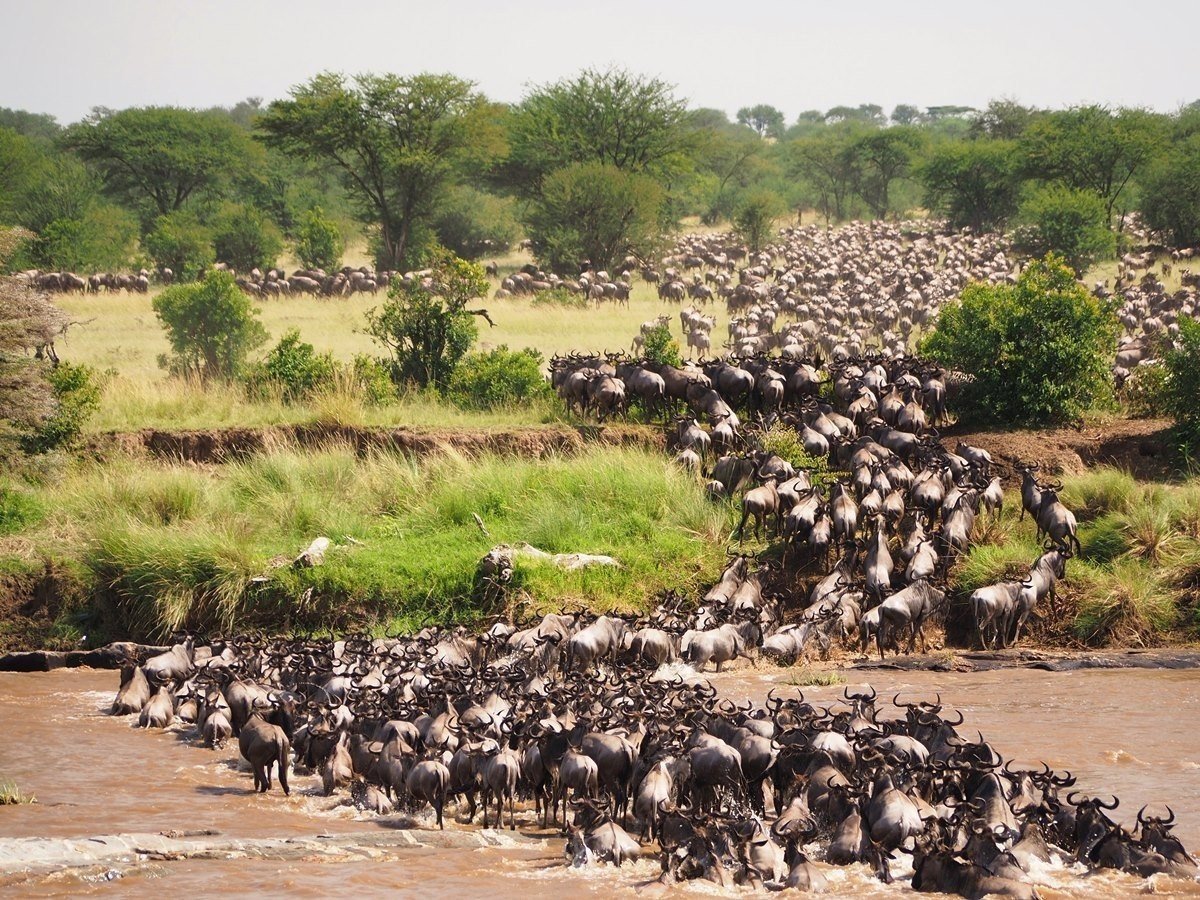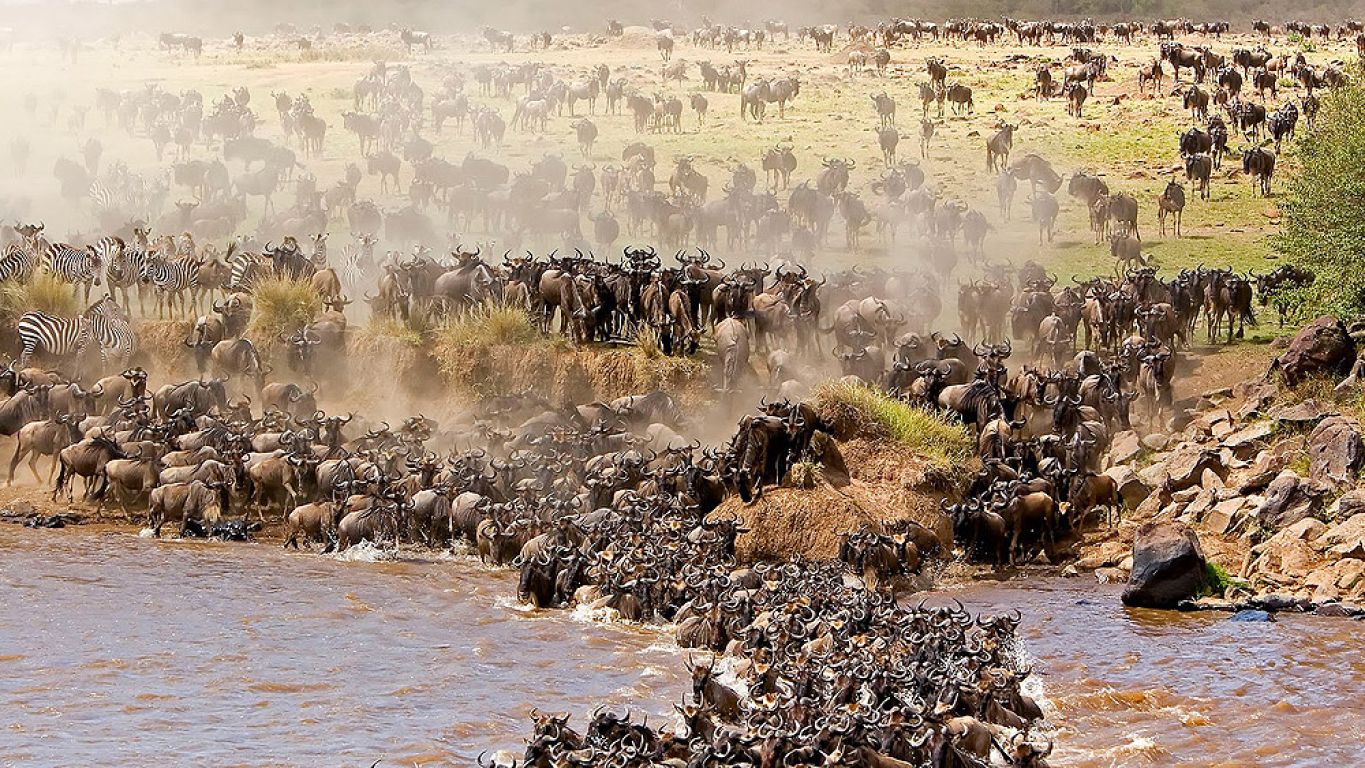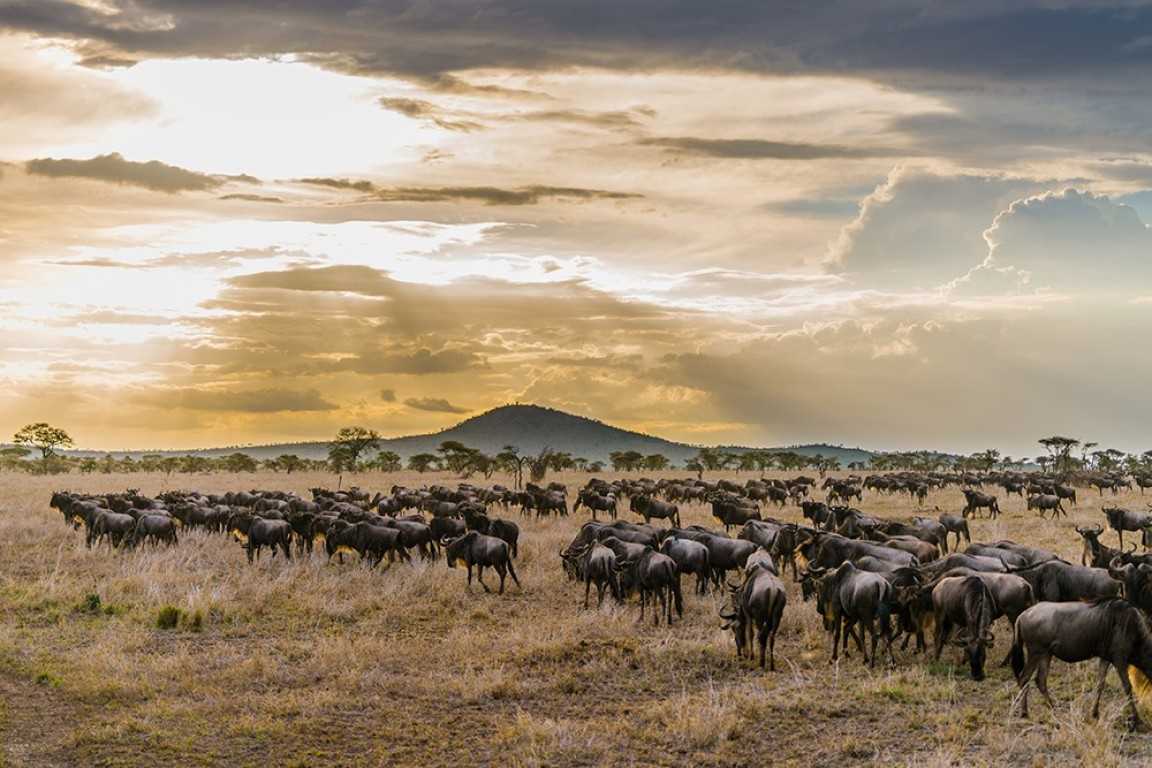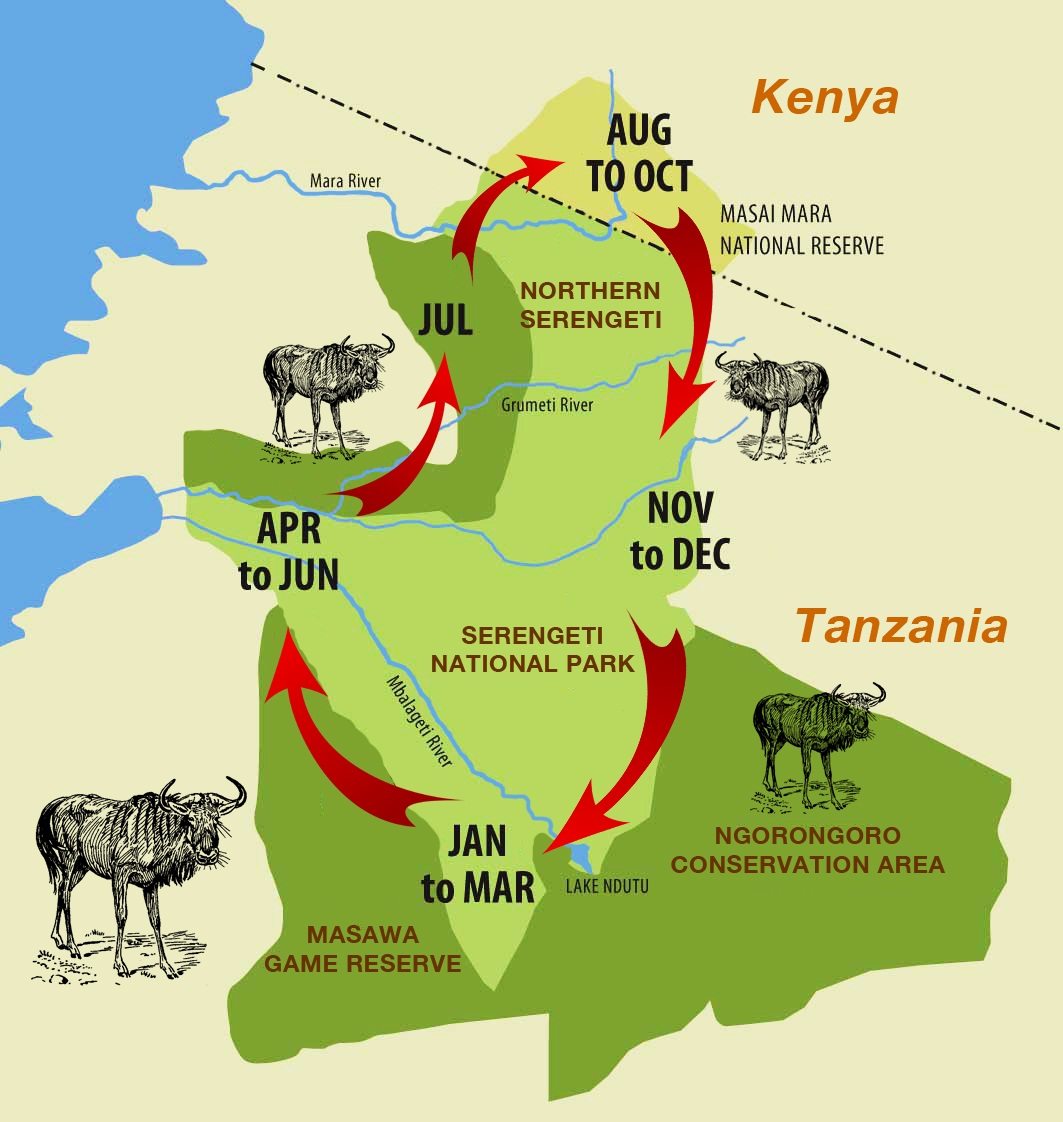
The Serengeti migration map shows the annual route of the Great Wildebeest Migration across the Serengeti ecosystem in Tanzania and the Maasai Mara in Kenya. Each year, more than 1.5 million wildebeest, along with zebras and gazelles, travel across this vast region searching for fresh grazing and water.
Although the migration follows a general route, it is not a fixed path. The movement of animals depends heavily on rainfall and grass availability, meaning the herds may arrive earlier or later in different areas depending on seasonal conditions.
For a full overview of this wildlife phenomenon, see the Serengeti Great Migration Guide.
Understanding the Serengeti Migration Route
The migration moves through several key regions of the Serengeti ecosystem during the year.
The typical route includes:
-
Southern Serengeti and Ndutu Plains – calving season
-
Central Serengeti (Seronera region) – herd movement
-
Western Serengeti Corridor – Grumeti River crossings
-
Northern Serengeti – Mara River crossings
-
Return south through eastern Serengeti
These regions form a natural circular movement driven by seasonal rainfall patterns.
Travelers interested in seasonal timing can also read Serengeti Migration by Month.
Serengeti Migration Map by Season
January to March – Southern Serengeti
At the beginning of the year, the migration is usually found in the southern Serengeti plains and Ndutu area.
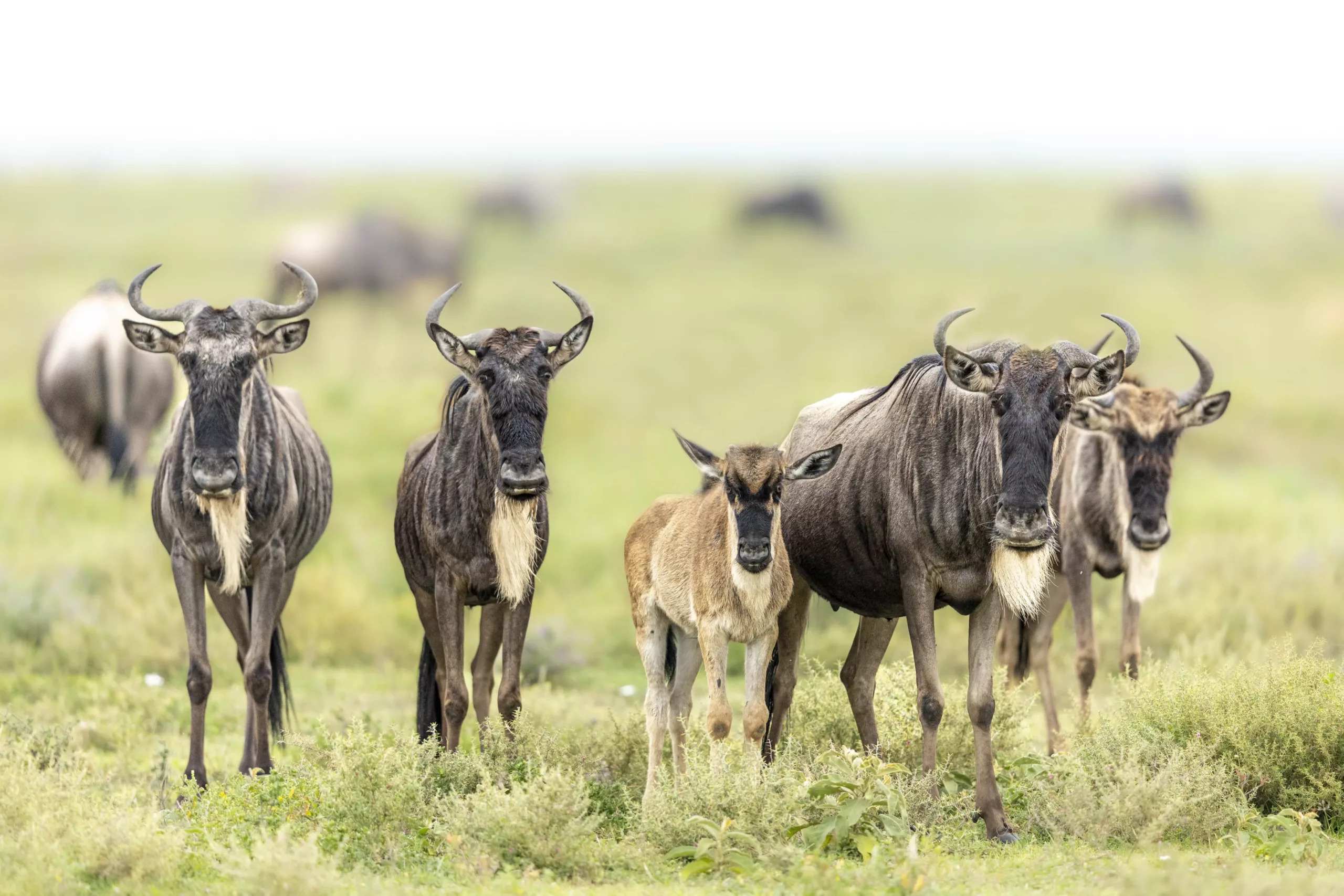
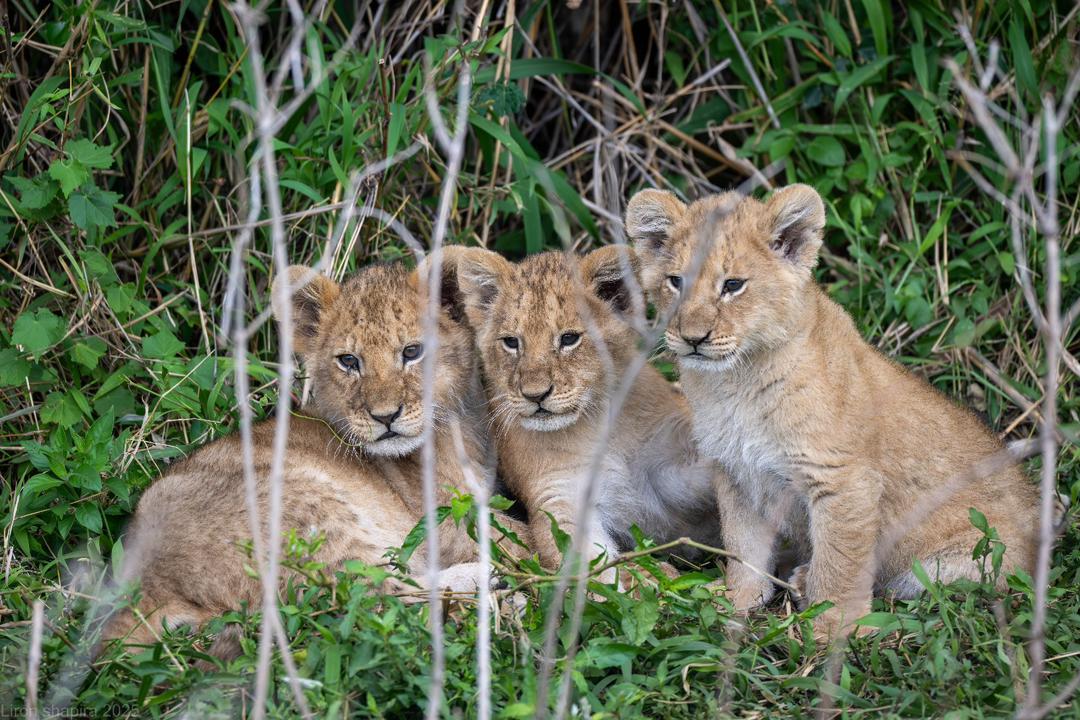
This is the wildebeest calving season, when thousands of calves are born. The open grasslands provide excellent grazing and good visibility to detect predators.
This period attracts lions, cheetahs, and hyenas, creating dramatic wildlife encounters.
April to May – Central Serengeti
As the rainy season progresses, the herds begin moving northward through central Serengeti.
Large columns of wildebeest travel across the plains, forming one of the most impressive wildlife movements on Earth.
June to July – Western Corridor
By early dry season, many herds move toward the western Serengeti corridor and the Grumeti River.
Some river crossings occur here, although they are usually smaller than the famous Mara River crossings later in the year.
July to October – Northern Serengeti and Mara River
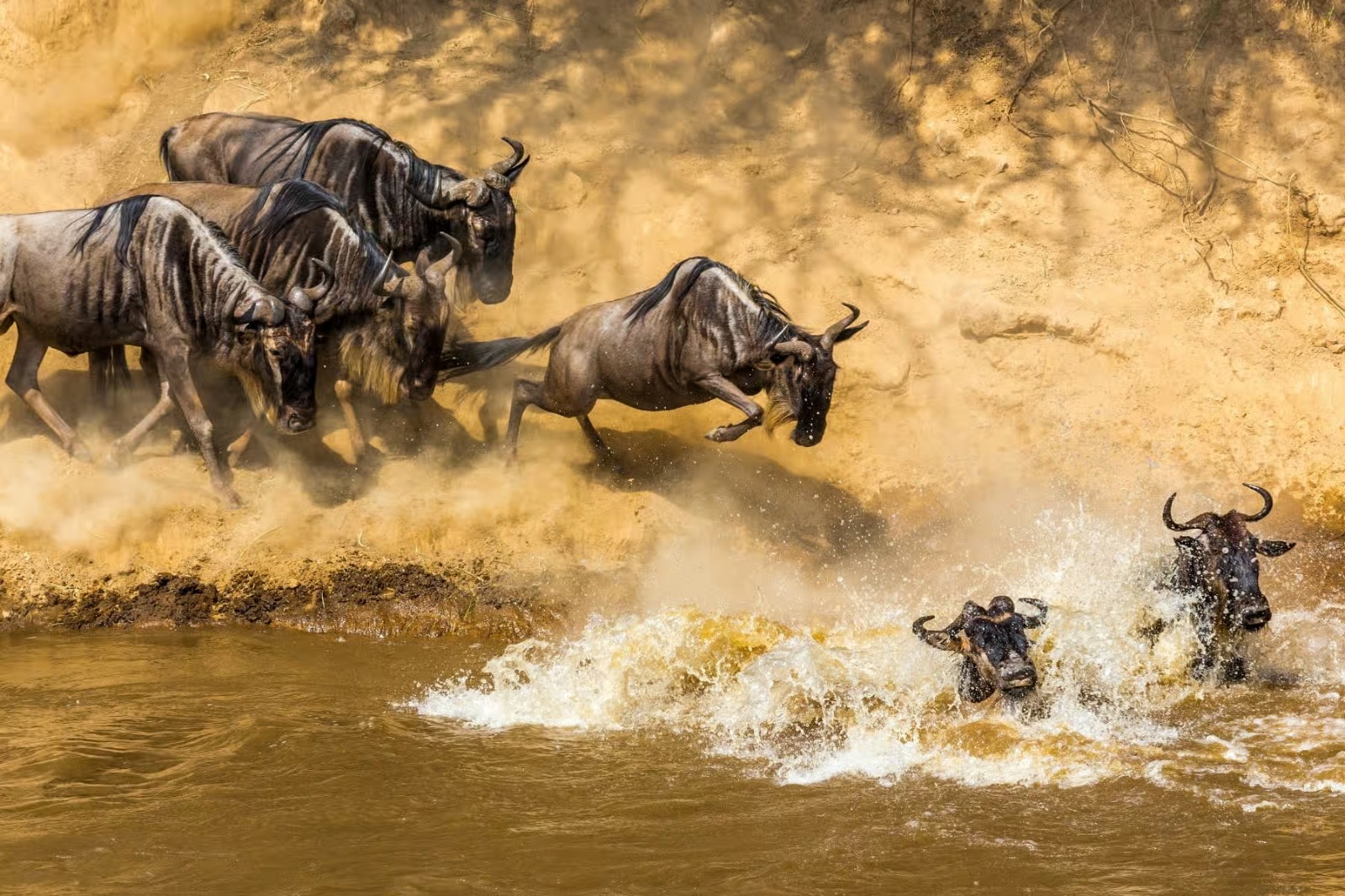
The migration continues into northern Serengeti, where animals must cross the Mara River.
These crossings are among the most dramatic moments of the migration. Thousands of wildebeest gather along the riverbanks before suddenly charging into the water while crocodiles wait below.
For more information about migration timing, see Best Time to See Serengeti Migration.
November to December – Return South
When the short rains begin, the herds move back through eastern Serengeti toward the southern plains.
By December, the animals begin returning to the calving grounds in southern Serengeti and Ndutu.
This completes the migration cycle before it begins again the following year.
Key Locations on the Serengeti Migration Map
Southern Serengeti / Ndutu
Best for calving season and newborn animals.
Central Serengeti
Important transit region where large herds pass through.
Western Corridor
Known for the Grumeti River crossings.
Northern Serengeti
Famous for Mara River crossings.
These regions form the core of the migration route across the Serengeti ecosystem.
Travelers planning their safari often visit several of these areas described in the Serengeti National Park Guide.
Why the Migration Route Changes
The migration does not follow a perfectly predictable path each year. Rainfall patterns influence the growth of fresh grass, which determines where the herds move.
As a result, the migration map should be understood as a general guide rather than an exact schedule.
For broader safari planning, see the Best Time to Visit Tanzania.
Animals Involved in the Migration
Although wildebeest dominate the migration, several other animals travel with the herds.
Common animals seen during migration include:
-
Wildebeest
-
Zebras
-
Gazelles
-
Lions
-
Hyenas
-
Cheetahs
-
Leopards
-
Crocodiles
Many visitors also hope to see the Big Five animals, which are explained in Big Five Animals Tanzania.
Final Thoughts
The Serengeti migration map helps travelers understand how millions of animals move across one of Africa’s most famous wildlife ecosystems. From the southern calving plains to the dramatic river crossings in the north, the Great Migration is a year-round journey shaped by nature.
Understanding this migration route helps visitors choose the best time and location for an unforgettable safari experience.
For complete safari planning advice, explore the Tanzania Safari Guide.