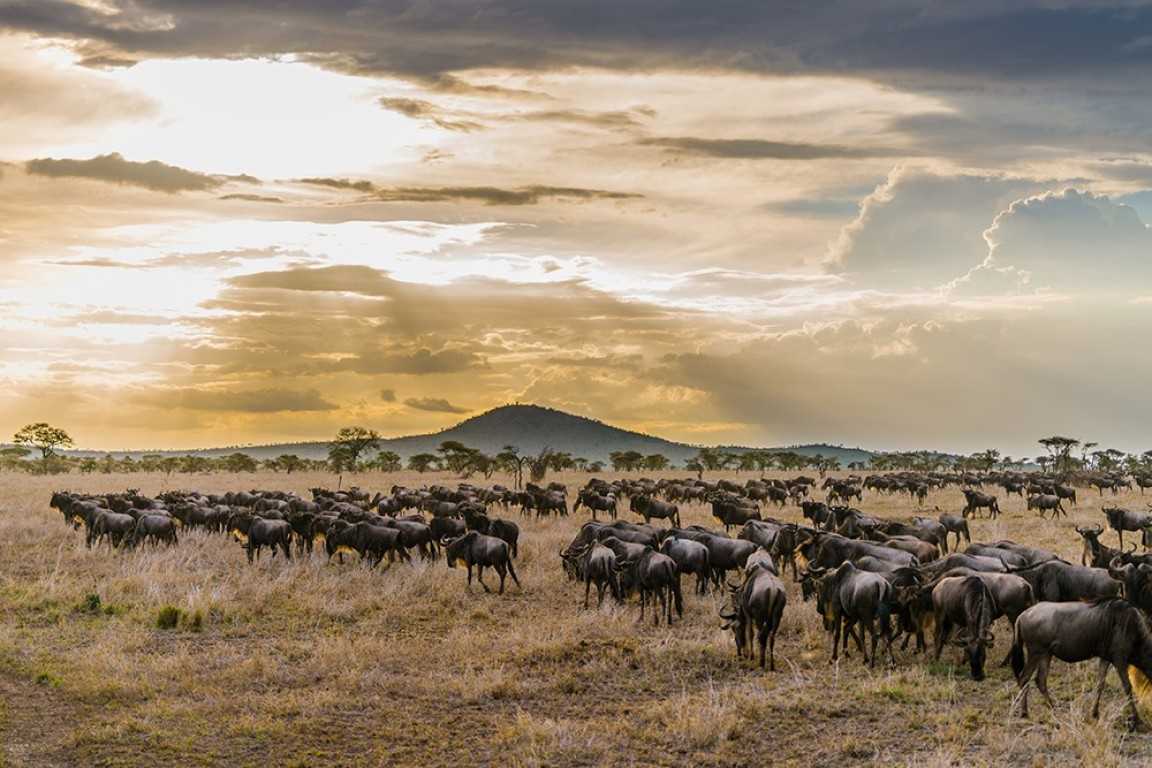
The Serengeti Great Migration is one of the most spectacular wildlife events on Earth. Every year, more than 1.5 million wildebeest, accompanied by zebras and gazelles, move across the Serengeti ecosystem in Tanzania and Kenya in search of fresh grazing and water.
Because the migration moves throughout the year, travelers often ask where the herds are located during different months. This Serengeti migration by month guide explains where the animals typically travel and what wildlife experiences visitors can expect throughout the year.
For a full overview of the migration, see the Serengeti Great Migration Guide.
January – Calving Season Begins
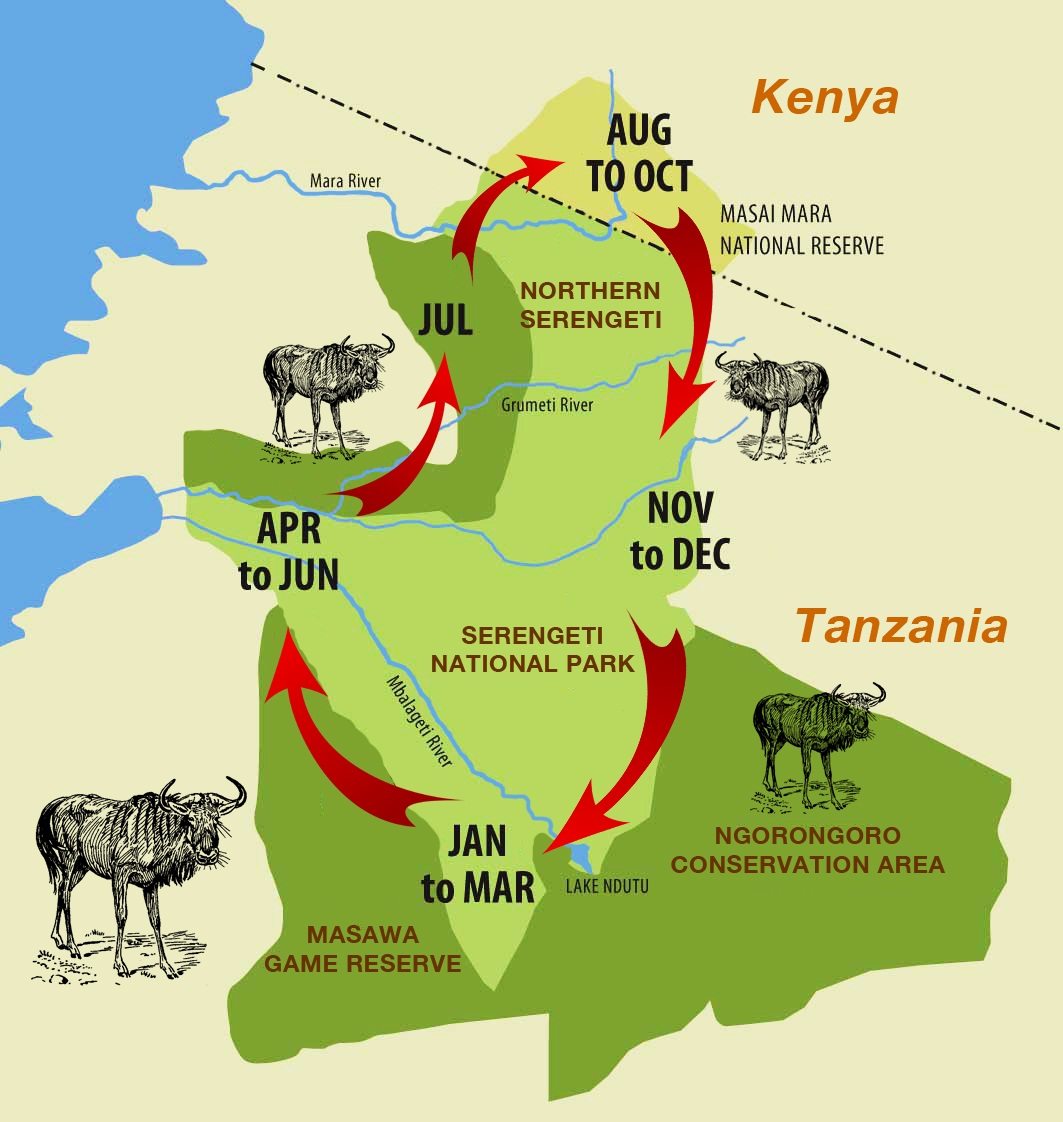
In January, most of the migration gathers in the southern Serengeti plains and Ndutu area.
This region has short grass plains that provide excellent grazing for pregnant wildebeest.
Wildlife highlights include:
-
Large herds across open plains
-
Predator sightings such as lions and cheetahs
-
Early stages of calving season
This is one of the most dramatic wildlife periods in the Serengeti ecosystem.
February – Peak Calving Season
February is the peak of the wildebeest calving season.
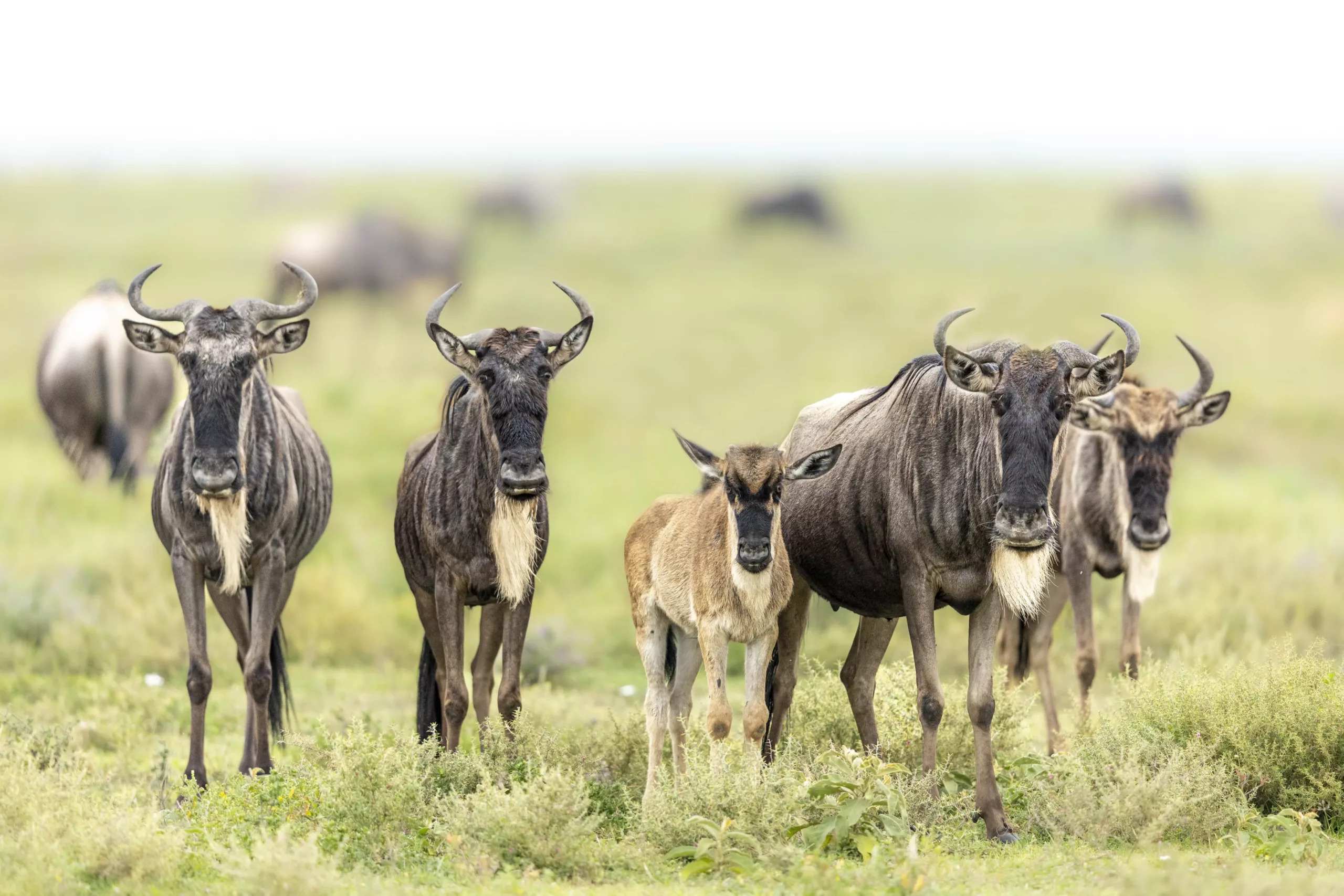
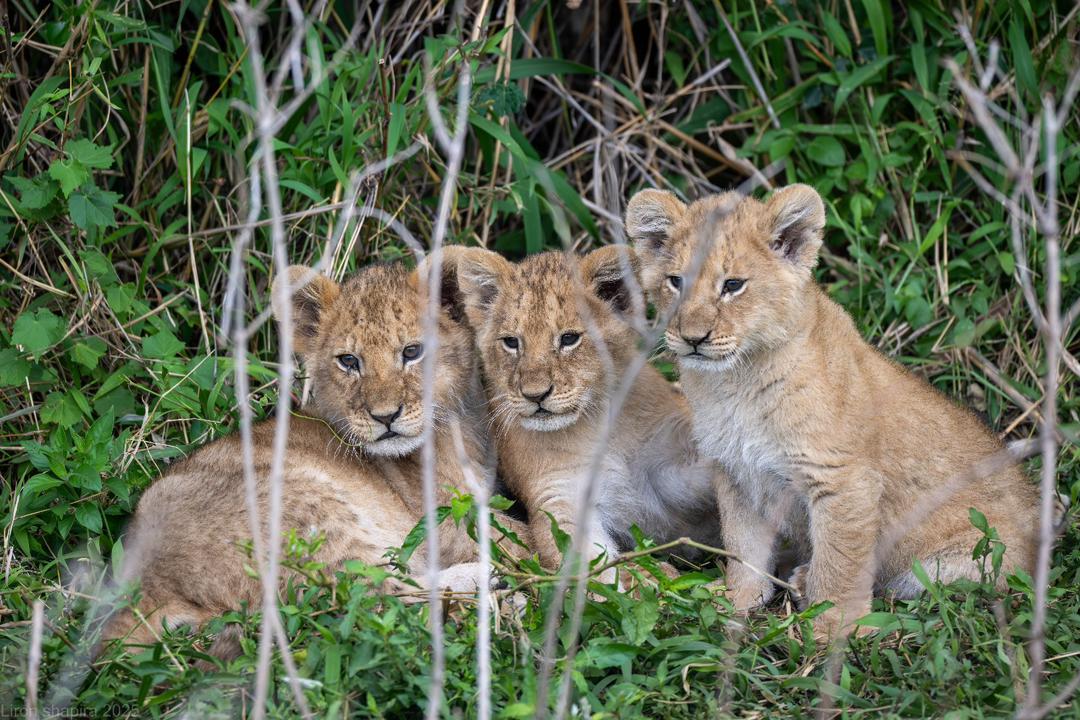
Thousands of calves are born each day in southern Serengeti and Ndutu. This attracts predators including lions, hyenas, and cheetahs.
The open plains make wildlife viewing and photography especially rewarding.
March – Herds Begin Moving
During March, the calving season begins to slow down as the herds prepare to move north.
Large groups of wildebeest can still be found in southern Serengeti, but the migration gradually starts moving toward central Serengeti.
April – Migration Movement
In April, the herds move through central Serengeti as the rainy season continues.
Animals travel in long columns across the plains as they move toward fresh grazing areas.
This is one of the most impressive times to see the sheer scale of the migration.
May – Large Moving Herds
During May, the migration continues traveling northwest.
Huge groups of wildebeest can often be seen crossing plains and forming long lines across the landscape.
Although this is part of the rainy season, wildlife viewing can still be excellent.
June – Western Serengeti
By June, many herds reach the western Serengeti corridor near the Grumeti River.
Some crossings may occur at the Grumeti River, although they are usually smaller than the famous Mara River crossings later in the year.
This period also marks the beginning of the dry season.
July – Northern Movement
In July, the migration continues moving north toward the northern Serengeti.
Herds begin approaching the Mara River, where one of the most dramatic stages of the migration occurs.
Travelers interested in this experience can read more in Best Time to See Serengeti Migration.
August – Mara River Crossings
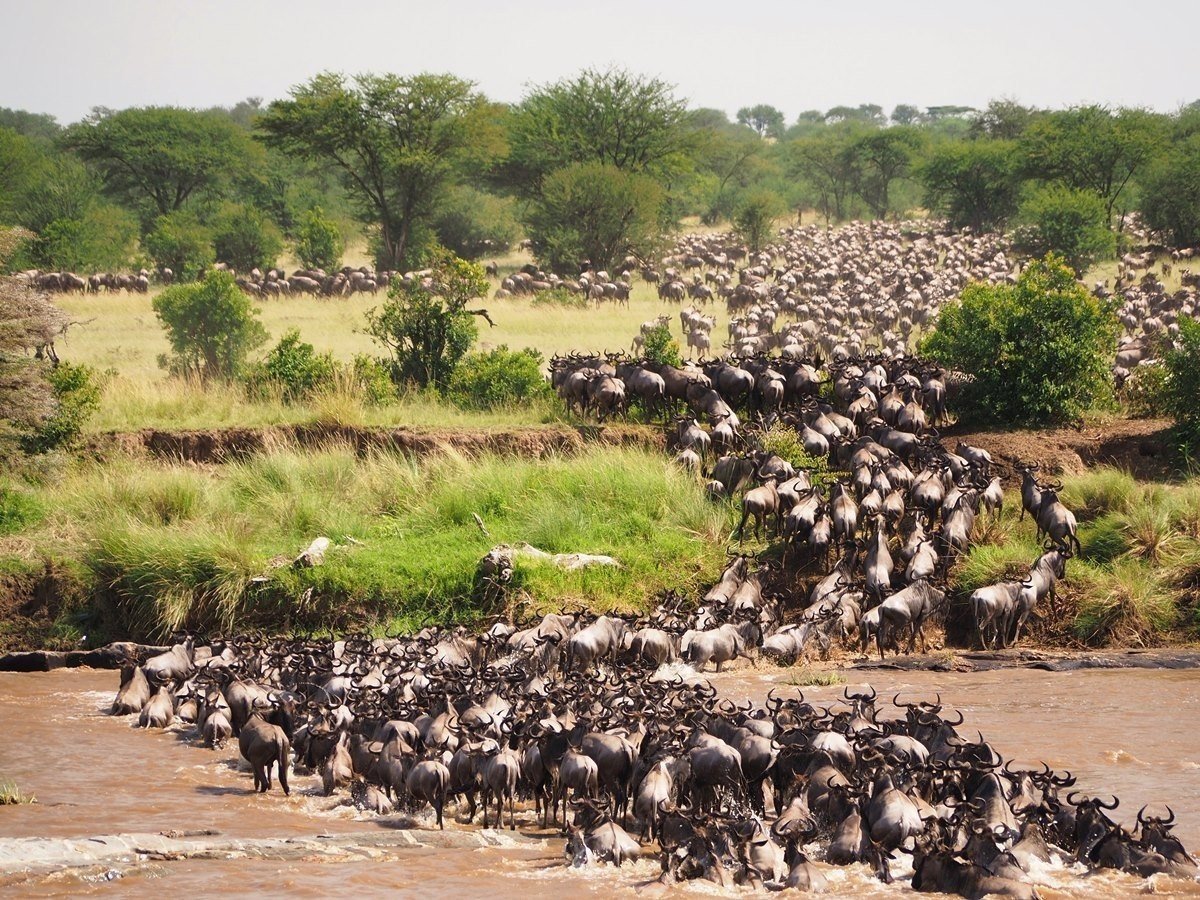
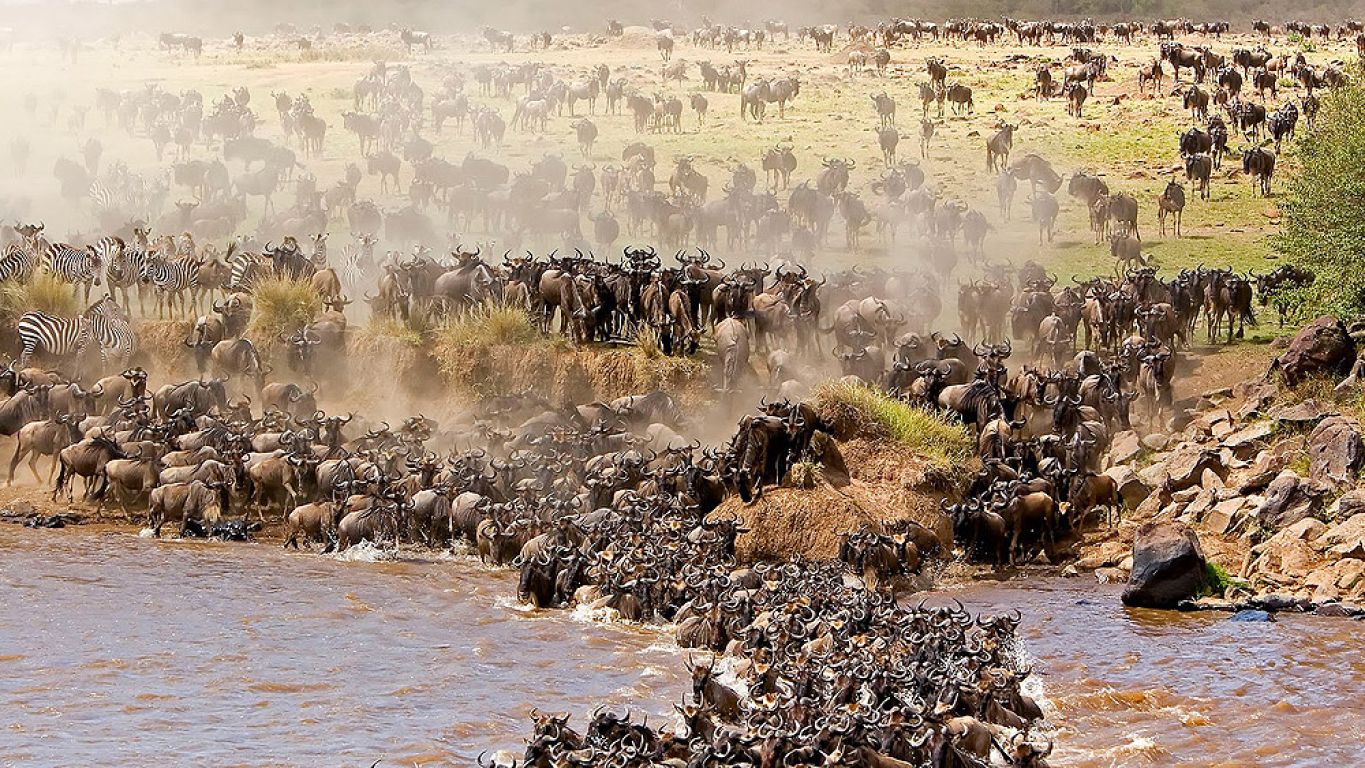
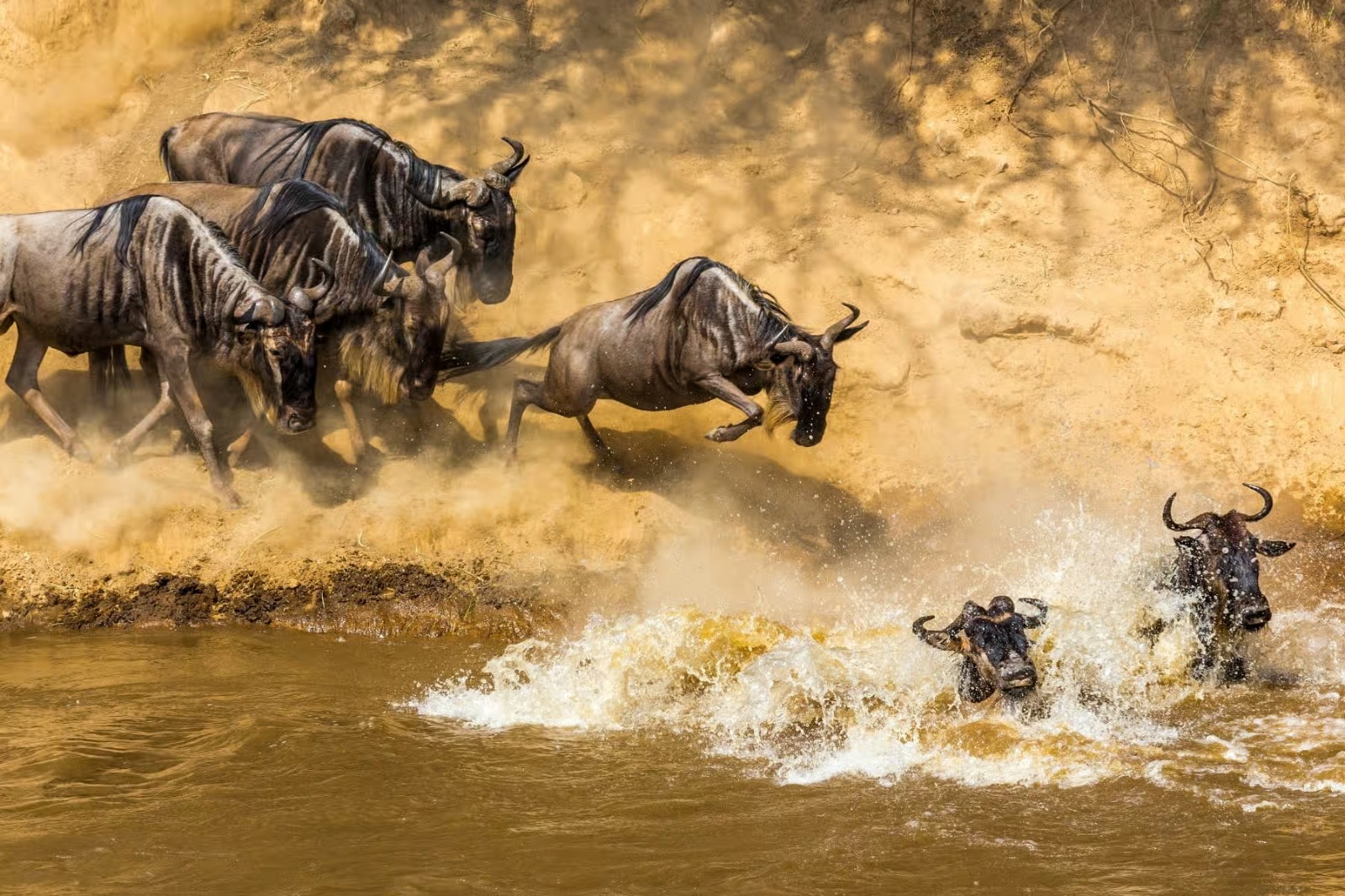
August is one of the best months to see Mara River crossings in northern Serengeti.
Large herds gather at the riverbanks before suddenly rushing into the water while crocodiles wait below.
These crossings are unpredictable but unforgettable.
September – Migration in Northern Serengeti
In September, many herds remain in northern Serengeti and the Maasai Mara ecosystem.
Wildlife viewing is excellent during this time, with strong predator activity and large concentrations of animals.
October – Late River Crossings
Some Mara River crossings continue in October, although the herds gradually begin preparing to move south again.
This is still a great time for wildlife viewing in northern Serengeti.
November – Return South
With the arrival of the short rains in November, the herds begin moving south through central and eastern Serengeti.
Fresh grass grows in southern Serengeti, attracting the migration back toward the calving areas.
December – Southern Serengeti
By December, the migration has mostly returned to the southern Serengeti plains.
The cycle prepares to begin again as pregnant wildebeest gather in the region for the next calving season.
Where to See the Migration Each Month
Understanding where the migration moves throughout the year helps travelers plan their safari.
January – March: Southern Serengeti / Ndutu
April – May: Central Serengeti
June – July: Western Serengeti
July – October: Northern Serengeti
November – December: Central and Southern Serengeti
You can also visualize this route in the Serengeti Migration Map.
Best Time to See Serengeti Migration
Different months offer different migration highlights.
-
January–March: Calving season
-
April–June: Massive moving herds
-
July–October: Mara River crossings
-
November–December: Return south
For a detailed timing guide, see Best Time to See Serengeti Migration.
Final Thoughts
The Serengeti migration by month shows how millions of animals travel across one of the world’s most famous wildlife ecosystems. From calving season in the southern plains to the dramatic Mara River crossings in the north, each stage of the migration offers a unique safari experience.
Understanding this seasonal movement helps travelers choose the best time and location for an unforgettable Serengeti safari.
For complete safari planning advice, read the Tanzania Safari Guide.