Quick facts
Destinations
5 parks & reserves
Tour categories
0 safari styles
Tours available
11 packages
Climate
About Uganda
Winston Churchill called Uganda the Pearl of Africa in 1908, and the description still holds. A small, landlocked country of extraordinary ecological diversity — rainforest, savanna, highland moorland, the Rift Valley lakes and the source of the Nile — Uganda contains over 50% of Africa's bird species, harbours more than half of the world's remaining mountain gorillas, and produces chimpanzee encounters in Kibale Forest that are the most reliable on the continent.
Mountain gorilla trekking
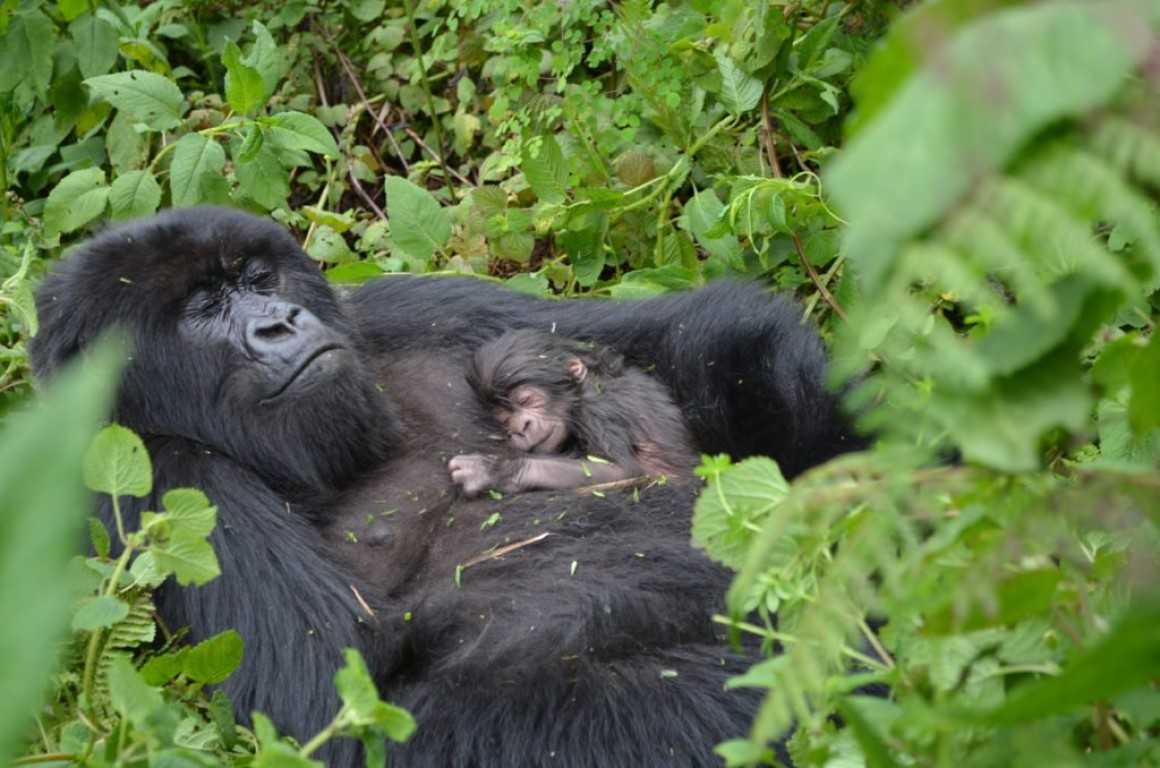
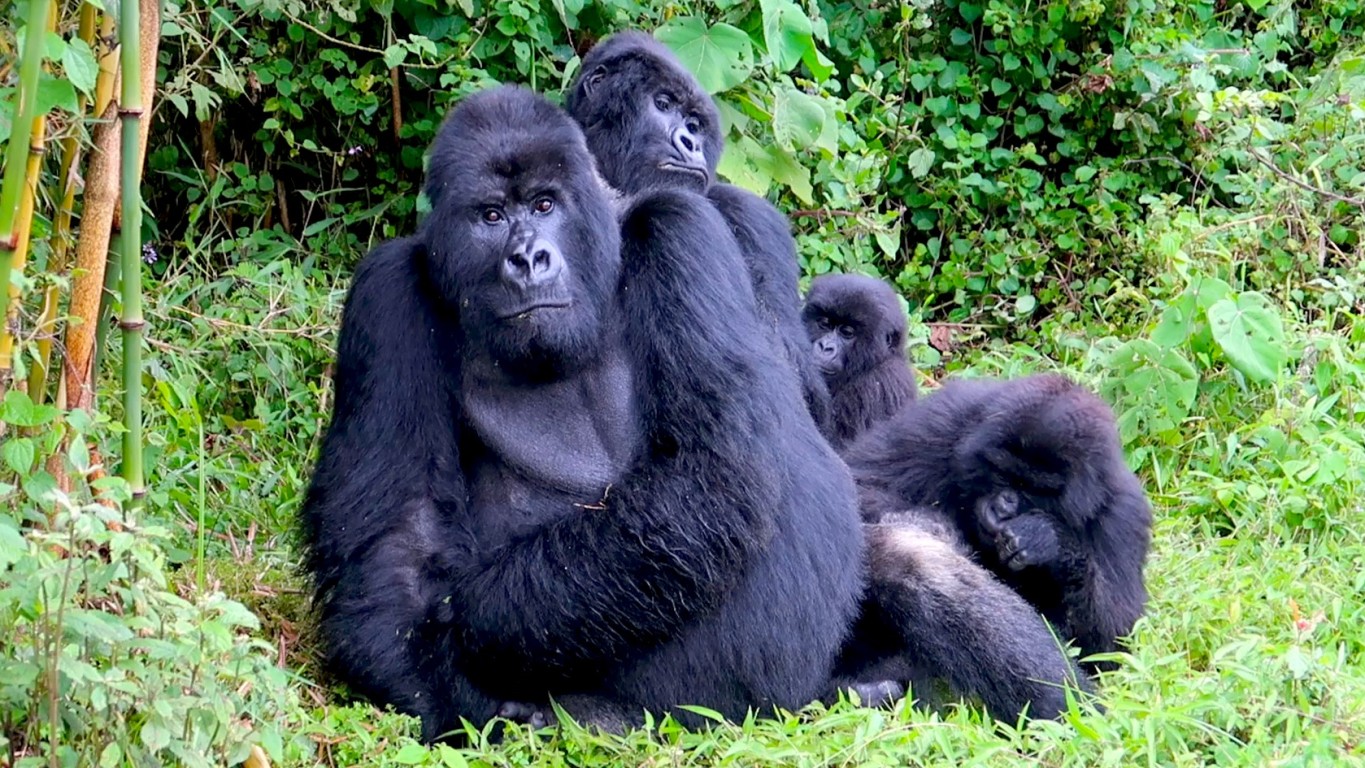
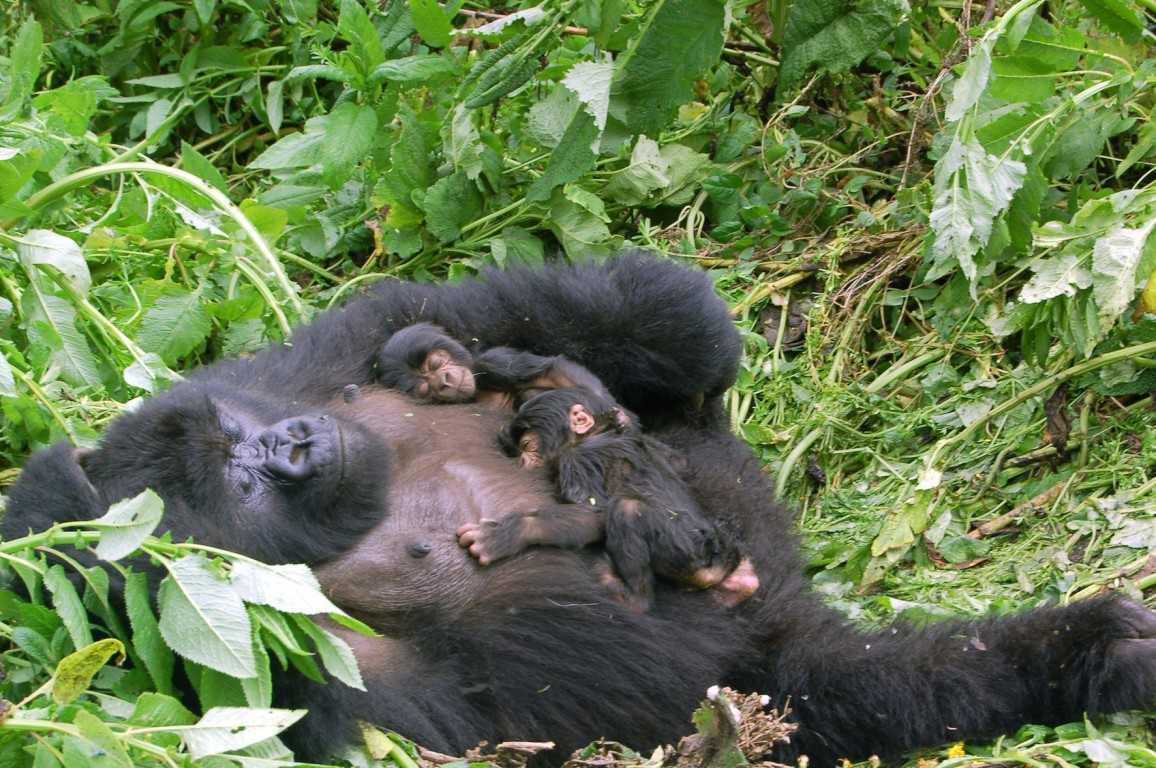
Bwindi Impenetrable National Park in southwestern Uganda is Africa's most important mountain gorilla sanctuary. Approximately 460 mountain gorillas live in Bwindi's 321 sq km of ancient rainforest — roughly half the world's total population. Multiple habituated gorilla families are open to trekking, each with a maximum of 8 visitors per day. The one-hour encounter with a gorilla family at close range — silverback at 3 to 5 metres, juveniles playing in the canopy, the entire social hierarchy visible — is one of the most powerful wildlife encounters available anywhere on Earth.
Bwindi has four trekking sectors (Buhoma, Ruhija, Rushaga, Nkuringo) at different altitudes and forest densities, allowing us to match the trekking sector to your fitness level and accommodation preferences.
Chimpanzee trekking
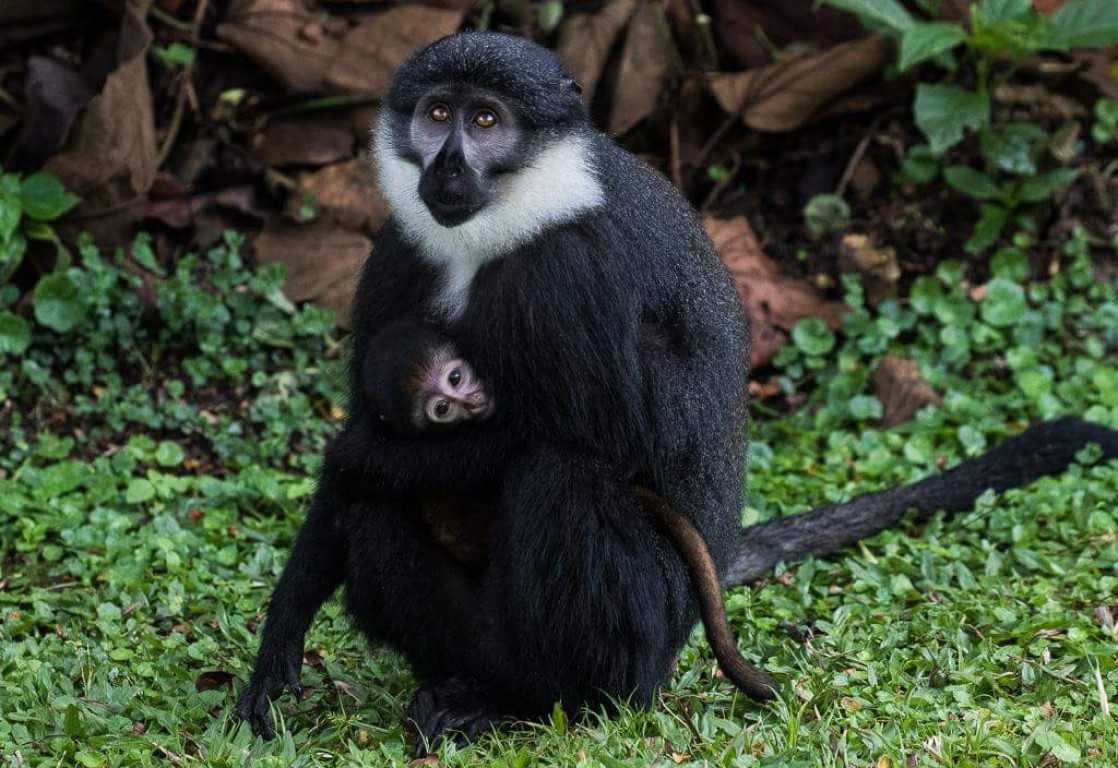
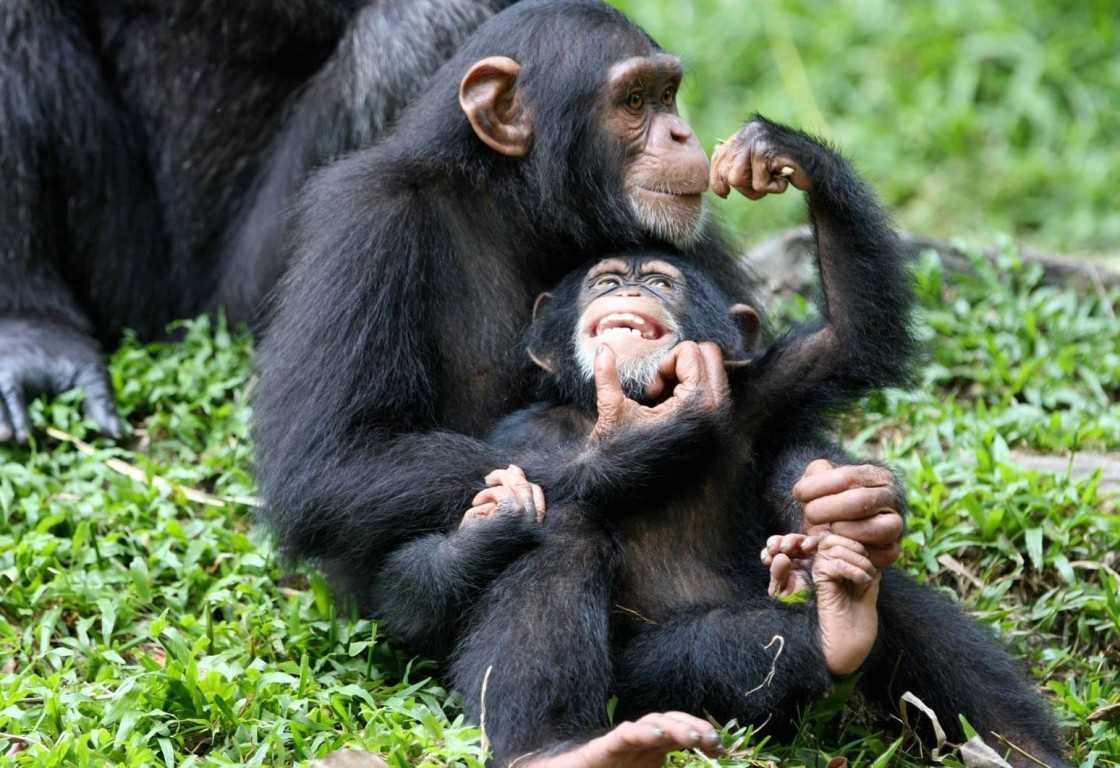
Kibale Forest National Park in western Uganda has the highest density of chimpanzee of any habitat in Africa — approximately 1,500 chimpanzees in 795 sq km. The habituated communities at Kibale give the most reliable chimpanzee encounter in East Africa: a large, active community with 13 additional primate species visible in the same forest, including Angola colobus in troops of up to 400 animals. Kibale is typically combined with Queen Elizabeth National Park on the same western Uganda circuit.
Queen Elizabeth National Park
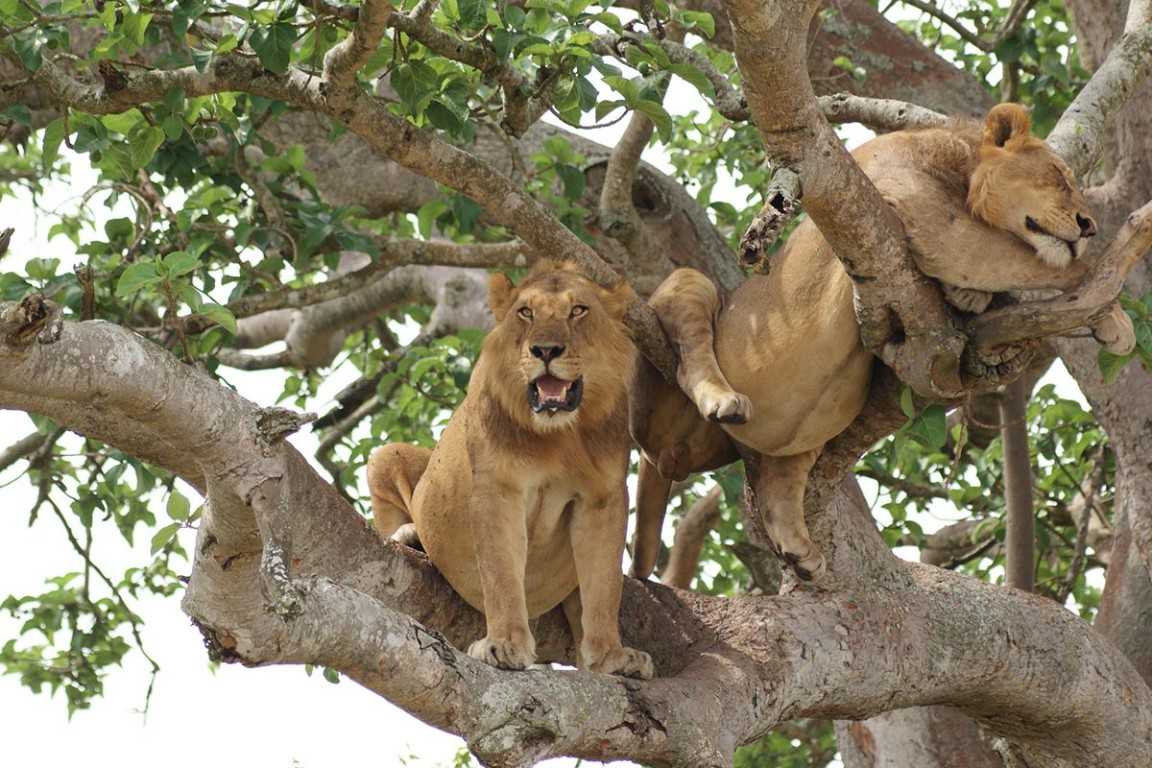
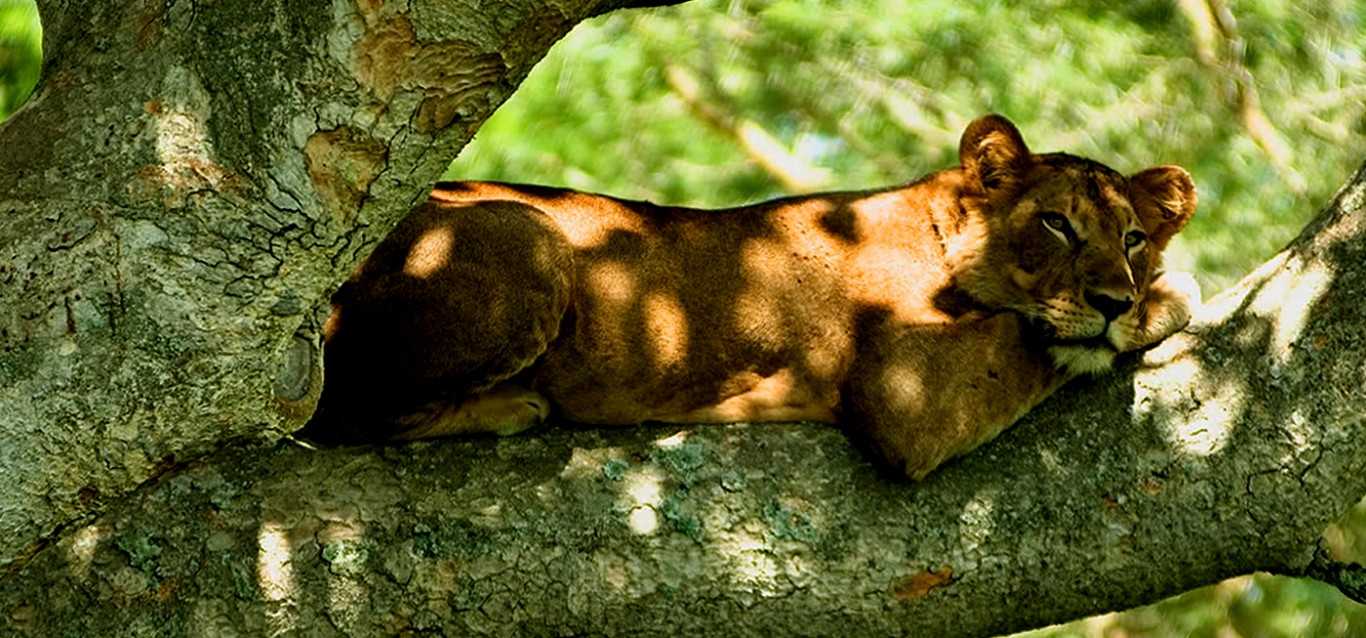
Queen Elizabeth National Park in western Uganda sits against the border with the Democratic Republic of Congo across Lake Edward. Its most famous feature is the Ishasha sector — the only place in East Africa besides Tanzania's Lake Manyara where lions habitually climb trees, resting in the branches of large fig trees in groups of up to 7 animals. The Kazinga Channel boat safari (a natural waterway connecting Lakes George and Edward) has one of Africa's highest hippo densities, with buffalo, elephant and an extraordinary diversity of waterbirds on the banks. The park also has chimpanzee in the Kyambura Gorge and giant forest hog on the crater lakes plateau.
Murchison Falls
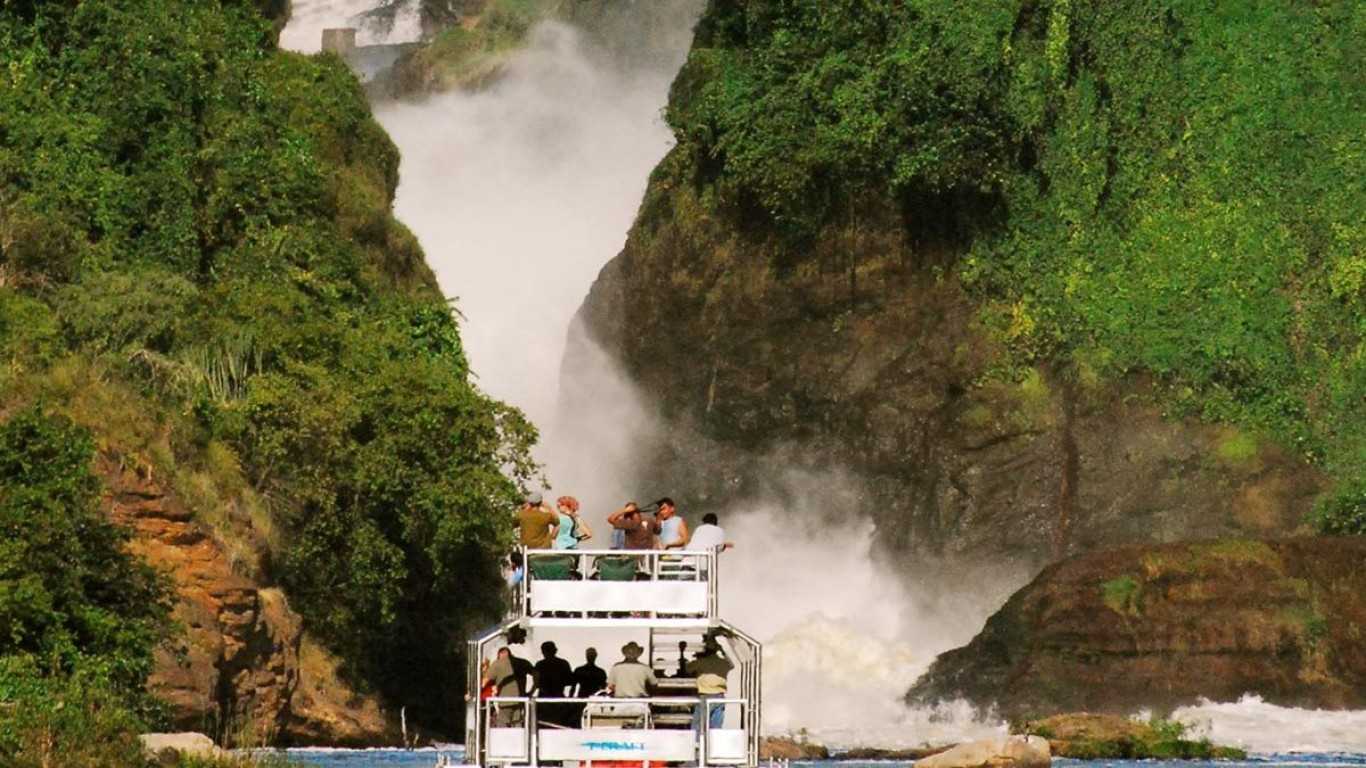
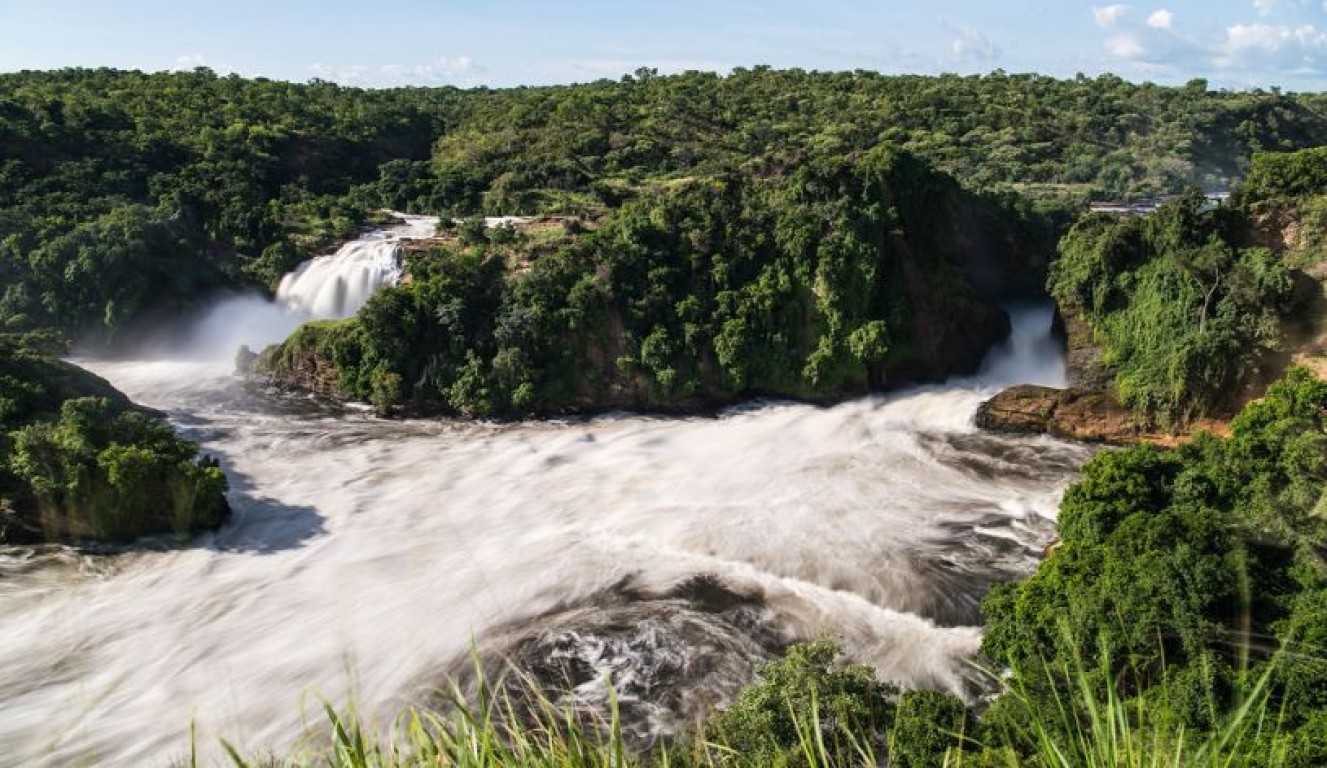
Murchison Falls National Park in northern Uganda is the country's largest park and home to one of Africa's great natural spectacles: the entire Nile River forced through a 7-metre gap in the rock, creating the most powerful waterfall on Earth by water volume forced through a constrained channel. The Nile boat safari upstream to the base of the falls passes hippo, Nile crocodile, elephant, giraffe and enormous numbers of waterbirds. The savanna north of the Nile has lion, leopard, buffalo and Uganda kob.
Source of the Nile
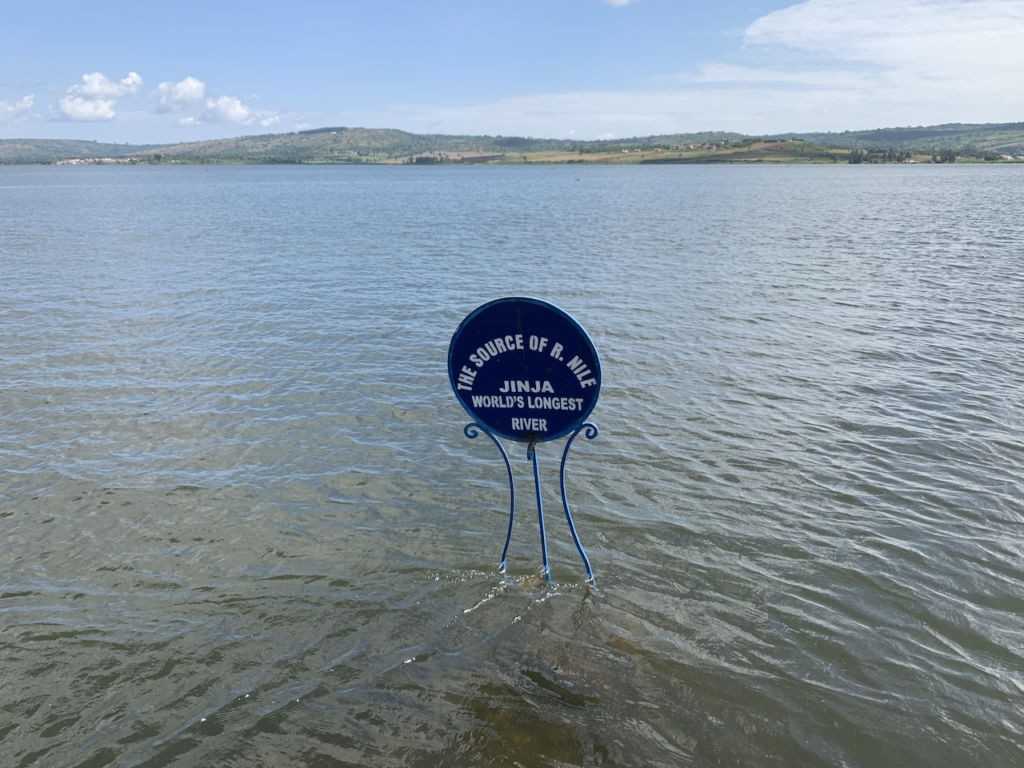
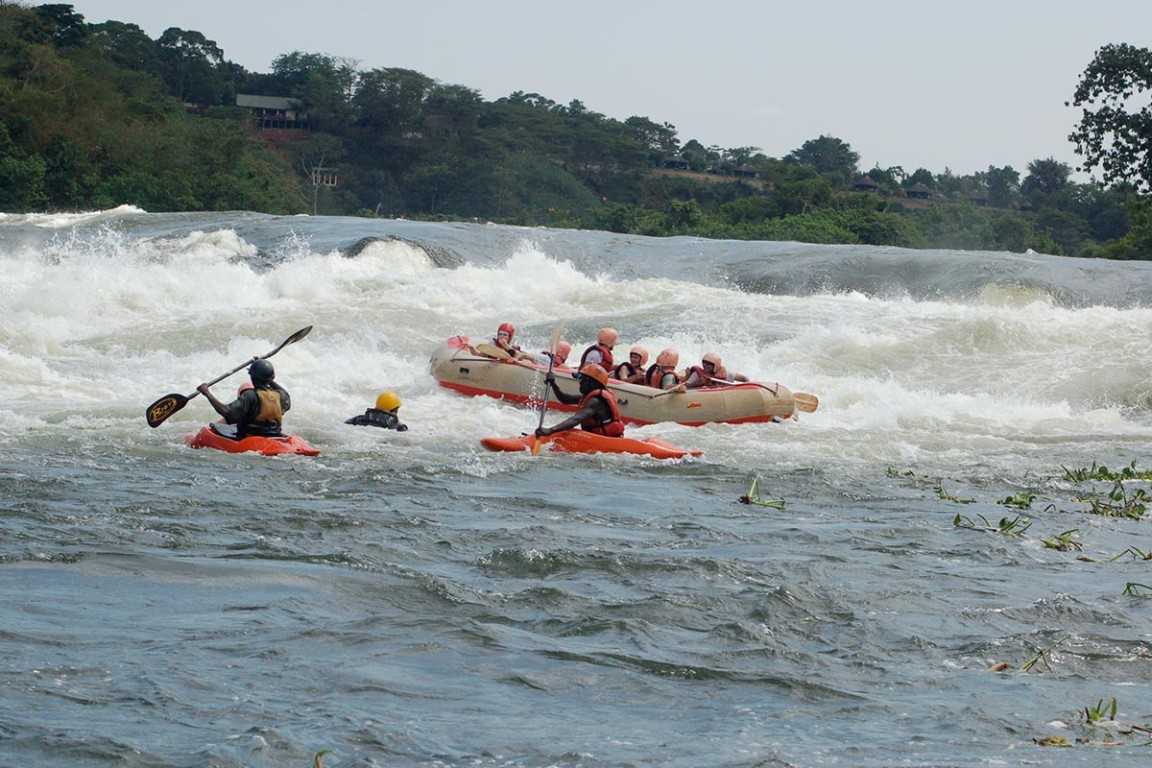
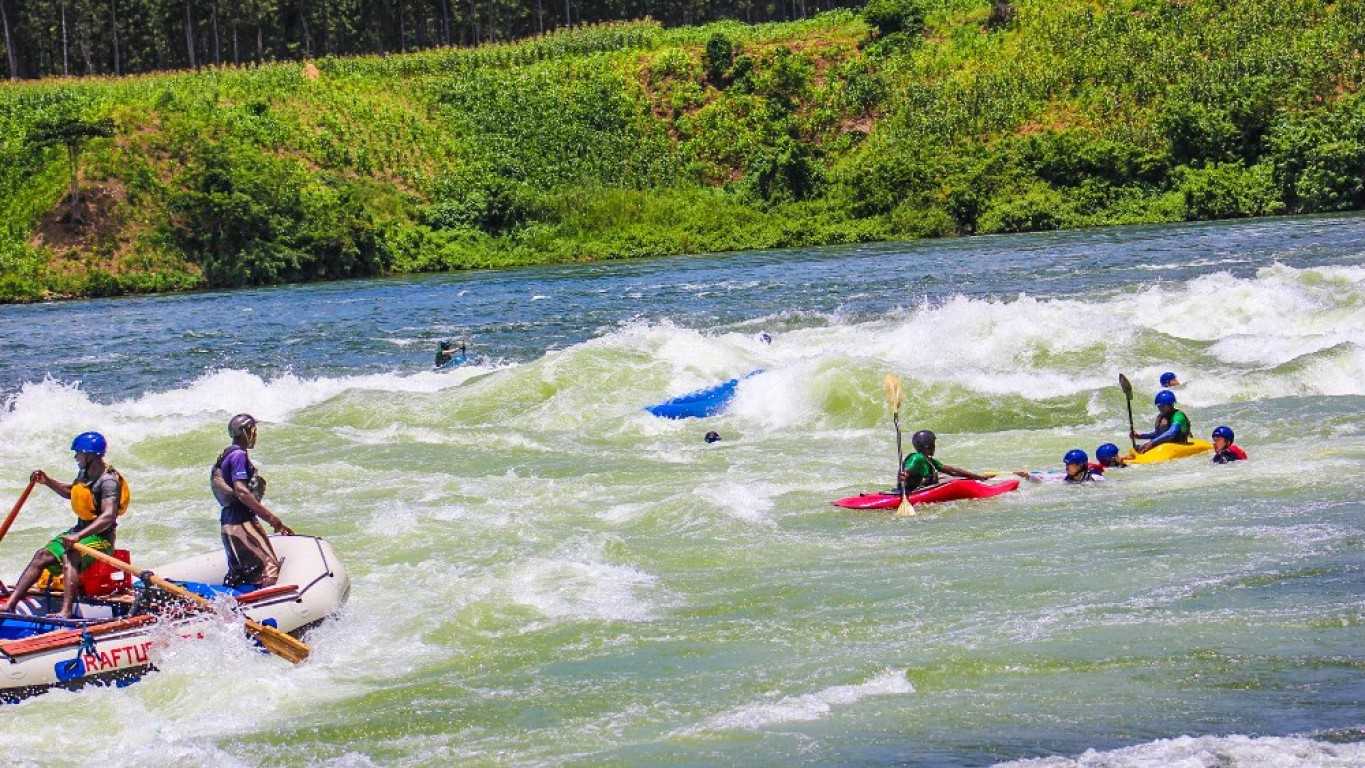
The Nile begins at Jinja, where Lake Victoria pours into the river that travels 6,650 km to the Mediterranean. The source of the Nile — identified by John Hanning Speke in 1862 — is marked by a modest plaque on the riverbank, but the white-water rafting on the upper Nile at Jinja is among the finest in Africa, and the bungee jump above the river draws adventurous visitors from across East Africa.
Want to visit Uganda?
Get a free custom safari plan within 24 hours.
All Uganda destinations
Uganda tour packages


Want to visit Uganda?
Get a free custom safari plan within 24 hours.
Best time to visit Uganda
Best time to visit Uganda
June to September — Long dry season (best for gorilla and chimp trekking)
The primary trekking season. The forest floor at Bwindi and Kibale is at its driest, making the steep trails significantly more manageable. Gorilla and chimpanzee permit demand is highest in this window — book 6 to 12 months ahead for June and August. Game viewing in Queen Elizabeth and Murchison is excellent with dry conditions concentrating wildlife at water sources. Temperatures are comfortable (18 to 26°C in the western parks).
December to February — Short dry season (good alternative window)
The second trekking season. Less crowded than June to September, permits more available and slightly lower lodge rates. Forest conditions at Bwindi are drier than the rainy season but muddier than June to September. An excellent window for combining gorilla trekking with game drives in Queen Elizabeth and Murchison. December is festive in Kampala and visitor numbers rise around Christmas and New Year.
March to May — Long rains (challenging, not recommended)
The heaviest rainfall of the year. Bwindi's trails become very muddy and some sections are genuinely difficult. Gorilla trekking continues year-round but the March to May window is the most physically demanding. Suitable for experienced trekkers specifically seeking quieter conditions; not recommended for first-time gorilla trekking visitors.
October to November — Short rains (transitional)
Brief afternoon rain in October and November. Trails muddier than the dry seasons but manageable. A reasonable mid-season window with lower permit demand and good wildlife in the savanna parks.
Uganda weather & climate
Uganda weather
Uganda straddles the equator and has a relatively stable tropical climate with two rainy seasons. Temperatures vary more by altitude than by season — Kampala (1,190m) averages 24°C year-round, while Bwindi Impenetrable Forest (1,900m to 2,500m) is significantly cooler and misty.
Temperature by region
Kampala and central Uganda: 20 to 28°C year-round. Queen Elizabeth National Park (western rift valley): 24 to 32°C, drier and warmer than the highlands. Bwindi and southwestern highlands: 12 to 22°C, cooler with high humidity and frequent mist in the forest. Murchison Falls (northwest): 24 to 35°C, Uganda's hottest region.
Rainfall patterns
Uganda has two rainy seasons: the long rains from March to May and the short rains from October to November. The dry seasons are June to September and December to February. However, Uganda's equatorial position means rain can fall in any month — the "dry season" is relative rather than absolute. Bwindi in particular remains misty and frequently damp even in the dry season; pack waterproof layers regardless of when you visit.
Getting to Uganda
Entebbe International Airport (EBB) is Uganda's only international airport, located 40 km southwest of Kampala on the shores of Lake Victoria. It receives direct flights from London (British Airways), Dubai (Emirates), Doha (Qatar Airways), Nairobi (Kenya Airways, Air Tanzania), Addis Ababa (Ethiopian Airlines), Kigali (RwandAir) and Johannesburg (South African Airways). Flying time from London is approximately 9 hours; from Nairobi 1 hour.
Domestic charter flights connect Entebbe to the safari destinations: Bwindi Impenetrable Forest (1.5 hours by charter to Kihihi or Kisoro airstrips), Queen Elizabeth National Park (1 hour to Kasese), Murchison Falls (1 hour to Pakuba) and Kibale Forest (1 hour to Kasese). Road transfers from Kampala to Bwindi take 8 to 9 hours; charter is strongly recommended for time-sensitive itineraries.
Uganda can also be entered overland from Kenya (Malaba/Busia border crossings, 6 to 8 hours from Nairobi to Kampala by road), Rwanda (Katuna border, 3 hours from Kigali to Kabale) and Tanzania (via Mutukula border).
Uganda travel tips
Gorilla trekking permits
Mountain gorilla trekking permits cost $800 per person per trek (Uganda Wildlife Authority). Each permit covers one 60-minute encounter with a habituated gorilla family. Permits are limited (8 visitors per gorilla family per day) and sell out months ahead for the dry seasons. Book as early as possible — we secure permits as part of all gorilla safari bookings.
Visa
Most nationalities require a tourist visa for Uganda, available as an e-visa at visas.immigration.go.ug or on arrival at Entebbe airport. Cost is $50 for a single-entry tourist visa. The East Africa Tourist Visa ($100) covers Uganda, Kenya and Tanzania on a single permit — the best option for multi-country itineraries including Tanzania safari and Uganda gorilla trekking.
Currency
Ugandan Shilling (UGX). Most safari and lodge costs are quoted in USD. ATMs in Kampala and Entebbe dispense UGX and sometimes USD. Carry USD cash for lodges and remote areas where card payment is unreliable. Mobile money (MTN and Airtel) is widely used locally.
Health
Malaria is present throughout Uganda including Kampala. Prophylactics are strongly recommended. Yellow fever vaccination is required for entry. The gorilla trekking guidelines require visitors to maintain a 7-metre distance from the gorillas at all times and to wear a face mask — this protects both gorillas and visitors from respiratory transmission. Anyone with cold, flu or gastrointestinal symptoms should not trek that day; permits are transferable within the booking group.
Altitude
Bwindi Impenetrable Forest sits at 1,900 to 2,500m altitude. The combination of altitude, steep terrain and humidity makes gorilla trekking physically demanding. Good cardiovascular fitness and sturdy waterproof footwear are essential. Porters are available at the trailhead for reasonable fees and are strongly recommended.
Want to visit Uganda?
Get a free custom safari plan within 24 hours.
Where to stay in Uganda
From budget tented camps to luxury lodges — we'll recommend accommodation that fits your dates, budget, and travel style.
Browse All Lodges