
Quick facts
Wildlife
The Skeleton Coast's extraordinary wildlife paradox: the cold Benguela Current upwelling makes the sea among the most productive in the world, supporting enormous Cape fur seal colonies (at Mowe Bay and Cape Fria, numbering 100,000+), which in turn support the world's only documented desert-adapted lion population that hunts marine mammals. Brown hyena and black-backed jackal patrol the beaches. Desert-adapted elephant, oryx and springbok survive in the river valleys. Lappet-faced vulture, Damara tern, jackass penguin and pelagic seabirds inhabit the coast.
Top activities
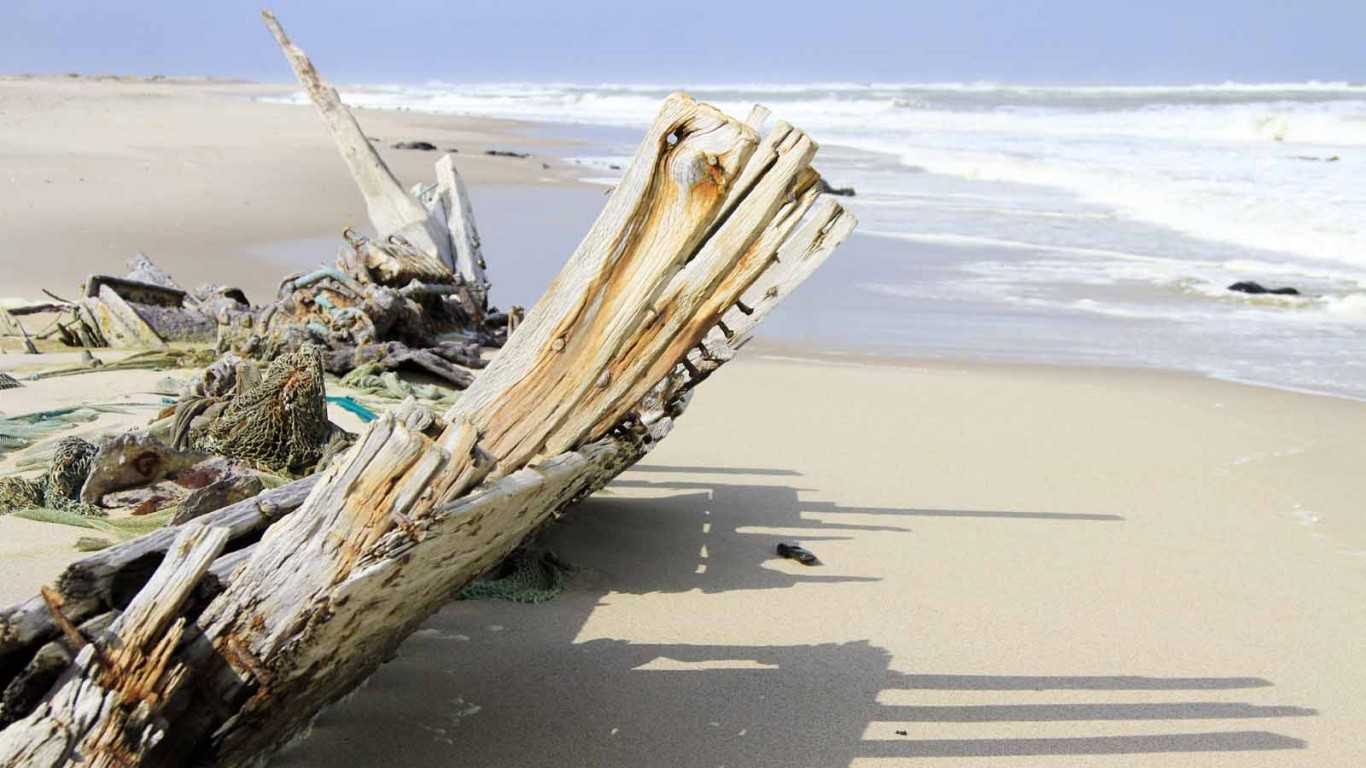
Fly-in safari to the northern Skeleton Coast wilderness (the only access — no roads exist) — landing on wilderness airstrips for guided walking, game drives and seal colony visits. Ship wreck exploration — the rusting hulls of vessels that ran aground on the Benguela fog-shrouded coast, including the famous Eduard Bohlen beached in 1909, now 500 metres inland as the dune sea has advanced. Desert-adapted lion tracking — one of the rarest lion subspecies behaviours on Earth. Cape fur seal colony visits at Cape Cross (southern section, accessible by road from Swakopmund). Skeleton Coast Park southern section self-drive — the park between Ugabmund and Springbokwasser.
About Skeleton Coast
The Bushmen of southern Africa called it “The Land God Made in Anger.” Portuguese sailors who navigated the Benguela Current called it “The Gates of Hell.” The modern name — Skeleton Coast — comes from the whale and seal bones left by 19th-century hunters, and the human skeletons of sailors who survived the shipwreck only to perish in the waterless desert behind the surf.
This stretch of Atlantic coastline running from the Ugab River mouth in the south to the Kunene River on the Angolan border is among the most remote and inhospitable places on Earth. There are no roads in the northern section. Access is only by light aircraft landing on gravel strips carved from the desert. The Benguela Current drives cold, dense sea fog over the coast for most of the year, reducing visibility to metres and creating the conditions that have stranded hundreds of ships on the low, surf-battered shore.
Where is the Skeleton Coast?
The Skeleton Coast occupies the entire northwestern coastline of Namibia, from the Cape Cross seal reserve in the south to the Angolan border at the Kunene River mouth. It is divided into a southern section (accessible by road via Swakopmund and the C34) and a northern wilderness section (accessible only by fly-in with a concession permit).
The shipwrecks
The Benguela fog, combined with offshore reefs and a coastline with no natural harbours, wrecked hundreds of ships from the Portuguese caravel era through to the 20th century. Several wrecks are accessible on guided tours from the northern wilderness lodges:
- Eduard Bohlen (1909) — a German cargo vessel that ran aground near Conception Bay. The advancing dune sea has carried the wreck 500 metres inland from the current waterline over 110 years — one of the most photographed images on the coast.
- Dunedin Star (1942) — a British cargo vessel wrecked during World War II. The rescue operation itself became a disaster, with the rescue tug and aircraft also grounded. The rusted hull is accessible from the northern wilderness section.
- Winston (1970) and numerous others scatter the coast at irregular intervals, each with its own story of fog, miscalculation or mechanical failure.
Desert-adapted lions
The Skeleton Coast wilderness supports one of the world’s most extraordinary lion populations: a small number of individuals (fewer than 150 in the entire northwestern Namibia population) that have adapted behaviourally to an environment with essentially no surface freshwater and limited prey. The coastal lions have learned to hunt Cape fur seals — an ambush technique documented only here — and can survive for days without drinking by metabolising moisture from their prey.
Tracking these lions with experienced wilderness guides, following their prints across the dune-and-gravel landscape, is one of Africa’s most exclusive wildlife experiences. Encounters are never guaranteed; the wilderness is vast and the lions are genuinely wild.
The seal colonies
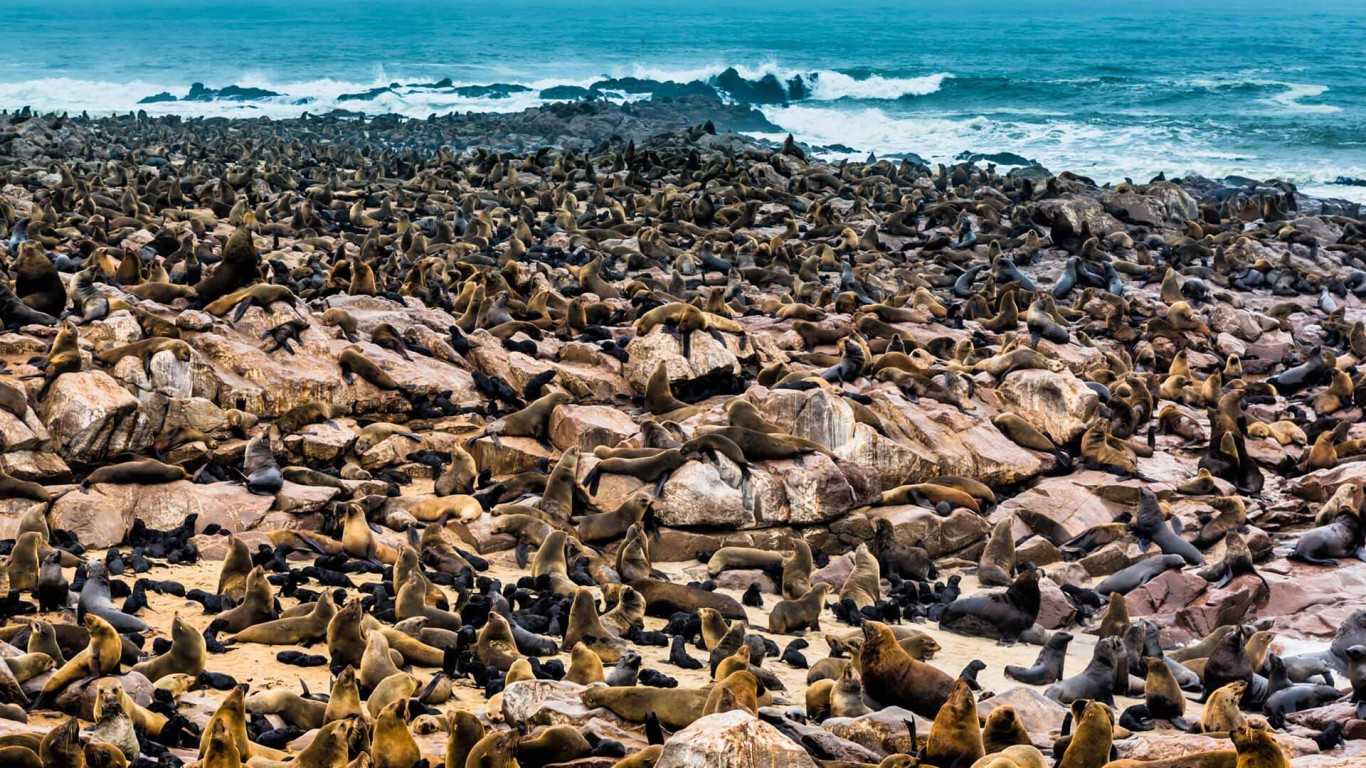
The Benguela Current supports extraordinary marine productivity, which in turn sustains massive Cape fur seal colonies along the coast. Cape Cross (120 km north of Swakopmund, accessible by road) is the most visited. Further north, the Mowe Bay colony and the Cape Fria colony (accessible only by fly-in) together number well over 100,000 seals.
Visiting the northern wilderness
The northern Skeleton Coast wilderness (between the Hoanib and Kunene rivers) is a private concession with strictly limited visitor numbers. A handful of small, ultra-luxury fly-in camps operate here — typically 6–8 guests maximum, with exclusive access to thousands of square kilometres of coast. Activities include walking on the beach among seal colonies, lion tracking with specialist guides, desert-adapted elephant encounters in the Hoanib River valley, and shipwreck exploration. Minimum stay is typically 3 nights.
Combine the Skeleton Coast with…
- Swakopmund — the southern end of the coast route and adventure base.
- Etosha — fly from the Skeleton Coast wilderness to Etosha; the classic northern Namibia circuit.
- Twyfelfontein — Damaraland rock art and desert elephant on the return.
Frequently asked questions about the Skeleton Coast
Can you drive the full Skeleton Coast?
The southern section (Ugabmund to Springbokwasser) has a gravel road accessible by self-drive permit. The northern section has no roads and is accessible only by chartered light aircraft.
Why is it called the Skeleton Coast?
From the whale and seal bones left on the beaches by 19th-century hunters, and the bones of sailors who died after surviving their shipwrecks in the waterless desert behind the surf.
Is the Skeleton Coast worth the cost of a fly-in?
For travellers seeking genuine wilderness, the lion tracking, shipwreck atmosphere and total absence of other tourists make the northern concession one of the most extraordinary safari experiences in Africa. The price reflects the cost of maintaining a lodge in a place with no road access.
Want to visit Skeleton Coast?
Get a free custom safari plan within 24 hours.
Skeleton Coast safari tours
Want to visit Skeleton Coast?
Get a free custom safari plan within 24 hours.
Best time to visit the Skeleton Coast
May to October — Dry season (best for fly-in safaris and wildlife)
The Benguela fog that characterises the coast operates year-round, but the dry season (May–October) is the most productive for wildlife and the most comfortable for travel. Desert-adapted lion are most reliably tracked in winter when they follow the seal colonies rather than dispersing inland. The northern wilderness concession camps are open during this period. Temperatures are cool to mild (15–22°C) and the light for shipwreck and coastal photography is at its most dramatic.
November to February — Cape fur seal breeding season
The seal breeding season peaks in November–December, making the Cape Cross colony (accessible year-round by road from Swakopmund) at its most spectacular. The northern wilderness concession lodges may have limited availability. The coastal fog is somewhat less dense in summer.
Bottom line: May to October for fly-in safaris and lion tracking. November to December for the seal breeding colony spectacle at Cape Cross.
Where to stay in Skeleton Coast
We'll recommend accommodation across all budget levels based on your dates and preferences.
Plan My Trip Browse All LodgesWant to visit Skeleton Coast?
Get a free custom safari plan within 24 hours.
Nearby destinations
 Namibia
 Namibia
 Namibia
 Namibia
 Namibia