Quick facts
Destinations
5 parks & reserves
Tour categories
0 safari styles
Tours available
5 packages
Climate
About Zimbabwe
About Zimbabwe
Zimbabwe is southern Africa's most underrated safari destination — a country with extraordinary wildlife, one of the world's natural wonders and some of the finest safari guides on the continent, hampered only by a decade of political and economic difficulty that reduced its tourist numbers without reducing the quality of what it offers. Those who visit Zimbabwe now find an extraordinary value proposition: world-class safari infrastructure in parks where the wilderness experience remains genuinely uncrowded.
Victoria Falls
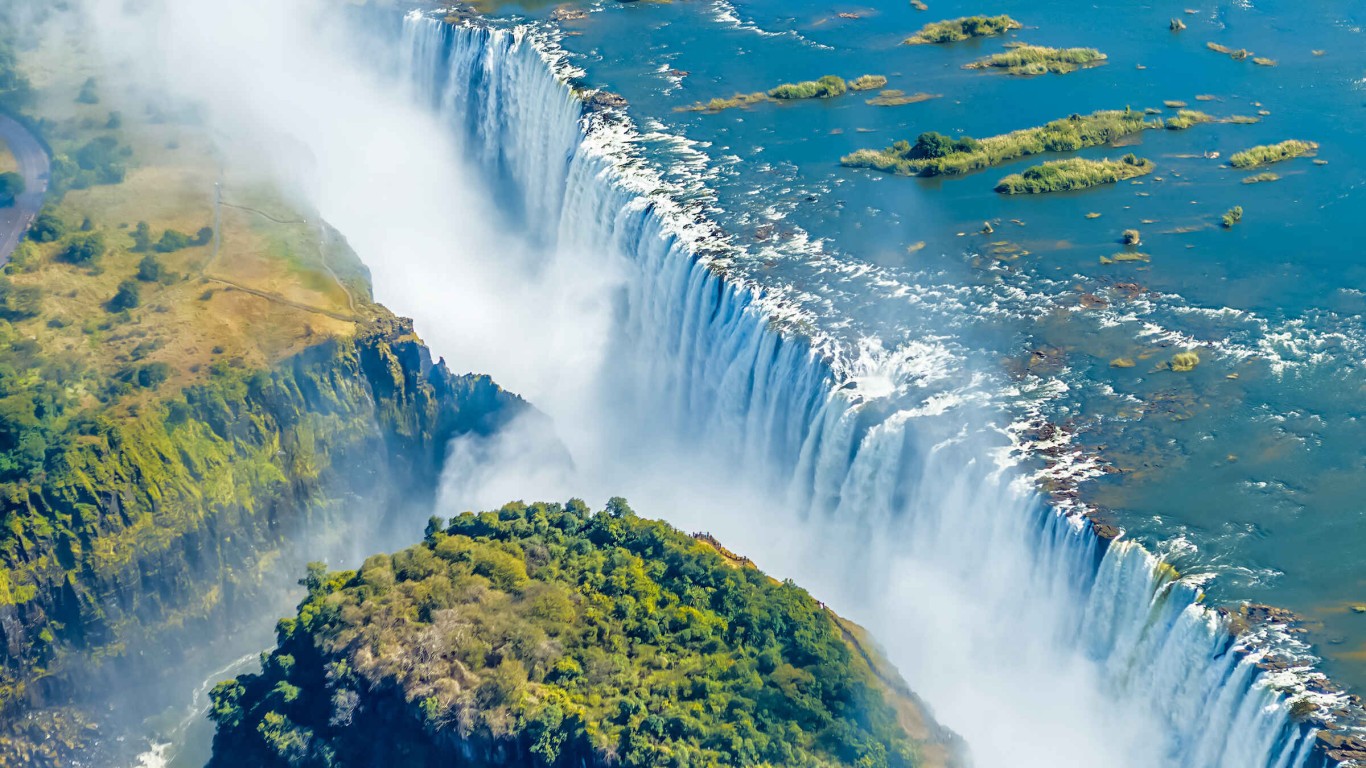
Victoria Falls — Mosi-oa-Tunya, the smoke that thunders — is the world's largest waterfall by combined width and height: 1,708 metres wide and up to 108 metres high, with a spray plume visible from 50 kilometres away. The falls sit on the border between Zimbabwe and Zambia; the Zimbabwean side offers the most complete view of the full width of the falls curtain, while the Zambian side gives the best view of the gorge below and the bridge that spans it.
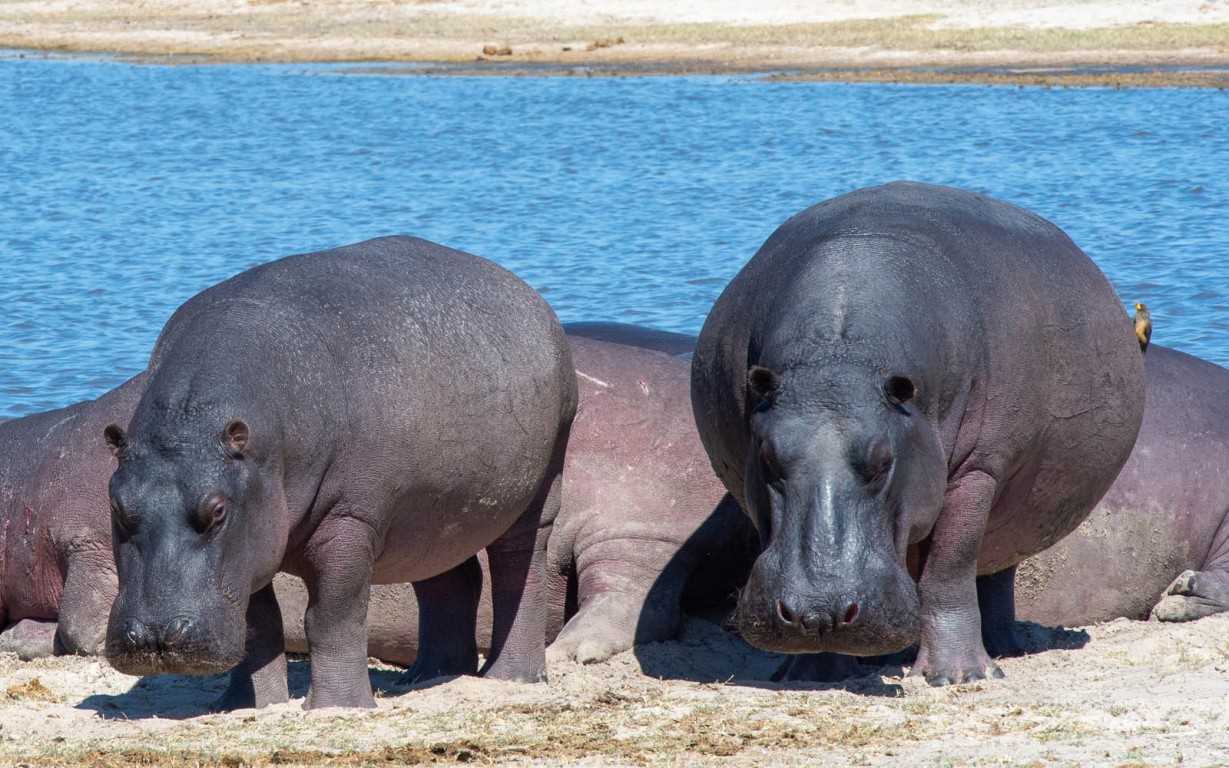
Victoria Falls town on the Zimbabwean side is a compact, functional tourist hub with a good range of accommodation, restaurants and activity operators. White-water rafting on the Zambezi's Grade 5 rapids below the falls, the gorge swing (111m free fall), bungee jumping from the 111m Victoria Falls Bridge and sunset river cruises on the upper Zambezi with hippo and elephant on the banks are the core activities.
Hwange National Park
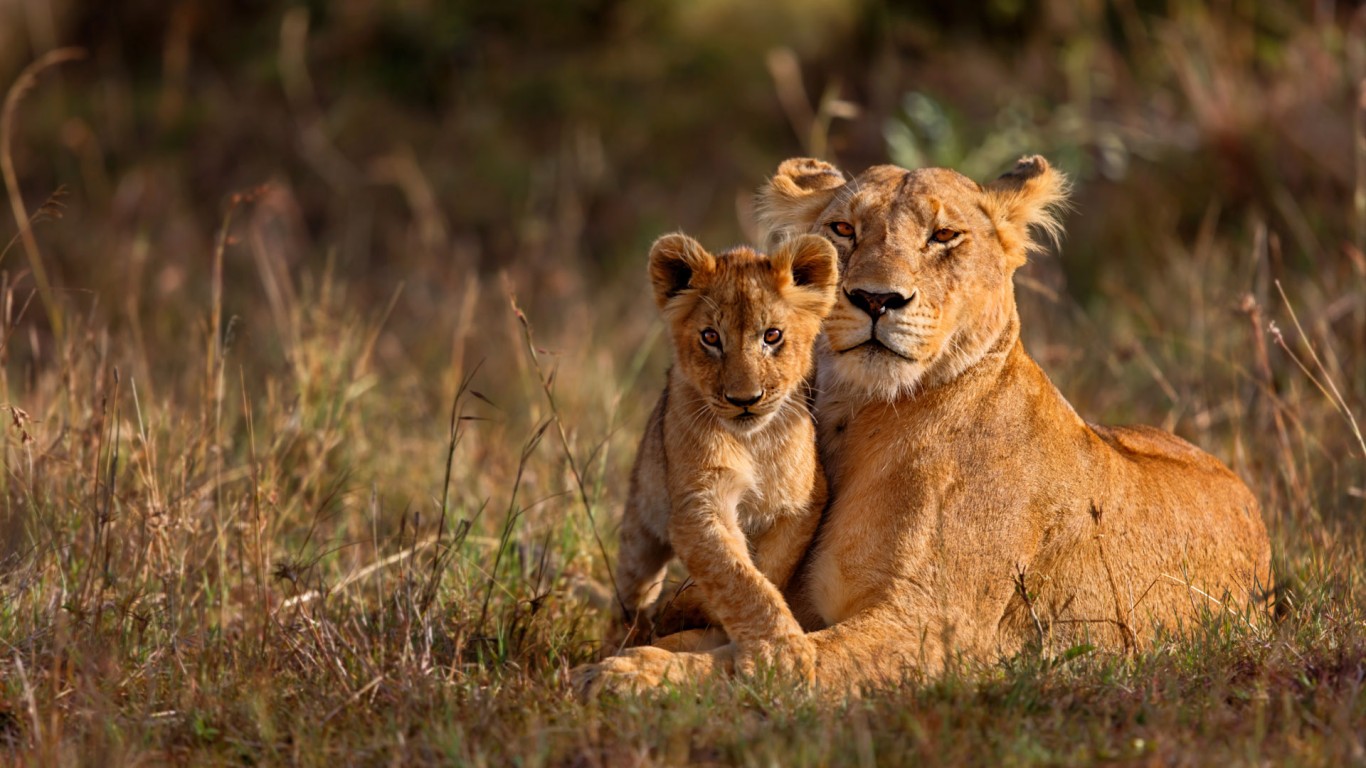
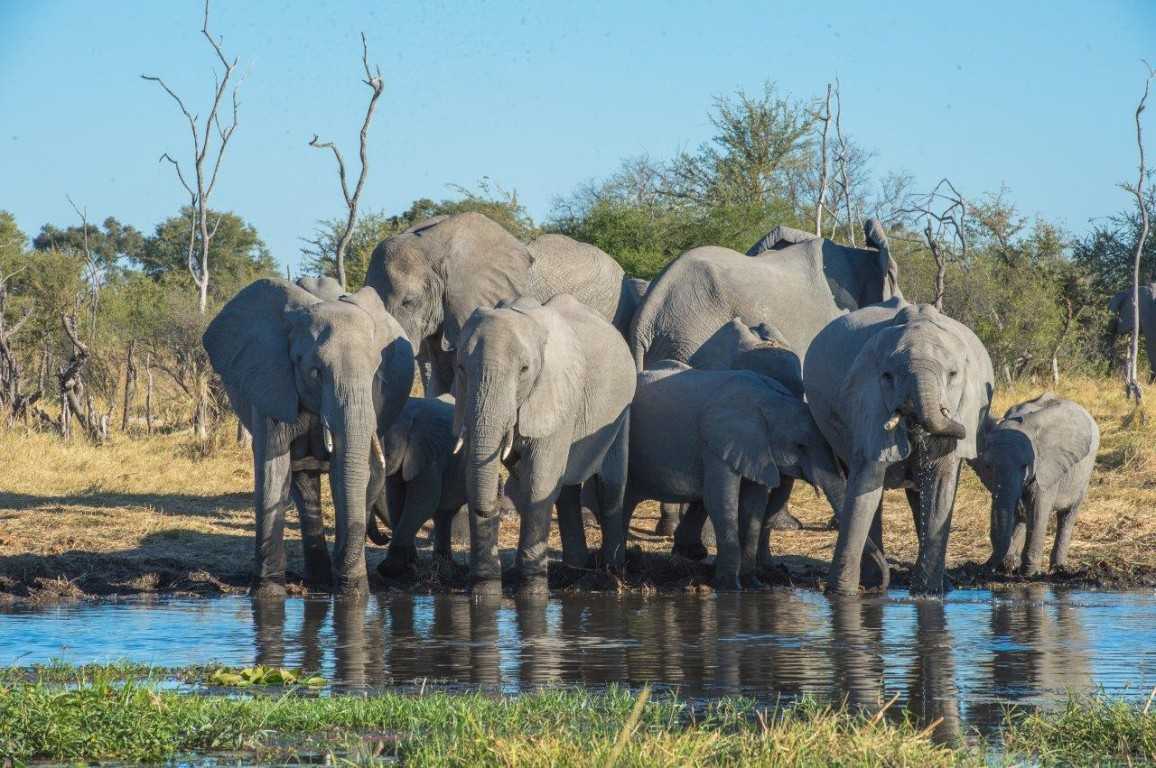
Hwange is Zimbabwe's largest national park — 14,651 sq km of dry acacia savanna and teak woodland in western Zimbabwe. The park's defining feature is its elephant population: approximately 45,000 to 50,000 animals, one of the largest concentrations in Africa. In the dry season, ZIMPARKS pumps water to maintain over 60 artificial water holes throughout the park, and the elephant herds — groups of 200 to 500 animals — arrive at these holes in processions that can last the entire day. Lion, wild dog, sable antelope, roan antelope and eland complete a wildlife profile among the richest in southern Africa. The private camps in Hwange's Linkwasha and Davison's areas offer some of the best-value luxury safari in Africa.
Mana Pools National Park
Mana Pools is a UNESCO World Heritage Site on the Zambezi River floodplain — a park famous for an approach to safari that has largely disappeared elsewhere in Africa: walking without armed rangers, in areas with lion, leopard, elephant and hippo, trusting the guide's knowledge rather than a rifle. Mana Pools' top guides are among the most skilled wildlife interpreters in southern Africa — able to approach elephant on foot and read animal behaviour with a precision that makes the Mana walking safari a genuinely different kind of experience from a game drive. The park's four permanent pools and the Zambezi floodplain scenery, with the Zambian escarpment visible across the river, make it among the most beautiful settings in southern Africa.
Matobo Hills
Matobo Hills National Park near Bulawayo is archaeologically extraordinary — over 3,500 documented sites of San rock art (some up to 13,000 years old) scattered across granite kopjes and caves throughout the park. White and black rhino tracking on foot is the park's primary safari activity; Matobo has the highest density of black rhino in Zimbabwe and encounters are reliably close on foot tracking. Cecil Rhodes is buried on the summit of Malindidzimu, with a panoramic view of the granite landscape that makes the site one of the most historically layered in the country.
Great Zimbabwe
Great Zimbabwe — the medieval capital of the Kingdom of Zimbabwe, built between the 11th and 15th centuries — is the largest ancient stone structure in sub-Saharan Africa outside Egypt. The dry stone walls, some 11 metres high, were built without mortar from locally quarried granite blocks fitted with extraordinary precision. The site gives Zimbabwe its name and represents the peak of the pre-colonial Zimbabwe culture, a sophisticated trading state that controlled the gold and ivory trade routes to the Indian Ocean coast. A UNESCO World Heritage Site since 1986.
Want to visit Zimbabwe?
Get a free custom safari plan within 24 hours.
All Zimbabwe destinations
 Zimbabwe

 Zimbabwe
  Zimbabwe
 Zimbabwe tour packages


Want to visit Zimbabwe?
Get a free custom safari plan within 24 hours.
Best time to visit Zimbabwe
Best time to visit Zimbabwe
May to October — Dry season (best for Hwange and Mana Pools)
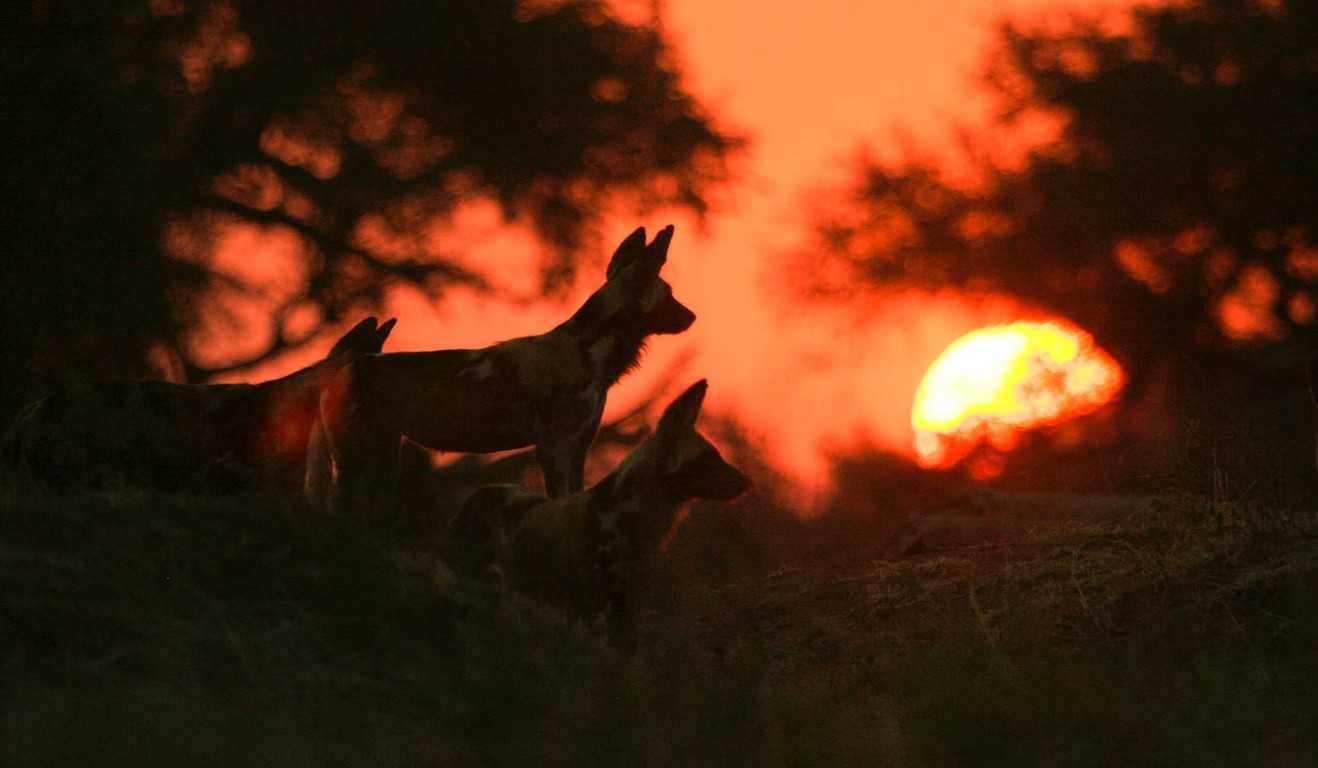
Zimbabwe's prime safari window. Hwange's artificial water holes reach their maximum elephant concentrations as seasonal sources dry up — herds of 200 to 500 animals visiting daily in August and September. Mana Pools is open May to November; walking safaris are most productive in the dry season when tracks are clear and animals are predictable at water. Victoria Falls is at lower water volume (May to October) which reduces the spray and gives clearer views of the full falls curtain from the Zimbabwean side. Wild dog denning (June to August) makes the dry season the most reliable window for this species.
February to April — Peak Victoria Falls volume
The Zambezi River is at maximum flood from February to April, fed by the upstream Zambian rainy season. Victoria Falls reaches its most dramatic volume — the spray plume rises 300 to 400 metres and can be seen from 50 km away. The viewing experience from the Zimbabwe side is spectacular but very wet (waterproof gear is needed on the main walkways). The falls are at their most famous and most imposing in this window. Game viewing in Hwange and Mana Pools is reduced as vegetation is lush and wildlife dispersed.
November to January — Green season and early summer
The start of Zimbabwe's rainy season. Hwange and Mana Pools turn green and newborn animals appear from November to January with associated predator activity. Falls volume begins rising. A good value window with lower lodge rates and fewer visitors. Mana Pools closes mid-November for the rainy season.
Zimbabwe weather & climate
Zimbabwe weather
Zimbabwe has a subtropical climate with a dry winter season (May to October) and a wet summer season (November to April). Altitude moderates temperatures significantly — Harare (1,490m) and Bulawayo (1,340m) are considerably cooler than the Zambezi Valley and Hwange lowveld.
Zambezi Valley and Hwange (low altitude, hot)
Victoria Falls and Hwange: October to March temperatures reach 35 to 42°C — extremely hot with high humidity in the rainy season. April to September: 20 to 32°C, dry and comfortable for game drives. Morning and evening game drives in the dry season are the most comfortable; midday heat is intense. Carry sunscreen, a wide-brimmed hat and stay hydrated throughout the day.
Harare and central plateau
Pleasant year-round at 1,490m altitude. Dry season (May to September): warm days (18 to 26°C) and cool nights (8 to 14°C). Rainy season (November to March): warm and humid (22 to 30°C) with daily afternoon thunderstorms typically clearing by evening.
Eastern Highlands
Zimbabwe's Eastern Highlands (Nyanga, Chimanimani, Mutare) at 1,500 to 2,592m are the country's coolest region — temperatures can approach 0°C on winter nights (June to August). The highlands receive higher rainfall than the rest of the country and have a green, almost temperate character unlike the lowveld savanna.
Getting to Zimbabwe
Robert Gabriel Mugabe International Airport (HRE) in Harare is Zimbabwe's main international hub with flights from Johannesburg (multiple daily), London (British Airways, via connections), Nairobi, Addis Ababa, Dubai and several African cities. Victoria Falls Airport (VFA) is the more convenient entry point for most safari visitors — it receives direct flights from Johannesburg (1.5 hours, multiple daily with Airlink and FlySafair), Nairobi, Addis Ababa and Cape Town (seasonal). Most international safari visitors fly directly to Victoria Falls rather than routing through Harare.
From Victoria Falls, Hwange National Park is 2 hours by road (or 30 minutes by charter). Mana Pools requires a charter flight from Victoria Falls (1.5 hours) or from Harare (1 hour). Matobo Hills is 5 hours from Victoria Falls by road or 1 hour from Bulawayo.
Victoria Falls sits on the Zimbabwe-Zambia border — the bridge between the two countries is open to tourists and moving between Victoria Falls town (Zimbabwe) and Livingstone (Zambia) is straightforward with the appropriate visas for both. Chobe National Park in Botswana is 2 hours by road from Victoria Falls, making a three-country combination easy to arrange.
Zimbabwe travel tips
Visa
Most nationalities can obtain a visa on arrival at Victoria Falls and Harare airports ($50 single entry, $75 double entry). A KAZA UniVisa ($50) covers both Zimbabwe and Zambia simultaneously — the best option for Victoria Falls visits that move between both countries. Citizens of USA, UK, EU, Canada, Australia and many others are eligible for KAZA UniVisa at the border. Check the current eligible nationality list at kazavisa.info before travel. E-visas are also available online at evisa.gov.zw.
Currency
Zimbabwe's official currency is ZiG (Zimbabwe Gold), introduced in 2024. In practice, USD is the currency of the tourist economy — all safari lodges, tour operators, park entry fees and major businesses quote and accept USD. Carry USD cash in small denominations; $1, $5 and $10 bills are the most useful. ATMs in Victoria Falls town dispense USD. Park entry fees (ZINARA/ZIMPARKS) are payable in USD.
Health
Malaria is present throughout Zimbabwe's lowveld and Zambezi Valley (Hwange, Mana Pools, Victoria Falls) from November to April. Prophylactics are recommended for safaris in these areas during the rainy season. The dry season (May to October) has significantly lower malaria risk but precautions are still advisable. Yellow fever vaccination is required if arriving from an endemic country. Travel insurance covering medical evacuation is essential.
Safety
Zimbabwe's safari areas and Victoria Falls are safe for international visitors. The political situation has been stable since 2017 and the safari infrastructure — lodges, guides, airstrips — is fully operational. Standard urban precautions apply in Harare and Bulawayo. Victoria Falls town is safe and tourist-friendly. Avoid political demonstrations and follow the standard advice applicable to any African city.
Want to visit Zimbabwe?
Get a free custom safari plan within 24 hours.
Where to stay in Zimbabwe
From budget tented camps to luxury lodges — we'll recommend accommodation that fits your dates, budget, and travel style.
Browse All Lodges