Quick facts
Wildlife
Lake Kivu is a meromictic lake — its lower layers are permanently stratified and hold extraordinary concentrations of dissolved methane and carbon dioxide, the legacy of sub-lake volcanic activity. The upper layers support tilapia and other freshwater fish. The lake shore forests hold colobus monkey, red-tailed monkey and a range of Albertine Rift forest birds. The adjacent Gishwati-Mukura National Park (east of Gisenyi) protects the last Rwandan population of chimpanzee outside Nyungwe.
Top activities
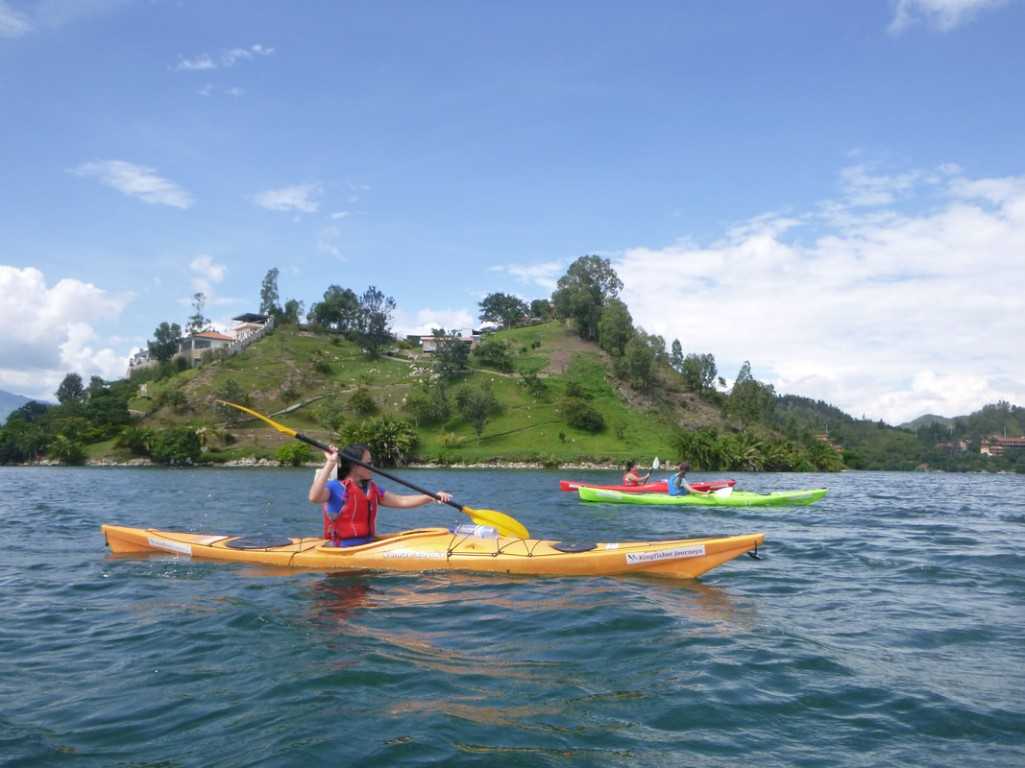
Island boat trips from Gisenyi and Kibuye — visiting Napoleon Island (the world's largest fruit bat colony at dusk, over 1 million bats), Amahoro Island and the Kibuye peninsula churches. Kayaking on the lake surface among volcanic hillsides. Swimming from rocky lakeside beaches in Gisenyi. Congo Nile Trail hiking — a 227 km trail along the lake's eastern shore from Gisenyi to Cyangugu. Cycling sections of the Congo Nile Trail between lakeside villages. Sunset boat cruise from Gisenyi or Kibuye. Visit to the Gishwati-Mukura National Park for chimp trekking.
About Lake Kivu
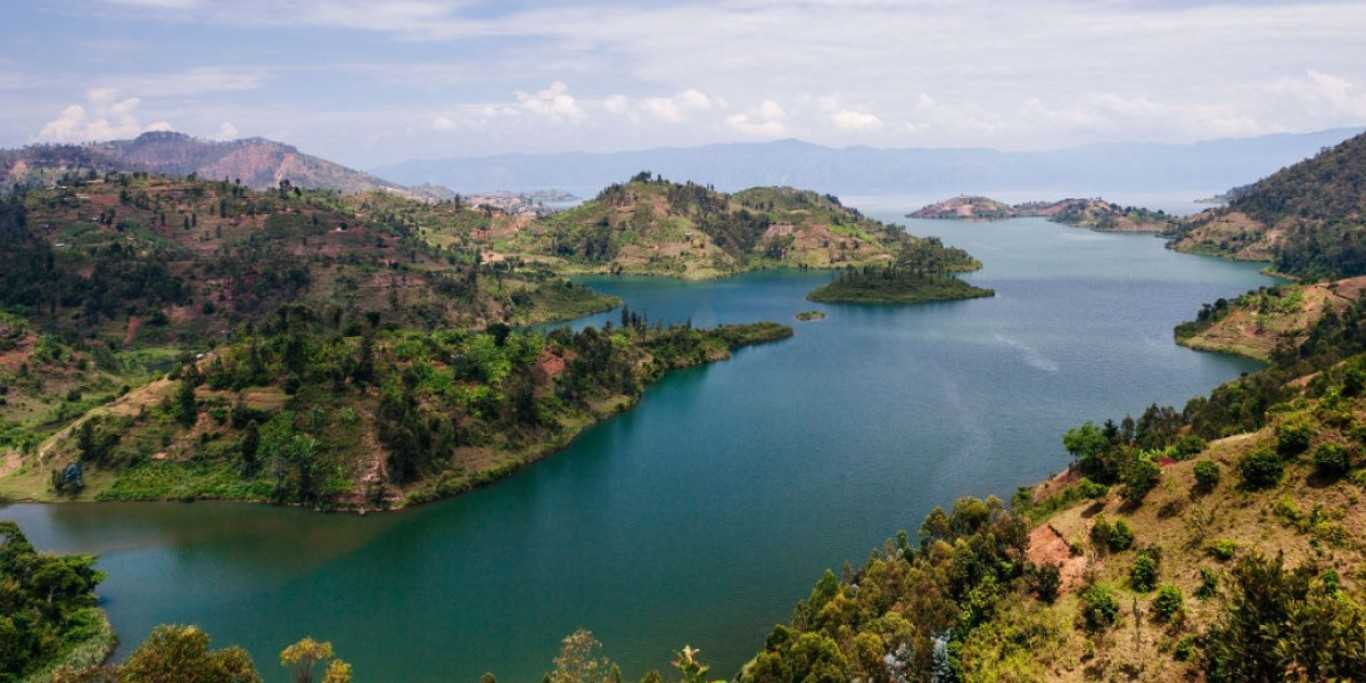
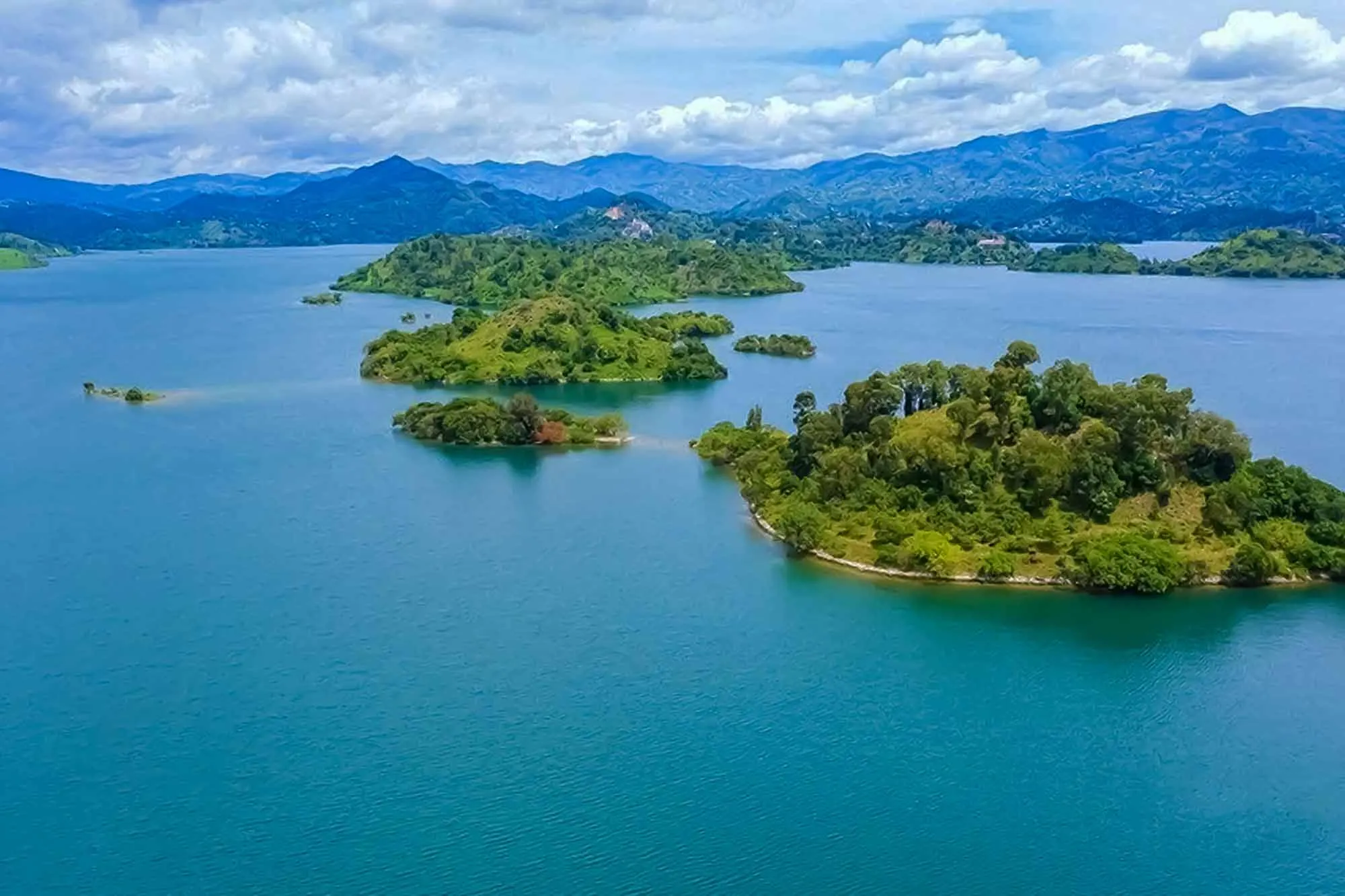
Lake Kivu sits at 1,460 metres above sea level between Rwanda to the east and the Democratic Republic of Congo to the west, its shores a succession of volcanic hillsides, papyrus bays and lakeside towns that feel completely unlike anywhere else in East Africa. It is one of the African Great Lakes — 2,700 square kilometres, 475 metres deep at its maximum — and it holds a geological secret that makes it genuinely unique among the world’s major lakes.
The lake’s lower layers contain extraordinary concentrations of dissolved methane and carbon dioxide, the result of sub-lake volcanic activity in the Virunga zone above it. Roughly 55 billion cubic metres of methane sit in solution beneath the surface — enough to power Rwanda’s entire electricity grid for decades. Rwanda is already extracting this methane commercially, one of the world’s only energy-from-lake-gas projects.
Where is Lake Kivu?
The lake runs along Rwanda’s entire western border with the DRC. Three Rwandan towns provide access: Gisenyi (Rubavu) in the north (2.5 hours from Kigali, gateway to Volcanoes National Park), Kibuye (Karongi) in the centre (3 hours from Kigali), and Cyangugu (Rusizi) in the south near the Nyungwe Forest entry point.
Napoleon Island
Off the coast near Kibuye, Napoleon Island hosts one of the world’s largest fruit bat colonies — over one million straw-coloured fruit bats roost in the island’s trees and pour out in a river of wings at dusk that takes 45 minutes to fully emerge. The boat trip from Kibuye pier takes 30 minutes; watching the colony lift off against the lake and volcanic skyline is one of Rwanda’s most extraordinary wildlife spectacles.
The Congo Nile Trail
A 227 km hiking and cycling trail running along the lake’s Rwandan eastern shore from Gisenyi in the north to Cyangugu in the south, the Congo Nile Trail passes through tea plantations, lakeside fishing villages, eucalyptus forest and volcanic ridgelines. The full trail takes 10–14 days on foot or 3–5 days by mountain bike. Individual sections can be done as day trips from any of the three lakeside towns.
Gisenyi beach
Rwanda’s most popular beach — a lakeside strip in Gisenyi with restaurants, bars, kayak hire and a sandy foreshore where Rwandans and visitors swim freely in the lake. No bilharzia risk (the lake water is too cold and deep), no crocodile (the lake holds none), no hippo in the swimming areas. One of the most pleasant freshwater swimming experiences in East Africa.
Combine Lake Kivu with…
- Volcanoes National Park — gorilla trekking is 45 minutes from Gisenyi.
- Nyungwe Forest — Cyangugu at the lake’s southern end is the Nyungwe gateway.
- Kigali — a 2.5-hour scenic drive east from Gisenyi.
Frequently asked questions about Lake Kivu
Is Lake Kivu safe to swim in?
Yes — the lake has no bilharzia, no hippos and no crocodiles in its deep, cold waters. The designated swimming areas in Gisenyi and Kibuye are safe and widely used.
Is the lake methane dangerous?
The dissolved gases are stable at depth and present no danger to surface swimmers or boat users. A limnic eruption (a sudden release of dissolved gas) is theoretically possible but has never occurred at Kivu in recorded history.
Can you cross to the DRC from Kivu?
The border crossing at Gisenyi/Goma exists but travel into eastern DRC carries significant security risks for most travellers. Check your government’s current travel advisory before any DRC entry consideration.
Want to visit Lake Kivu?
Get a free custom safari plan within 24 hours.
Lake Kivu safari tours
Want to visit Lake Kivu?
Get a free custom safari plan within 24 hours.
Best time to visit Lake Kivu
June to September — Long dry season (best for outdoor activities and Congo Nile Trail)
The dry season offers the most reliable conditions for boat trips, kayaking and the Congo Nile Trail. The lake is calm, the sky is clear and the volcanic hillsides glow green in the late-afternoon light. Napoleon Island bat colony viewing is excellent year-round but the drier months make the boat crossing most comfortable.
December to February — Short dry season (warm, clear, excellent swimming)
Warm and sunny with the lake at its calmest. The best window for swimming from the Gisenyi beach and for cycling the southern sections of the Congo Nile Trail. Fewer visitors than June–September.
March to May — Long rains (lush but challenging for trail activities)
Heavy rains make the Congo Nile Trail very muddy in sections. Boat trips and lake swimming remain possible on rain-free mornings. The landscape is extraordinarily lush.
Bottom line: June to September and December to February for the most complete Lake Kivu experience.
Where to stay in Lake Kivu
We'll recommend accommodation across all budget levels based on your dates and preferences.
Browse All LodgesWant to visit Lake Kivu?
Get a free custom safari plan within 24 hours.