Quick facts
Wildlife
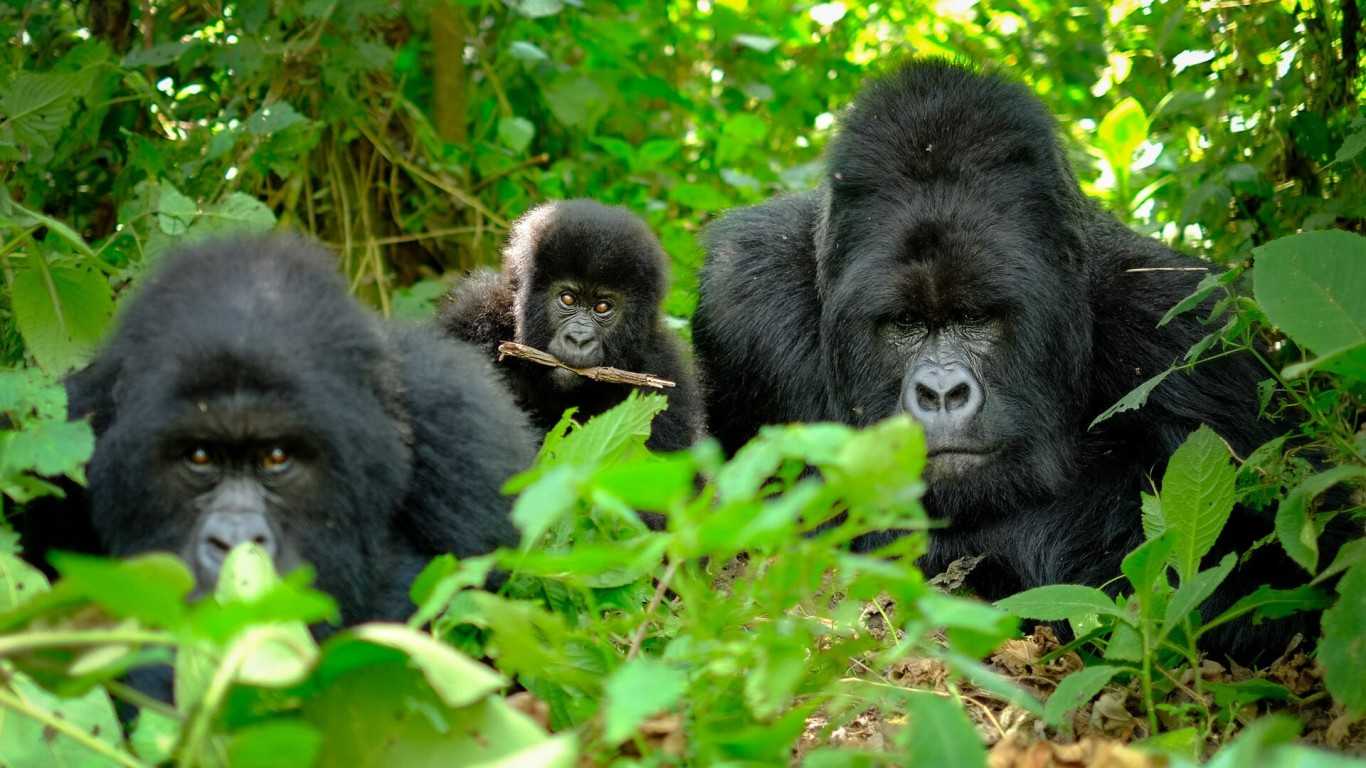
Volcanoes National Park is home to approximately 400 of the world's 1,000 remaining mountain gorillas, organized into multiple habituated and unhabituated family groups. Ten gorilla families are currently open to trekking. The park also holds the golden monkey — an endemic subspecies of blue monkey found only in the Virunga highlands and Nyungwe. Other mammals include forest buffalo, black-fronted duiker, olive baboon, side-striped jackal and spotted hyena on the forest edge. Over 180 bird species, including 16 Albertine Rift endemics.
Top activities
Gorilla trekking — one permit per person per day (USD 1,500 in 2026), limited groups of 8, one hour with a gorilla family. Golden monkey tracking — a less expensive and highly rewarding activity in the bamboo zone. Dian Fossey tomb and Karisoke Research Centre hike — a steep 3-hour forest trail to the site of Fossey's camp and grave. Mount Bisoke crater hike — 5–6 hours return to the volcanic crater rim with a crater lake. Iby'iwacu Cultural Village visit — Batwa community cultural experience. Twin Lakes (Ruhondo and Burera) boat trip below the park.
About Volcanoes National Park
In 1967, an American zoologist named Dian Fossey hiked into the Virunga volcanoes of northwestern Rwanda and began the study that would change our understanding of mountain gorillas — and ultimately cost her her life. The camp she established at Karisoke, the families she habituated and named, and the protection she fought for with increasingly desperate intensity are the foundation of everything that Volcanoes National Park is today. Without Fossey, the mountain gorilla might not have survived at all.
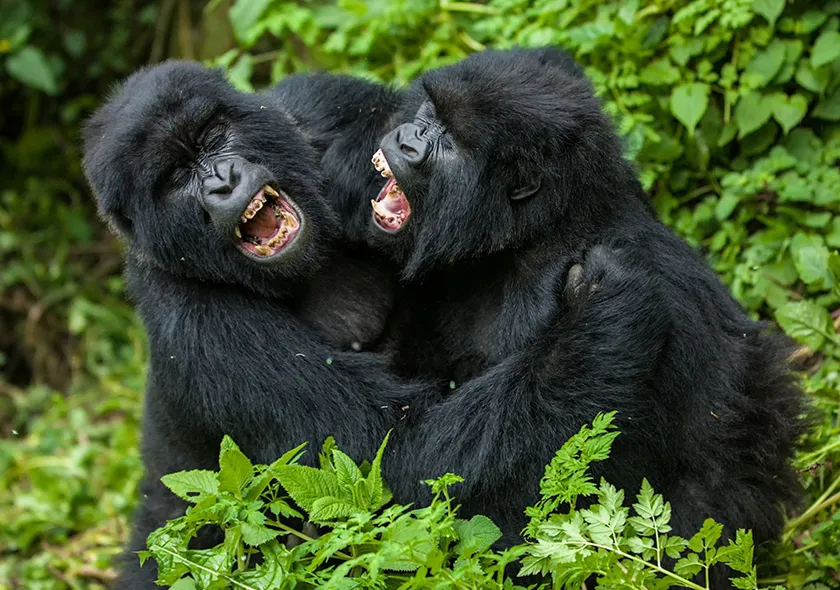
Today the park protects approximately 400 mountain gorillas across the Rwanda section of the Virunga Massif — a chain of dormant and active volcanoes straddling the borders of Rwanda, Uganda and the DRC. Ten gorilla families are habituated for trekking, each visited by a maximum of eight people for exactly one hour per day. That hour — sitting in the dense Hagenia forest as a 200kg silverback moves around you with an authority that makes the ground feel slightly insufficient — is one of the most significant wildlife experiences available anywhere on Earth.
Where is Volcanoes National Park?
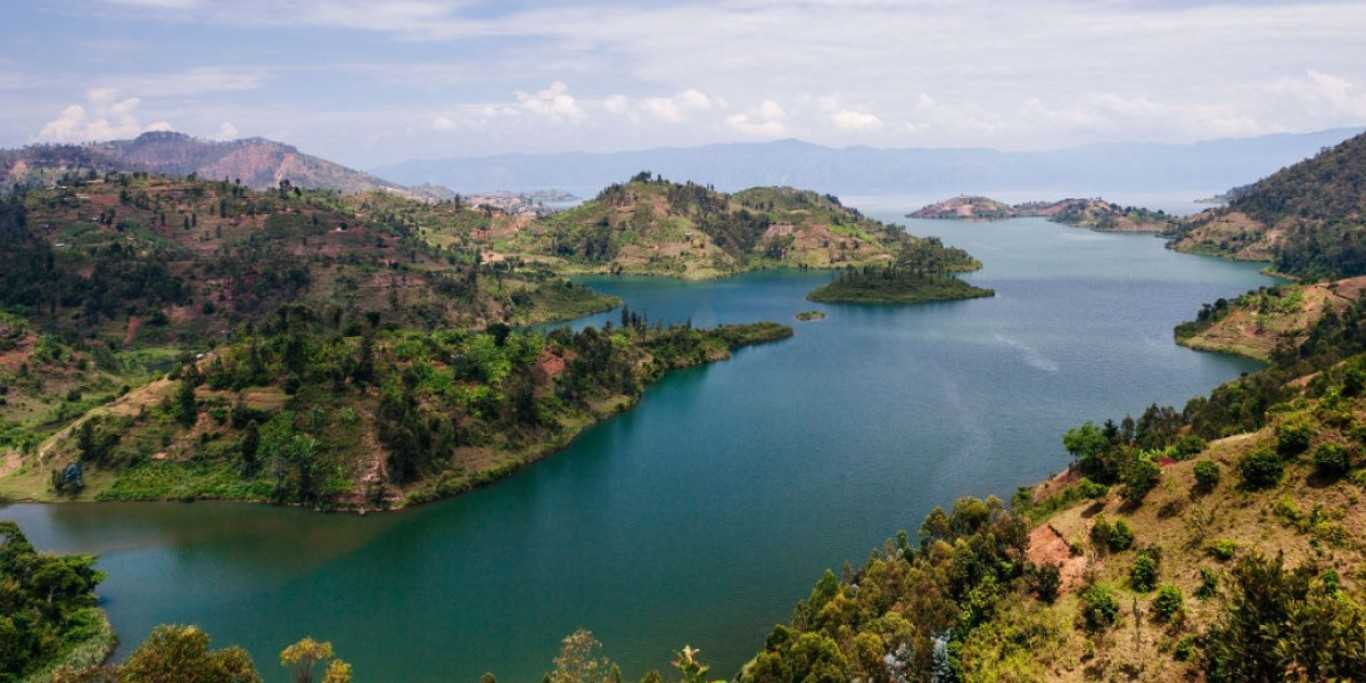
The park is in northwestern Rwanda, near the town of Musanze (Ruhengeri), approximately 110 km from Kigali by road (2–2.5 hours). The park shares boundaries with Uganda’s Bwindi Impenetrable Forest and Mgahinga Gorilla National Park to the north, and DRC’s Virunga National Park to the west. Together they form the transfrontier greater Virunga Conservation Area.
Gorilla trekking: what to expect
Trekking starts at the park headquarters at 07:00 with a briefing and allocation to one of the gorilla families. Groups of maximum eight visitors are accompanied by a lead guide, tracker team and armed ranger. The trek itself ranges from 30 minutes (if the family has spent the night close to the forest edge) to 4–6 hours of steep forest hiking if they have moved deep into the mountain.
Once with the family, you have exactly one hour of observation time. Phones and cameras can be used; flash is prohibited. You stay at a minimum distance of 7 metres (though gorillas regularly ignore this protocol and approach on their own terms). The one hour is not negotiable — it exists to protect the gorillas from excessive stress and disease transmission.
The permit
Gorilla trekking permits in Rwanda cost USD 1,500 per person as of 2026. The high cost is a deliberate conservation tool — it limits visitor numbers while generating substantial revenue for park management and community benefit. Book through Rwanda Development Board or a licensed operator. Permits sell out months in advance for the June–September dry season. Book 6–12 months ahead for peak dates.
Golden monkey tracking
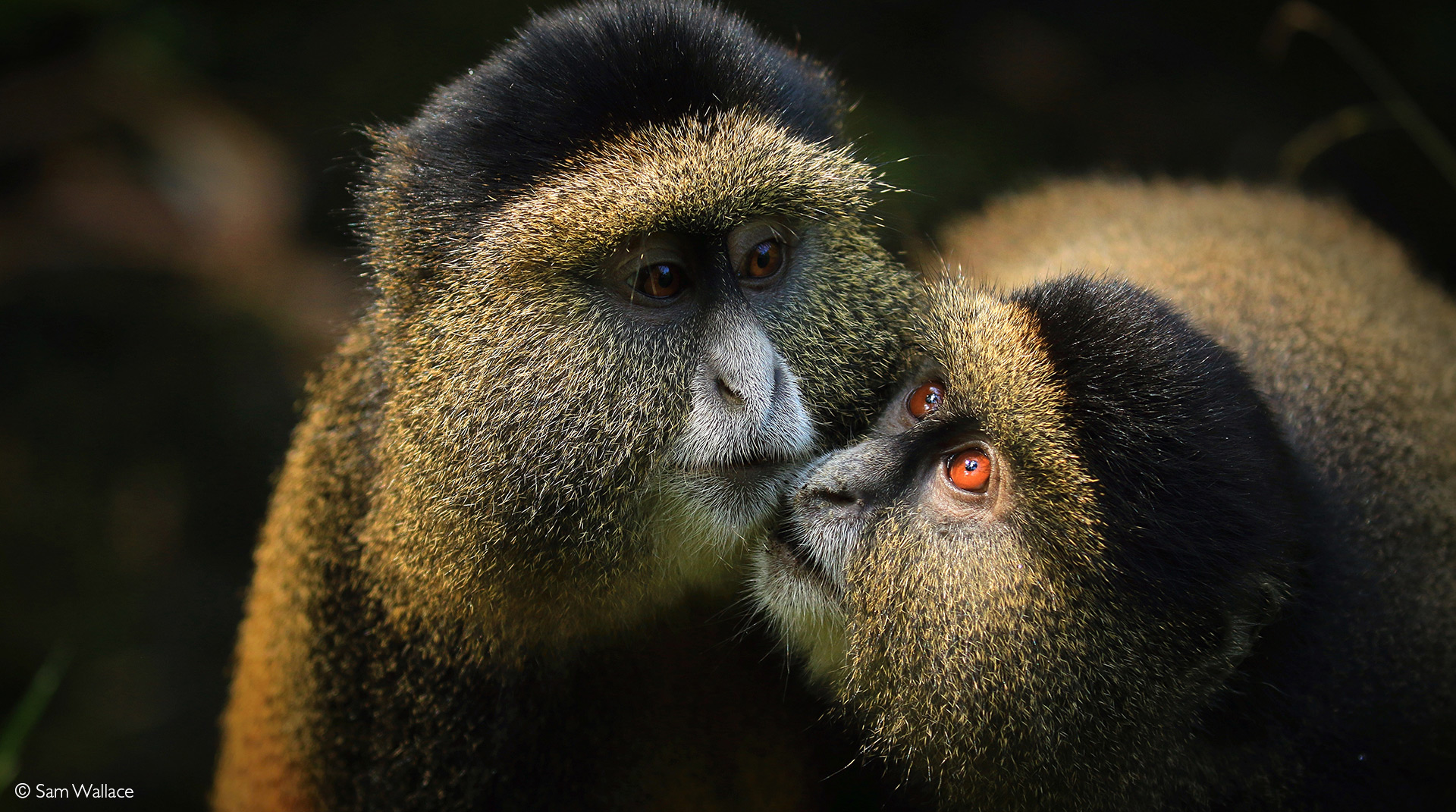
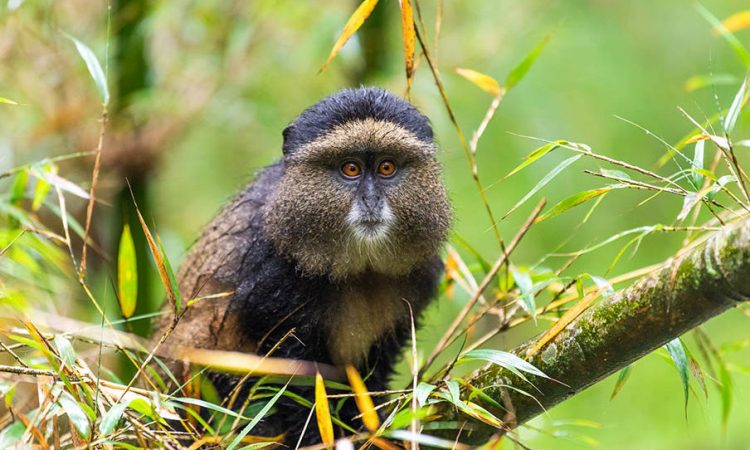
The golden monkey (Cercopithecus kandti) is a strikingly coloured endemic of the Virunga highlands — a subspecies of blue monkey with a vivid gold-orange patch on its back. Two habituated groups in the park’s bamboo zone can be tracked daily, with a permit significantly cheaper than gorilla trekking. The experience is joyful and frenetic — golden monkeys move fast, feed noisily and interact constantly. An excellent activity for days when you have a gorilla trek scheduled in the afternoon.
The Dian Fossey hike
A 3-hour steep trail from the forest edge leads to the site of the Karisoke Research Centre, established by Fossey in 1967, and to her grave alongside gorilla skeletons poached during her lifetime. The hike passes through old-growth Hagenia forest draped in old man’s beard lichen. It is physically demanding but historically profound.
Combine Volcanoes NP with…
- Kigali Genocide Memorial — always an essential part of any Rwanda itinerary.
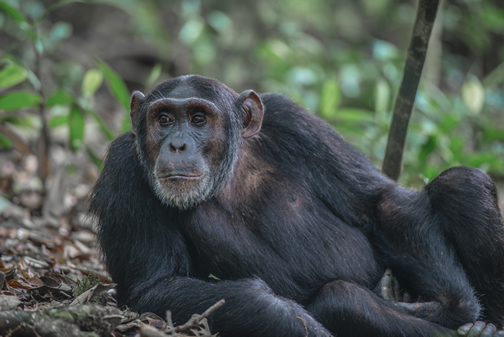
- Nyungwe Forest — chimpanzee trekking in the south of Rwanda.
- Akagera National Park — the Big Five savanna contrast in eastern Rwanda.
- Uganda’s Bwindi Impenetrable Forest — additional gorilla trekking across the border.
Frequently asked questions about Volcanoes NP
How difficult is gorilla trekking?
Moderate to strenuous. The trek involves steep forested terrain at 2,500–3,000 m with no established path through dense undergrowth. Fit walkers manage comfortably; those with limited mobility can sometimes request the Susa or Kwitonda families whose ranges tend to be lower. Porters are available (and provide meaningful community income) — hire one.
Is gorilla trekking in Rwanda or Uganda better?
Rwanda is more expensive (USD 1,500 vs ~USD 700 in Uganda) but the infrastructure, camp quality and Kigali airport connections give it an overall smoother experience. Uganda offers the same gorilla quality at lower cost. Many serious wildlife travellers do both on a combined Great Apes circuit.
What do I wear for gorilla trekking?
Long-sleeved shirt, long trousers (tucked into socks), waterproof hiking boots, rain jacket and gloves for gripping vegetation. Garden gloves work better than trekking gloves in the forest understorey.
Want to visit Volcanoes National Park?
Get a free custom safari plan within 24 hours.
Volcanoes National Park safari tours

9-Day Rwanda Gorilla Trekking and Tanzania Safari - Serengeti and Ngorongoro Crater
Want to visit Volcanoes National Park?
Get a free custom safari plan within 24 hours.
Best time to visit Volcanoes National Park
June to September — Long dry season (best trekking conditions)
The dry season is the most practical window for gorilla trekking. Trails through the dense bamboo and Hagenia forest are less muddy and more navigable — important because the trek can range from 30 minutes to 6+ hours depending on where the gorilla family has moved. Clear weather also gives better photography conditions inside the forest. Bisoke and Karisimbi hiking routes are at their safest. The busiest and most expensive period for camp accommodation — book gorilla permits well in advance (often 3–6 months ahead).
December to February — Short dry season (good trekking, lower demand)
A strong alternative window. Trails are drier than the wet season, permits are easier to secure than June–September, and camp rates are somewhat lower. Mountain gorillas are present year-round — the family groups do not migrate and trekking is available every day of the year.
March to May — Long rains (muddy trails, atmospheric forest)
The long rains make the forest trails very muddy and physically demanding. Permits are available and gorilla encounters are just as rewarding — the gorillas do not care about rain. An excellent low-season value window for travellers who are fit and don’t mind wet conditions. Permits are easiest to obtain in this period.
October to November — Short rains (transitional, moderate conditions)
Brief rains, moderate trail conditions and reasonable permit availability. A workable window that doesn’t have the extreme conditions of either the dry season or the long rains.
Bottom line: June to September for the finest trekking conditions. December to February for good trekking with easier permit access. Gorilla encounters are exceptional in any season.
Where to stay in Volcanoes National Park
We'll recommend accommodation across all budget levels based on your dates and preferences.
Browse All LodgesWant to visit Volcanoes National Park?
Get a free custom safari plan within 24 hours.