
Quick facts
Wildlife
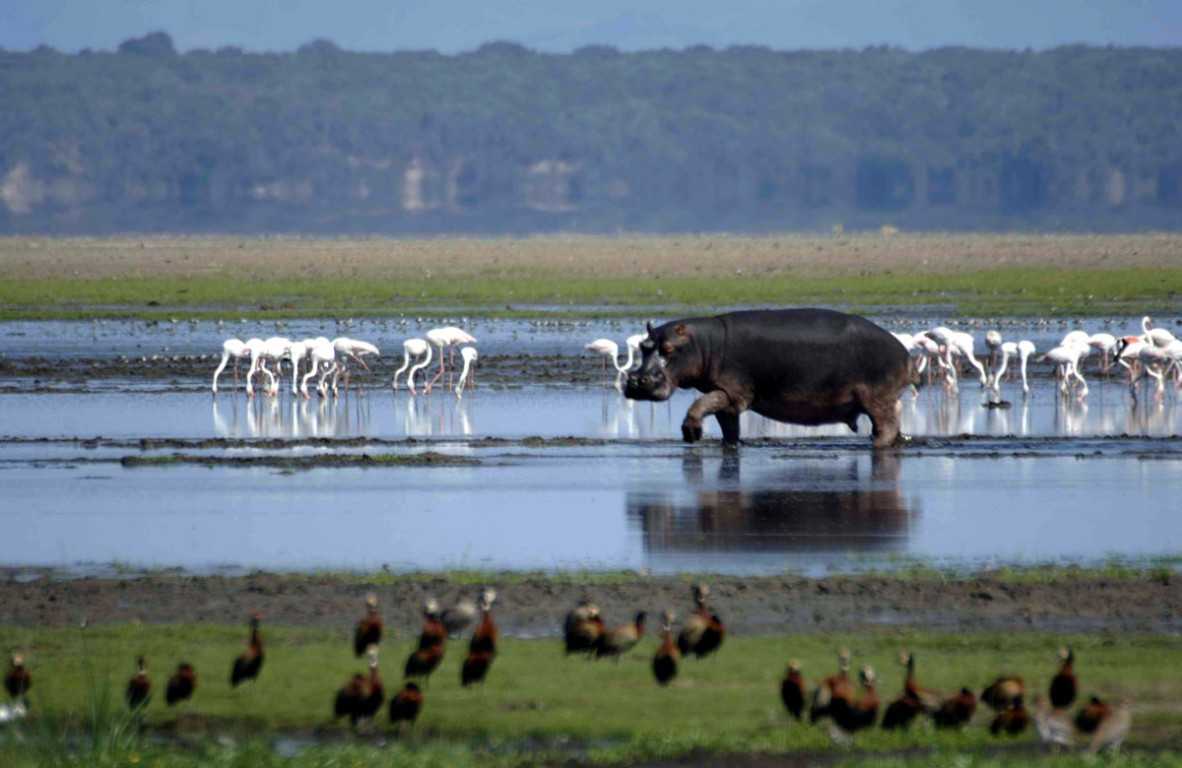
iSimangaliso holds Africa's largest estuarine system (Lake St Lucia). The lake supports Africa's largest hippo population (around 800 animals) and massive Nile crocodile concentration. Leatherback and loggerhead turtles nest on the iSimangaliso Coastal Forest beaches from November to January — the southernmost nesting site for leatherbacks in the world. The marine reserve holds dugong (rare), whale shark (seasonal), humpback whale (June–December), bottlenose dolphin, green turtle and pristine coral reefs with 1,200 fish species. Over 530 bird species recorded.
Top activities
Hippo and crocodile boat safari on Lake St Lucia — the park's most popular activity. Leatherback turtle nesting tours (November to January) — guided night walks on the beach to observe 1.5-tonne turtles laying eggs. Snorkelling and diving on the Sodwana Bay coral reefs — rated among Africa's best. Whale shark snorkelling at Sodwana Bay (November to March). Humpback whale watching offshore (June–December). 4WD game drive along the iSimangaliso Coastal Forest strip for reedbuck, red duiker and spotted hyena. Birdwatching at Charter's Creek for pelican, fish eagle and pink-backed pelican.
About iSimangaliso Wetland Park, KwaZulu-Natal
iSimangaliso means “miracle and wonder” in Zulu, and the name was chosen carefully. South Africa’s first UNESCO World Heritage Site (1999) protects 332,000 hectares of KwaZulu-Natal coastline where eight distinct ecosystems interlock in a way found nowhere else on the continent: coral reef meets tropical forest meets hippo lake meets sea turtle beach meets coastal dune meets freshwater swamp meets savanna. The result is a park of extraordinary biodiversity where you can snorkel on pristine reef in the morning, watch hippos from a boat in the afternoon and observe a leatherback turtle laying eggs on the beach at midnight.
Formerly known as the Greater St Lucia Wetland Park, iSimangaliso covers the coastline from the Mozambique border in the north to the Tugela River mouth in the south, anchored by Africa’s largest estuarine system — the St Lucia Estuary, which connects a complex of lakes, rivers and wetlands to the Indian Ocean through a narrow mouth at St Lucia town.
Where is iSimangaliso?
The park is on KwaZulu-Natal’s north coast, 300 km north of Durban. The main town is St Lucia at the estuary mouth, 3.5 hours by road from Durban. The northern sections (Sodwana Bay, Kosi Bay) are accessible only by 4WD vehicle or charter light aircraft.
Lake St Lucia hippo and crocodile safari
The most popular activity in the park is a 2-hour boat safari on the estuary from St Lucia town. The estuary holds approximately 800 hippos — one of Africa’s largest lake hippo populations — and hundreds of Nile crocodiles. The boat positions beside hippo pods at close range, drifts past basking crocodiles and pauses at the bird-rich shorelines where pelicans, herons and fish eagles congregate. An essential iSimangaliso experience and very different from the marine activities in the north.
The leatherback turtles
Between November and January, leatherback turtles — the world’s largest reptile, reaching 1.5 tonnes in weight — haul themselves up the remote wilderness beaches north of St Lucia at night to dig nests and lay approximately 100 eggs each. The iSimangaliso beaches are the southernmost regular nesting site for leatherbacks in the world, and the experience of sitting quietly as a creature that has barely changed in 100 million years completes its nesting cycle is genuinely profound.
Guided turtle tours depart late evening and involve a 4WD drive along the beach to find nesting females. Numbers vary year to year; iSimangaliso Conservation Trust rangers monitor the population nightly.
Sodwana Bay: the reef
Sixty kilometres north of St Lucia, Sodwana Bay is South Africa’s most popular dive destination and one of the world’s southernmost coral reef systems. The Sodwana reefs — Seven Mile, Five Mile, Two Mile and Quarter Mile — support over 1,200 fish species alongside hard and soft coral, green sea turtle, dolphin, shark and seasonal whale shark. Non-divers can snorkel the shallower areas or join glass-bottom boat trips.
Combine iSimangaliso with…
- Durban — 3.5 hours south; combine the wetland with the Golden Mile beach.
- Drakensberg — mountains and coast in one KwaZulu-Natal trip.
- Kruger — the Big Five extension, 4–5 hours north by road.
Frequently asked questions about iSimangaliso
When is the best time to see leatherback turtles?
Nesting peaks in November and December. Hatching begins 65 days after laying, so December to February is when hatchlings emerge and scramble to the sea.
Can you swim in the estuary?
No — the estuary mouth beach at St Lucia is theoretically swimmable but the hippos and crocodiles make it inadvisable. The designated swimming beaches are the ocean beaches east of the estuary mouth.
Is a 4WD necessary for iSimangaliso?
For St Lucia town and standard activities: no. For the northern sections (Sodwana, Kosi Bay, Cape Vidal beach access): yes, 4WD is required.
Want to visit iSimangaliso Wetland Park, KwaZulu-Natal?
Get a free custom safari plan within 24 hours.
iSimangaliso Wetland Park, KwaZulu-Natal safari tours
Want to visit iSimangaliso Wetland Park, KwaZulu-Natal?
Get a free custom safari plan within 24 hours.
Best time to visit iSimangaliso
November to February — Turtle nesting season (iconic iSimangaliso experience)
This is iSimangaliso’s most remarkable seasonal event. Leatherback turtles — the world’s largest reptile at up to 1.5 tonnes — haul themselves up the remote beaches north of St Lucia at night to nest. Loggerhead turtles nest simultaneously in much larger numbers. Guided night walks to witness nesting are one of the most unforgettable experiences in South African wildlife. Book through registered operators; walking independently on nesting beaches is prohibited.
June to December — Whale season (marine wildlife at its best)
Humpback whales use iSimangaliso’s coastal waters as a calving area from June through December. Whale watching boat trips from St Lucia and Sodwana Bay are most productive in August–October. Whale sharks arrive seasonally in the Sodwana area from November.
Year-round — Hippo and croc safaris
The Lake St Lucia hippo and crocodile boat safari is outstanding in every month. The lake environment is productive for wildlife year-round; water levels are highest after the summer rains and lowest in late winter.
Bottom line: November to January for turtle nesting. June to December for whales. Year-round for hippos, crocs and birding.
Where to stay in iSimangaliso Wetland Park, KwaZulu-Natal
We'll recommend accommodation across all budget levels based on your dates and preferences.
Browse All LodgesWant to visit iSimangaliso Wetland Park, KwaZulu-Natal?
Get a free custom safari plan within 24 hours.
Nearby destinations
 South Africa
 South Africa
 South Africa
 South Africa