
Quick facts
Wildlife
Johannesburg and Pretoria are urban environments with no large wildlife, but they are gateways to exceptional safari destinations. The Johannesburg Zoo and National Zoological Gardens in Pretoria are research institutions rather than prime visitor experiences. The Walter Sisulu National Botanical Garden in Johannesburg has a resident pair of Verreaux's eagles that nest annually on the cliff face. The Rietvlei Nature Reserve south of Pretoria holds hippo, rhino, giraffe and more in a 3,700-hectare reserve just 20 km from the city centre.
Top activities
Apartheid Museum (Johannesburg) — South Africa's finest historical museum, covering apartheid from its ideological roots to liberation. Soweto township tour — Vilakazi Street, Orlando Towers, Hector Pieterson Memorial and the neighbourhood where both Mandela and Desmond Tutu lived. Constitution Hill — the former prison complex now housing South Africa's Constitutional Court. Cradle of Humankind UNESCO site (45 minutes from Jo'burg) — fossil hominid site and Maropeng visitor centre. Sandton City and Rosebank mall areas for urban dining and shopping. Pretoria Union Buildings and Jacaranda Avenue spring bloom (October).
About Johannesburg and Pretoria, Gauteng
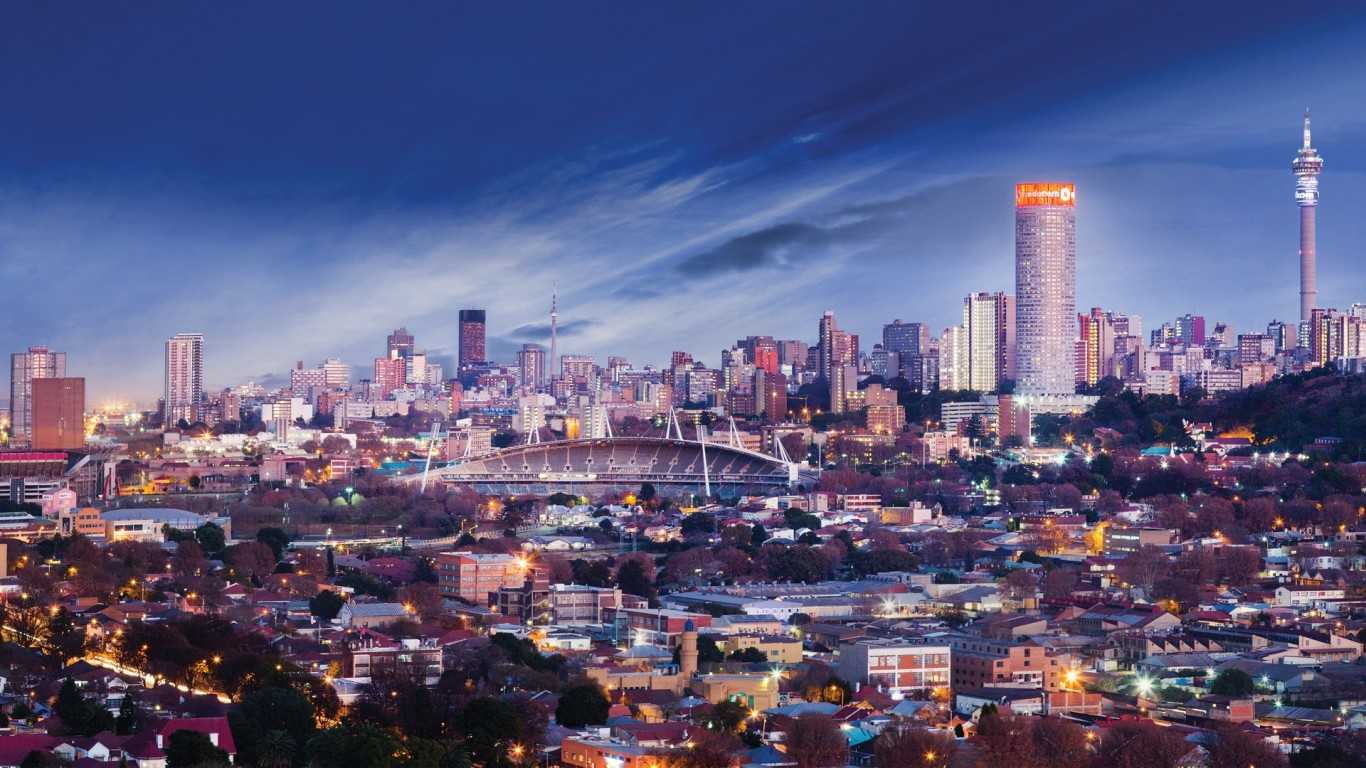
Most international visitors to Johannesburg spend as little time as possible in the city, treating OR Tambo International Airport as a transit hub and heading straight to Kruger, Cape Town or the Garden Route. This is understandable but wasteful. Johannesburg has two of the finest history museums in Africa, one of the world’s most significant hominid fossil sites on its doorstep, and a cultural neighbourhood — Soweto — that is as important to understanding modern South Africa as anything in the country.
Pretoria, South Africa’s administrative capital and Johannesburg’s twin city 55 km to the north, is calmer, greener and famous in October for the 70,000 purple jacaranda trees that erupt simultaneously across its suburbs.
The Apartheid Museum
This is the one attraction in Johannesburg that no visitor with any interest in South Africa’s history should skip. The Apartheid Museum traces the ideological origins, implementation, resistance and eventual collapse of apartheid through photographs, film footage, documents and reconstructed environments. The entrance is deliberately segregated — visitors are assigned randomly to “White” or “Non-White” entry gates and experience the opening section of the museum through the prism of their randomly assigned race. It is a small gesture that lands with surprising force.
Allow 2–3 hours. The museum is on the southern edge of Johannesburg near Gold Reef City; Uber or taxi from the CBD takes 25 minutes.
Soweto
South Western Townships — Soweto — was the centre of anti-apartheid resistance, the neighbourhood where Nelson Mandela and Archbishop Desmond Tutu both lived (the only street in the world to have housed two Nobel Peace Prize winners), and the site of the 1976 Soweto Uprising, in which schoolchildren marching against Afrikaans-language instruction were shot by police.
Key stops on a Soweto tour:
- Hector Pieterson Memorial and Museum — documenting the 1976 uprising; the photograph of 12-year-old Hector Pieterson being carried after being shot became one of apartheid’s defining images.
- Vilakazi Street — the street of Mandela and Tutu; Mandela House (now a museum) is on this street.
- Orlando Towers — two decommissioned power station cooling towers, one now housing a bungee jump, both painted in vivid murals by local artists.
- Regina Mundi Church — where anti-apartheid meetings were held when all other venues were banned; bullet holes from police raids are still visible in the roof.
Constitution Hill
In central Johannesburg, the former Old Fort Prison Complex — which held both Mahatma Gandhi and Nelson Mandela at different points — has been converted into the precinct housing South Africa’s Constitutional Court. The court’s architecture deliberately incorporates bricks from the demolished prison as a statement about transformation. The Museum on the hill documents the prison history and the constitution drafting process. Free guided tours run daily.
Cradle of Humankind
Forty-five kilometres northwest of Johannesburg, the Cradle of Humankind is a UNESCO World Heritage Site containing the richest concentration of hominid fossils in the world — over 40% of all known human ancestor fossils have been found in the dolomite caves of this area. The Maropeng Visitor Centre is a well-designed museum covering human evolution from 3.5 million years ago; Sterkfontein Caves offer guided tours of the actual excavation sites.
Pretoria highlights
- Union Buildings — the seat of South Africa’s government, designed by Herbert Baker; the gardens in front hold a Nelson Mandela statue.
- Jacaranda season (October) — the city turns purple.
- National Zoological Gardens — one of Africa’s largest and best-maintained zoos.
- Freedom Park — a memorial to South Africans who died in conflicts from precolonial times through to apartheid.
Combine Jo’burg and Pretoria with…
- Pilanesberg — 2.5 hours northwest; Big Five weekend safari.
- Kruger — 4–5 hours east; the full safari experience.
- Blyde River Canyon — en route to Kruger.
- Cape Town — 2-hour domestic flight.
Frequently asked questions about Johannesburg
Is Johannesburg safe for tourists?
The main tourist areas — Sandton, Rosebank, Maboneng, the Apartheid Museum precinct, Soweto with a guide — are manageable with standard urban precautions. Central Johannesburg CBD requires caution and ideally a knowledgeable local guide. Use Uber rather than street taxis. Violent crime statistics are high nationally but tourist-targeted incidents in the main areas are much lower than the headline figures suggest.
How long should I spend in Johannesburg?
One full day covers the Apartheid Museum and Soweto. Two days adds Constitution Hill, Cradle of Humankind and a dinner in the Maboneng or Rosebank areas.
What is the difference between Johannesburg and Pretoria?
Johannesburg is South Africa’s commercial and cultural capital, the largest city, privately driven and intense. Pretoria is the administrative capital (home to most government ministries and foreign embassies), smaller, greener and significantly calmer. They are 55 km apart and connected by the Gautrain rapid rail line (35 minutes).
Want to visit Johannesburg and Pretoria, Gauteng?
Get a free custom safari plan within 24 hours.
Johannesburg and Pretoria, Gauteng safari tours
Want to visit Johannesburg and Pretoria, Gauteng?
Get a free custom safari plan within 24 hours.
Best time to visit Johannesburg and Pretoria
May to September — Dry season/winter (best for safaris and outdoor activities)
The Highveld winter is sunny and dry — very different from the European or North American experience of winter. Johannesburg sits at 1,750 metres altitude and winter days are warm (18–23°C) while nights can drop to 3–7°C. The air is clear and dry. This window coincides with the best game viewing at Pilanesberg and Kruger — making it the optimal window for a Jo’burg-based safari extension.
October — Jacaranda season in Pretoria
Pretoria is called the Jacaranda City for its 70,000 purple jacaranda trees that bloom simultaneously in October, transforming the suburbs and the Union Buildings precinct into a spectacular purple canopy. This is the single most beautiful time to be in Pretoria.
October to April — Summer (hot, afternoon thunderstorms)
The Highveld summer brings daily afternoon thunderstorms that are dramatic but brief. Temperatures reach 28–32°C. The cities are green and vibrant. Museums and indoor attractions are excellent year-round.
Bottom line: May to September for safaris and outdoor comfort. October for jacarandas. Year-round for city cultural attractions.
Where to stay in Johannesburg and Pretoria, Gauteng
We'll recommend accommodation across all budget levels based on your dates and preferences.
Browse All LodgesWant to visit Johannesburg and Pretoria, Gauteng?
Get a free custom safari plan within 24 hours.
Nearby destinations
 South Africa
 South Africa
 South Africa
 South Africa