Quick facts
Wildlife
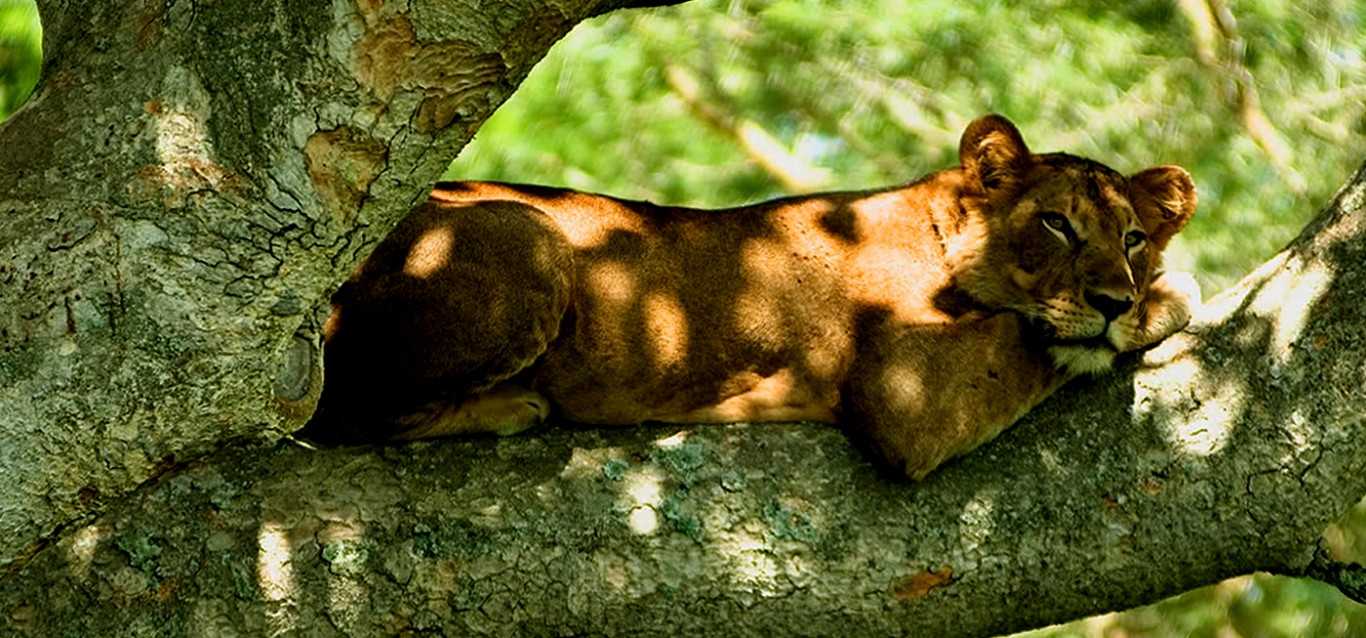
Queen Elizabeth holds the famous tree-climbing lion prides of Ishasha sector — a habit documented only here and at Tanzania's Lake Manyara. The Kazinga Channel connecting Lakes George and Edward holds Africa's largest hippo concentration outside of a river system, alongside enormous Nile crocodiles and a staggering waterbird diversity. Chimpanzees inhabit the Kyambura Gorge. Elephant herds are common, as are buffalo, Uganda kob, topi, waterbuck, warthog and giant forest hog. 600+ bird species recorded — the highest count of any Ugandan park.
Top activities
Ishasha sector game drives for tree-climbing lions — the southern sector where prides habitually rest in the branches of large fig trees. Kazinga Channel boat safari — 2 hours on the channel between Lakes George and Edward, passing hippo pods, Nile crocodile and thousands of waterbirds at extremely close range. Kyambura Gorge chimpanzee tracking — a forested river gorge where a habituated chimp community can be tracked. Maramagambo Forest primate walk for red-tailed monkey, blue monkey and L'Hoest's monkey. Birdwatching on the crater lakes circuit. Cultural visit to a Toro-Bunyoro fishing village on Lake George.
About Queen Elizabeth national park
Queen Elizabeth National Park is Uganda’s most visited national park, and once you have done the Kazinga Channel boat safari and seen a lion draped across a fig tree branch in Ishasha, the reason is obvious. The park packs an extraordinary density of different experiences into 1,978 square kilometres: savanna game drives, a world-class boat safari, chimpanzee trekking, forest walks, crater lake birding and some of the finest hippo viewing anywhere in Africa.
Established in 1952 and named in honour of Queen Elizabeth II’s coronation visit in 1954, the park straddles the equator in western Uganda and extends to the DRC border at Lake Edward. It sits in the Western Rift Valley between the Bwindi Forest to the south and Kibale Forest to the north, making it the natural midpoint of Uganda’s classic western circuit.
Where is Queen Elizabeth NP?
The park is in western Uganda, approximately 6 hours by road from Kampala or 1 hour by charter flight. The main visitor area is around Mweya Peninsula, on the shore of Lake Edward where the Kazinga Channel meets the lake. Ishasha sector (tree-climbing lions) is 90 km south of Mweya.
The tree-climbing lions of Ishasha
The southern Ishasha sector is famous throughout the safari world for a behaviour found in only two places: lions that habitually climb and rest in large trees. The Ishasha prides climb the ancient fig and acacia trees to escape heat, avoid insects and gain vantage over the grasslands below. Finding a pride of 8–12 lions distributed across the branches of a single enormous fig — some on their backs, paws dangling — is one of Uganda’s great wildlife spectacles.
The only other documented tree-climbing lions are at Lake Manyara National Park in Tanzania.
The Kazinga Channel boat safari
The Kazinga Channel connects Lakes George and Edward and is consistently described as one of the finest boat safaris in Africa. The channel’s banks are lined with the world’s second-largest hippopotamus concentration outside of a river system — in the low-water dry season, hundreds of hippos jam the shallows within metres of the boat. Enormous Nile crocodiles bask on the banks. Elephants drink on the shore. And the waterbirds — pelicans, cormorants, herons, storks, kingfishers, African skimmer — create a continuous spectacle. All at 2 metres from the boat, with no vehicles or dusty tracks involved.
Kyambura Gorge
A steep, forested river gorge cutting through the savanna of the park’s northeastern section, Kyambura holds a habituated chimpanzee community and several other primate species. The gorge walk is not just a primate excursion — the contrast between the open savanna above and the dense forest below creates an unusual ecosystem transition that makes the descent feel like entering a different world.
Birdwatching
With over 600 species, Queen Elizabeth has the highest bird count of any Ugandan national park. The Maramagambo Forest holds 7 Albertine Rift endemics; the Chambura Game Reserve holds shoebill stork in the papyrus swamps; and the crater lakes circuit north of Mweya produces some of Uganda’s finest shorebird and waterbird viewing.
Combine Queen Elizabeth with…
- Bwindi — the classic Uganda southern circuit; gorilla trekking 3 hours south.
- Kibale Forest — chimp trekking 2 hours north.
- Murchison Falls — the classic full Uganda circuit adds the Nile in the north.
Frequently asked questions about Queen Elizabeth NP
Is it guaranteed to see the tree-climbing lions?
Not guaranteed — no wildlife sighting is — but the Ishasha prides are resident and guides track their movements. Sighting rates in the dry season are very high.
How long does the Kazinga Channel boat safari take?
The standard safari is 2 hours. Longer private charters are available through the park or your camp.
Can you combine Ishasha and Mweya on the same trip?
Yes — they are 90 km apart. Most itineraries spend 1–2 nights in each sector on a Queen Elizabeth trip.
Want to visit Queen Elizabeth national park?
Get a free custom safari plan within 24 hours.
Queen Elizabeth national park safari tours


Want to visit Queen Elizabeth national park?
Get a free custom safari plan within 24 hours.
Best time to visit Queen Elizabeth National Park
June to September — Long dry season (best game viewing and boat safaris)
The long dry season is the prime window. Tree-climbing lion sightings in Ishasha peak when the grass is shorter and prides spend longer resting in fig trees to escape the heat. Kazinga Channel water levels are optimal for boat safaris and hippo, crocodile and waterbird concentrations are at their densest. Chimp tracking in Kyambura Gorge is most productive in dry conditions. This is Uganda’s peak safari season.
January to February — Short dry season (good, quieter)
A second dry window with excellent game viewing and significantly fewer visitors than June–September. The Kazinga Channel boat safari is superb year-round; January and February see comfortable temperatures. Good value lodge rates.
March to May — Long rains (lush, birding excellent)
The rains bring extraordinary bird diversity — migratory species arrive in March and the park’s 600+ species are at their most diverse. Tree-climbing lion sightings are harder in taller grass. The Kazinga Channel boat safari remains excellent regardless of rain. Rates drop and the park is empty.
Bottom line: June to September for tree-climbing lions and the full wildlife experience. The Kazinga Channel boat safari is extraordinary in any season.
Where to stay in Queen Elizabeth national park
We'll recommend accommodation across all budget levels based on your dates and preferences.
Browse All LodgesWant to visit Queen Elizabeth national park?
Get a free custom safari plan within 24 hours.