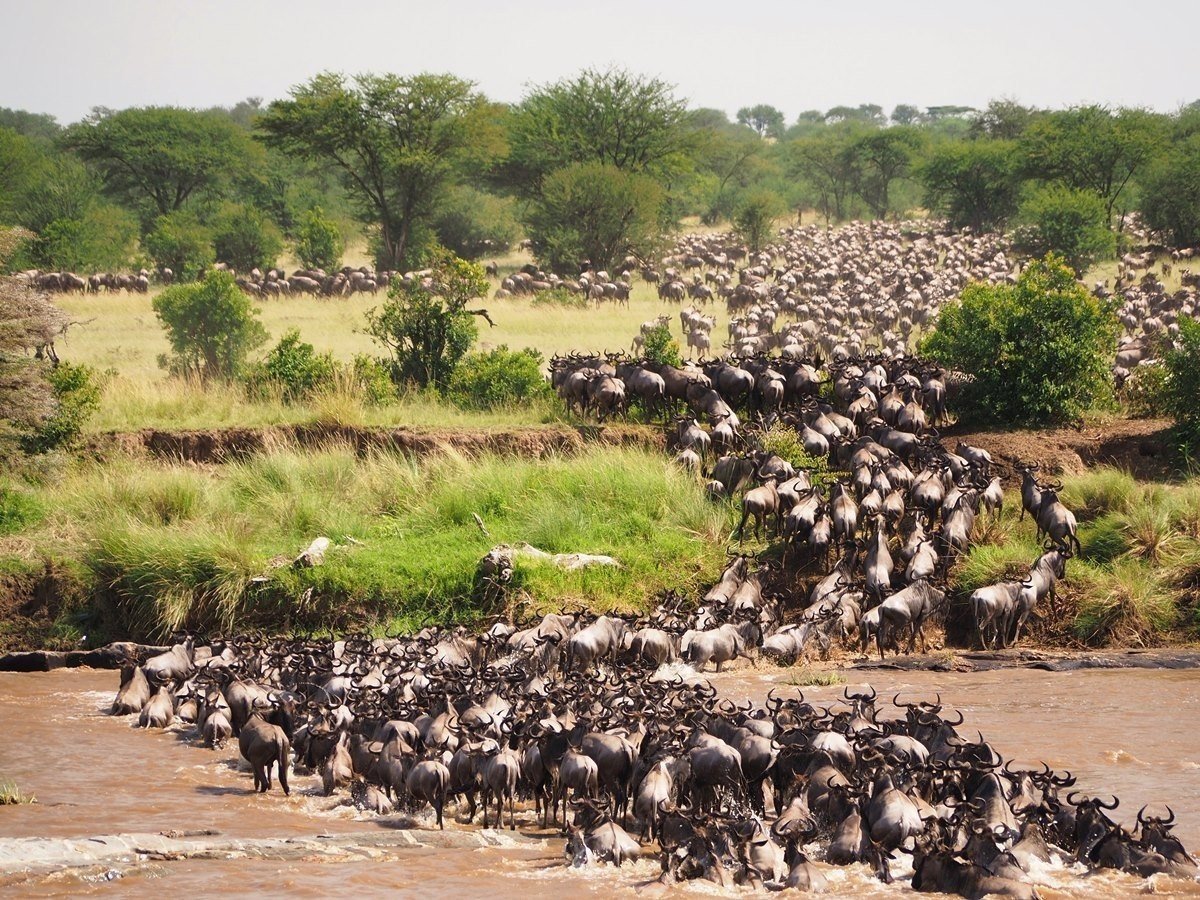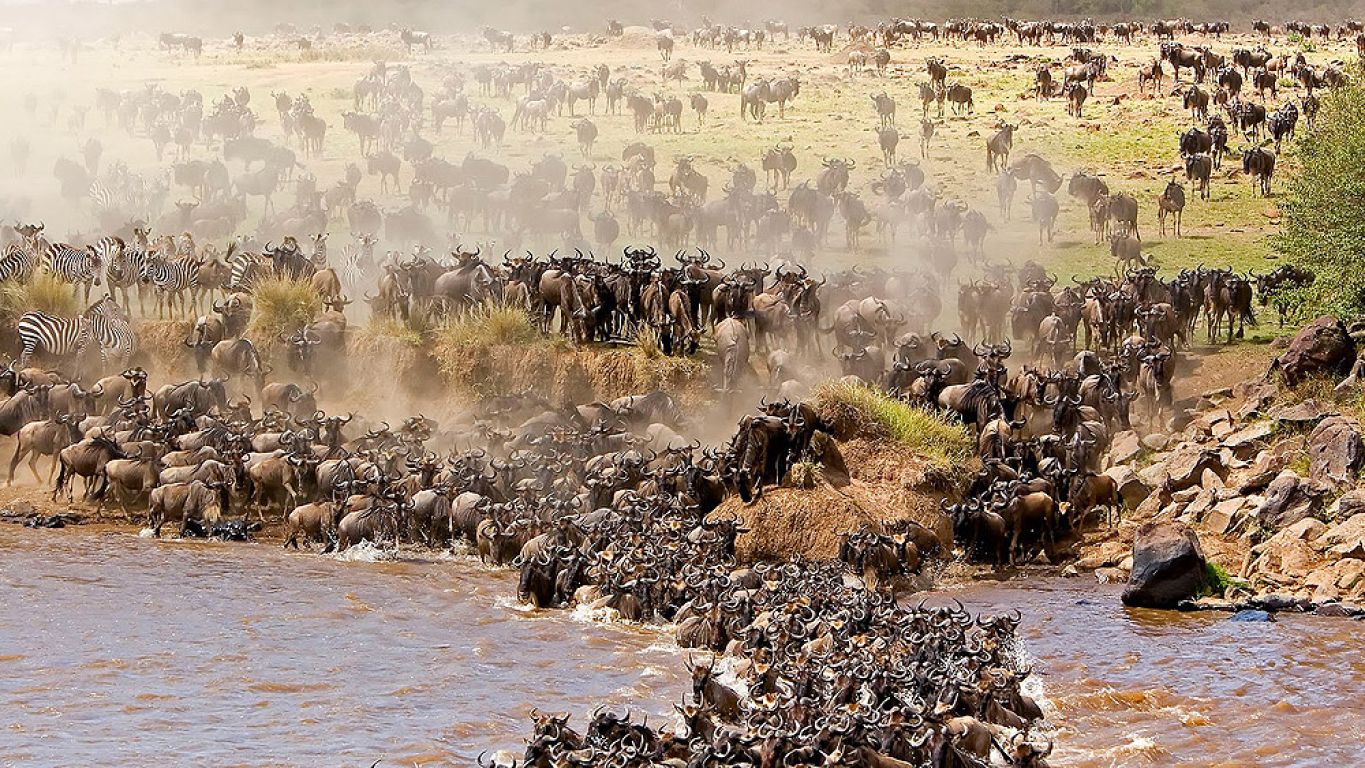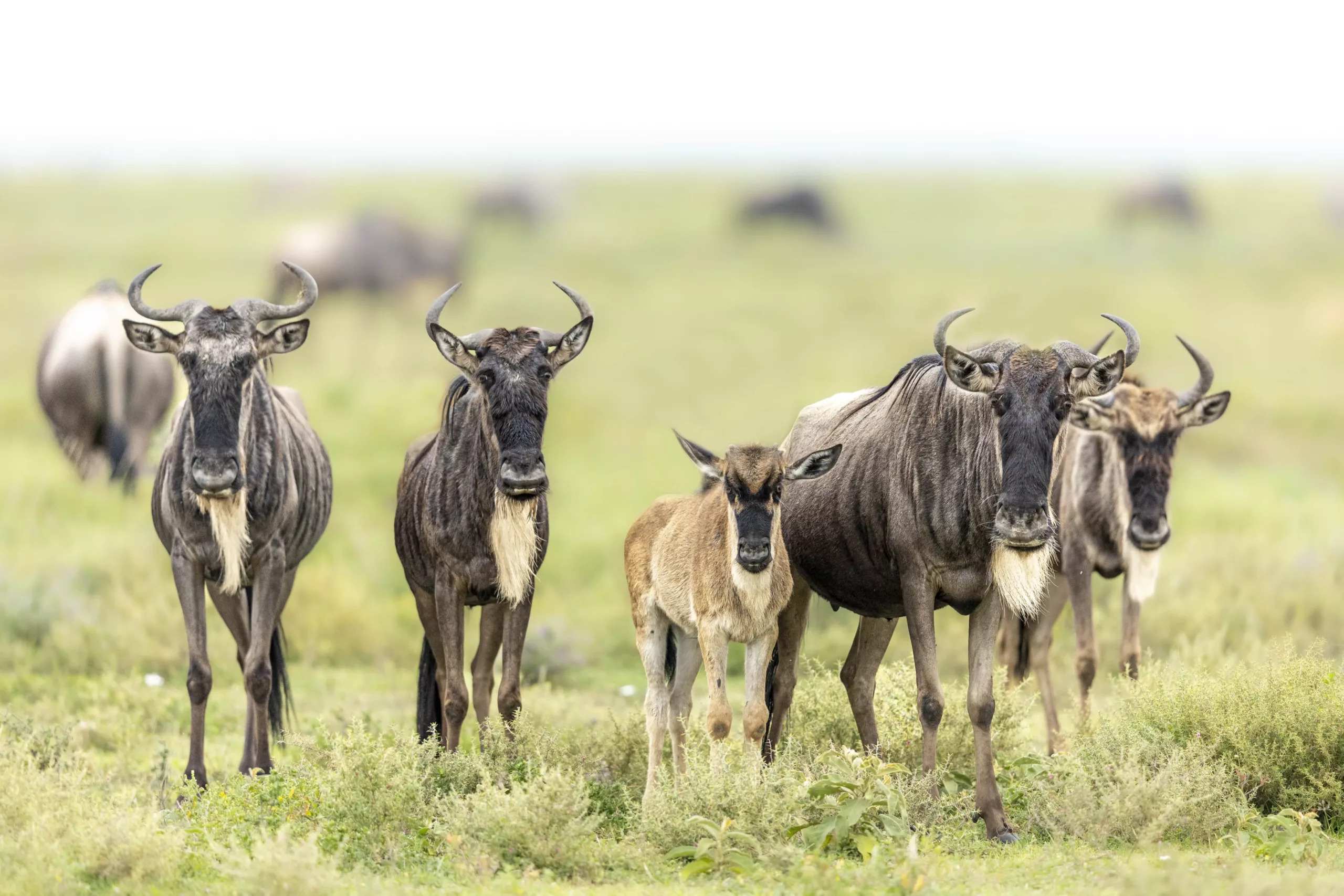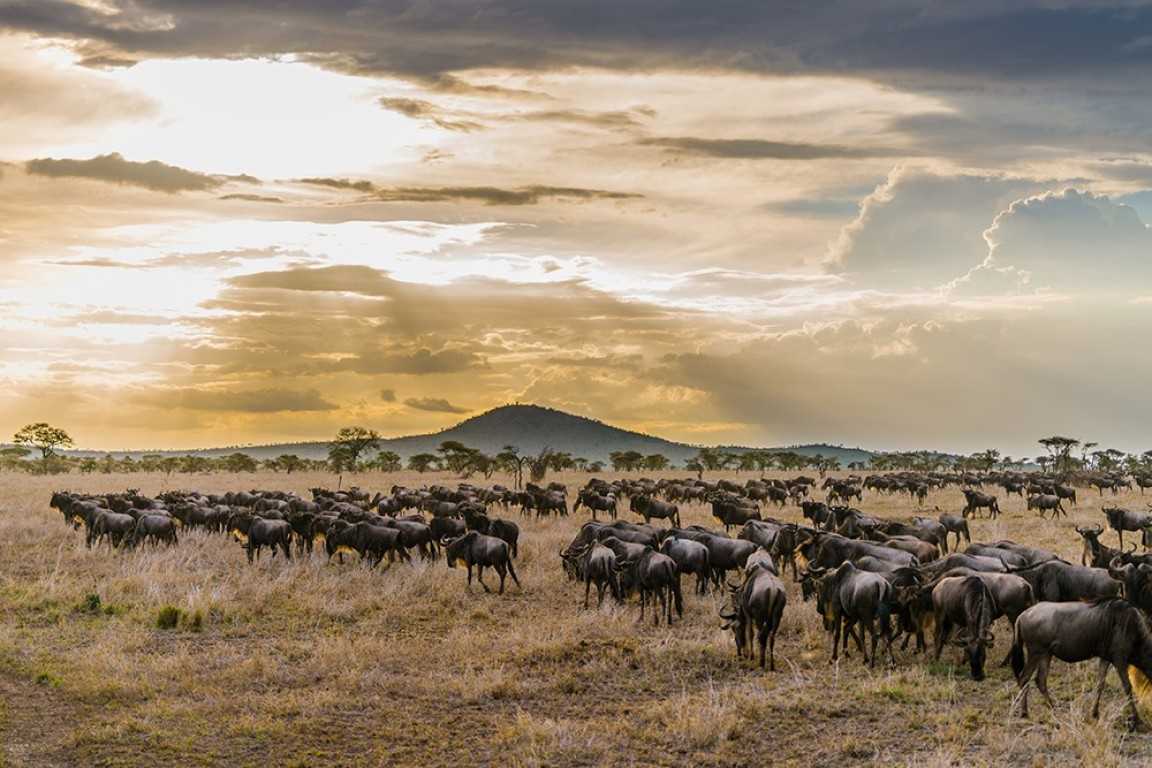
The Great Wildebeest Migration is one of the most spectacular wildlife events on Earth. Each year, more than 1.5 million wildebeest, along with hundreds of thousands of zebras and gazelles, move in a massive circular journey across the Serengeti ecosystem in Tanzania and Kenya’s Maasai Mara.
Understanding when and where to see the migration is essential when planning a safari. The herds move continuously throughout the year in search of fresh grazing and water, so the best location depends on the season.
For a full overview of the phenomenon, start with the complete Serengeti Great Migration Guide.
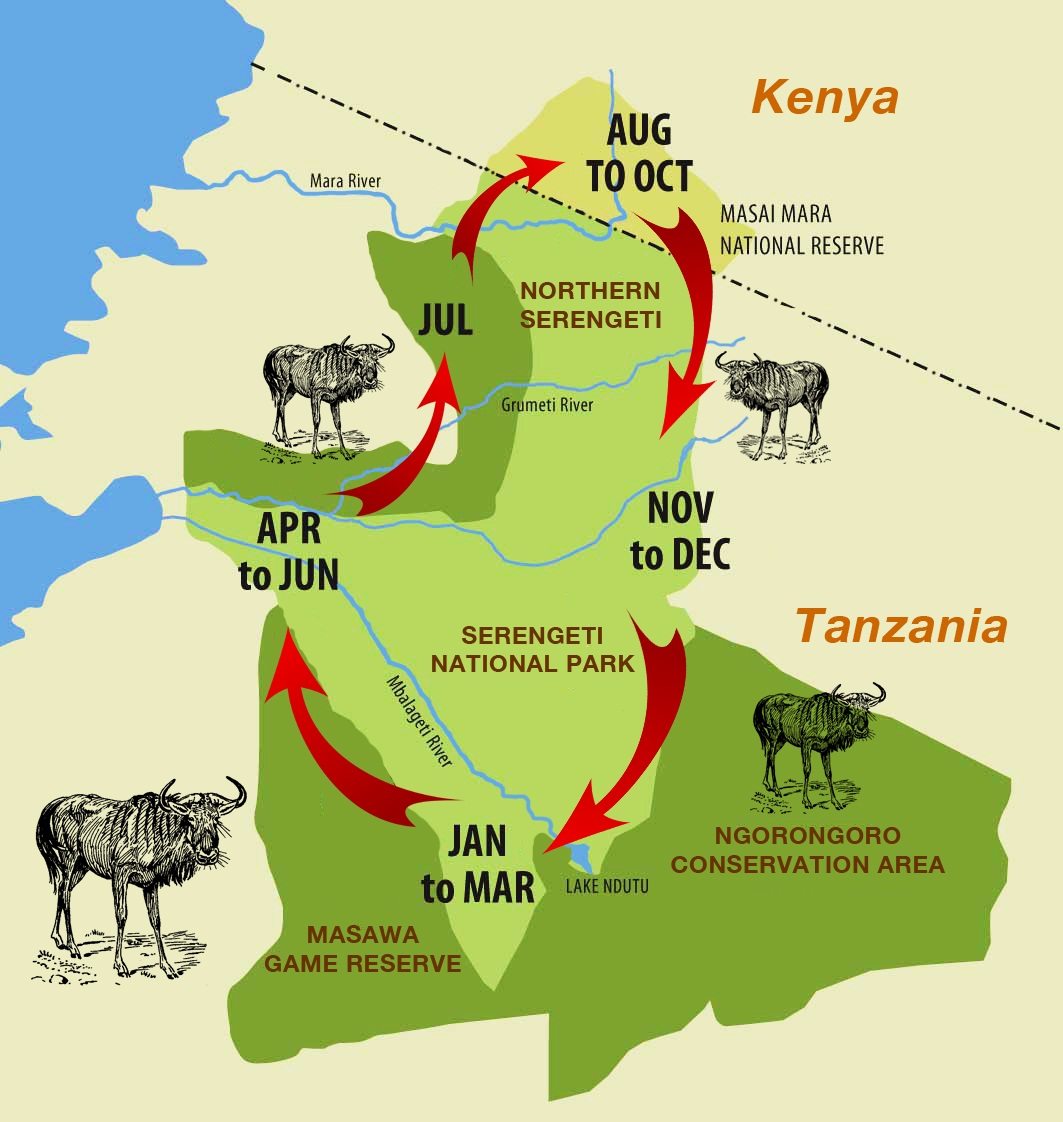
Overview of the Migration Route
The migration follows a roughly circular path across the Serengeti ecosystem:
-
Southern Serengeti and Ndutu (calving season)
-
Central Serengeti (moving north)
-
Western Corridor (Grumeti River crossings)
-
Northern Serengeti (Mara River crossings)
-
Return south as rains begin
Each stage offers a different safari experience, from newborn animals to dramatic river crossings.
To understand the best viewing locations, see Top 5 Spots to Witness the Serengeti Great Wildebeest Migration.
January – March: Calving Season in Southern Serengeti
From January to March, the migration gathers in the Ndutu area and southern Serengeti plains. This is known as the calving season, when around 500,000 wildebeest calves are born within a few weeks.
This period is famous for:
-
Large concentrations of animals
-
Predator action from lions, cheetahs, and hyenas
-
Excellent wildlife photography opportunities
The short-grass plains provide nutrient-rich grazing for newborn animals.
To learn more about this period, read The Calving Season in Tanzania’s Serengeti.
April – May: Migration Moves Through Central Serengeti
As the rainy season progresses, the herds begin moving northwest through Central Serengeti (Seronera region).
During this time:
-
The migration forms long columns of moving animals
-
Predators follow the herds
-
Landscapes are lush and green
Although river crossings are rare during this stage, it is still an incredible time to witness massive herds on the move.
You can also explore the region in the Serengeti National Park Guide.
June – July: Grumeti River Crossings
By June and early July, the migration reaches the Western Corridor of Serengeti.
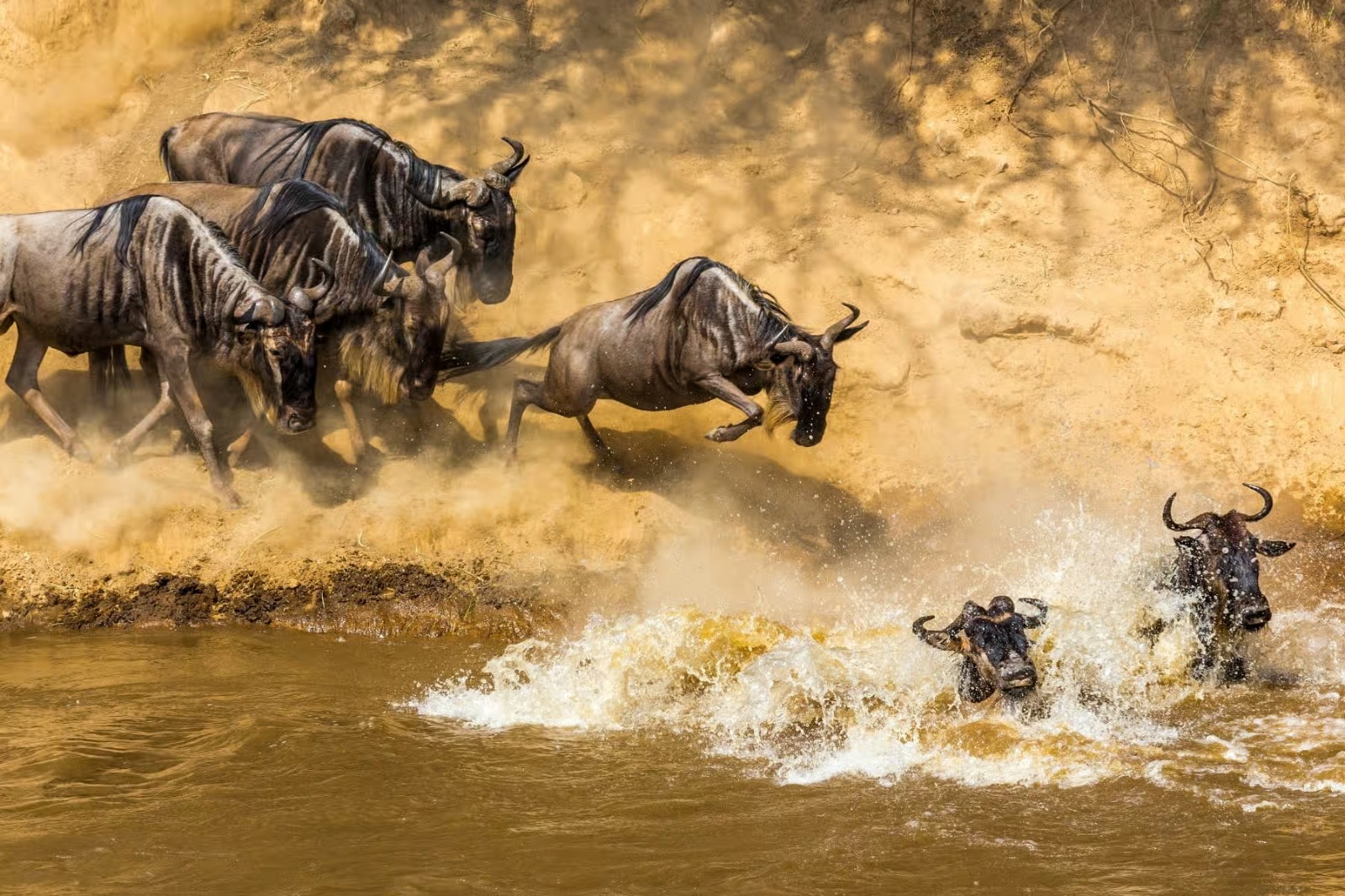
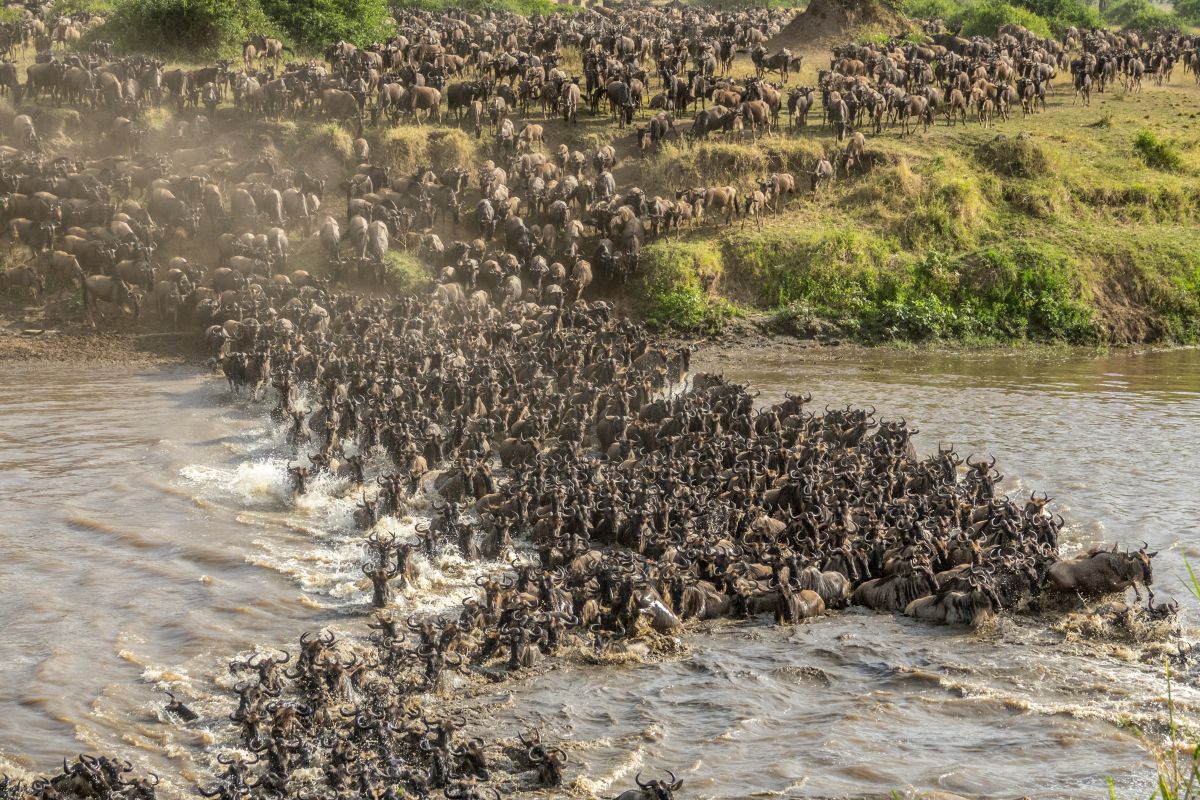
One of the highlights during this period is the Grumeti River crossings, where herds must cross crocodile-filled rivers while predators wait nearby.
While these crossings are smaller than the famous Mara River crossings, they still provide thrilling wildlife moments.
Travelers visiting during this period often combine Serengeti with other parks like those listed in the Best National Parks in Tanzania.
July – October: Mara River Crossings in Northern Serengeti
Between July and October, the migration reaches the Northern Serengeti near the Mara River.
This is the most famous stage of the migration and the most sought-after safari experience.
Highlights include:
-
Dramatic river crossings
-
Huge wildebeest herds
-
Crocodile attacks
-
Intense predator activity
The animals may cross the river multiple times during this period depending on rainfall patterns.
For travelers planning specifically for this event, see the Mara River Crossing guide.
November – December: Migration Returns South
When short rains begin around November, the herds begin moving south again toward the southern Serengeti plains.
This stage of the migration is less predictable but still offers excellent wildlife viewing.
The cycle then repeats as the herds prepare for the next calving season.
You can track seasonal movement in the Wildebeest Migration Tracker.
Best Time to See the Great Migration
Different travelers prefer different stages of the migration depending on what they want to see.
Best time for calving and predator action
January – March
Best time to see massive herds moving
April – June
Best time for river crossings
July – October
Each season offers a unique experience, so there is no single “perfect” time to visit.
For broader travel planning, read Best Time to Visit Tanzania.
Tips for Planning a Migration Safari
Planning your safari carefully can greatly improve your chances of seeing the migration.
Important tips include:
-
Choose the correct region of Serengeti for your travel month
-
Stay at least 3–4 nights in the Serengeti
-
Book lodges early for peak migration season
-
Be flexible because herd movement depends on rainfall
Safari operators and guides monitor herd movements closely and can help position you in the best areas.
To help plan your trip, see Tanzania Safari for First Timers and How Much Does a Safari Cost in Tanzania.
Final Thoughts
The Great Wildebeest Migration is not just a single event but a year-round wildlife journey across the Serengeti ecosystem. From the calving season in southern Serengeti to the dramatic Mara River crossings in the north, each stage offers unforgettable safari experiences.
By understanding when and where to see the migration, you can plan a safari that places you in the right location at the right time.
For deeper planning, continue exploring the Serengeti National Park Guide, the Tanzania Safari Guide, and the full Serengeti Great Migration Guide.