All Mount Meru Climbing Tours
About Mount Meru
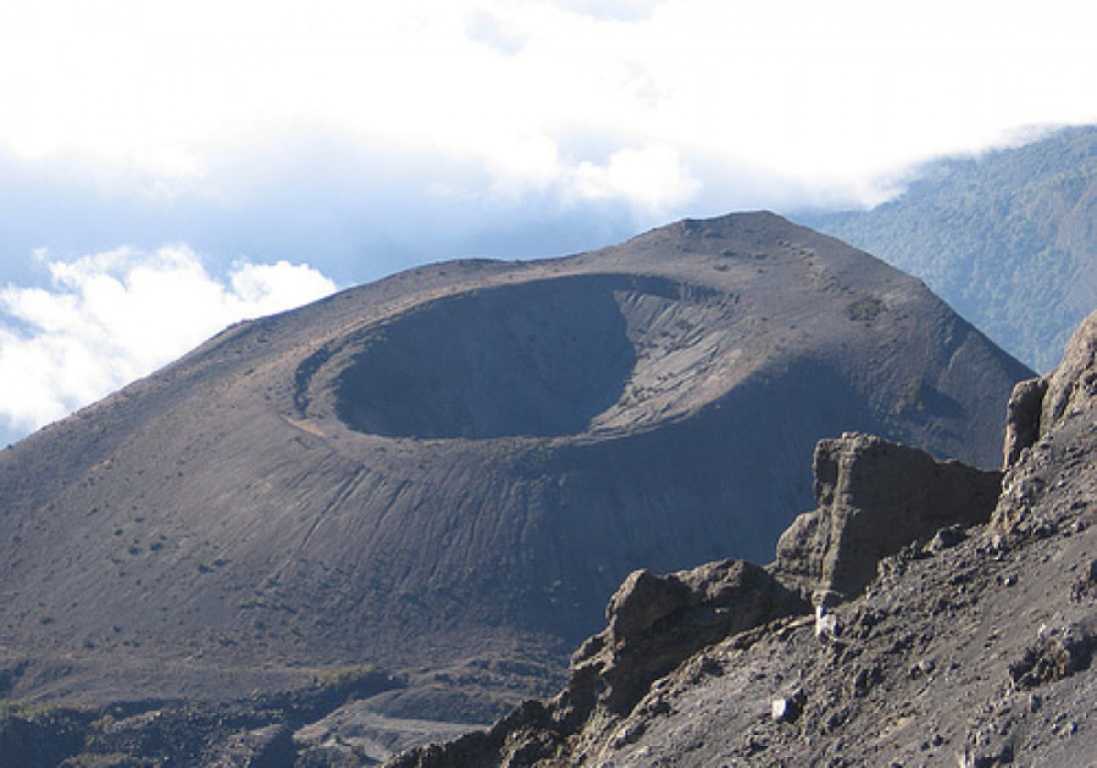
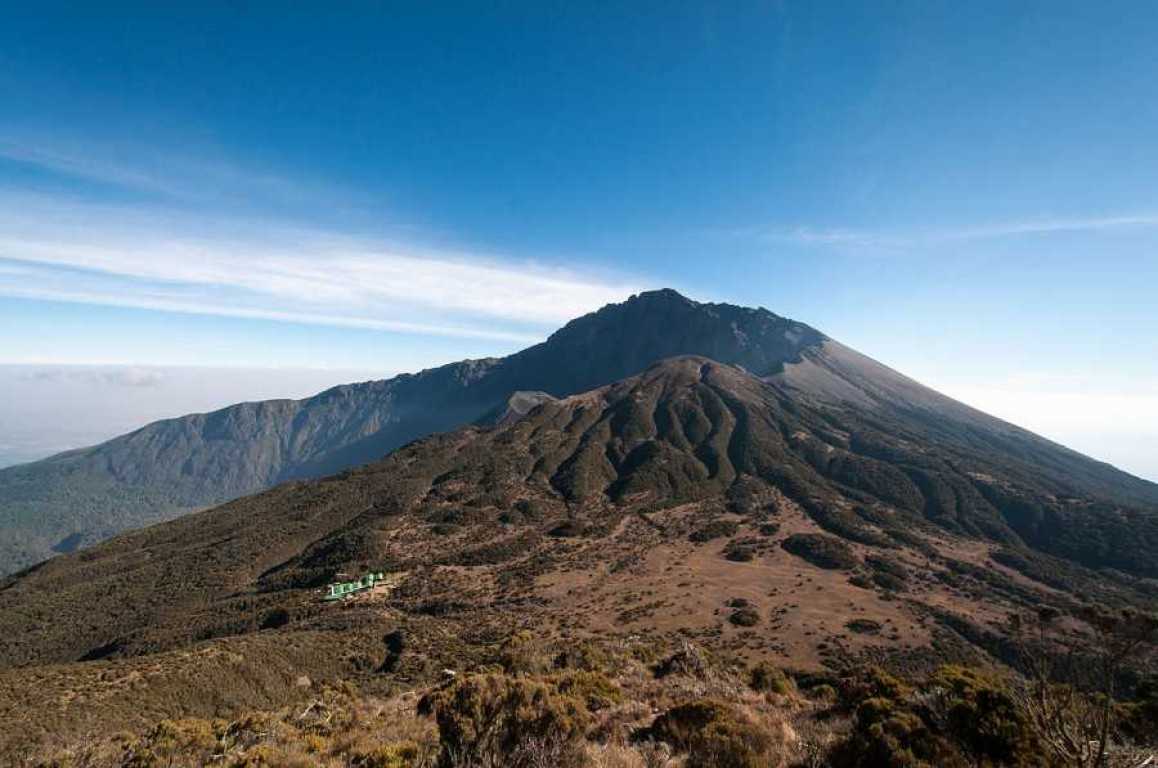
Mount Meru is a stratovolcano in the heart of Arusha National Park, 70 km west of Kilimanjaro. It is a dramatic mountain — an inner crater formed by a massive eruption approximately 8,000 years ago collapsed the eastern face, leaving a horseshoe-shaped crater rim with the active ash cone visible on the crater floor. The summit route follows the narrow ridge of that crater rim, with a near-vertical drop into the crater on one side and the long sweep of the Arusha plains on the other.
The Meru ascent is a genuine mountaineering experience without technical climbing requirements. The upper sections require careful footing on steep, exposed ridge paths — different in character from Kilimanjaro's high-altitude slog and, for many trekkers, more immediately thrilling. The summit view of Kilimanjaro at dawn, seen across the Arusha plains from a slightly lower but adjacent peak, is one of the finest mountain views in Africa.
The Mount Meru Climbing Route
Day 1: Momela Gate to Miriakamba Hut (2,514m)
The trail enters through the Momela Gate in Arusha National Park (1,500m) and climbs through open savanna and then acacia and fig forest. Wildlife encounters are part of the Mount Meru experience in a way that is unusual for a trekking mountain: buffalo, giraffe and zebra graze on the lower slopes and colobus and blue monkey are common in the forest sections. An armed TANAPA ranger accompanies every Meru trekking group throughout the climb — required by the national park and genuinely useful in the lower wildlife zones. The first night is at Miriakamba Hut, a comfortable stone structure with dormitory sleeping and a basic kitchen.
Day 2: Miriakamba Hut to Saddle Hut (3,570m)
The second day climbs through montane forest into heath and moorland, with the crater rim becoming increasingly visible to the left as altitude increases. The Saddle Hut sits between the two peaks of the crater rim — Little Meru (3,820m) is a 45-minute side trip from the saddle, offering the first views down into the crater. This is the acclimatisation day; most altitude gain happens here. The hut is more exposed than Miriakamba and significantly colder at night — a quality sleeping bag (rated to -10°C) is essential.
Day 3: Summit push and descent to Miriakamba Hut
The summit push begins at midnight for a dawn arrival. The route follows the crater rim ridge in the dark — headtorch essential, with the guide leading through the rocky exposed sections. The ridge narrows significantly on the upper approach. Socialist Peak (4,566m) is reached at dawn, the Kilimanjaro summit visible 70 km to the east as the sky lightens. Descent after the summit to Miriakamba Hut takes most of the remaining day, with wildlife encounters again possible on the lower forest sections.
Day 4 (4-day option): Miriakamba Hut to Momela Gate
The 4-day option adds a leisurely final morning descent through the forest and savanna to the gate, with time for birdwatching and photography rather than the rushed descent of the 3-day option. Recommended for trekkers who want a more relaxed pace and photographers who want morning light in the forest on the final day.
Mount Meru as Kilimanjaro Acclimatisation
Meru's altitude profile — 2 nights above 2,500m, a summit push to 4,566m — provides excellent preparation for Kilimanjaro trekking. Most altitude physiology research suggests that pre-acclimatisation at 3,500 to 4,500m significantly improves summit success rates on Kilimanjaro. A 4-day Meru climb followed by 2 to 3 days of rest in Arusha, then a 7-day Machame or Lemosho Kilimanjaro route, gives excellent acclimatisation for the combined trip.
The combined Meru and Kilimanjaro package takes approximately 14 to 16 days total. We design these combinations regularly and can advise on the optimal rest period between the two climbs.
Wildlife on Mount Meru
Mount Meru is trekked inside a national park with significant wildlife, which is unusual and adds an element to the climb that pure trekking mountains cannot offer. The lower forest sections have colobus monkey and blue monkey at close range, often less than 10 metres from the trail. Buffalo graze in clearings on the approach from Momela Gate and on the descent — the armed ranger accompaniment is required and not performative. Cape buffalo at forest edge are one of the genuine wildlife hazards of the lower Meru trail and are treated accordingly by guides.
Frequently Asked Questions
Is Mount Meru harder than Kilimanjaro?
Different rather than harder. Kilimanjaro's summit (5,895m) is 1,300m higher than Meru, making altitude the dominant challenge. Meru's upper crater rim route is technically more demanding — the exposed ridge with a drop into the crater on one side requires careful footing and confidence on steep terrain that Kilimanjaro's standard routes do not. Experienced trekkers generally find Meru more immediately exciting; Kilimanjaro's challenge is more physiological and psychological.
Do I need a ranger on Mount Meru?
Yes — TANAPA requires an armed ranger to accompany every trekking group on Mount Meru for the entire climb. The ranger fee is included in all our Meru packages. The requirement exists because of the wildlife (primarily buffalo and elephant on the lower slopes) and is enforced at the Momela Gate.
What is the best time of year to climb Mount Meru?
January to March and June to October are the clearest and driest windows. The long rains (April to May) make the forest sections very muddy and the upper ridge potentially icy. November to December (short rains) is manageable but wetter than the dry season periods. Unlike Kilimanjaro, Meru is climbable year-round by experienced trekkers who are prepared for variable conditions.
Can I see Mount Kilimanjaro from the summit of Mount Meru?
On a clear day, yes — the summit view of Kilimanjaro from Socialist Peak is one of the finest mountain-to-mountain views in Africa. The Kilimanjaro massif is fully visible across the Arusha plains, showing the complete ice cap and glaciers in a way that is not visible from the Kilimanjaro approach routes themselves. Arrival at the summit at dawn (before cloud builds) maximises the probability of a clear view.
Not sure which Mount Meru Climbing Tours is right for you?
Our team designs custom itineraries — no fee, no obligation.Explore Other Safari Types
Kilimanjaro Trekking Tours
View Tours
Tanzania Lodge Safaris
View Tours
Tanzania Honeymoon Safaris
View Tours
Tanzania Camping Safaris
View Tours
Serengeti Migration Safaris
View Tours