
Quick facts
Wildlife
The Durban coastline is a marine environment. The Bluff Nature Reserve south of Durban is an important loggerhead turtle nesting site. The warm Agulhas Current makes Durban's coastal waters some of the most species-rich in South Africa — bottlenose and common dolphin are regularly seen from the beach, and humpback whale pass offshore from June to November. Bull sharks are present in the bay (one reason for the famous shark nets on swimming beaches). uShaka Marine World houses over 100 marine species in its aquarium. The Umgeni River mouth north of the Golden Mile is excellent for birdwatching.
Top activities
Beach swimming and sunbathing along the Blue Flag Golden Mile — Durban has South Africa's warmest ocean (25-28°C in summer). Surfing at the Bay of Plenty and New Pier beach breaks. uShaka Marine World — aquarium and water park at the southern end of the Golden Mile. Victoria Street Market and Indian Quarter food tour — Durban's famous bunny chow, roti and Indian sweetshop trail. Moses Mabhida Stadium tour and the Big Swing (bungee from the stadium arch). Ricksha rides along the promenade (historical, operated by Zulu men in traditional dress). Wilson's Wharf fresh fish market and seafood restaurants.
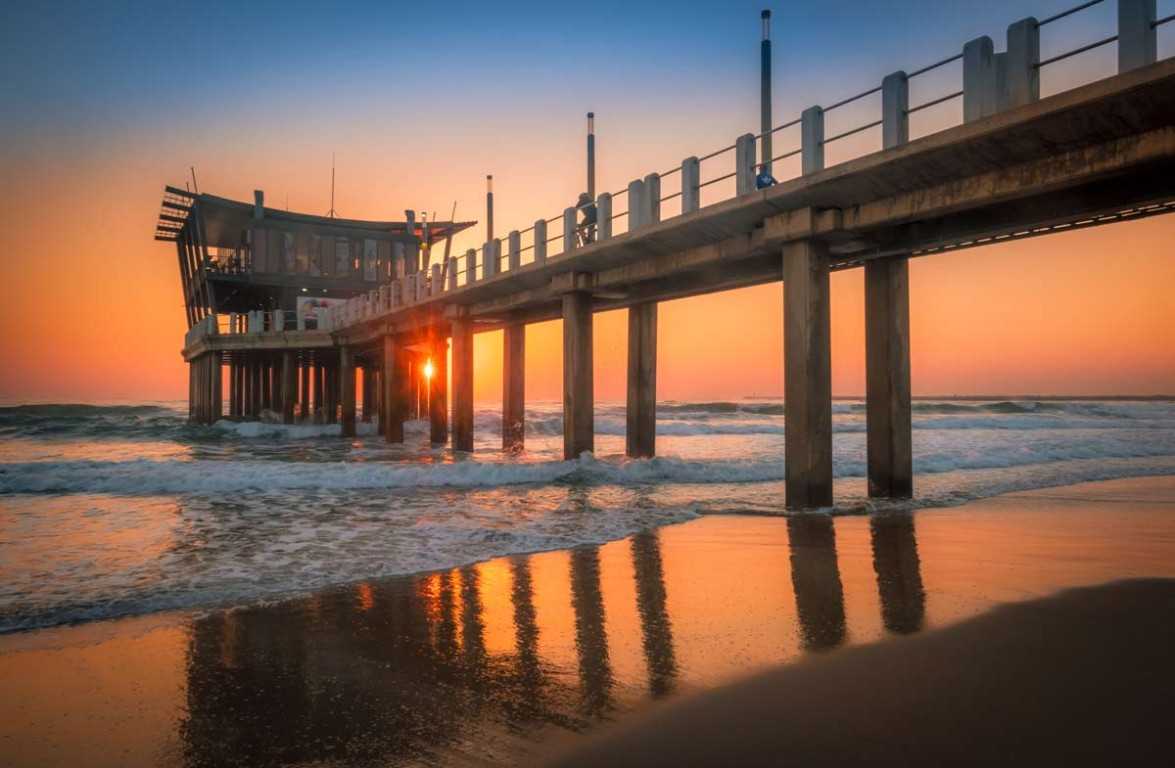
About Durban's Golden Mile, KwaZulu-Natal
Durban is South Africa’s third-largest city and its most ethnically diverse, shaped by the convergence of Zulu, Indian, British colonial and modern urban cultures into something that feels more dynamic and more contradictory than either Johannesburg or Cape Town. Its Indian population — the largest outside India — dates to the 1860s when indentured labourers were brought to work the sugarcane fields, and their cultural imprint on the city’s food, architecture and commerce is profound and delicious.
The city’s most famous asset is its beachfront: a 6-kilometre promenade of Blue Flag beaches along the Indian Ocean shore, where the warm Agulhas Current keeps water temperatures between 21–27°C year-round — significantly warmer than Cape Town’s Atlantic beaches. The Golden Mile is the commercial and recreational heart of the beachfront, with hotels, restaurants, surf shops and the famous ride-ons behind a continuous sweep of sand.
Where is Durban?
Durban (eThekwini) is KwaZulu-Natal’s largest city and South Africa’s busiest port, on the Indian Ocean coast. King Shaka International Airport serves daily flights from Johannesburg (1 hour), Cape Town (2 hours) and several international routes. The airport is 35 km north of the city centre.
The Indian Quarter and Durban’s food culture
Durban’s Indian Quarter — centred on Grey Street, the Jumma Mosque (the largest in Africa south of the Sahara) and the Victoria Street Market — is one of the most vibrant sensory environments in South Africa. The market sells spices, textiles, traditional medicine and street food. Outside it: curry houses that have been serving the same recipes since 1960, biryani shops, sweetmeat sellers and the birthplace of bunny chow — Durban’s signature dish and South Africa’s most distinctive culinary export: a hollowed quarter-loaf of white bread filled with mutton, bean or chicken curry.
The beaches
The Golden Mile runs north from uShaka Marine World at its southern end to the Umgeni River mouth at the north. Key sections:
- North Beach and South Beach — the main shark-netted swimming beaches, patrolled by lifeguards.
- Bay of Plenty and New Pier — Durban’s best surf breaks; the Gunston 500 (now the Mr Price Pro) runs here, one of the world’s longest-running surf events.
- Addington Beach — the quieter southern end, with calmer conditions.
uShaka Marine World
At the southern end of the Golden Mile, uShaka Marine World is Africa’s largest marine theme park, centred on an enormous open-ocean aquarium (one of the world’s largest) built inside a fake shipwreck. Ragged-tooth sharks (grey nurse), manta ray, sawfish and hundreds of species inhabit the tanks; the shark dive experience allows certified divers to enter the main tank.
Combine Durban with…
- iSimangaliso Wetland Park — 3.5 hours north for hippo safaris and turtle nesting.
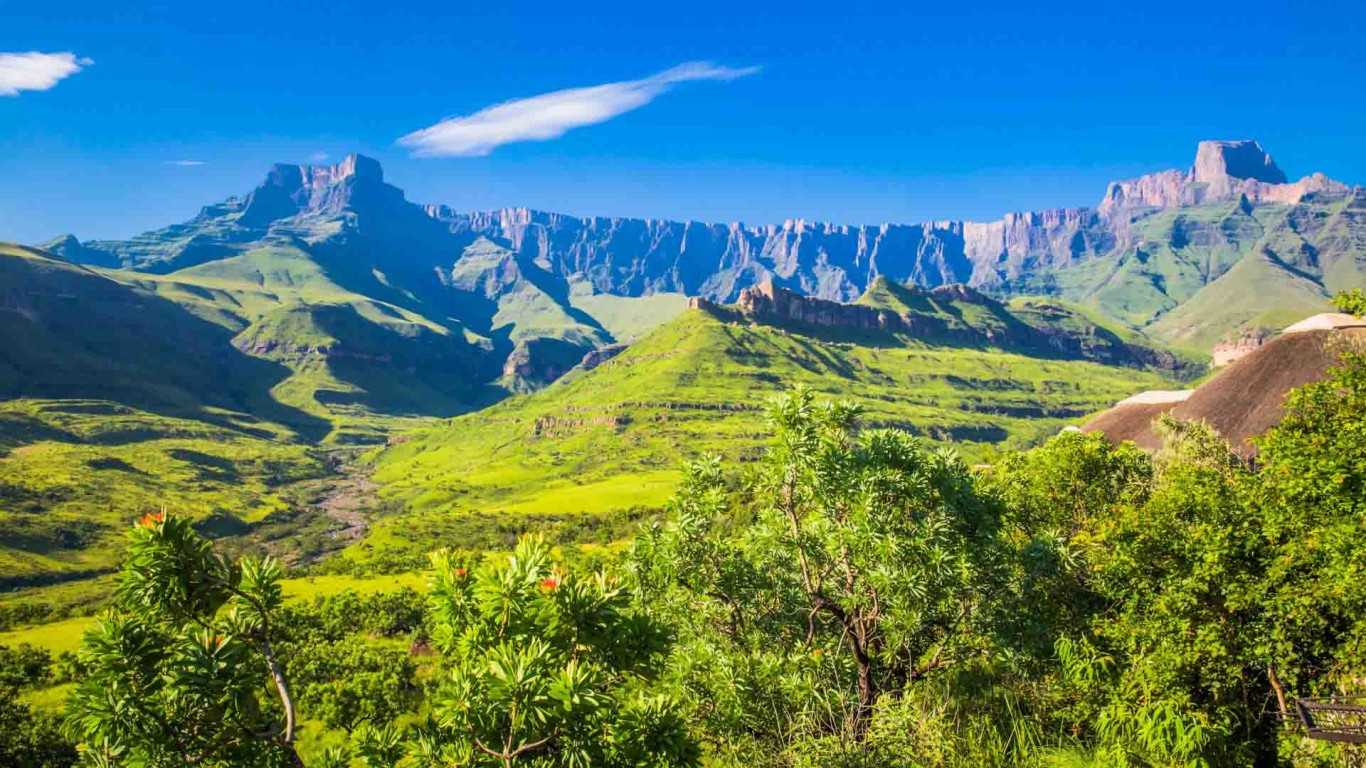
- Drakensberg — 3 hours west for mountain hiking.
- Kruger — 4–5 hours north for Big Five.
Frequently asked questions about Durban
Is it safe to swim at Durban beaches?
The main netted beaches (North Beach, South Beach, Addington) are protected by shark nets and are generally safe. Bull sharks are present in Durban bay outside the netted areas; always swim at lifeguard-patrolled, netted beaches.
What is bunny chow?
Durban’s most famous dish: a hollowed loaf of white bread filled with curry. The name has nothing to do with rabbits — the word “bania” (a South Indian merchant caste) was corrupted to “bunny”. It was created by Indian workers who couldn’t access restaurants under apartheid and needed a portable lunch container.
What is the Sardine Run?
One of the ocean’s great natural events: billions of sardines migrating north along the KwaZulu-Natal coast in June–July, pursued by sharks, dolphins, Bryde’s whales and Cape gannet. When a bait ball forms close inshore, the feeding frenzy can be witnessed from the beach or joined by snorkellers.
Want to visit Durban's Golden Mile, KwaZulu-Natal?
Get a free custom safari plan within 24 hours.
Durban's Golden Mile, KwaZulu-Natal safari tours
No fixed packages listed yet — we'll build a custom safari around Durban's Golden Mile, KwaZulu-Natal for you.
Browse All ToursWant to visit Durban's Golden Mile, KwaZulu-Natal?
Get a free custom safari plan within 24 hours.
Best time to visit Durban
November to March — Summer (warmest swimming, busiest beach)
Durban’s summer is warm, humid and festive. Ocean temperatures reach 25–28°C and the beaches are at their most animated. The Golden Mile fills with South African holidaymakers during December and January school holidays. The Durban surf season peaks in summer with consistent swells. This is the most expensive and most energetic period.
June to October — Dry season / winter (mild, quiet, whale watching)
Durban’s winter is genuinely pleasant (18–23°C) — probably the best beach climate in South Africa during July and August. The ocean is cooler (21–23°C) but still swimmable. Humpback whales pass offshore June–November. The beaches are quiet and accommodation rates are significantly lower. The famous Durban July horse race (June–July) brings the only significant winter influx of visitors.
Sardine Run — June/July (spectacular but variable)
One of the ocean’s great annual events: billions of sardines migrating north along the KwaZulu-Natal coast, pursued by sharks, dolphins, gannets and whales. When the bait ball forms close inshore, it can be watched from the beach and dived by snorkellers. The timing varies year to year; June and July are the most likely window but nothing is guaranteed.
Bottom line: November to March for summer beach energy; June to October for mild weather, whale watching and quieter beaches.
Where to stay in Durban's Golden Mile, KwaZulu-Natal
We'll recommend accommodation across all budget levels based on your dates and preferences.
Browse All LodgesWant to visit Durban's Golden Mile, KwaZulu-Natal?
Get a free custom safari plan within 24 hours.
Nearby destinations
 South Africa
 South Africa
 South Africa
 South Africa