
Quick facts
Wildlife
The Garden Route is one of South Africa's finest wildlife corridors. The Tsitsikamma National Park's marine reserve holds Cape fur seals, bottlenose dolphins and occasional humpback whale. Southern right whales breach in Plettenberg Bay and Mossel Bay from June to December. The Knysna forest holds the last wild forest elephants on the southern Cape — fewer than 10 animals remain. The Garden Route National Park (Wilderness section) has hippo, buffalo and diverse birdlife in the lake district. Knysna seahorse lives in the lagoon — endemic and critically endangered.
Top activities
Self-drive from Mossel Bay to Storms River — the signature route, 3-5 days at leisure. Whale watching at Hermanus and Plettenberg Bay (June–December). Tsitsikamma suspension bridge hike and waterfall trail. Bloukrans Bridge bungee jumping — the world's highest commercial bungee at 216 metres. Knysna Heads kayak through the lagoon mouth. Storms River mouth hike through ancient yellowwood forest to the suspension bridge. Featherbed Nature Reserve walking safari (Knysna lagoon, boat access only). Monkeyland, Birds of Eden and Elephant Sanctuary outside Plettenberg Bay.
About The Garden Route
The Garden Route is the road trip South Africans talk about. A 300-kilometre stretch of Indian Ocean coastline from Mossel Bay in the Western Cape to Storms River in the Eastern Cape, passing through a succession of lagoons, coastal forests, adventure towns and marine ecosystems that makes it one of Africa’s most diverse and rewarding self-drive routes.
The name was coined by early European settlers who, sailing along this coast, saw an abundance of trees and greenery in stark contrast to the dry Cape Flats behind Cape Town. The name stuck, and the landscape it describes is still the route’s defining character: the Outeniqua Mountains to the north, the Indian Ocean to the south, and between them a narrow green corridor of indigenous forest, lakes, heathland and garden towns that feels almost European in its lushness.
How to drive the Garden Route
Most travellers drive east from Cape Town or west from Kruger. The standard route runs along the N2 highway but the real rewards come from the detours: the R102 coastal road through Wilderness, the old road through Sedgefield, the Heads viewpoint above Knysna lagoon. Allow 4–7 days depending on how often you stop, which is the answer to almost every Garden Route planning question.
Key stops on the Garden Route
Mossel Bay
The start of the official route and the point where Vasco da Gama first landed in what is now South Africa in 1488. The Bartolomeu Dias Museum Complex documents this history well. Mossel Bay is also one of the best whale-watching points on the coast (June–November) and has reliable surf breaks.
George and Wilderness
George is the Garden Route’s largest town and transport hub; Wilderness is 10 km east and is where the route’s lake district begins. The Touw River estuary, five interconnected lakes and the Indian Ocean shoreline create an ecosystem of extraordinary beauty. The Wilderness section of the Garden Route National Park has hippo and buffalo.
Knysna
The Garden Route’s most loved town, centred on a vast lagoon entering the sea through a narrow gap between two sandstone cliffs (the Heads). The lagoon is the habitat of the critically endangered Knysna seahorse and the haunt of the Knysna forest elephants — fewer than 10 animals, the last wild forest elephants in southern Africa. Kayaking through the Heads, eating oysters on the waterfront, and walking the Featherbed Nature Reserve (boat-access only) are the Knysna essentials.
Plettenberg Bay
South Africa’s most fashionable coastal town, with a long sandy beach, excellent surf and some of the finest whale watching on the continent (June–December). Offshore cetaceans include southern right whale, humpback, Bryde’s and common dolphin. Outside Plett: Monkeyland, Birds of Eden and the Elephant Sanctuary on the R340.
Tsitsikamma National Park
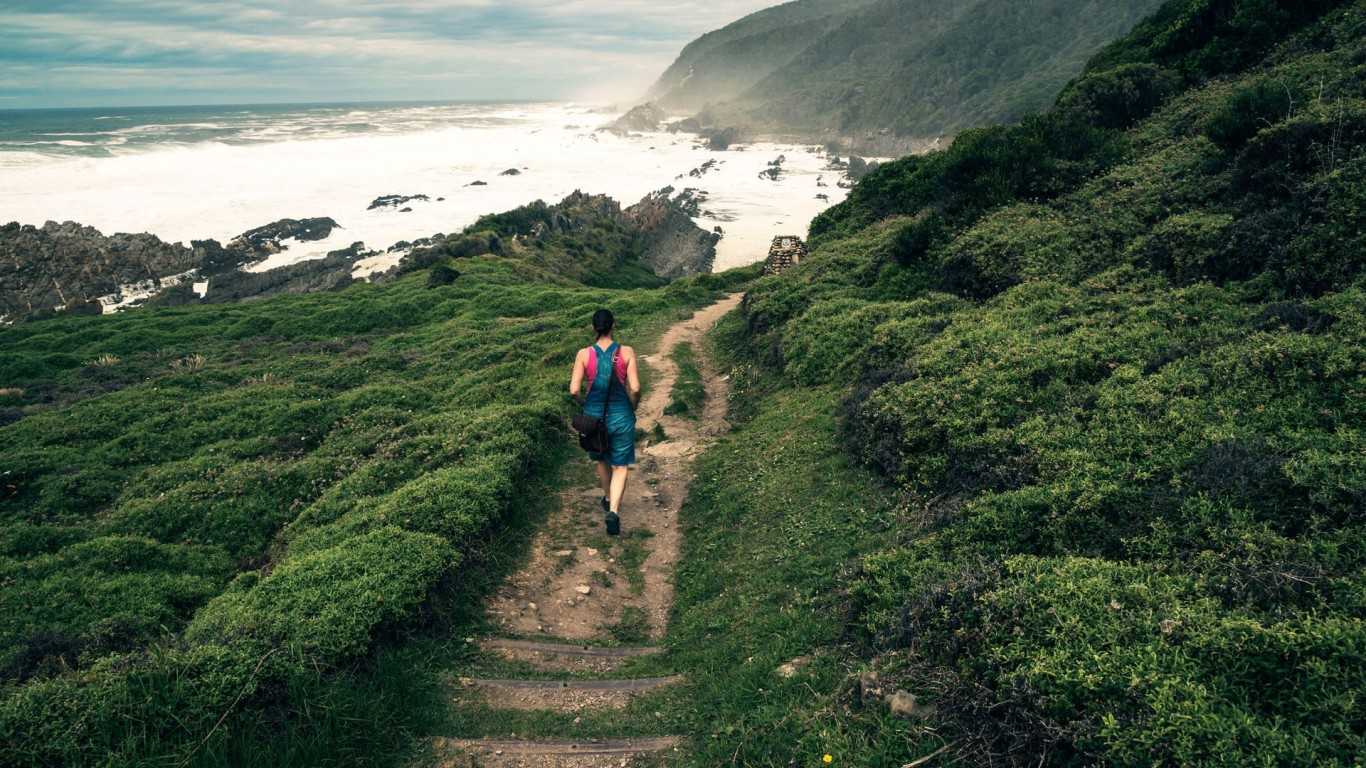
The eastern end of the Garden Route and one of South Africa’s most dramatic coastal landscapes: ancient yellowwood and stinkwood forest reaching the cliffs of the Indian Ocean, crossed by a famous suspension bridge at the Storms River mouth. The 2-day Otter Trail (one of South Africa’s most sought-after hikes, requiring advance booking) runs along the coast from here.
Bloukrans Bridge
Between Tsitsikamma and Nature’s Valley, the Bloukrans Bridge at 216 metres is the world’s highest commercial bungee jump. It is operated by a specialised company; the jump takes 8 seconds of freefall. Even spectating from the bridge catwalk (non-jumpers pay a smaller access fee) is impressive.
Combine the Garden Route with…
- Cape Town — the natural starting or ending point, 4 hours west of Mossel Bay.
- Kruger National Park — fly from George to Johannesburg and on to Hoedspruit for a Big Five extension.
- iSimangaliso Wetland Park — continue east along the coast to KwaZulu-Natal.
Frequently asked questions about the Garden Route
How many days do you need on the Garden Route?
Three days is the rushed minimum. Five to seven days allows genuine exploration of Wilderness, Knysna, Plettenberg Bay and Tsitsikamma without feeling like you’re ticking boxes.
Can you self-drive the Garden Route?
Yes — self-driving is the standard and recommended way to explore it. Roads are excellent, signage is clear and accommodation ranges from backpackers to luxury boutique hotels along the full route.
Is the Garden Route safe?
Generally yes in the main towns and tourist areas. The N2 highway is well-maintained. Standard South African caution applies: don’t leave valuables visible in parked cars and use hotel safes.
Want to visit The Garden Route?
Get a free custom safari plan within 24 hours.
The Garden Route safari tours
Want to visit The Garden Route?
Get a free custom safari plan within 24 hours.
Best time to visit the Garden Route
November to February — Summer (beaches, hiking, warm seas)
South African summer delivers warm temperatures (22–28°C), excellent beach and water conditions and long daylight hours for driving. This is peak season along the Garden Route — accommodation books out, especially in Knysna and Plettenberg Bay over Christmas and New Year. The busiest and most festive period; also the most expensive.
June to November — Whale season (best for marine wildlife)
Southern right whales arrive in the Western Cape bays from June and remain through November–December. Mossel Bay, Plettenberg Bay and Hermanus (just west of the Garden Route) are the top whale-watching points. October and November offer the warmest whale-season weather before peak summer crowds.
March to May — Shoulder season (excellent value, less crowded)
Late summer to autumn is arguably the most pleasant window: mild temperatures (18–23°C), thinning crowds, lower accommodation rates and the forest at its richest green. Rain is possible but rarely persistent.
June to August — Winter (quietest, cheapest, best for whales and Kgalagadi pairing)
Winter brings the mildest days (15–20°C) and the lowest rates. The Garden Route’s year-round green landscape means it doesn’t brown the way inland South Africa does in winter. An excellent value window for independent travellers and walkers.
Bottom line: November to February for beaches and summer energy; June to November for whale watching and quieter roads; March to May for the finest overall balance.
Where to stay in The Garden Route
We'll recommend accommodation across all budget levels based on your dates and preferences.
Browse All LodgesWant to visit The Garden Route?
Get a free custom safari plan within 24 hours.
Nearby destinations
 South Africa
 South Africa
 South Africa
 South Africa