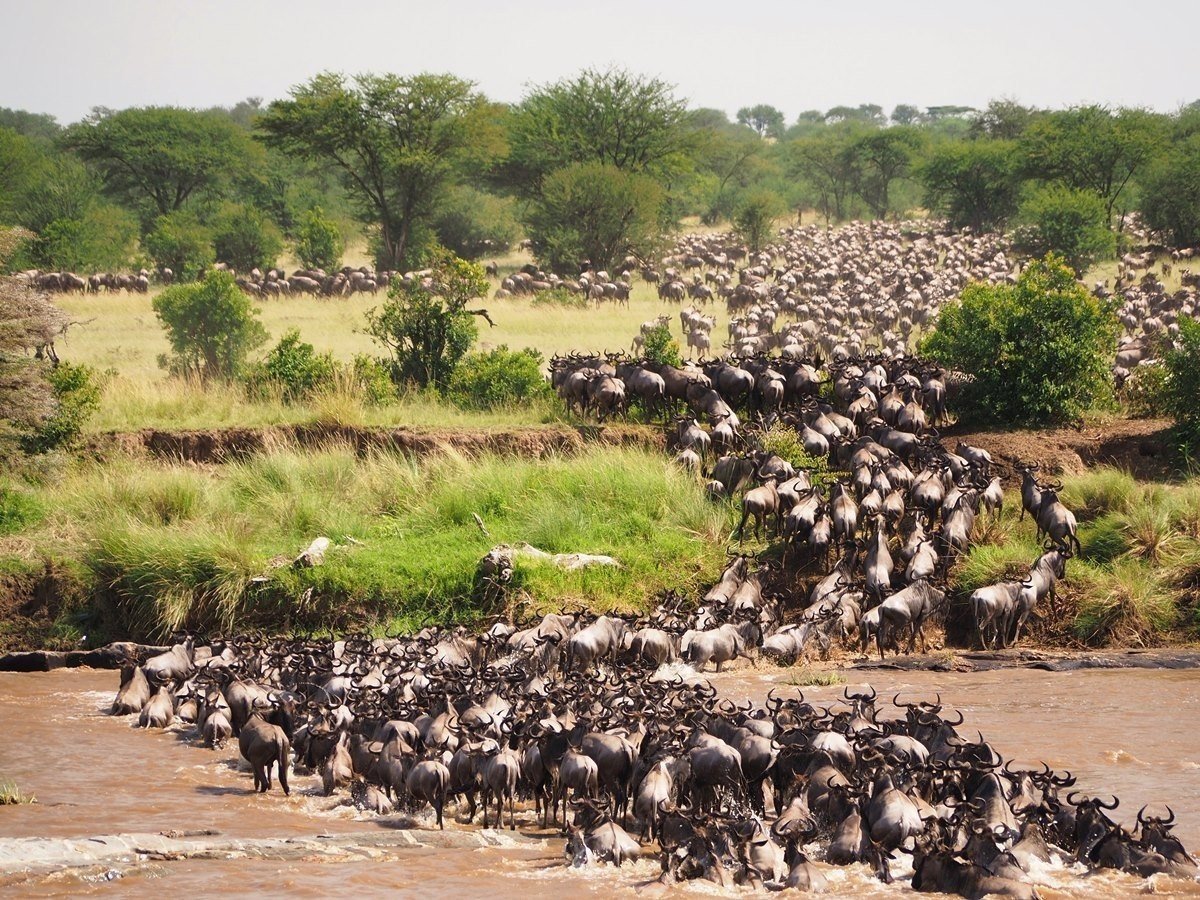
The Serengeti Great Migration is the largest land animal migration on Earth and one of the most extraordinary wildlife spectacles in the world. Each year, more than 1.5 million wildebeest, along with hundreds of thousands of zebras and gazelles, move across the Serengeti ecosystem in Tanzania and the Maasai Mara in Kenya.
This migration is driven by rainfall and the search for fresh grass. The animals follow seasonal grazing patterns across the plains, rivers, and woodlands of the Serengeti. Along the way they encounter predators, dramatic river crossings, and long journeys across Africa’s most famous wildlife landscape.
For visitors planning a safari, understanding how the migration works is essential to choosing the right time and place to see it. This Serengeti Great Migration Guide explains the migration route, best viewing months, and the key areas where the herds can be found throughout the year.
To understand the park where this incredible event takes place, see the Serengeti National Park Guide.
What Is the Serengeti Great Migration?
The Great Migration in Serengeti is the annual movement of wildebeest herds across the Serengeti-Mara ecosystem. The migration includes:
-
Over 1.5 million wildebeest
-
Around 200,000 zebras
-
Thousands of gazelles and other antelope
The animals move continuously throughout the year following rain and fresh grass. This movement forms a circular migration route across northern Tanzania and southern Kenya.
During the journey, the herds face numerous challenges including predators, dangerous river crossings, and long travel distances. Lions, cheetahs, hyenas, and crocodiles closely follow the herds, creating dramatic wildlife interactions.
Many travelers combine migration viewing with other northern Tanzania destinations such as the Ngorongoro Crater Guide and parks listed in Best National Parks in Tanzania.
Why the Great Migration Happens
The Serengeti migration happens because wildebeest depend on short fresh grass rich in nutrients. When rainfall produces new grazing areas, the animals move toward those regions.
The migration therefore follows seasonal rainfall patterns:
-
Southern plains during calving season
-
Western Serengeti during herd movement
-
Northern Serengeti during river crossing season
-
Return south with the short rains
Because rainfall changes each year, the exact timing of the migration can vary slightly. For travelers planning their visit, reading about seasonal conditions in Best Time to Visit Tanzania can be very helpful.
Serengeti Great Migration by Month
January to March – Calving Season
From January to March, the migration gathers in the southern Serengeti and Ndutu plains.
This is the wildebeest calving season, when hundreds of thousands of calves are born within a few weeks. The open plains provide good visibility and fresh grass for newborn animals.
Calving season attracts predators such as lions, cheetahs, and hyenas, making this one of the most exciting wildlife periods in the Serengeti.
April to May – Migration Movement
During April and May, the herds begin moving northwest through central Serengeti toward the western corridor.
This stage features long columns of animals moving across the plains. Although this period coincides with the rainy season, wildlife viewing remains excellent and there are usually fewer visitors.
June to July – Western Serengeti
By June and July, many herds reach the western Serengeti corridor and the Grumeti River.
Some river crossings may occur here, although they are generally smaller than the famous Mara River crossings later in the year.
This period also includes the wildebeest rutting season, when male wildebeest compete for mating opportunities.
July to October – Mara River Crossings
The most famous stage of the Serengeti migration occurs in northern Serengeti, where the herds must cross the Mara River.
These crossings are unpredictable but spectacular. Thousands of animals gather at the riverbanks before suddenly charging into the water while crocodiles wait below.
This is the classic migration moment often featured in wildlife documentaries.
For more detailed timing, see:
November to December – Return to the South
With the short rains beginning in November, the herds gradually move south through central and eastern Serengeti.
By December they are approaching the southern plains again, completing the migration cycle before the next calving season begins.
Best Places to See the Serengeti Migration
Different regions of Serengeti are best for migration viewing at different times of the year.
Southern Serengeti and Ndutu
Best for calving season and newborn animals.
Central Serengeti
Excellent for year-round wildlife viewing and migrating herds.
Western Serengeti
Best for observing herd movement and Grumeti River crossings.
Northern Serengeti
Best location to see the famous Mara River crossings.
Travelers planning their safari often combine Serengeti with other destinations described in the Tanzania Safari Guide.
Animals Seen During the Great Migration
Although wildebeest dominate the migration, the Serengeti ecosystem includes many other wildlife species.
Animals frequently seen during migration season include:
-
Wildebeest
-
Zebra
-
Thomson’s gazelle
-
Lions
-
Cheetahs
-
Hyenas
-
Leopards
-
Nile crocodiles
Predators play a key role in maintaining the balance of the ecosystem.
Visitors interested in Tanzania’s iconic wildlife can also read about the Big Five Animals Tanzania and What Animals Can I See on a Tanzania Safari.
How Many Days Are Needed for a Migration Safari?
A typical Serengeti safari lasts between 4 and 8 days depending on the itinerary.
Short safaris may focus mainly on Serengeti, while longer itineraries often include additional parks such as Tarangire or Ngorongoro.
Travelers planning their schedule may find helpful information in:
Frequently Asked Questions
What is the best month to see the Great Migration?
The best month depends on what you want to see. Calving season occurs from January to March, while Mara River crossings usually happen between July and October.
Where is the Great Migration in Serengeti now?
The location changes throughout the year. The herds move across southern, central, western, and northern Serengeti depending on rainfall and grazing conditions.
How many animals are in the Serengeti migration?
The migration includes over 1.5 million wildebeest, along with zebras, gazelles, and other grazing animals.
Is the Great Migration worth seeing?
Yes. The Serengeti Great Migration is widely considered one of the greatest wildlife spectacles on Earth and a highlight of visiting Tanzania.
Final Thoughts
The Serengeti Great Migration is one of the most extraordinary natural phenomena in Africa. The movement of millions of animals across the Serengeti plains creates unforgettable wildlife experiences throughout the year.
Understanding the migration cycle helps travelers choose the right time and region to visit, increasing the chances of witnessing one of nature’s most dramatic journeys.
For broader safari planning advice, explore the Tanzania Safari Guide.