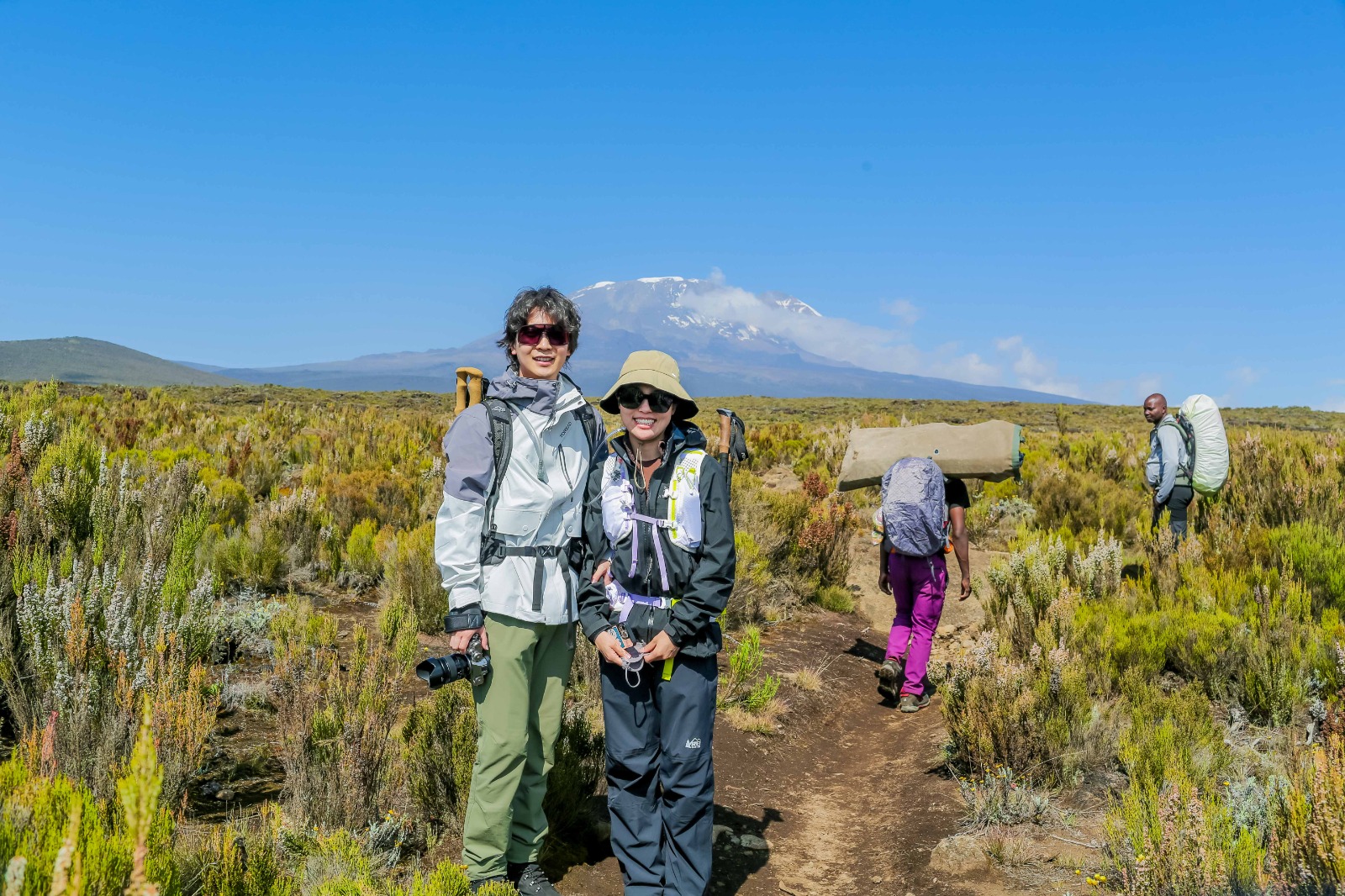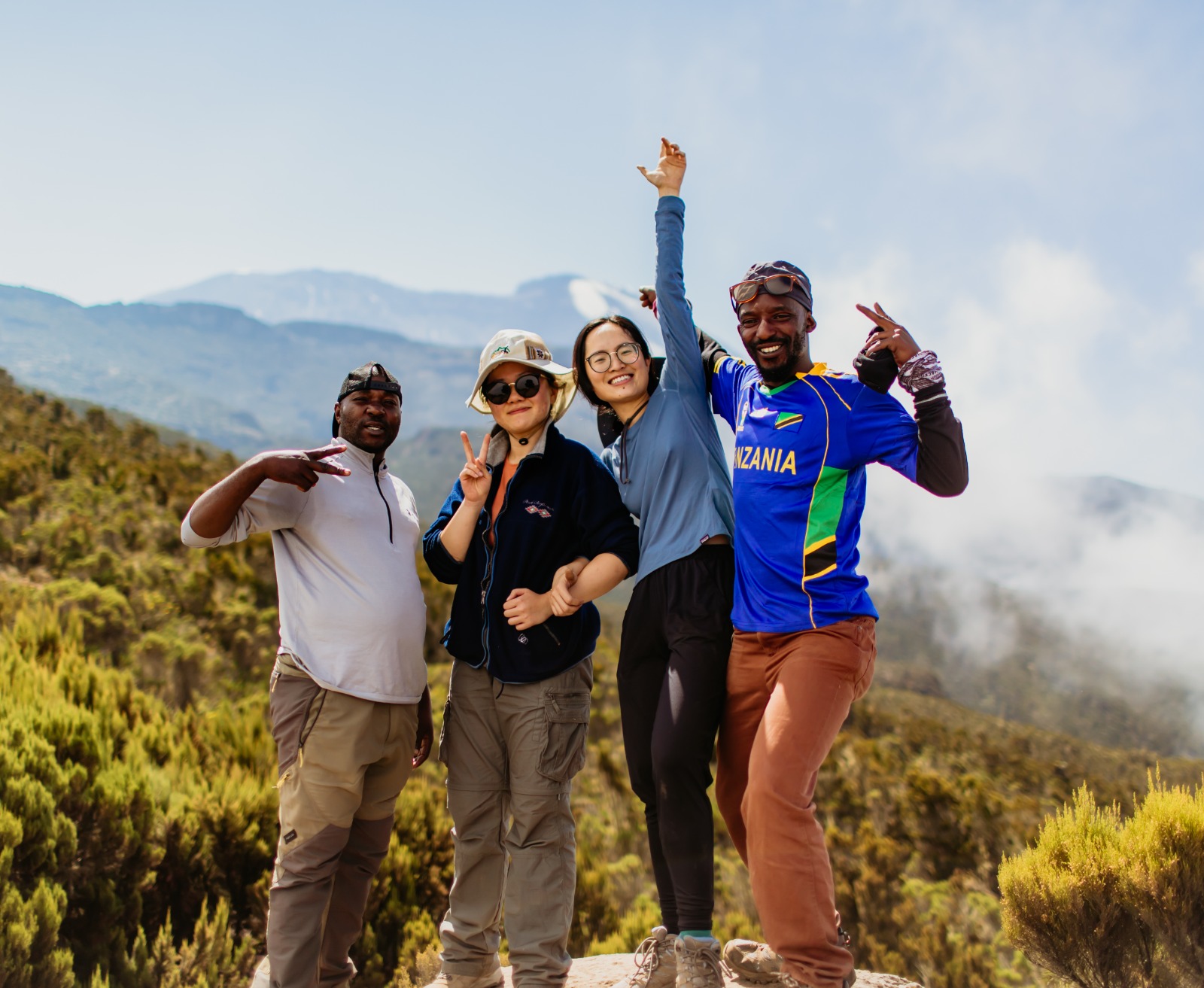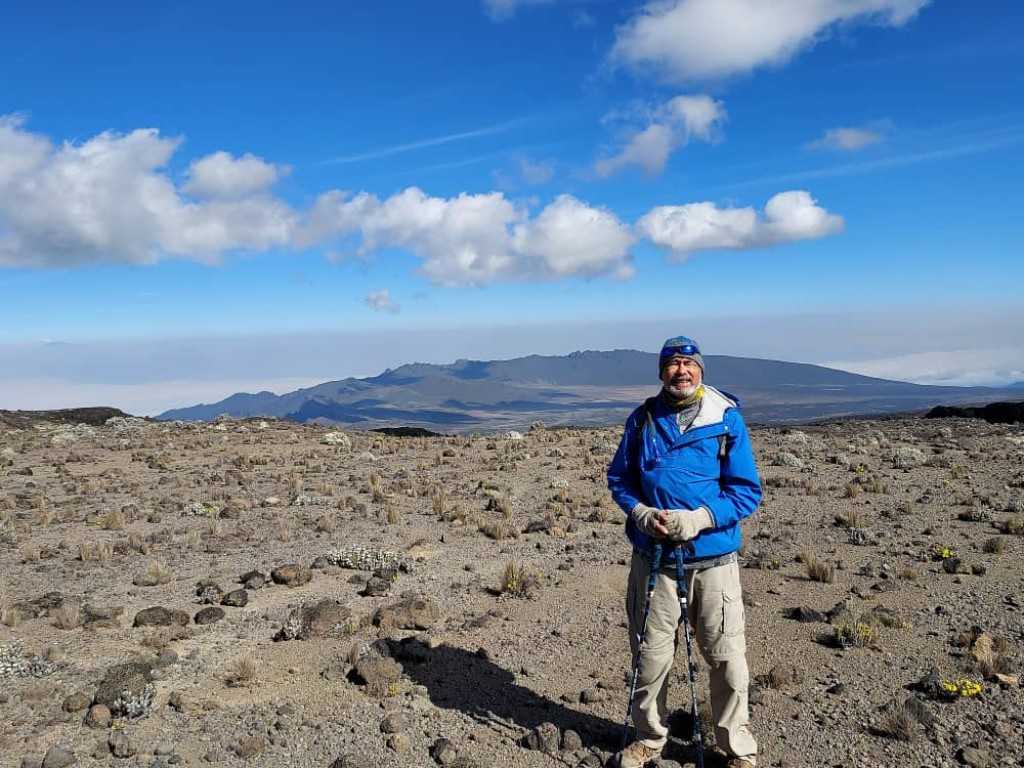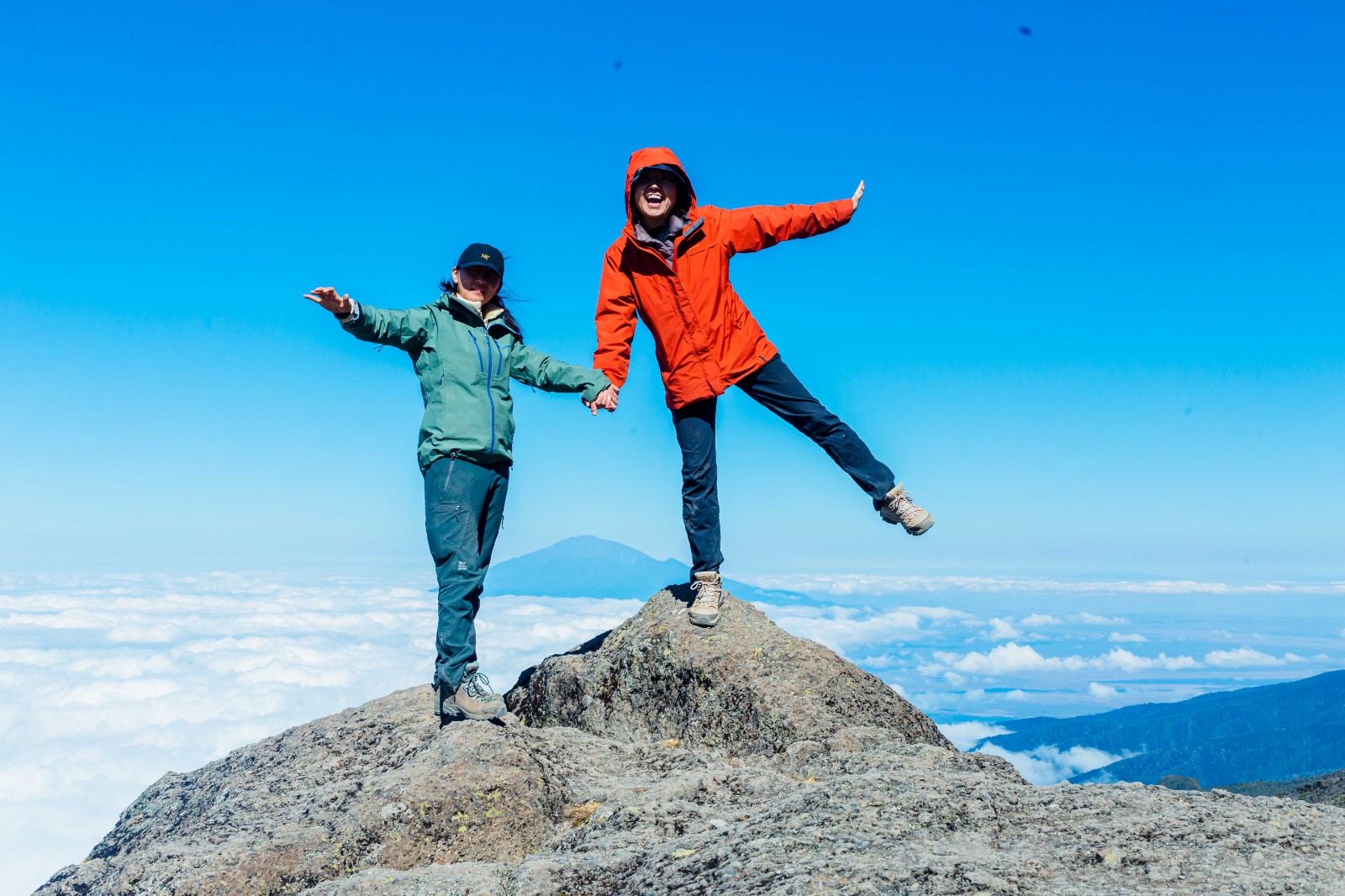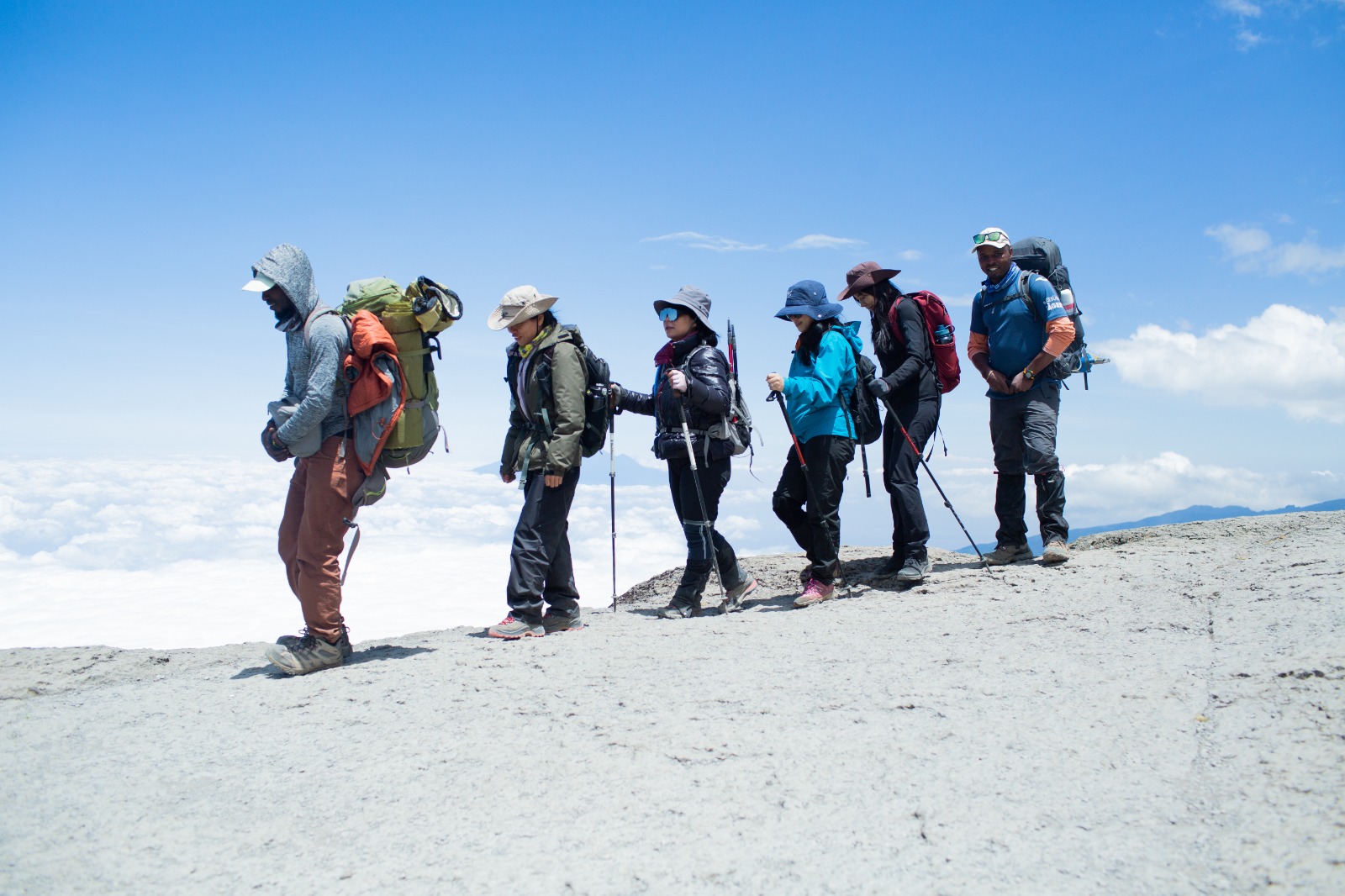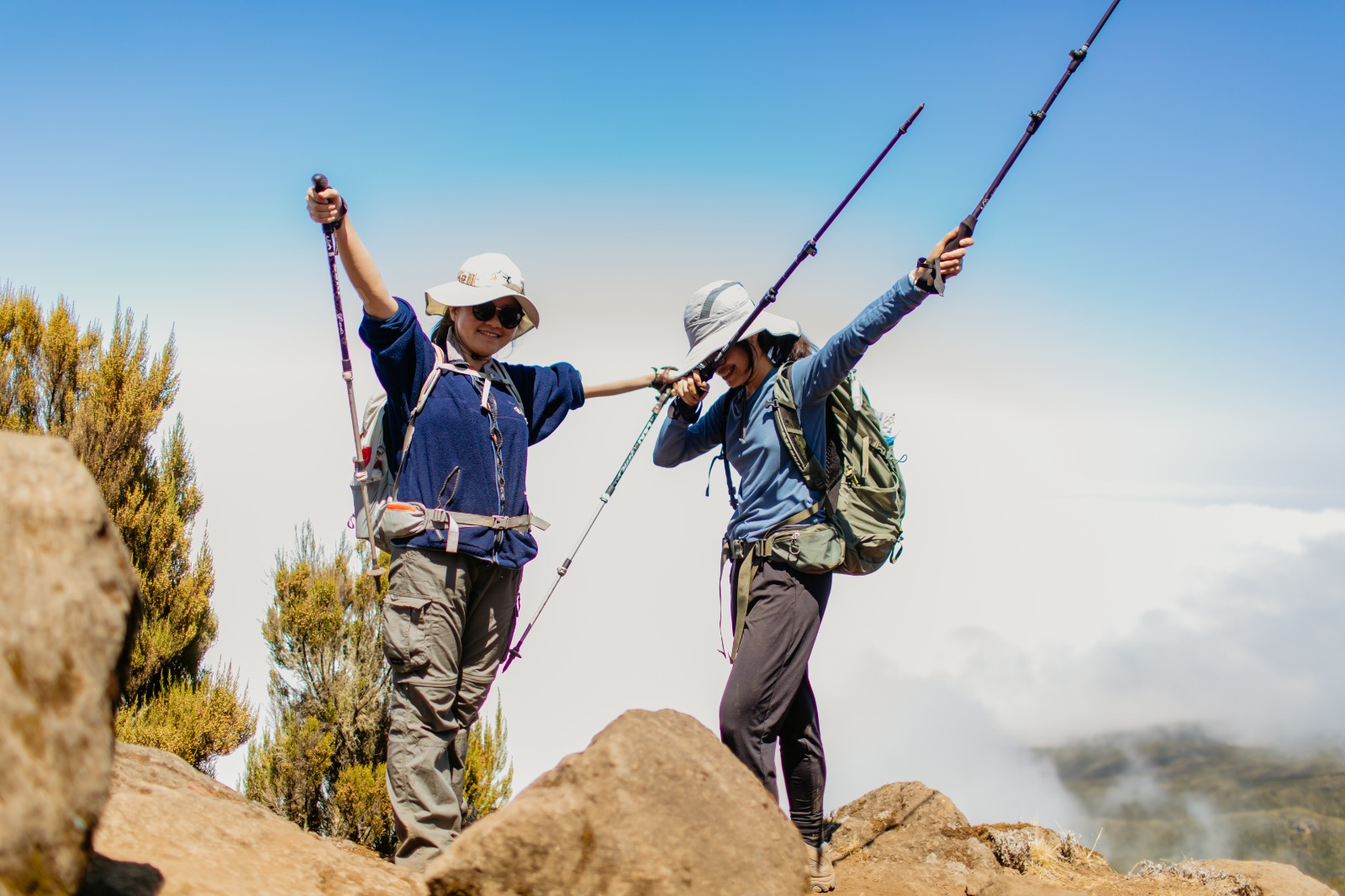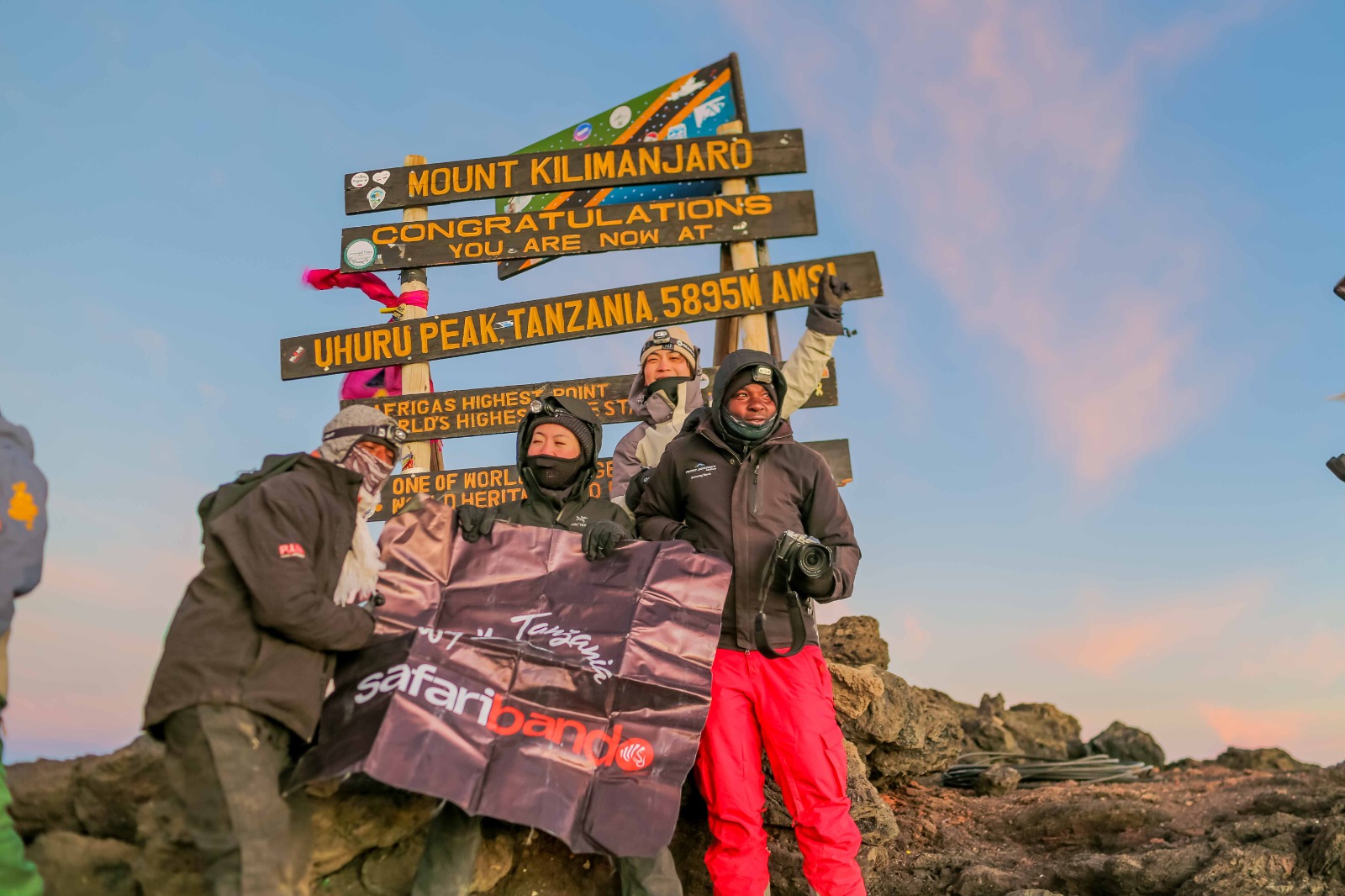
Mount Kilimanjaro is the tallest mountain in Africa, rising 5,895 meters (19,341 feet) above sea level. The summit is called Uhuru Peak, located on the crater rim of the Kibo volcanic cone.
Kilimanjaro is one of the Seven Summits, the highest mountains on each continent, and attracts thousands of climbers every year who attempt to reach its famous summit.
If you are planning to climb the mountain, start with the complete Kilimanjaro Climbing Guide.
Kilimanjaro Height in Different Units
Mount Kilimanjaro’s height is measured at:
-
5,895 meters above sea level
-
19,341 feet
-
3.66 miles
This measurement was officially confirmed in 1952 by the British Ordnance Survey, and later verified with modern GPS and satellite measurements.
The Three Volcanic Cones of Kilimanjaro
Mount Kilimanjaro is not a single peak but a massive volcanic mountain made of three cones.
Kibo
Kibo is the highest cone and contains the summit Uhuru Peak (5,895 m). It is considered dormant and is the part of the mountain that climbers summit.
Mawenzi
Mawenzi reaches 5,149 meters (16,893 feet) and is the second-highest peak on Kilimanjaro. It is rugged and technical, and climbers usually do not ascend it during standard Kilimanjaro treks.
Shira
Shira is the oldest volcanic cone and has collapsed into a plateau at about 4,000 meters.
Many routes, including the 7 Day Lemosho Route Kilimanjaro Climb, cross the Shira Plateau early in the climb.
How Long Does It Take to Reach the Summit?
Most Kilimanjaro climbs take between 5 and 8 days depending on the route and itinerary.
Popular routes include:
Longer itineraries allow better acclimatization and increase the chances of reaching the summit.
For a detailed explanation of trekking duration, read How Long Does It Take to Climb Kilimanjaro.
Temperature at the Summit
Even though Kilimanjaro is near the equator, temperatures at the summit can be extremely cold.
Typical summit temperatures range from:
-
-10°C to -20°C (14°F to -4°F) at night
This is why proper gear is essential. You can learn more in the guide Kilimanjaro Summit Temperature.
Why Kilimanjaro Is Unique
Mount Kilimanjaro is unique among the world’s tallest mountains for several reasons.
It is the tallest free-standing mountain in the world, meaning it rises independently from the surrounding plains rather than being part of a mountain range.
It can be climbed without technical mountaineering skills, making it accessible to many trekkers.
It contains multiple climate zones, from tropical rainforest to arctic summit conditions.
To understand the climbing challenge, read How Difficult Is the Kilimanjaro Climb.
Summit Success Rates
Reaching 5,895 meters is a significant challenge, and not every climber reaches the summit. Success depends on route choice, acclimatization, and preparation.
Routes with longer itineraries typically have higher success rates. Learn more in Kilimanjaro Summit Success Rate by Route.
Interesting Facts About Kilimanjaro Height
-
Kilimanjaro is the tallest mountain in Africa
-
It is the highest free-standing mountain in the world
-
The summit is Uhuru Peak at 5,895 meters
-
It is part of the Seven Summits challenge
You can explore more interesting information in Kilimanjaro Facts.
Final Thoughts
Mount Kilimanjaro stands 5,895 meters above sea level, making it the highest peak in Africa and one of the most famous mountains in the world. Every year, thousands of adventurers travel to Tanzania to attempt the climb and experience its incredible landscapes.
With the right preparation, route choice, and pacing, reaching the summit of Kilimanjaro can be an unforgettable achievement.
To start planning your climb, explore the available itineraries in Kilimanjaro Trekking Tours.