
Quick facts
Wildlife
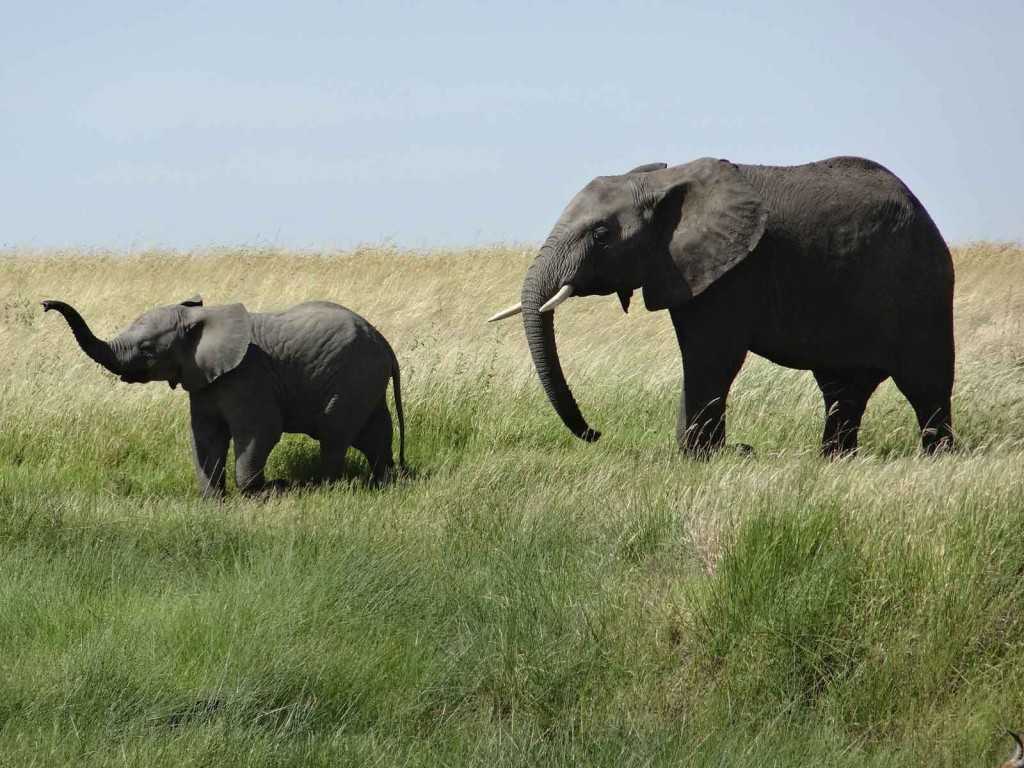
Pilanesberg holds all Big Five: lion, leopard, elephant, buffalo and both white and black rhino. The park also supports cheetah, African wild dog (reintroduced), giraffe, hippo, zebra, wildebeest, kudu, impala, eland and warthog. It occupies a unique ecotone where Kalahari dry savanna meets Lowveld bushveld, creating unusual species assemblages. Over 300 bird species recorded. The volcanic crater creates a central lake (Mankwe Dam) that concentrates wildlife and waterbirds year-round.
Top activities
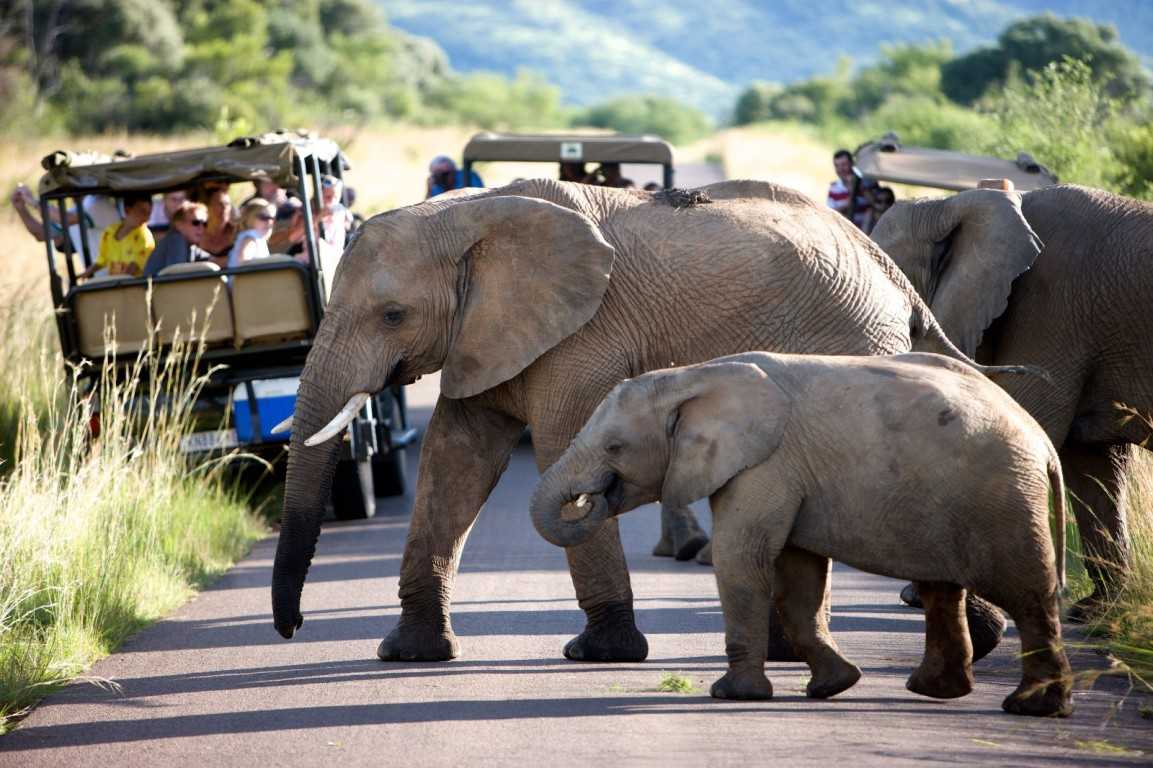
Self-drive Big Five game drives on Pilanesberg's well-signed road network. Guided game drives with rangers from the park's lodges. Night drives — available from Bakubung and other lodges, revealing leopard, hyena and nocturnal species. Bush walk with armed rangers from Sun City side. Boat cruise on Mankwe Dam — hippo, crocodile and waterbirds. Pilanesberg Centre wildlife education stop. Combination with Sun City resort complex adjacent to the park. Photography from the Mankwe hide overlooking the dam.
About Pilanesberg National Park
For visitors with limited time or a Johannesburg/Pretoria base, Pilanesberg National Park solves a real problem: how do you do a Big Five safari without flying to Kruger or booking a multi-day trip? The answer is 2.5 hours northwest of Johannesburg, inside a 1.3-billion-year-old volcanic crater, where 580 square kilometres of bushveld support lion, leopard, elephant, buffalo and both species of rhino.
Pilanesberg is one of the largest game reserve rehabilitation projects in Africa. Before 1979 it was degraded farmland; Operation Genesis re-stocked it from scratch with 6,000 animals from 19 species. Today it is a functioning Big Five ecosystem with naturally breeding populations of all headline species — including the world’s largest private white rhino breeding programme.
Where is Pilanesberg?
The park is in North West Province, adjacent to the Sun City resort complex, 180 km northwest of Johannesburg. From Johannesburg: N14 highway to the R556, approximately 2.5 hours. From Pretoria: similar distance, slightly different routing. The park has four main gates; Bakgatla and Manyane are the most commonly used for self-drivers.
The volcanic crater
The park sits inside an ancient alkaline complex volcano — one of the largest and best-preserved volcanic ring structures in the world, created by a massive eruption 1.3 billion years ago. The concentric rings of resistant volcanic rock create the park’s distinctive topography: ridges radiating from the centre like spokes, with the central Mankwe Dam at the hub. This geography concentrates water and wildlife in the crater centre — making Mankwe Dam one of the best wildlife-watching spots in the park regardless of season.
Self-drive
Pilanesberg’s road network is well-signed and easy to navigate without a guide. The main loop road around Mankwe Dam and the three radial roads (Leding, Sefara and Rathlogo) cover the park’s most productive wildlife areas in a 3–4 hour circuit. The roads are maintained dirt and gravel; a standard 2WD handles the entire park comfortably.
The Sun City connection
The Sun City resort complex borders the park’s southern boundary and shares an access road. Many visitors combine a night or two at one of the Sun City hotels (Palace of the Lost City is the luxury option) with morning and evening game drives in Pilanesberg. The park’s Bakubung Bush Lodge has the most direct game-drive access and the most authentic bush atmosphere.
Combine Pilanesberg with…
- Johannesburg and Pretoria — the natural starting city for any Pilanesberg visit.
- Kruger National Park — the Kruger private reserves are 4–5 hours east for a longer safari extension.
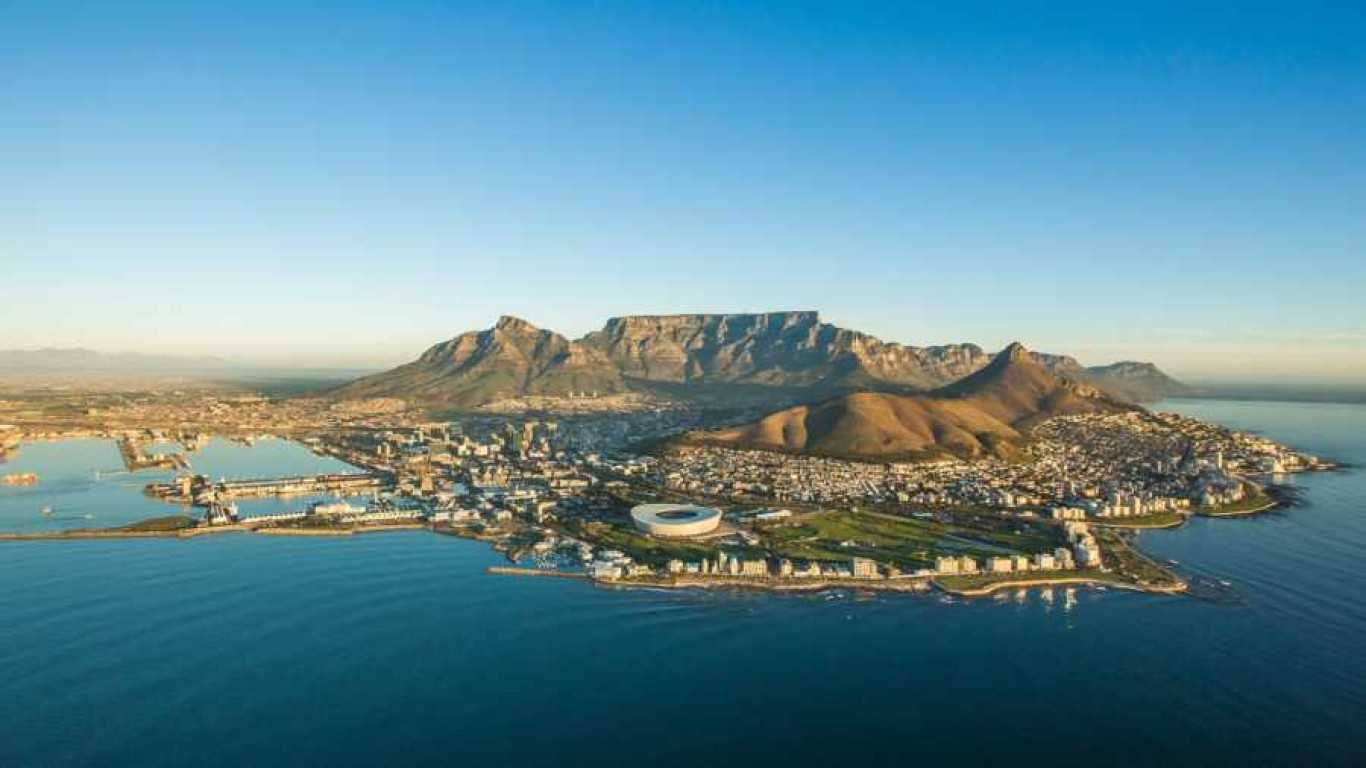
- Cape Town — fly south for the Cape Peninsula after the safari.
Frequently asked questions about Pilanesberg
Is Pilanesberg better than a Kruger day trip?
For Johannesburg-based visitors, yes — the park is 2.5 hours away vs 4–5 hours to Kruger’s nearest gate, making an overnight stay productive rather than mainly driving. Pilanesberg is also malaria-free.
Is Pilanesberg malaria-free?
Yes — unlike Kruger and the Limpopo lowveld, Pilanesberg is in a malaria-free zone. This makes it particularly suitable for families with young children.
Can you see all Big Five in Pilanesberg?
Yes — all five are resident and breeding. White rhino sightings are very reliable; black rhino are harder. Lion, leopard and elephant are seen on most game drives.
Want to visit Pilanesberg National Park?
Get a free custom safari plan within 24 hours.
Pilanesberg National Park safari tours
Want to visit Pilanesberg National Park?
Get a free custom safari plan within 24 hours.
Best time to visit Pilanesberg
May to September — Dry season (best game viewing)
The South African winter is Pilanesberg’s prime window. Vegetation thins dramatically as the acacia and bushwillow lose their leaves, opening long sightlines across the crater. Wildlife concentrates at Mankwe Dam and the park’s boreholes. Rhino, lion and leopard are easiest to spot. Temperatures are mild (18–25°C) and the park is busy with Johannesburg and Pretoria weekenders in June and July school holidays.
October to November — Spring (calving, birding peak)
The first spring rains arrive and impala, zebra and wildebeest begin dropping calves. Predator activity peaks around the vulnerability of young animals. Birdlife is at its most diverse with summer migrants arriving from October. Still good game visibility before the full leafing-out of the vegetation.
December to March — Summer (lush, hotter, busiest holiday period)
Dense green vegetation makes game viewing harder. Summer rains make for beautiful landscapes. School holiday periods (December–January) see the park at its absolute busiest. Game viewing is still very good at the dam and permanent water.
Bottom line: May to September for the finest game viewing. Year-round for Big Five sightings thanks to the permanent water at Mankwe Dam.
Where to stay in Pilanesberg National Park
We'll recommend accommodation across all budget levels based on your dates and preferences.
Browse All LodgesWant to visit Pilanesberg National Park?
Get a free custom safari plan within 24 hours.
Nearby destinations
 South Africa
 South Africa
 South Africa
 South Africa