Quick facts
Wildlife
The approach from the Lake Natron shore passes through acacia scrubland supporting Grant's gazelle, zebra and giraffe. The volcanic terrain of the upper mountain is largely barren, though Verreaux's eagle and augur buzzard patrol the thermals above the lava fields. Lammergeier (bearded vulture) has been recorded on the higher slopes. The primary draw is geological rather than faunal — Lengai's carbonatite lava flows and active crater are without parallel anywhere on Earth.
Top activities
Night hike summit attempt — the standard route departs the Natron lakeshore camp around midnight, summiting at dawn to avoid the brutal mid-morning heat. Crater rim exploration above the active natrocarbonatite lava vents. Geology and volcanology interpretation with specialist guides. Combined Lake Natron and Lengai 2-night itinerary from Arusha. Maasai cultural context visits at lakeside communities — Lengai is a sacred site in Maasai cosmology. Photography of the white lava fields and crater fumaroles at sunrise.
About Mount Ol doinyo Lengai
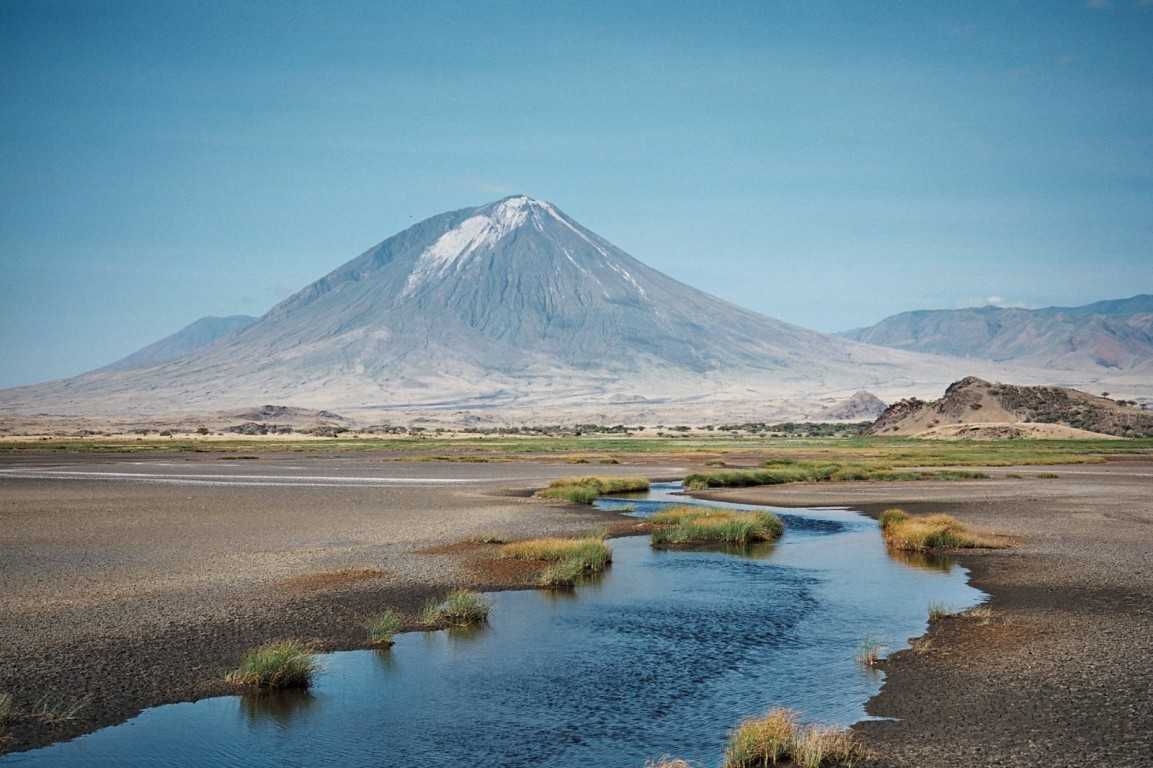
The Maasai call it Ol Doinyo Lengai — "Mountain of God" — and there is something appropriate in the name. This 2,962-metre stratovolcano on the southern shore of Lake Natron is unlike any other mountain on Earth. It is the worla's only active carbonatite volcano — erupting a peculiar low-temperature lava called natrocarbonatite that is cooler, faster-flowing and more fluid than conventional basaltic lava, and turns from black to white within hours of exposure to air and moisture. From a distance, Lengaa's upper slopes look like they have been dusted with snow.
Geologically, Lengai is extraordinary. The lava it produces is rich in sodium, potassium and calcium carbonate — essentially the same chemistry as the alkaline water of Lake Natron below it. Scientists believe Lengai has been contributing to the Rift Vallea's chemistry for thousands of years, its mineral-rich eruptions draining into the lake and creating the hypersaline conditions that make it both toxic and uniquely fertile.
Where is Ol Doinyo Lengai?
The volcano rises directly from the southern shore of Lake Natron in the Arusha Region of northern Tanzania. It sits within the Gregory Rift — the eastern branch of the East African Rift System — and is approximately 200 km from Arusha by road (4–5 hours). The climbing base camp is a lakeshore community camp run by the Engare Sero Maasai community.
The climb
Lengai is not a technical mountaineering objective — no ropes, no ice axes — but it is one of Tanzania's physically toughest day hikes. The statistics: 2,000 metres of elevation gain from the Natron base camp, on a slope that averages 45 degrees on the upper section, over terrain that is alternately loose ash, crumbling volcanic rock and brittle carbonatite crust. Allow 4–6 hours up, 2–3 hours down.
The standard approach is a night hike, departing base camp around midnight and reaching the summit crater rim as the sun rises over the Rift Valley. This strategy has two purposes: to avoid the brutal solar radiation on the exposed black volcanic rock in daylight, and to catch the extraordinary dawn light over Lake Natron and the surrounding landscape. Kilimanjaro is sometimes visible 200 km to the south on very clear December to February mornings.
The crater
The summit is a broad, active caldera with multiple vents and lava hornitos (small spatter cones). Active carbonatite lava flows are a real possibility during most visits — the lava is dark grey when molten and turns white as it cools. Summit visits should always respect current volcanic activity: your guide will assess conditions before allowing crater rim exploration. Lengai has had significant eruptions in 1966, 1983, 1993 and 2007–08; between major eruptions it produces continuous but lower-intensity effusive activity.
Sacred significance
To the Maasai, Lengai is a sacred mountain — the earthly home of Enkai, the Maasai deity. It is associated with rain, fertility and catastrophe; significant eruptions are interpreted as divine communication. Several Maasai ceremonies and pilgrimages are conducted on and around the mountain. Travellers should approach the cultural dimension of the climb with respect for this context.
What to bring
- Headlamp with fresh batteries (essential for the night hike)
- Warm layers for the cold summit — temperatures at the rim can drop below 5°C
- At least 3 litres of water per person
- High-ankle boots with good tread — sneakers are not appropriate
- Trekking poles — invaluable on the descent
- A face mask or buff for the sulphurous gases near active vents
- Sun protection for the descent — the black volcanic rock reflects intense radiation at altitude
Combine Ol Doinyo Lengai with…
- Lake Natron — always: the Engare Sero footprints, flamingo viewing and waterfall hike fill day one, the Lengai night hike fills day two.
- Serengeti via Loliondo — an adventurous 2WD accessible route on a Northern Tanzania loop.
- Ngorongoro — return via Engaruka and the Ngorongoro escarpment road.
Frequently asked questions about Ol Doinyo Lengai
How difficult is the Lengai climb?
Very strenuous. The gradient on the upper section is approximately 45 degrees on loose volcanic material. Fit, experienced hikers describe it as one of the hardest day hikes they have attempted. Unfit or inexperienced hikers regularly turn back before the summit. No mountaineering skills are required but physical conditioning and determination are essential.
Is Ol Doinyo Lengai dangerous?
The volcanic hazard (active lava flows, gas emissions) is real but manageable with local guide knowledge of current activity levels. The fall hazard on steep volcanic rock is the greater concern for most climbers. Always go with an experienced local guide who monitors volcanic activity daily.
Can anyone climb Lengai?
Anyone with good fitness and mountain hiking experience. The climb is not suitable for beginners, people with knee problems (descent is brutal) or those with no tolerance for heights on exposed ridges.
Is it still erupting in 2026?
Lengai is permanently active at a low level. Major effusive eruptions are episodic. Check current activity reports from the Smithsonian Global Volcanism Program or consult your guide for the most recent crater conditions.
Want to visit Mount Ol doinyo Lengai?
Get a free custom safari plan within 24 hours.
Mount Ol doinyo Lengai safari tours
Want to visit Mount Ol doinyo Lengai?
Get a free custom safari plan within 24 hours.
Best time to climb Ol Doinyo Lengai
June to October — Dry season (strongly recommended)
The dry season is the only sensible window for most climbers. The lower volcanic slopes are extremely steep and the surface is a mixture of loose ash, volcanic rock and carbonatite crust. In wet conditions the crust becomes treacherously slippery and the risk of falls increases significantly. Dry-season nights are cooler (15–20°C at the base), making the midnight start more bearable, and dawn summit arrivals are rewarded with extraordinary views over Lake Natron, the Rift Valley and, on clear mornings, Kilimanjaro 200 km to the southeast.
January to February — Secondary dry window
A viable alternative window. The base camp temperature is warm but the higher slopes are cooler at night. January typically produces very clear summit views. Less busy than July and August.
November to December — Short rains (avoid the summit, consider the crater only)
Brief rains make the upper slopes unpredictable. Experienced climbers with volcanic terrain experience can still attempt the mountain, but should be prepared to turn back if conditions deteriorate.
March to May — Long rains (do not attempt)
The access road to the Lake Natron base camp is often impassable, and the mountain itself is dangerously slippery. Eruptions are more frequent during the wetter months. Do not attempt a Lengai climb during the long rains.
Bottom line: June to October, starting the night hike at midnight and summiting at dawn.
Where to stay in Mount Ol doinyo Lengai
We'll recommend accommodation across all budget levels based on your dates and preferences.
Browse All LodgesWant to visit Mount Ol doinyo Lengai?
Get a free custom safari plan within 24 hours.
Nearby destinations
 Tanzania
 Tanzania
 Tanzania
 Tanzania