All Uganda Safaris
Uganda Safari: Why Go
Uganda is called the Pearl of Africa — a description attributed to Winston Churchill in 1908, and one that the country's extraordinary biodiversity still earns. Over half of the world's remaining mountain gorilla population lives in Uganda (the remainder split between Rwanda and the Democratic Republic of Congo). The country also has 50% of Africa's bird species (over 1,000 recorded), chimpanzee in multiple parks, and a range of savanna wildlife in the western and northern parks that adds a conventional safari dimension to the primate trekking.
Uganda's Key Safari Destinations
Bwindi Impenetrable National Park — gorilla trekking
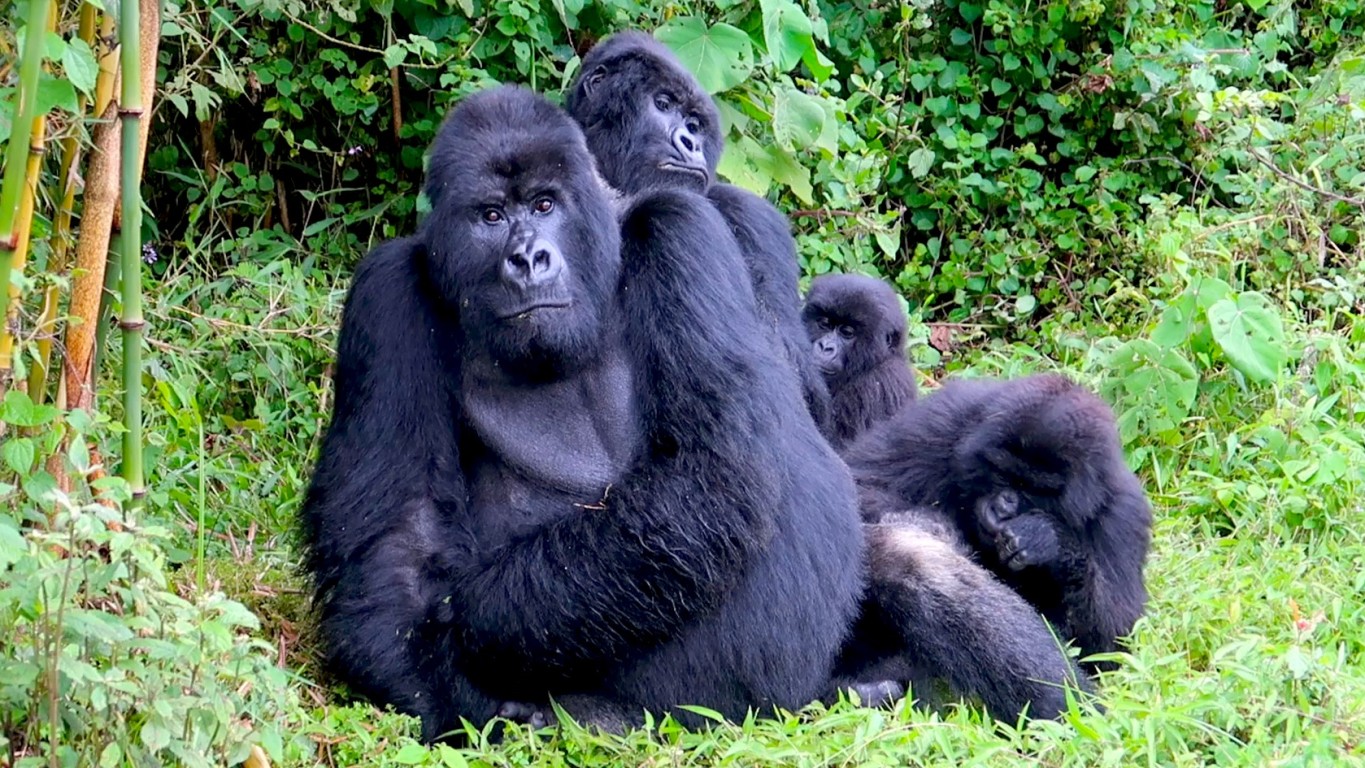
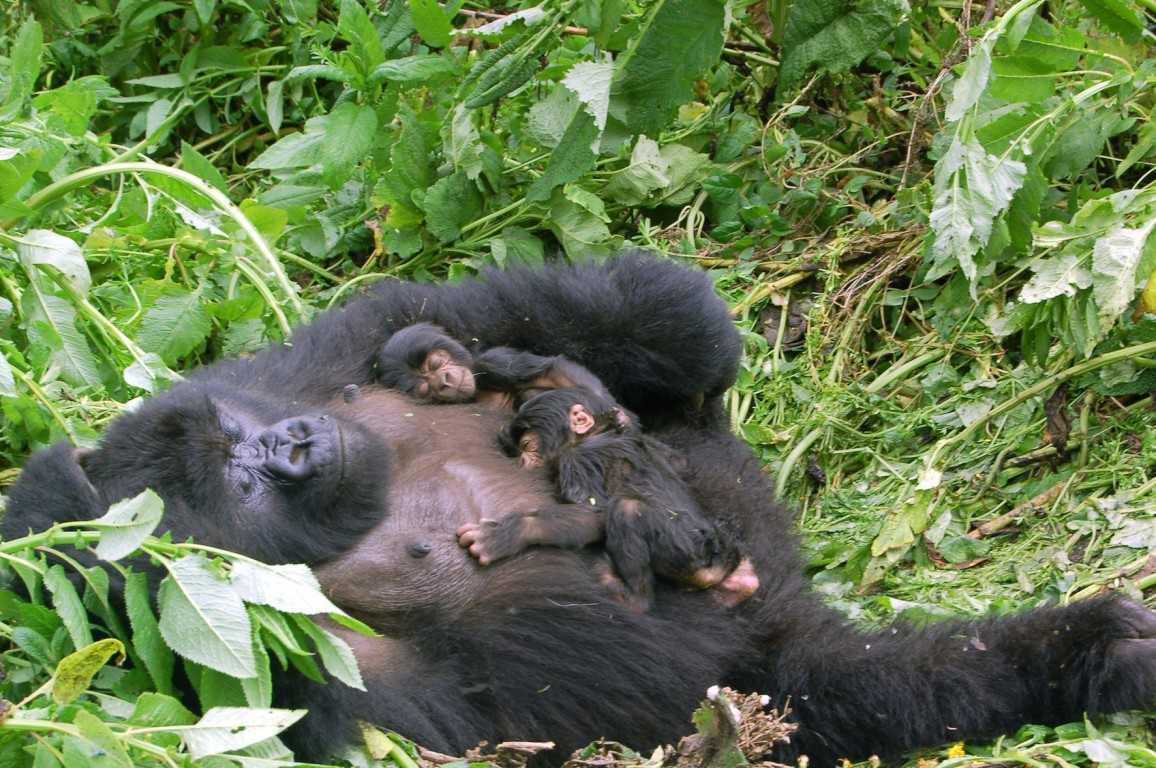
Bwindi is Uganda's most important conservation site — a 321 sq km ancient rainforest in southwestern Uganda supporting approximately 460 mountain gorillas across multiple habituated family groups. Trekking permits (limited to 8 visitors per gorilla family per day) give a one-hour encounter with a gorilla family at close range: adults at 3 to 5 metres, juveniles playing in the canopy, the silverback moving through the undergrowth metres from where you stand. No photograph or description fully prepares first-time visitors for the scale of a silverback in its natural habitat — the largest primate on Earth, weighing up to 200 kg, encountered in a forest clearing at arm's length.
Bwindi has four trekking sectors: Buhoma, Ruhija, Rushaga and Nkuringo. Each has different gorilla families at different altitudes and forest densities. We advise on which sector suits your fitness level and accommodation preferences.
Queen Elizabeth National Park — tree-climbing lions and boat safari
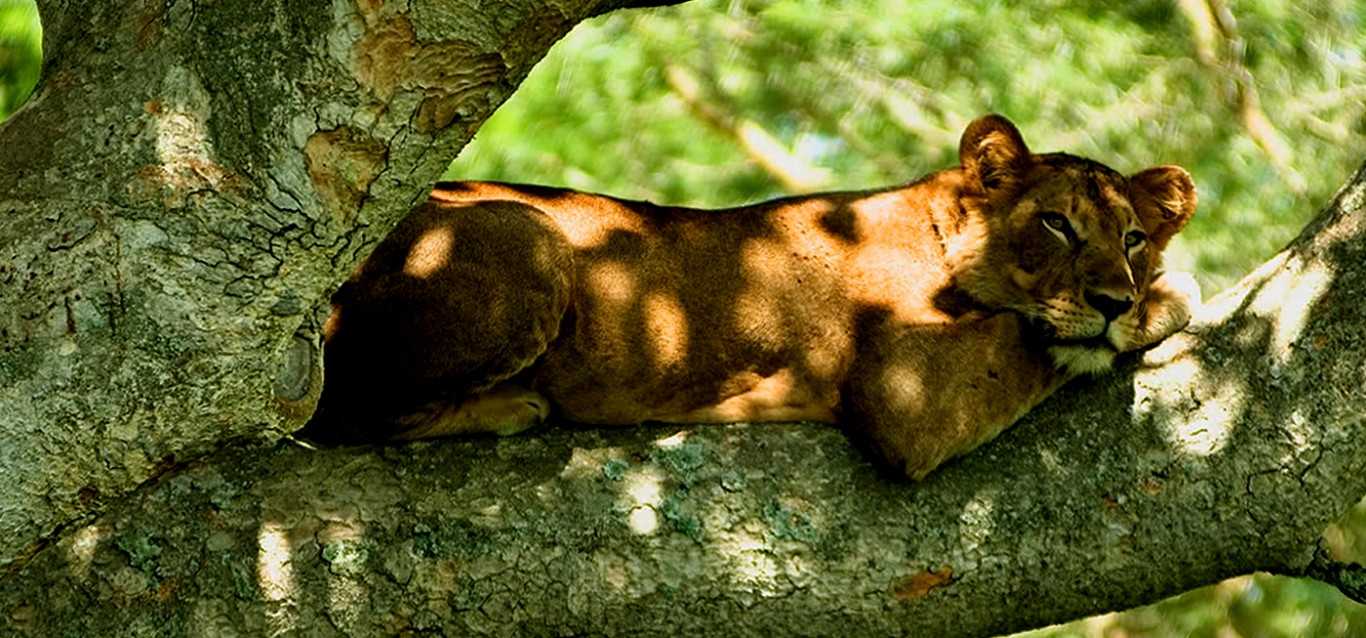
Queen Elizabeth National Park in western Uganda borders the Democratic Republic of Congo across Lake Edward. The park's most famous feature is the Ishasha sector in the south — the only place in East Africa besides Lake Manyara in Tanzania where lions habitually climb trees, resting in the branches of large fig trees in groups of 3 to 7 animals. The Kazinga Channel boat safari (a 40 sq km waterway connecting Lakes George and Edward) has one of the highest hippo densities in Africa alongside buffalo, elephant and an extraordinary diversity of waterbirds. The park's savanna sectors also have chimpanzee in the Kyambura Gorge and giant forest hog on the crater lakes plateau.
Kibale Forest National Park — chimpanzee trekking
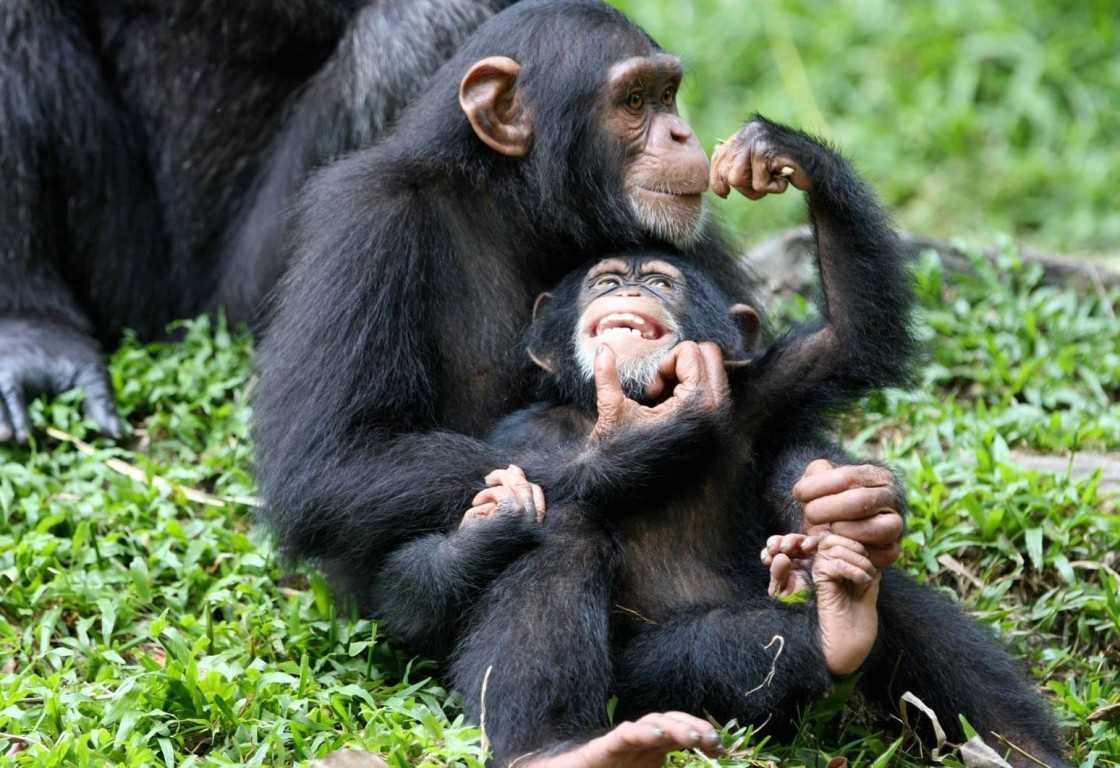
Kibale Forest has the highest density of chimpanzee of any habitat in Africa — approximately 1,500 chimpanzees in 795 sq km of forest. The habituated communities at Kibale give the most reliable chimpanzee trekking encounter in Uganda: the forest is less steep than Bwindi, the chimpanzees are large and active, and the diversity of primate species encountered alongside the chimps (including red colobus, black-and-white colobus, red-tailed monkey and L'Hoest's monkey) makes Kibale the finest primate trekking destination in East Africa.
Murchison Falls National Park — Uganda's largest park
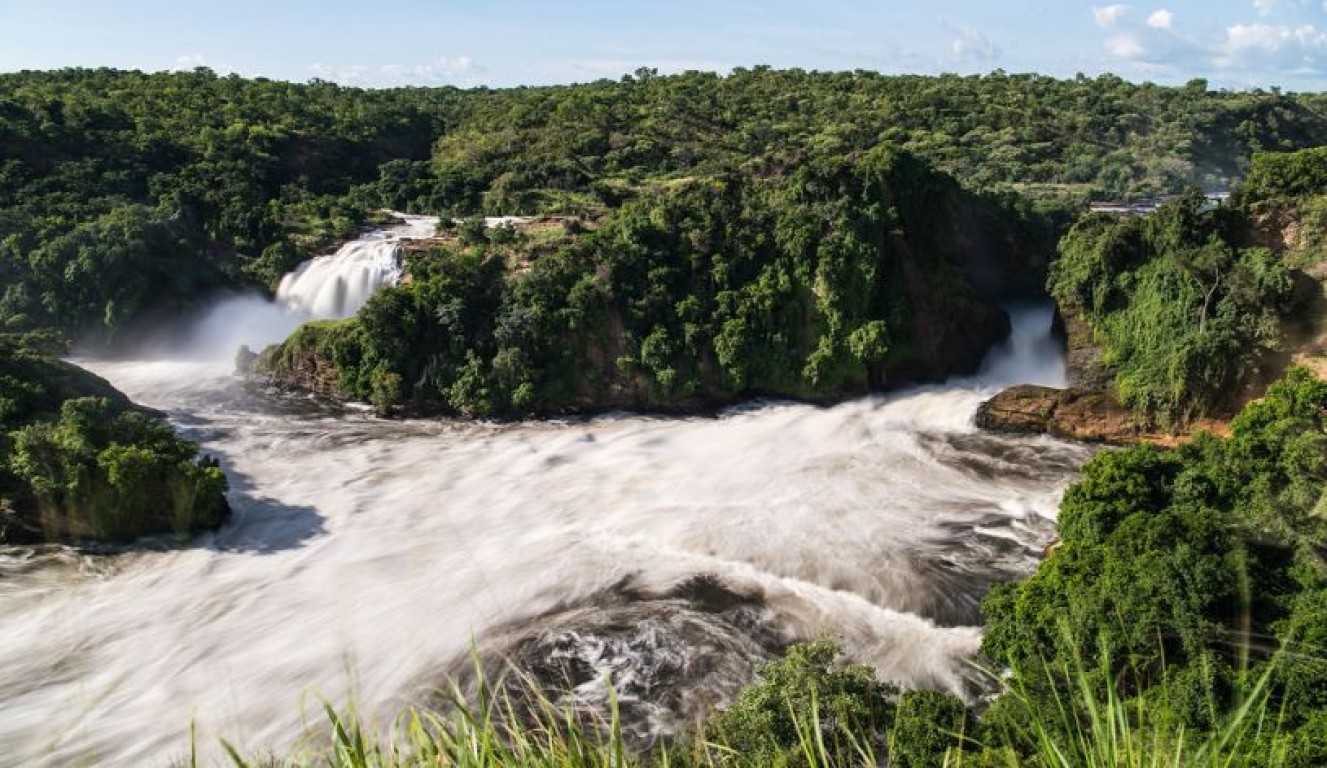
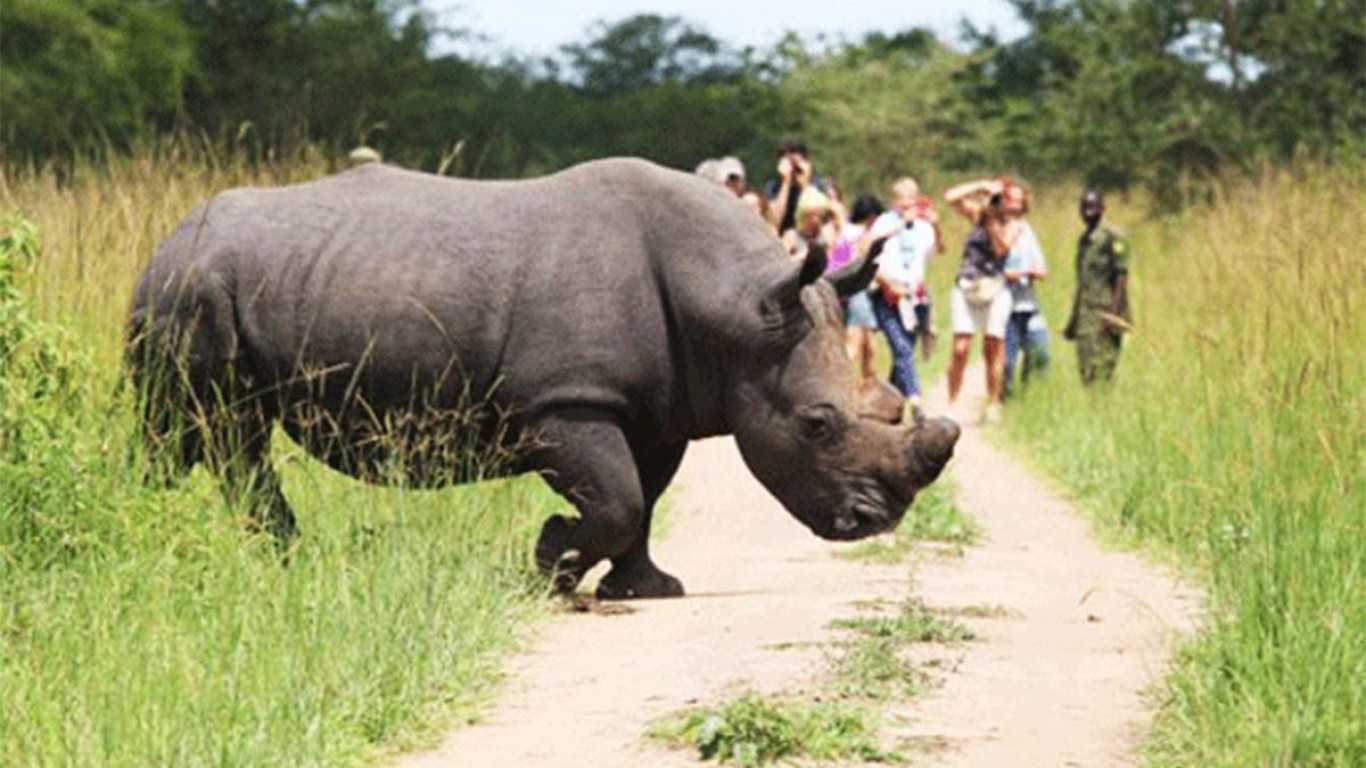
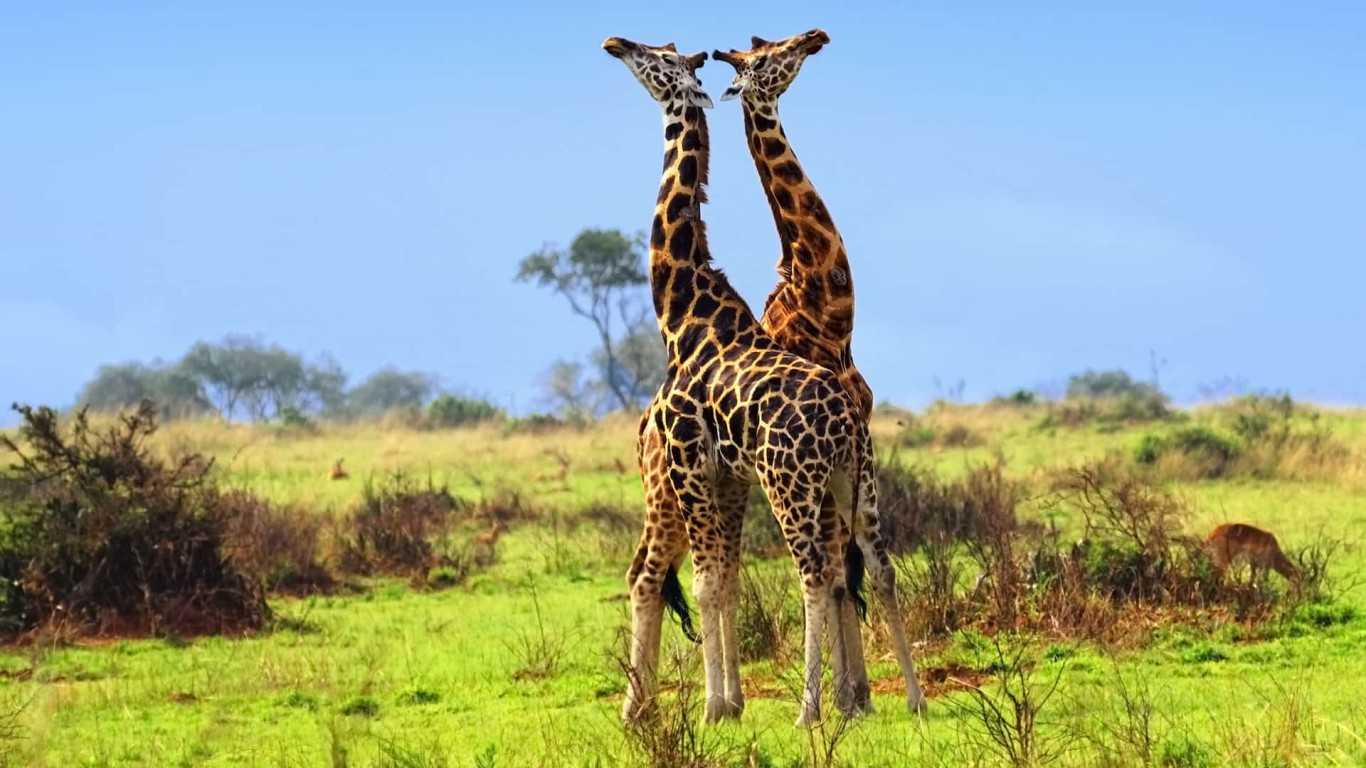
Murchison Falls National Park in northern Uganda is the country's largest park and home to one of Africa's great natural spectacles: the entire Nile River (at this point carrying the full flow of Lake Victoria) forced through a 7-metre gap in the rock, creating the most powerful waterfall on Earth by water volume. The Nile boat safari upstream to the base of the falls passes hippo, Nile crocodile, elephant, giraffe and enormous numbers of waterbirds. The savanna north of the Nile has lion, leopard, buffalo, Jackson's hartebeest and Uganda kob in significant numbers.
Uganda Gorilla Trekking: Permits and Practicalities
Mountain gorilla trekking permits in Uganda are issued by the Uganda Wildlife Authority (UWA) and currently cost $800 per person per trek. Each permit allows one 60-minute encounter with a habituated gorilla family. Permits for Bwindi sell out months ahead for the June to October dry season — we secure permits as part of all Uganda gorilla safari bookings. Book as early as possible; December to February permits are more available than peak season.
Uganda East Africa Combinations
Uganda is most commonly combined with Rwanda (shared gorilla trekking access — permits available in both countries) or with a Tanzania Northern Circuit safari. A natural 14-day East Africa itinerary: 5 days Northern Tanzania safari (Serengeti, Ngorongoro), fly to Kampala, 3 days Kibale chimpanzee trekking, 4 days Bwindi gorilla trekking. Two countries, two great primate species, the finest savanna wildlife in East Africa — one itinerary.
Frequently Asked Questions
How hard is gorilla trekking in Bwindi?
Moderate to very demanding depending on which sector and which gorilla family is assigned. Bwindi's terrain is steep, the forest floor is root-covered and the altitude (1,900 to 2,400m) adds breathlessness. Trek durations range from 1 hour to 8 hours depending on where the gorillas have moved. Good physical fitness and waterproof trail boots are essential. The Buhoma and Ruhija sectors are generally considered slightly less extreme than Rushaga and Nkuringo.
What is the best time to visit Uganda?
June to September and December to February are the driest and most comfortable trekking periods. The long rains (March to May) and short rains (October to November) make Bwindi's trails very muddy but gorilla trekking continues year-round. Permits are available in all seasons — the dry season permits are hardest to secure.
Can I see both gorillas and chimpanzees on one Uganda trip?
Yes — the most popular Uganda itinerary combines Kibale Forest (chimpanzee trekking, 2 to 3 days) with Queen Elizabeth National Park (game drives and Kazinga Channel, 2 days) with Bwindi (gorilla trekking, 2 to 3 days). Total 7 to 9 days in Uganda, covering both great ape species and a full savanna wildlife experience.
Not sure which Uganda Safaris is right for you?
Our team designs custom itineraries — no fee, no obligation.Explore Other Safari Types
Kilimanjaro Trekking Tours
View Tours
Tanzania Lodge Safaris
View Tours
Tanzania Honeymoon Safaris
View Tours
Tanzania Camping Safaris
View Tours
Serengeti Migration Safaris
View Tours