
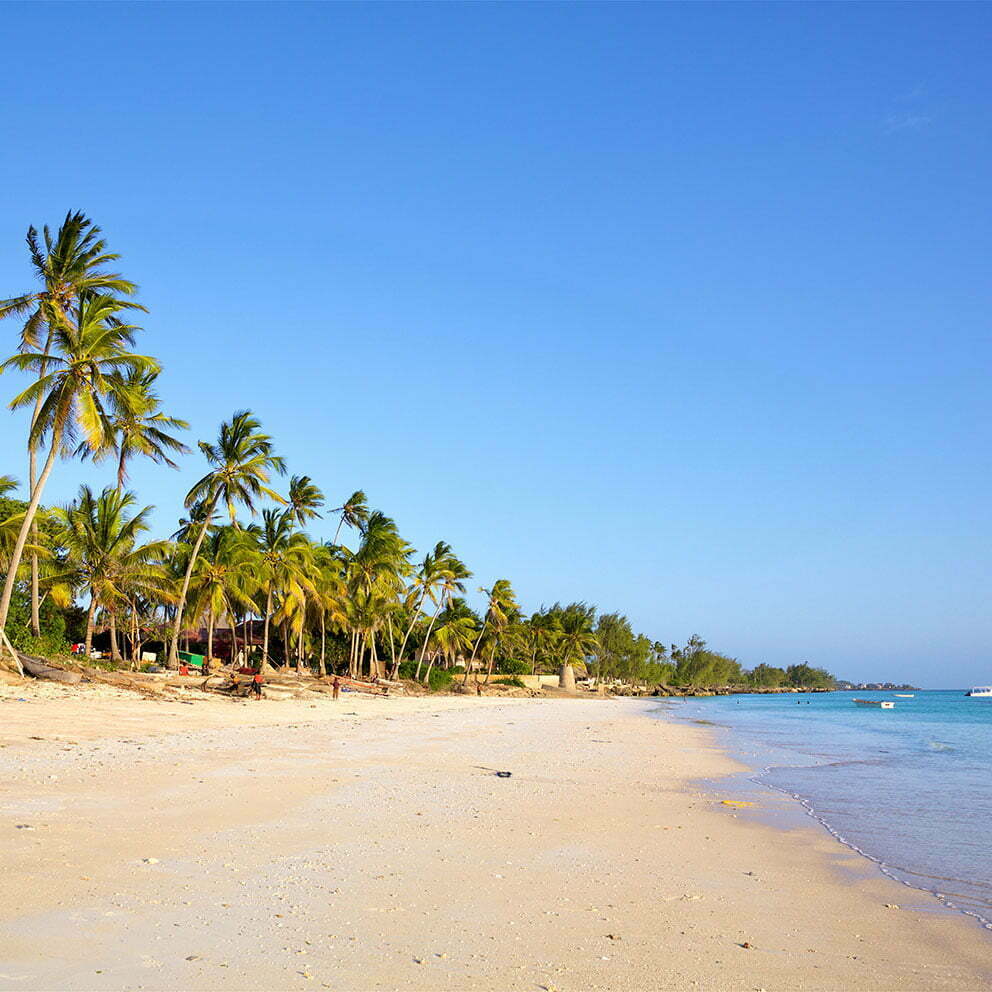
Quick facts
Wildlife
Kizimkazi is Zanzibar's premier dolphin destination. Two resident populations — spinner dolphin (Stenella longirostris) and Indo-Pacific bottlenose dolphin — inhabit the southern channel year-round, resting in the protected bay at dawn and feeding offshore. Morning snorkel trips allow swimmers to enter the water with the pods. Humpback whale pass between June and October, sometimes close inshore. The reef off Kizimkazi has healthy coral gardens with reef fish, sea turtle and occasional ray. Baobab trees framing the coastline support various hornbill and raptor species.
Top activities
Spinner dolphin snorkelling tour — the primary Kizimkazi activity: early-morning boat trips locate the dolphin pods in the southern bay, passengers slip into the water to snorkel alongside them. Kizimkazi Dimbani Mosque — the oldest mosque in East Africa (1107 AD, Shirazi inscriptions inside), still in active use and open to respectful visitors outside prayer times. Kizimkazi village walk — through the fishing community among baobab trees and dhow-building yards. Reef snorkelling on the southern Kizimkazi reef. Sunset from Kizimkazi Point over the southern channel. Zanzibar southern day trip combining Stone Town, Jambiani and Kizimkazi.
About Kizimkazi Beach
At the southern tip of Zanzibar’s main island, a fishing village wakes before dawn every morning. The boats leave the Kizimkazi jetty in darkness, navigating by torch and local knowledge to the spot in the southern channel where the dolphins sleep. By the time the sun is fully up, passengers are in the water alongside spinner and bottlenose dolphin — watching the acrobatic spinners launch themselves in spiralling leaps or simply drifting in the current with a pod of bottlenose rising and diving around them.
Kizimkazi is Zanzibar’s dolphin village. The two resident populations — spinner dolphin and Indo-Pacific bottlenose — have made the protected southern bay their home and their resting ground, returning each dawn before dispersing offshore to feed. The dolphin tour industry here has grown significantly, and responsible operators prioritise the dolphins’ welfare (never entering the water between a mother and calf, not chasing the pods when they signal stress). Choose your operator on that basis.
Where is Kizimkazi?
On Zanzibar’s southern coast, 60 km from Stone Town (1.5–2 hours by car). The village splits into two sections: Kizimkazi Dimbani (to the north, where the mosque is) and Kizimkazi Mkunguni (to the south, the main dolphin tour departure point). Most dolphin day trips from Stone Town, Nungwi, Paje and Jambiani drive to Kizimkazi Mkunguni.
The dolphin encounter: responsible tourism
The responsible way to experience the dolphins:
- Choose an operator who waits for the dolphins to approach the boat rather than driving into the pod.
- Never enter the water between a mother and calf.
- Decline if your operator positions the boat to cut off a moving pod.
- Enter the water quietly, without splashing, and allow the dolphins to come to you.
- Depart when the dolphins show stress signals (fast directional swimming, tightly packed group).
Kizimkazi Dimbani Mosque
The Kizimkazi Mosque (also called Kizimkazi Shirazi Mosque) was built in 1107 AD — making it the oldest mosque in East Africa. The original Shirazi Arabic inscription inside the mihrab documents the founding date and the name of the mosque’s patron. The mosque was subsequently enlarged and rebuilt in later centuries but incorporates the original foundation and decorative elements. It is still in active use; visitors should remove shoes, dress modestly and visit outside prayer times.
The Shirazi were Persian traders who established settlements along the East African coast in the 10th–12th centuries; the mosque is a direct legacy of that early Indian Ocean trading network and one of the most significant historical monuments in Tanzania.
The Kizimkazi landscape
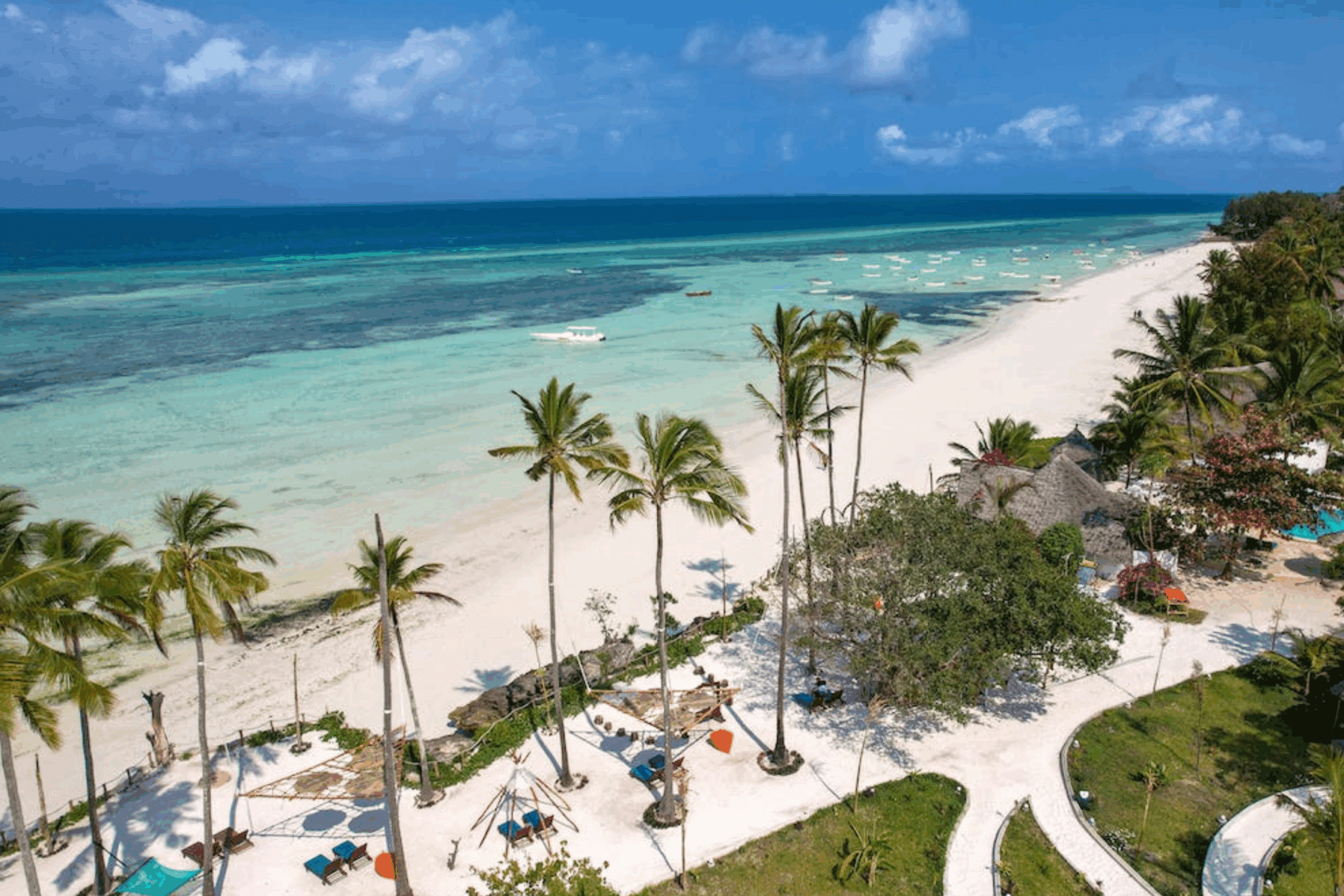
Kizimkazi’s coastal landscape is more dramatic than the flat-beach Zanzibar norm: ancient baobab trees frame the rocky headlands, dhow-building yards are still in operation on the foreshore, and the small offshore island of Kizimkazi creates a protected channel where the southern swell is broken and the water is clear. Sunset from the headland above the village — looking south across the channel with baobabs in the foreground — is one of Zanzibar’s finest.
Combine Kizimkazi with…
- Jambiani Beach — 30 minutes north; cycle or drive for the lagoon beach.
- Paje Beach — 40 minutes north; kitesurfing and east-coast atmosphere.
- Stone Town — day trip north for the UNESCO heritage town.
Frequently asked questions about Kizimkazi
Is swimming with dolphins ethical at Kizimkazi?
With a responsible operator who follows the guidelines above: yes. The dolphins are wild animals who can choose to engage or avoid the boats. Problems arise when operators chase or corner pods; choose operators with a documented welfare policy.
Can you see dolphins without getting in the water?
Yes — the pods are often visible from the boat and are close enough for photography. Non-swimmers can do the tour from the boat.
How old is the Kizimkazi mosque?
The original foundation dates to 1107 AD, making it nearly 920 years old and the oldest mosque in East Africa. The current building incorporates elements from multiple construction phases but the original inscription remains.
Want to visit Kizimkazi Beach?
Get a free custom safari plan within 24 hours.
Kizimkazi Beach safari tours
No fixed packages listed yet — we'll build a custom safari around Kizimkazi Beach for you.
Browse All ToursWant to visit Kizimkazi Beach?
Get a free custom safari plan within 24 hours.
Best time to visit Kizimkazi
Year-round for dolphins (morning trips always best)
The resident dolphin populations at Kizimkazi are present throughout the year — they do not migrate. The critical variable is not the season but the time of day: dolphins rest in the protected southern bay in the early morning before moving offshore to feed. Departures before 07:30 give the highest encounter probability. Afternoon trips are significantly less reliable as the dolphins have dispersed.
June to October — Kusi season (humpback whale bonus, cooler)
The Kusi season is the most productive for humpback whale sightings in addition to dolphins. Cooler water (24–26°C) and clear conditions for snorkelling.
December to February — Kaskazi season (warmest, calmest boat crossing)
Warm water and calm sea conditions for the boat trip and snorkelling. Dolphin encounters are reliable year-round; this is simply the warmest and most comfortable season.
March to May — Long rains (avoid rough crossings)
Rough seas can make the dolphin boat trip uncomfortable or unsafe. Dolphin encounters are still possible in moderate weather; check conditions with your operator.
Bottom line: Dolphins year-round, always early morning. June to October for humpback bonus.
Where to stay in Kizimkazi Beach

Want to visit Kizimkazi Beach?
Get a free custom safari plan within 24 hours.
Nearby destinations
 Zanzibar
 Zanzibar
 Zanzibar
 Zanzibar
 Zanzibar
 Zanzibar