
Quick facts
Wildlife
Paje's shallow reef lagoon is rich in marine life accessible at low and mid tide. Octopus, sea cucumber, starfish and a wide variety of reef fish inhabit the lagoon floor. The outer reef beyond the lagoon has better snorkelling with coral cover and larger fish. Green sea turtle are occasionally seen resting in the lagoon and feeding on seagrass beds. Humpback whale pass the southeastern coast from June to October. Spinner dolphin can be encountered on morning boat trips south toward Kizimkazi.
Top activities
Kitesurfing — Paje is East Africa's kitesurfing capital. The Kusi trade wind (June–September) blows consistent 15–25 knot wind across the wide lagoon, producing perfect learning and riding conditions. Beginner to advanced courses available from several licensed schools. Snorkelling at the outer reef beyond the lagoon edge (boat transfer required at low tide). Low-tide lagoon walk exploring the reef flat with local guides — octopus, sea cucumber and reef fish at close range. Seaweed farming cultural visit — Paje women farmers cultivate red and green seaweed in the lagoon for export. Sunset horse riding along the beach. Kizimkazi dolphin tour day trip (30 minutes south).
About Paje Beach
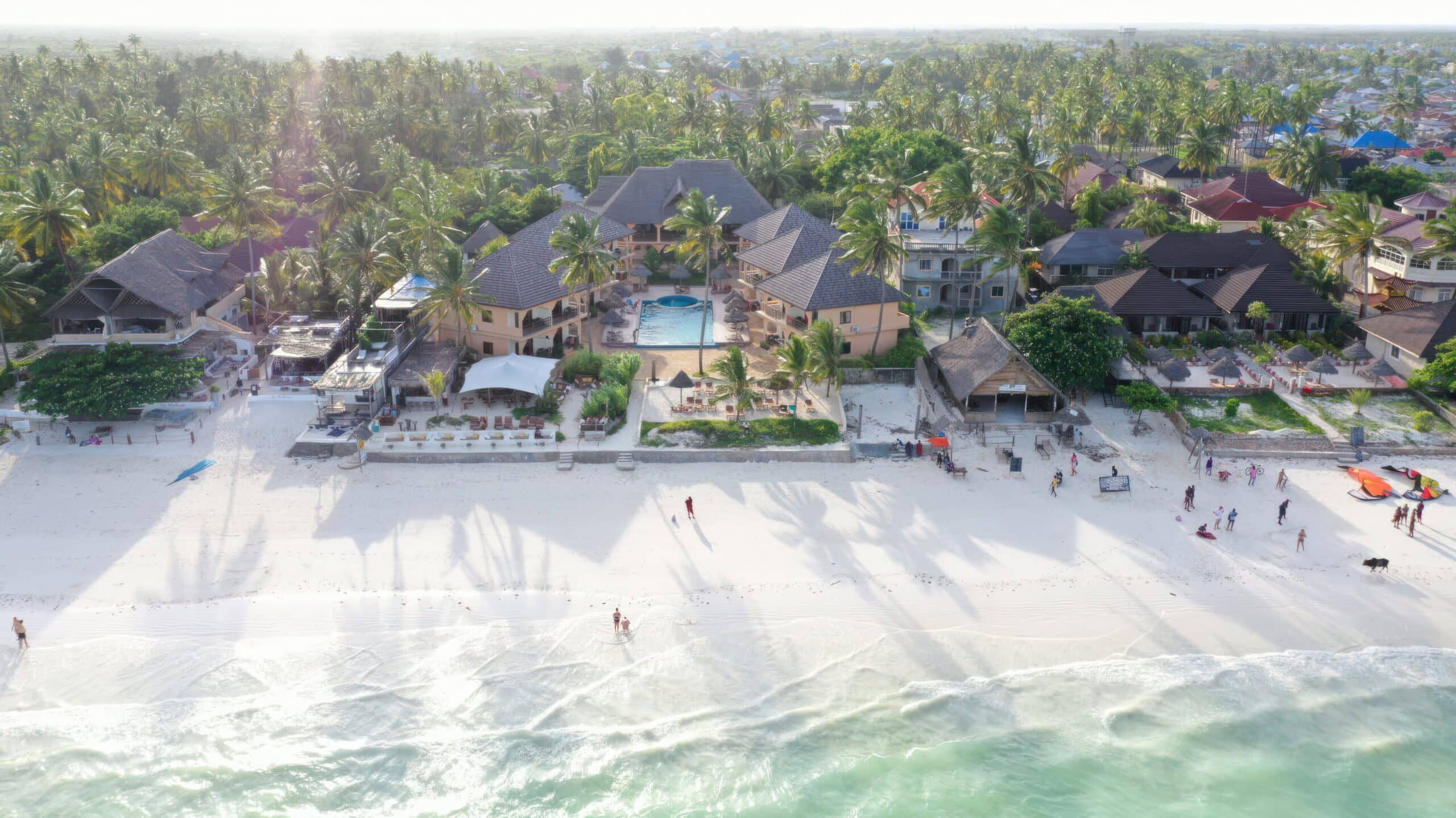
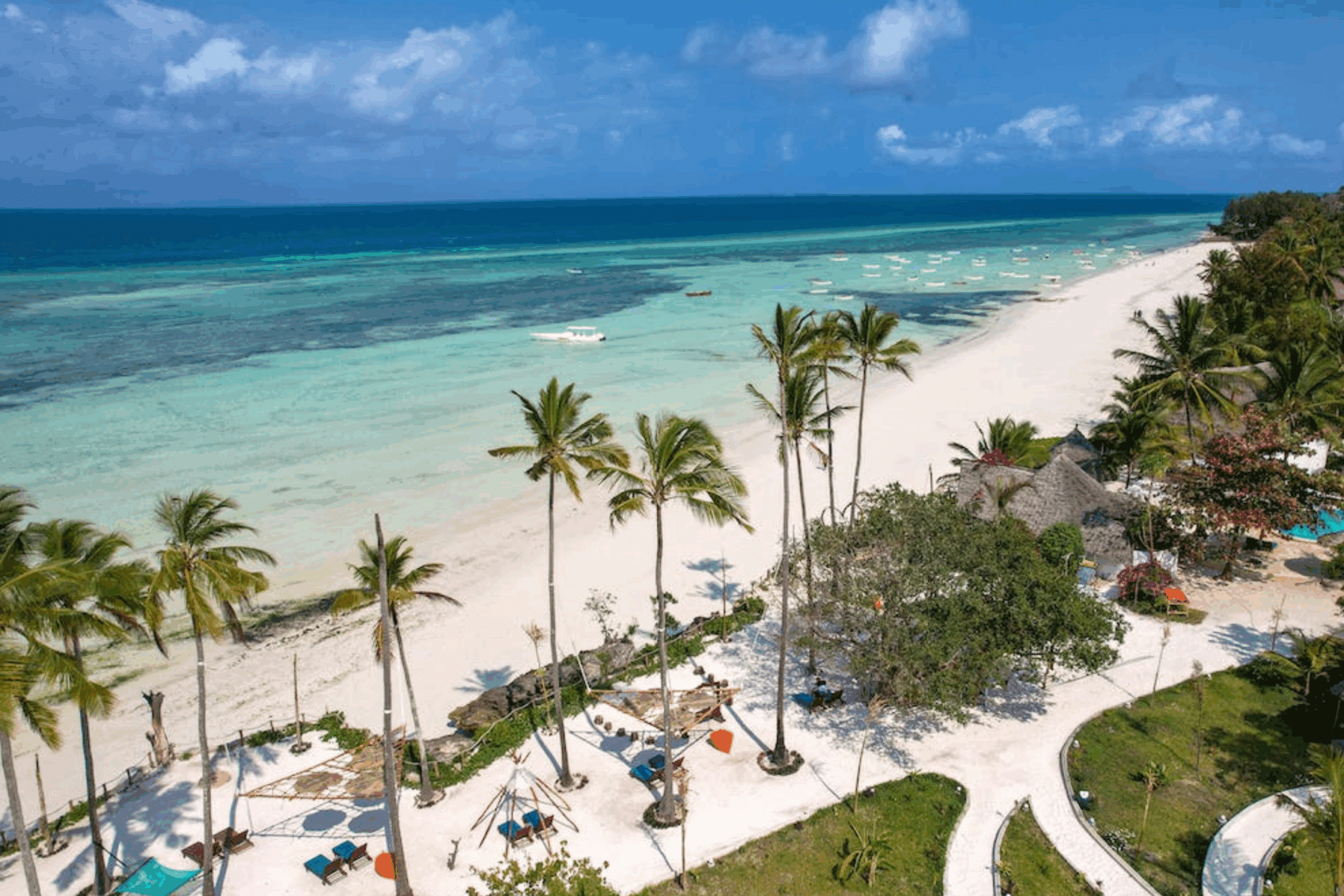
On Zanzibar’s southeastern coast, the Indian Ocean sweeps around the island’s tip and the trade winds arrive at Paje Beach unimpeded and consistent. Between June and September, the south-east trade wind (Kusi) blows 15–25 knots across the wide, shallow lagoon between the beach and the outer reef — creating conditions that made Paje East Africa’s kitesurfing capital. Riders from Europe, South Africa and Australia come specifically for the Kusi season.
Outside kitesurfing season, Paje is the most authentic large beach village on the island — still primarily inhabited by Zanzibar fishing and seaweed-farming families, with the tourist infrastructure grafted respectfully around the working community. The pace is slower than Nungwi; the vibe is more village and less resort.
Where is Paje?
On Zanzibar’s southeastern coast, 57 km from Stone Town (approximately 1–1.5 hours by car). The beach extends from Paje village south toward Jambiani, the two beaches forming a long, continuous stretch of the same reef lagoon.
Kitesurfing at Paje
The Paje lagoon is ideal for kitesurfing because of its shallow, waist-deep water over a sandy bottom — safe for learning and easy water re-entry after falls. Multiple licensed kite schools operate with certified instructors, equipment rental and storage. Standard beginner courses run 9–12 hours over 3–4 days; intermediate and advanced riders can self-hire equipment. The best Kusi wind typically blows strongest from late morning to late afternoon (11:00–17:00).
The seaweed farmers
Paje’s lagoon is criss-crossed at low tide by rows of seaweed cultivation stakes — the work of local women farmers who grow red and green seaweed for export to the cosmetics and food industries. This has been the main livelihood of Paje’s female community for decades; a guided walk through the cultivation plots with a local farmer provides fascinating context on the economics and technique, and is one of the most genuine cultural experiences available at any Zanzibar beach.
The tidal lagoon
Paje’s east-facing position means it has a significant tidal range — at low tide, the lagoon can extend 300–400 metres across exposed reef flat. This is the east coast’s most important practical consideration: low tide means no swimming from the beach, only reef walking. High tide brings the water back to the beach for comfortable swimming. Plan days around the tide tables, which your accommodation will provide.
Combine Paje with…
- Jambiani Beach — 8 km south on the same lagoon; quieter, more rural.
- Kizimkazi — 30 minutes south for spinner dolphin snorkelling.
- Stone Town — 1–1.5 hours west; the UNESCO heritage town day trip.
- Nungwi — the northern beach contrast, 2 hours north for all-day swimming.
Frequently asked questions about Paje
Is Paje good for non-kitesurfers?
Yes — the beach is beautiful, the seaweed farm walk is fascinating, the snorkelling on the outer reef is good and the village atmosphere is the most authentic of any large Zanzibar beach. Paje works for any traveller; kitesurfers just get an additional reason to love it.
Can I swim at Paje at low tide?
Not from the beach — the lagoon is knee-to-waist deep at low tide. Many guesthouses have pools for low-tide swimming. The reef walk at low tide is a genuinely interesting activity rather than a frustration.
Want to visit Paje Beach?
Get a free custom safari plan within 24 hours.
Paje Beach safari tours
No fixed packages listed yet — we'll build a custom safari around Paje Beach for you.
Browse All ToursWant to visit Paje Beach?
Get a free custom safari plan within 24 hours.
Best time to visit Paje Beach
June to September — Kusi season (best kitesurfing)
This is why kitesurfers come to Paje. The south-east trade wind (Kusi) blows consistently at 15–25 knots across the wide lagoon from June through September — some of the most reliable kitesurfing wind conditions in Africa. Water temperature is around 25–26°C and visibility at the outer reef is good. The beach is at its most animated with kite schools and riders.
December to February — Kaskazi season (warmest, best snorkelling)
Warm, calm and the best visibility for snorkelling at the outer reef. The lagoon is fuller at high tide and more accessible for swimming. A smaller Kaskazi wind window (December–January) can also provide rideable kite conditions. Water temperature peaks at 28–29°C.
April to May — Long rains (avoid)
The lagoon is rough and kitesurfing conditions are unpredictable. Many guesthouses close or operate at minimal capacity.
Bottom line: June to September for kitesurfing. December to February for snorkelling and warm swimming. Paje is best avoided in April and May.
Where to stay in Paje Beach


Want to visit Paje Beach?
Get a free custom safari plan within 24 hours.
Nearby destinations
 Zanzibar
 Zanzibar
 Zanzibar
 Zanzibar
Zanzibar
Zanzibar
 Zanzibar