Quick facts
Wildlife
The Matobo Hills National Park holds Zimbabwe's most reliable white rhino population and a smaller black rhino presence — the only park in Zimbabwe where rhino tracking on foot is a standard activity. The granite kopjes support the highest density of Verreaux's eagle (black eagle) in the world, with up to 60 breeding pairs recorded. Leopard, cheetah, sable antelope, kudu, giraffe, zebra, impala and warthog all inhabit the park. Rock hyrax (dassie) are abundant on the kopje surfaces. Over 350 bird species recorded, with the raptor community outstanding.
Top activities
White rhino tracking on foot with armed rangers — among the best in Zimbabwe, with relaxed animals on open ground. Black eagle (Verreaux's eagle) watching from the kopje ridges — the world's highest density population. San Bushman rock art walks — White Rhino Shelter (the finest single site), Pomongwe Cave and numerous other painted shelters in the park. Cecil Rhodes's grave at World's View — the panoramic granite outcrop where the British imperialist is buried alongside his friend Leander Starr Jameson. Game drives through the wooded valley sections of the park. Sunset from World's View over the granite chaos.
About The Matobo Hills
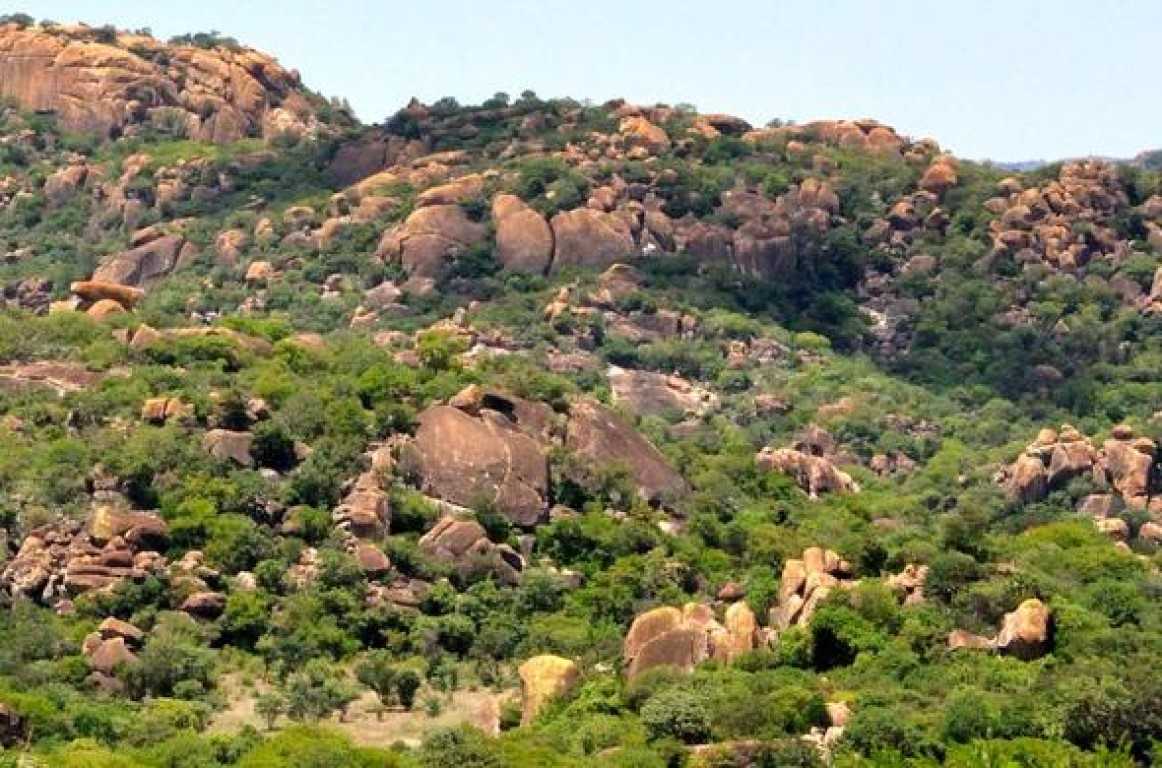
The Matobo Hills are one of Africa’s most extraordinary landscapes — and one of its most overlooked. A UNESCO World Heritage Site south of Bulawayo in southwestern Zimbabwe, the hills cover 3,100 square kilometres of ancient granite domes, balancing boulders and cave formations that have been sacred to the people of this region for thousands of years. Within this landscape: the highest concentration of San Bushman rock art in southern Africa, the highest density of Verreaux’s eagle anywhere in the world, Zimbabwe’s most reliable white rhino population, and the grave of Cecil John Rhodes.
The Ndebele call the hills Amatobo — “bald heads” — for the smooth, rounded domes that protrude above the valley floor like the skulls of giants. Rhodes was so taken with the landscape that he asked to be buried at the highest point, a granite outcrop he called World’s View. He lies there still, looking north toward the continent he spent his life trying to control.
Where is Matobo?
The Matobo Hills National Park is 35 km south of Bulawayo, Zimbabwe’s second city. Bulawayo is served by daily flights from Harare (45 minutes) and by the overnight train from Harare. The park is a 45-minute drive from the city on a good tar road.
White rhino tracking on foot
Matobo offers one of Zimbabwe’s finest wildlife experiences: white rhino tracking on foot in the Whovi Wild Area of the park. The rhino population is well-established and the animals are calm around guided walking groups. The open granite terrain allows close approach and extended observation — a fundamentally different experience from watching rhino through a vehicle window. Armed rangers accompany all walking groups. Guides track from fresh sign and typically locate rhino within 30–60 minutes of entry.
The San Bushman rock art
Over 3,000 San rock art sites have been identified in the Matobo Hills — the largest single concentration of San paintings in southern Africa. The art spans a period of at least 13,000 years. The most accessible and best-preserved site is White Rhino Shelter (named for its painted rhino figures), which has detailed human and animal figures including a famous hunting scene. Other major sites include Pomongwe Cave and Inanke Cave, requiring longer guided walks to reach.
Verreaux’s eagle (black eagle)
The Matobo Hills support the world’s highest recorded density of Verreaux’s eagle — a magnificent large raptor with striking black-and-white plumage that is entirely dependent on the rock hyrax as prey. The hyrax colonies on the kopjes provide the food base; the cliff faces provide the nest sites. The combination has produced 60+ breeding pairs in the park, making Matobo the single best place in the world to observe this species.
World’s View
The highest granite dome in the area, World’s View provides a 360-degree panorama over the hills and, on a clear day, well into Botswana. Cecil Rhodes is buried in a simple grave cut into the bare rock at the summit — alongside his friend Leander Starr Jameson (of the Jameson Raid) and a small number of other figures from the colonial era. The site is accessible by a short steep walk from the car park.
Combine Matobo with…
- Hwange National Park — 4 hours northwest for Big Five game drives.
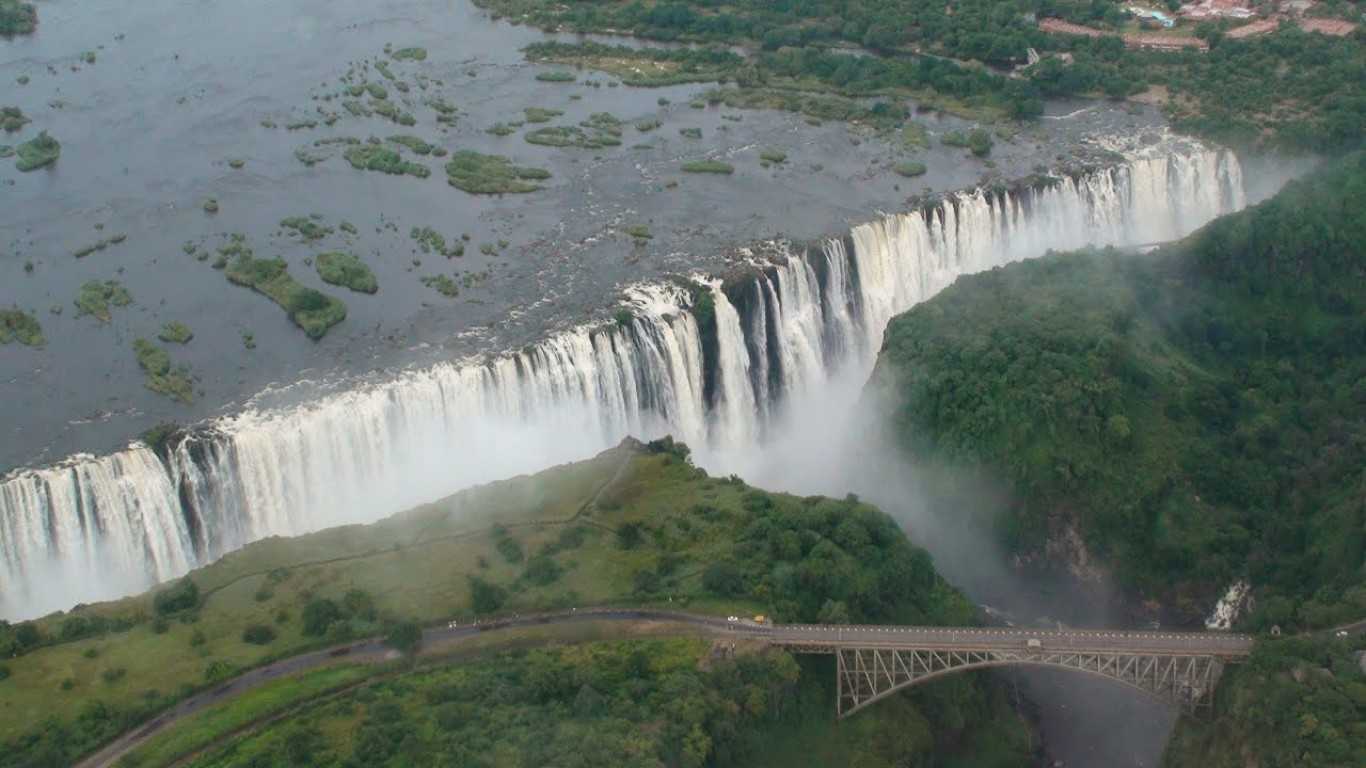
- Victoria Falls — 5 hours northwest; fly from Bulawayo.
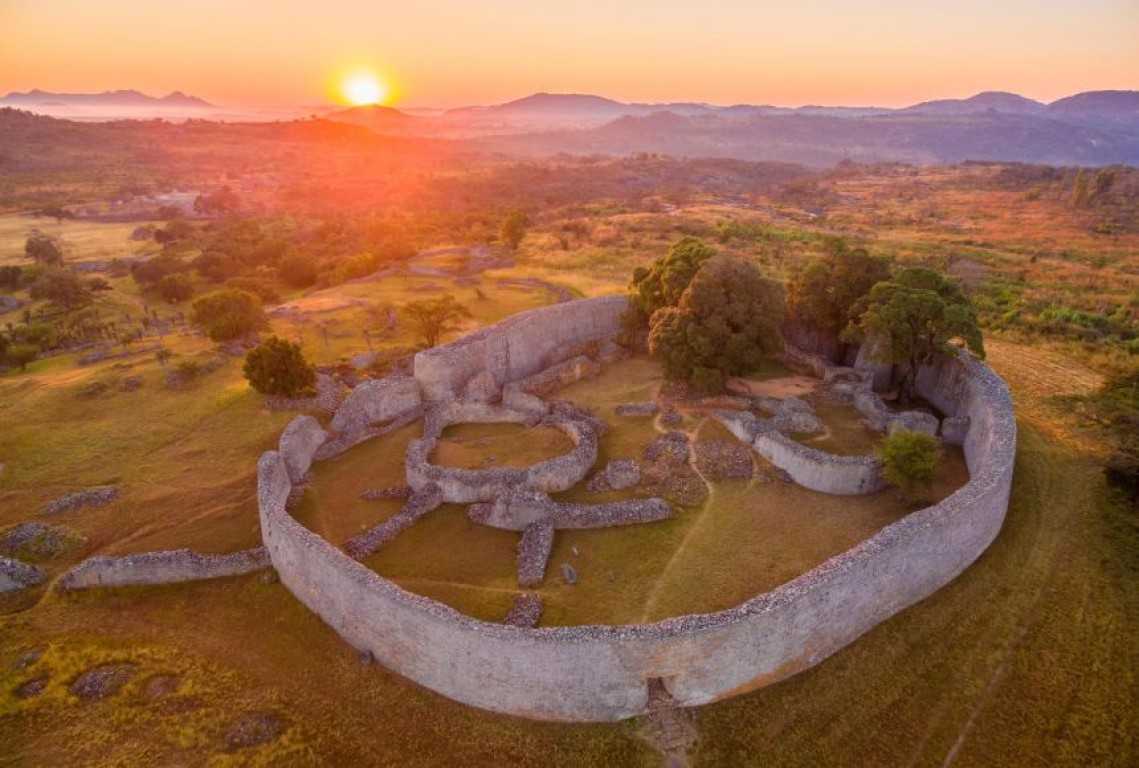
- Great Zimbabwe Ruins — 3 hours east for Zimbabwe’s other great stone heritage site.
Frequently asked questions about Matobo
Is it safe to walk among white rhino in Matobo?
Yes — with armed rangers following established protocols. The Matobo rhino are well-habituated to guided groups and incidents are extremely rare. The experience requires following the ranger’s instructions precisely.
How does Matobo compare to Kruger or Hwange?
Matobo is a completely different safari experience — intimate, on foot, focused on specific species (rhino, eagle, rock art) in a dramatic geological setting. It is not a Big Five game drive destination but one of Africa’s finest specialist wildlife and cultural experiences.
Want to visit The Matobo Hills?
Get a free custom safari plan within 24 hours.
The Matobo Hills safari tours
Want to visit The Matobo Hills?
Get a free custom safari plan within 24 hours.
Best time to visit the Matobo Hills
May to October — Dry season (best for rhino tracking and rock art)
The dry season is the recommended window. Vegetation is short and open, making rhino tracking on the open granite most productive. The rock art sites are accessible without rain-slicked rocks, and the granite kopjes are cooler and safer for walking in the dry-season temperatures. Verreaux’s eagle activity peaks during the breeding season (May–September) when pairs are visible at their nests.
November to April — Green season (lush, birding excellent)
The hills are dramatically green after the summer rains. Bird diversity peaks as migrants arrive. Rhino are more spread across the park but still trackable. The granite surfaces become slippery when wet — take care on the kopje walks. This is the quieter and cheaper season.
Bottom line: May to October for rhino tracking and the best overall experience. Matobo is an underrated destination year-round.
Where to stay in The Matobo Hills
We'll recommend accommodation across all budget levels based on your dates and preferences.
Browse All LodgesWant to visit The Matobo Hills?
Get a free custom safari plan within 24 hours.
Nearby destinations
 Zimbabwe
Zimbabwe
Zimbabwe
 Zimbabwe