Quick facts
Wildlife
Malindi's primary wildlife draw is marine. The Malindi and Watamu Marine National Parks protect coral reefs rich in reef fish, sea turtles, dolphins and — seasonally — whale sharks. The Sabaki River estuary at Malindi's northern edge is one of the best birding sites on the Kenya coast, attracting thousands of Palaearctic waders between October and April. The Arabuko-Sokoke Forest Reserve (35 km south near Watamu) is East Africa's largest coastal dry forest, home to the endangered golden-rumped elephant shrew and Clarke's weaver.
Top activities
Snorkelling and glass-bottom boat trips in Malindi Marine National Park coral gardens. Whale shark diving and snorkelling at Watamu (seasonal, November to February). Gede Ruins guided tour — the best-preserved Swahili trading town ruins on the Kenya coast. Arabuko-Sokoke Forest birding walk for endemic species including Clarke's weaver and Sokoke scops owl. Falconry display at the Malindi Falconry. Vasco da Gama Pillar — the oldest European monument in sub-Saharan Africa. Deep-sea fishing for marlin, sailfish and wahoo off the reef wall.
About Malindi
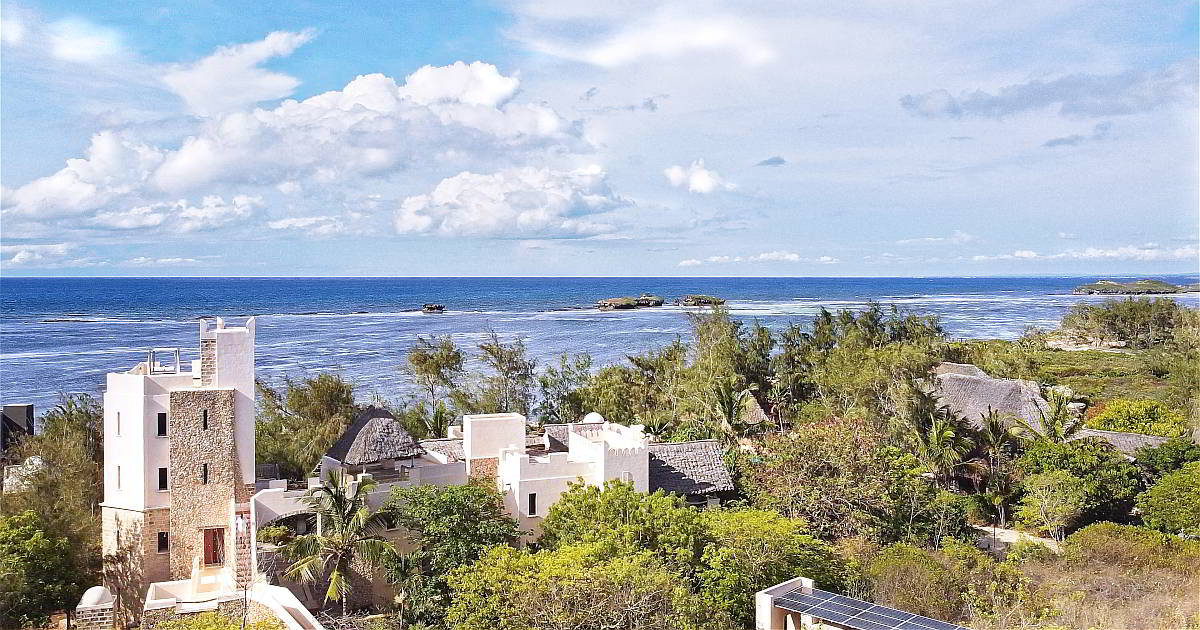
Kenya’s coast has two personalities. Mombasa is the big-city anchor — old fort, working harbour, resort hotels south of the island. Malindi, 120 km to the north, is something more layered: a Swahili trading town older than the colonial era, sitting inside a modern beach resort, inside an Italian expat enclave, beside one of Kenya’s most important marine parks and one of East Africa’s most significant coastal forests. The combination is entirely improbable and genuinely rewarding.
Portuguese explorer Vasco da Gama put in here in 1498 — his pillar still stands on the seafront, the oldest European monument in sub-Saharan Africa. The Swahili trading town of Gede, 15 km south, was abandoned in the 17th century and now stands in extraordinary preservation, its coral-stone mosques and palace walls draped in strangler figs. These are not minor historical footnotes; they are among the finest historical sites on the East African coast.
Where is Malindi?
Malindi is on Kenya’s north coast in Kilifi County, 120 km north of Mombasa by road (2 hours) and served by daily flights from Nairobi Wilson Airport (1 hour). The town sits between the Sabaki River mouth to the north and the Malindi Marine National Park reef to the east.
Malindi and Watamu Marine National Parks
The Malindi–Watamu reef system is part of a continuous marine protected area that extends 200 km along the northern Kenya coast. The reefs are part of the Western Indian Ocean coral belt — less famous than the Great Barrier Reef but biologically diverse, with hard and soft coral gardens supporting hundreds of reef fish species, green and hawksbill turtles, spinner dolphins and a healthy population of whale sharks (seasonal).
Whale sharks at Watamu
Between approximately November and February, whale sharks aggregate in the plankton-rich waters south of Malindi near Watamu. The convergence of the Sabaki River outflow and the seasonal current creates ideal conditions for the world’s largest fish to feed close to shore. Swimming with whale sharks is one of Kenya’s most remarkable experiences — arranged through licensed marine park operators in Watamu.
The Gede Ruins
Fifteen kilometres south of Malindi, Gede is the best-preserved Swahili town on the Kenya coast — a walled settlement that flourished between the 13th and 17th centuries before being abruptly abandoned, possibly due to drought or enemy pressure, and then swallowed by coastal forest. Today a guided walk through the site reveals a palace, multiple mosques, houses with coral-stone washrooms, and a great wall that once enclosed a town of several thousand people. The silence and the strangler figs make it one of the coast’s most atmospheric visits.
Arabuko-Sokoke Forest Reserve
Between Malindi and Mombasa, the Arabuko-Sokoke Forest Reserve is East Africa’s largest remaining fragment of coastal dry forest — a globally threatened habitat with extraordinarily high endemism. It holds the golden-rumped elephant shrew (one of the world’s most endangered mammal species), Clarke’s weaver (found nowhere else on Earth), the Sokoke scops owl and the Sokoke pipit. A 2–3 hour guided walk with a Kenya Forest Service ranger is the standard visit.
The Vasco da Gama Pillar
On the seafront at the southern end of Malindi beach, a small coral-stone cross on a pillar marks the spot where Vasco da Gama erected a navigational pillar in 1498 on his voyage to India. The original coral base is genuine; the cross is a replica. It is the oldest European monument still standing south of the Sahara — a quietly powerful piece of history that most visitors walk past without knowing what it is.
The Italian community
Since the 1970s, Malindi has attracted a large Italian expatriate and tourist community — giving the town a distinctly Mediterranean flavour alongside its Swahili and Kenyan identity. The result: excellent Italian restaurants, gelaterias, fishing charter operators run by Italians who have been on the coast for decades, and a beach culture with more espresso than tusker. Dissonant and charming in equal measure.
Combine Malindi with…
- Mombasa — 2 hours south; the old town, Fort Jesus and south-coast beaches.
- Tsavo National Park — a full-day game drive from Malindi or combination with a coast stay.
- Lamu Island — 1 hour north by air or 3+ hours by road.
Frequently asked questions about Malindi
Is Malindi good for snorkelling?
Yes — the Marine National Park reef is accessible by boat in 15–20 minutes. Best visibility from November to March. Glass-bottom boats are available for non-swimmers.
Can you see whale sharks near Malindi?
The whale sharks are primarily at Watamu, 15 km south. The season is approximately November to February. Book through a licensed operator in Watamu — swimming with whale sharks at this site is one of Kenya’s great wildlife experiences.
Is Malindi safe?
Generally yes in the main tourist zone. Standard coastal Kenya precautions apply: use hotel transport at night, don’t walk the beach after dark, and carry minimal valuables on the street.
Want to visit Malindi?
Get a free custom safari plan within 24 hours.
Malindi safari tours
No fixed packages listed yet — we'll build a custom safari around Malindi for you.
Browse All ToursWant to visit Malindi?
Get a free custom safari plan within 24 hours.
Best time to visit Malindi
December to March — Kaskazi season (peak beach and diving)
The north-east trade wind (Kaskazi) brings calm, clear seas and the finest diving and snorkelling conditions of the year. This is also whale shark season — the gentle giants feed in the plankton-rich waters off Watamu from approximately November through February. Warm temperatures (28–32°C), minimal rain and flat seas make this the premier window for all marine activities. European visitors dominate in December and January; rates and occupancy are at their highest.
July to September — Kusi season (dry, windy, cooler)
The south-east trade wind cools the coast to a comfortable 24–27°C. Seas are lively but manageable for snorkelling in sheltered reef areas. The Sabaki River estuary fills with Palaearctic waders from October. Good visibility for reef snorkelling and the Arabuko-Sokoke forest is at its best for birding. Fewer visitors and lower rates than the December–March peak.
April to May — Long rains (rough seas, limited diving)
The long rains bring rough Indian Ocean swells, poor marine visibility and frequent heavy showers. Marine park activities are significantly curtailed. Not recommended for a Malindi beach or diving visit.
October to November — Short rains transition (whale sharks arriving)
The sea is calming after the Kusi season and whale sharks begin appearing off Watamu. A transitional window with good value and the exciting prospect of first whale shark encounters of the season.
Bottom line: December to March for whale sharks and peak beach conditions. July to September for birding and a cooler, quieter coastal experience.
Where to stay in Malindi


Want to visit Malindi?
Get a free custom safari plan within 24 hours.