
Quick facts
Wildlife
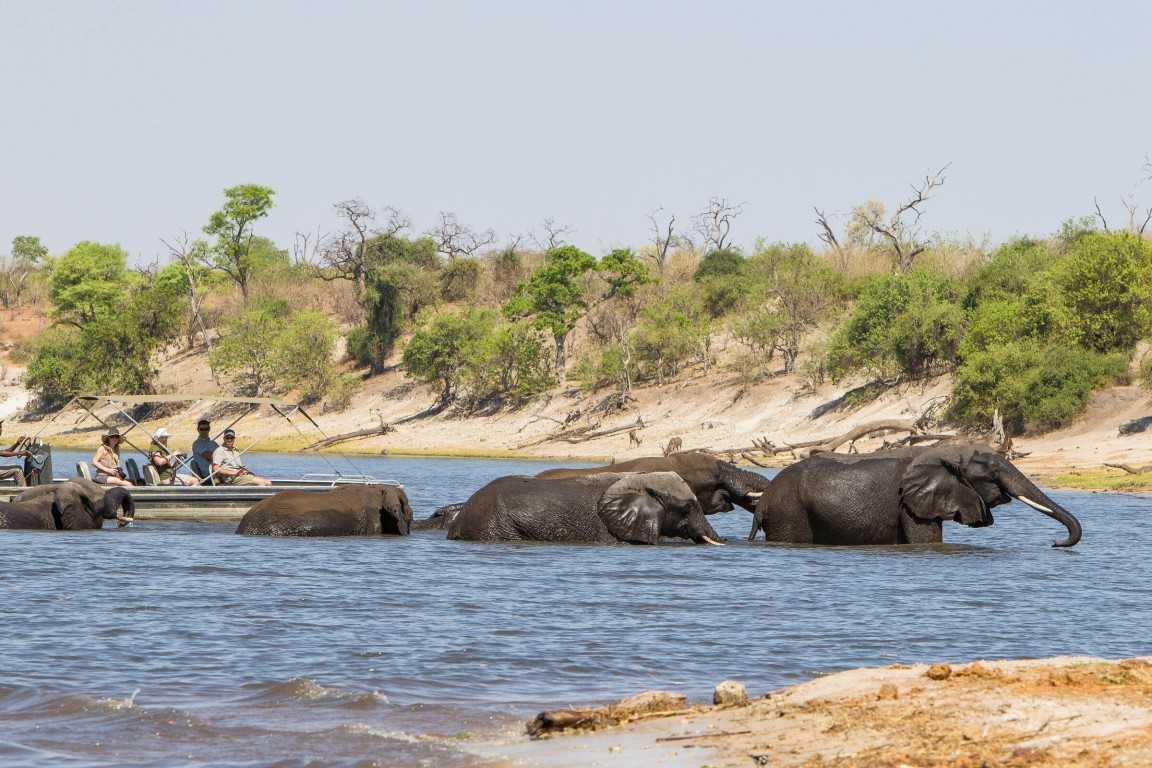
The Caprivi Strip supports one of southern Africa's most important transfrontier wildlife corridors. Elephant populations move freely between Botswana's Chobe, Zimbabwe's Hwange and Namibia's Bwabwata parks — one of the largest free-roaming elephant populations on the continent. African wild dog, lion, leopard, hippo, Nile crocodile, roan, sable, tsessebe and reedbuck are all resident. The Kwando River system in Mudumu and the wetlands of Nkasa Rupara support outstanding waterbird diversity including the rare sitatunga, Pel's fishing owl and African skimmer. Over 430 bird species recorded.
Top activities
Bwabwata National Park game drives — the main park in the western Caprivi, with reliable elephant, lion and wild dog. Mudumu National Park boat safari on the Kwando River — hippo, crocodile, sitatunga and waterbirds from a mokoro or motorboat. Nkasa Rupara (Mamili) National Park wetland exploration — Namibia's most complete wetland ecosystem, best by mokoro. Chobe River boat safari and cross-border day trip into Botswana's Chobe National Park. Cultural village visits to Mafwe, Subia and Mbunza communities along the river banks. Walking safari in the riverine forest. Night drives for leopard, hyena and nocturnal specials.
About Caprivi Strip
The Caprivi Strip — officially the Zambezi Region since 2013 — is one of Africa’s most curious geographical features: a finger of Namibian territory 450 km long and rarely more than 50 km wide, sandwiched between Angola to the north, Zambia to the northeast, Botswana to the south and Zimbabwe just visible at its eastern tip. It was designed in 1890 by German colonial administrator Count Leo von Caprivi to give German South-West Africa access to the Zambezi River — and therefore, theoretically, to the Indian Ocean. The plan never worked geographically (Victoria Falls blocks river navigation), but the strip exists as a cartographic relic of that imperial ambition.
For wildlife travellers, the Caprivi Strip is exceptional. The four major rivers that flow through or border it — the Okavango, Kwando, Chobe and Zambezi — create a permanently watered corridor through an otherwise arid landscape. The result: Namibia’s most biodiverse region, with three national parks protecting an extraordinary transfrontier elephant population and some of the finest river-based wildlife watching in southern Africa.
Where is the Caprivi Strip?
The strip runs east from Divundu (where the B8 highway crosses the Okavango River) to Katima Mulilo, the regional capital on the Zambezi. From Windhoek: 1,100 km east, approximately 10–12 hours driving. Flights connect Windhoek to Katima Mulilo (1.5 hours). The strip borders Botswana’s Chobe National Park along its southern boundary — elephant cross between the two countries freely.
Bwabwata National Park
The western section of the strip, straddling the B8 highway, is managed as Bwabwata National Park. It is unusual in that the San (Khwe Bushmen) people live inside the park, maintaining traditional use rights alongside conservation — one of Africa’s few examples of integrated human-wildlife coexistence in a formal park. Wildlife includes elephant, buffalo, lion, leopard and African wild dog. The Mahango Game Reserve within Bwabwata, on the Okavango flood plain, is outstanding for birds and elephant.
Mudumu National Park and the Kwando River
The central Caprivi’s finest wildlife area, Mudumu is centred on the Kwando River — a broad, hippo-filled waterway that forms the park’s eastern boundary and provides exceptional boat safari conditions. The river holds Africa’s highest Nile crocodile density in some sections. Sitatunga are reliably seen in the papyrus margins. Pel’s fishing owl — one of Africa’s most sought-after nocturnal birds — is regularly heard and sometimes seen at night from the river camps.
Nkasa Rupara National Park
The eastern Caprivi’s most complete wetland system, Nkasa Rupara (formerly Mamili) encompasses the Linyanti and Kwando floodplains at their widest point. Accessible only by mokoro (dugout canoe) or motorboat in the wet season, this is Namibia’s most pristine remaining wetland — a counterpart to the Okavango Delta, far less visited and equally extraordinary.
Combine the Caprivi with…
- Botswana’s Chobe National Park — a day cross-border trip from Katima Mulilo by boat.
- Etosha — the complete Namibia wildlife circuit, fly or drive west.
- Victoria Falls (Zimbabwe/Zambia) — 2 hours east from Katima Mulilo.
- Botswana’s Okavango Delta — accessible from the western Caprivi via Divundu.
Frequently asked questions about the Caprivi Strip
Is the Caprivi Strip safe?
Yes — Namibia is one of Africa’s safest countries, and the Caprivi is no exception. The region is stable and well-administered. Standard wildlife precautions apply (don’t walk at night near river banks due to hippo and crocodile).
Is malaria present in the Caprivi?
Yes — the Caprivi Strip is Namibia’s only malaria zone. Anti-malarial prophylaxis is strongly recommended. Consult a travel clinic before visiting.
What is the best way to see the Caprivi?
Self-drive with a 4WD on the main B8 highway is feasible but misses the river and wetland experiences that make the Caprivi unique. A lodge-based trip with guided boat safaris and night drives is far more productive.
Want to visit Caprivi Strip?
Get a free custom safari plan within 24 hours.
Caprivi Strip safari tours
No fixed packages listed yet — we'll build a custom safari around Caprivi Strip for you.
Plan My Trip Browse All ToursWant to visit Caprivi Strip?
Get a free custom safari plan within 24 hours.
Best time to visit the Caprivi Strip
May to October — Dry season (best game viewing)
The dry season is the Caprivi’s prime wildlife window. As the floodplains dry and the river levels drop, wildlife concentrates along the permanent river channels — the Kwando, Chobe and Zambezi. Elephant herds visit the river banks predictably; boat safaris on the Kwando produce exceptional hippo, crocodile and sitatunga sightings. Wild dog denning (June–August) makes pup sightings possible from the Bwabwata camps. Roads are in their best condition.
November to April — Wet season (birding peak, flooding)
The Caprivi’s wet season is dramatic. The rivers flood their banks, the floodplains transform into vast shallow lakes, and the region becomes some of the best bird habitat in Namibia — migrants arrive in their thousands and the waterbird diversity is extraordinary. Ground-level game viewing becomes harder but mokoro excursions through the flooded plains offer a unique perspective. Some camps and roads close.
Bottom line: May to October for wildlife concentration and road access. November to April for birding and the extraordinary wet-season landscape.
Where to stay in Caprivi Strip
We'll recommend accommodation across all budget levels based on your dates and preferences.
Plan My Trip Browse All LodgesWant to visit Caprivi Strip?
Get a free custom safari plan within 24 hours.
Nearby destinations
 Namibia
 Namibia
 Namibia
 Namibia
 Namibia