Quick facts
Wildlife
Lake Chala is renowned for its tilapia fish population and for a small but confirmed crocodile population — swimming is not recommended at unsupervised entry points; consult your camp. The forested crater walls support vervet and colobus monkeys, African fish eagle, malachite kingfisher and a variety of forest-edge birds. The surrounding dry bush supports impala, giraffe, zebra and dik-dik. Hippo were historically present but the current population status should be confirmed locally.
Top activities
Kayaking on the turquoise crater lake — the primary activity, with guided morning paddles and full-day circumnavigation options. Crater rim hiking — a 2-3 hour circular trail along the steep forested rim with views into the lake and across to Kilimanjaro. Cliff jumping and supervised swimming at designated safe points. Camping and glamping on the crater rim with Kilimanjaro sunrise views. Birdwatching on the forested rim and lake shore. Day trip combination with Taveta town and the Grogan's Castle ruins on the Kenya side.
About Lake Chala
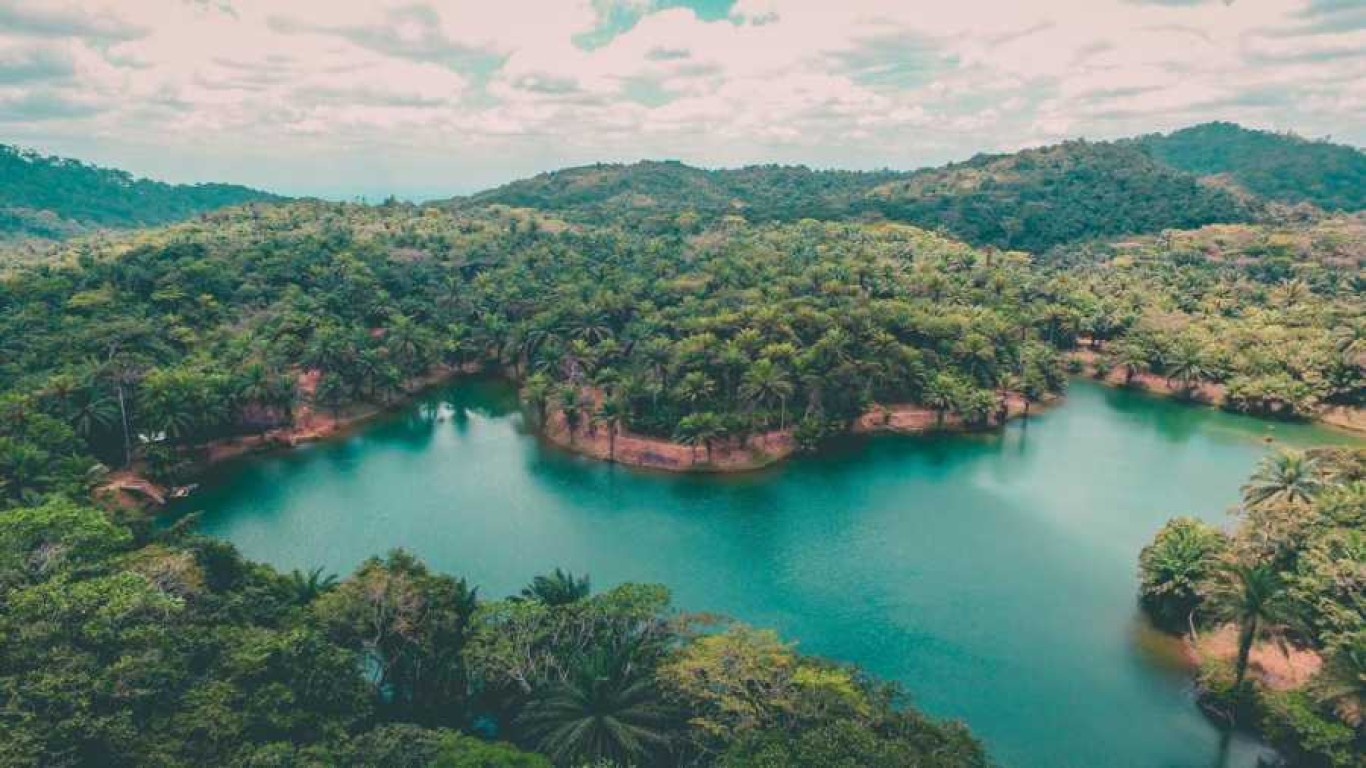
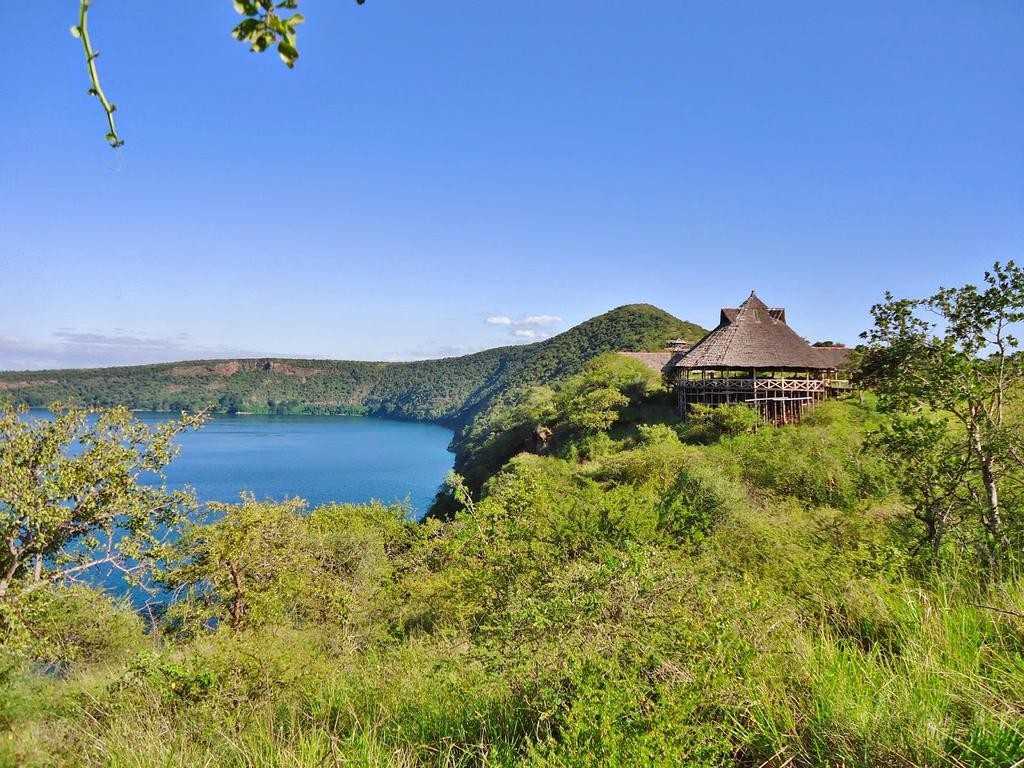
On the Kenya–Tanzania border, 45 km east of Moshi, a perfectly circular lake fills an extinct volcanic crater to a depth of 92 metres. Lake Chala is one of East Africa's most beautiful hidden destinations: the water is a vivid emerald green, fed entirely by underground springs from Kilimanjara's snowfields above, and the crater walls drop nearly 100 metres to the surface in a ring of forested rock that creates extraordinary stillness inside. From the rim on a clear morning, the snowy summit of Kilimanjaro fills the western sky.
Lake Chala straddles the international border — the Tanzanian side is the more developed for tourism, with campsites and a small tented camp on the rim, while the Kenyan side (accessible through Taveta) remains largely undeveloped. The lake itself is shared; kayaking from one countra's shoreline to the other is a quietly surreal experience.
Where is Lake Chala?
The lake sits in the Kilimanjaro Region of Tanzania, near the town of Holili on the Tanzanian side and Taveta on the Kenyan side. From Moshi it is a 45–60 minute drive on a reasonable dirt road. From Kilimanjaro International Airport (JRO) it is approximately 90 minutes.
Geology and the underground connection to Kilimanjaro
Lake Chala has no surface river inflow or outflow. It is fed entirely by groundwater that drains underground from Kilimanjara's volcanic slopes and snowfields — a flow estimated at roughly 26 million litres per day. The residence time of the water in the lake is extraordinarily long (centuries), which contributes to its remarkable clarity and chemical stability. Sediment cores taken from the lake floor have yielded a continuous climate record stretching back 25,000 years — one of the longest terrestrial palaeoclimate archives in Africa.
Activities
Kayaking
The signature Chala experience. The laka's circular shape (about 4 km in circumference) makes it ideal for a morning paddle. The water is clear enough to see several metres deep, the forested walls are alive with birds, and on still mornings the surface reflects Kilimanjaro perfectly. Guided kayaks are available from the rim camp; no experience is necessary.
Crater rim hiking
A 2–3 hour circuit along the rim, which drops steeply from the surrounding plateau at 900 m to the crater edge, then follows the forested lip around the full circle. The best Kilimanjaro viewpoints are on the western rim in the first two hours after dawn.
Swimming and cliff jumping
The lake has a small crocodile population — always swim at designated safe points indicated by your camp, not at unsupervised access spots. At the designated areas the water is clear, deep and refreshing. Cliff jumping is available at one location on the crater wall (supervised, specific jump points only).
Camping and glamping
Spending the night on the crater rim, falling asleep to the lake below and waking before dawn to watch Kilimanjaro emerge from darkness, is one of the more memorable overnight experiences near the mountain. Basic and glamping options are both available.
The crocodile question
Lake Chala had a widely-reported incident involving a British student who was taken by a crocodile at an unsupervised swimming point in 2002. Crocodiles have been confirmed present in the lake since. This is an important piece of information rather than a reason to avoid the lake — designated swimming areas are safe, and your camp staff will direct you clearly. Always swim where advised and never alone.
Combine Lake Chala with…
- Mount Kilimanjaro — a 2-day Chala add-on before or after a Kili climb.
- Arusha National Park — 2 hours west for game drives and canoe safaris.
- Moshi town — the nearest base for day trips to Chala.
- Taveta (Kenya) — cross-border day trip combining the Kenyan crater rim and the Grogaa's Castle ruins nearby.
Frequently asked questions about Lake Chala
Is Lake Chala safe to swim in?
At designated swimming points under camp supervision, yes. Never swim at unsupervised access points — a small crocodile population is resident in the lake.
Can you see Kilimanjaro from Lake Chala?
Yes — on clear mornings (most reliably June–October and January–February) the full Kilimanjaro massif is visible above the western crater rim.
How deep is Lake Chala?
Approximately 92 metres at its deepest point — one of the deepest crater lakes in East Africa relative to its surface area.
Is Lake Chala in Kenya or Tanzania?
Both — the international border runs through the lake. The main tourist infrastructure is on the Tanzanian side, near Holili. The Kenyan side is accessed through Taveta.
Want to visit Lake Chala?
Get a free custom safari plan within 24 hours.
Lake Chala safari tours
No fixed packages listed yet — we'll build a custom safari around Lake Chala for you.
Browse All ToursWant to visit Lake Chala?
Get a free custom safari plan within 24 hours.
Best time to visit Lake Chala
June to October — Dry season (best for kayaking and crater rim views)
The dry season offers the clearest skies for Kilimanjaro views from the rim (the mountain is frequently cloud-free in the early morning between June and October). The crater rim trail is dry and safe. Kayaking conditions on the calm lake surface are most reliable. This is the recommended window for first-time visitors.
January to February — Short dry season (warm, clear, good for Kili views)
Another strong window for Kilimanjaro views. The lake is at its most vivid turquoise against a backdrop of clear blue sky. Warmer temperatures make swimming more appealing. A popular period for visitors combining Chala with a Kilimanjaro climb nearby.
March to May — Long rains (green, muddy, rim trail slippery)
The crater walls become extremely slippery after rain. Kilimanjaro is obscured by cloud most of the time. Kayaking is still possible but the experience is less rewarding. A low season with significantly reduced rates.
November — Short rains (transitional)
Brief afternoon showers. Mornings are often clear. A viable window for visitors who want the green landscape and don't mind the occasional wet afternoon.
Bottom line: June to October and January to February. Lake Chala is a year-round destination but the Kilimanjaro views — the standout feature — require clear skies.
Where to stay in Lake Chala
We'll recommend accommodation across all budget levels based on your dates and preferences.
Browse All LodgesWant to visit Lake Chala?
Get a free custom safari plan within 24 hours.
Nearby destinations
 Tanzania
 Tanzania
 Tanzania
 Tanzania