Quick facts
Wildlife
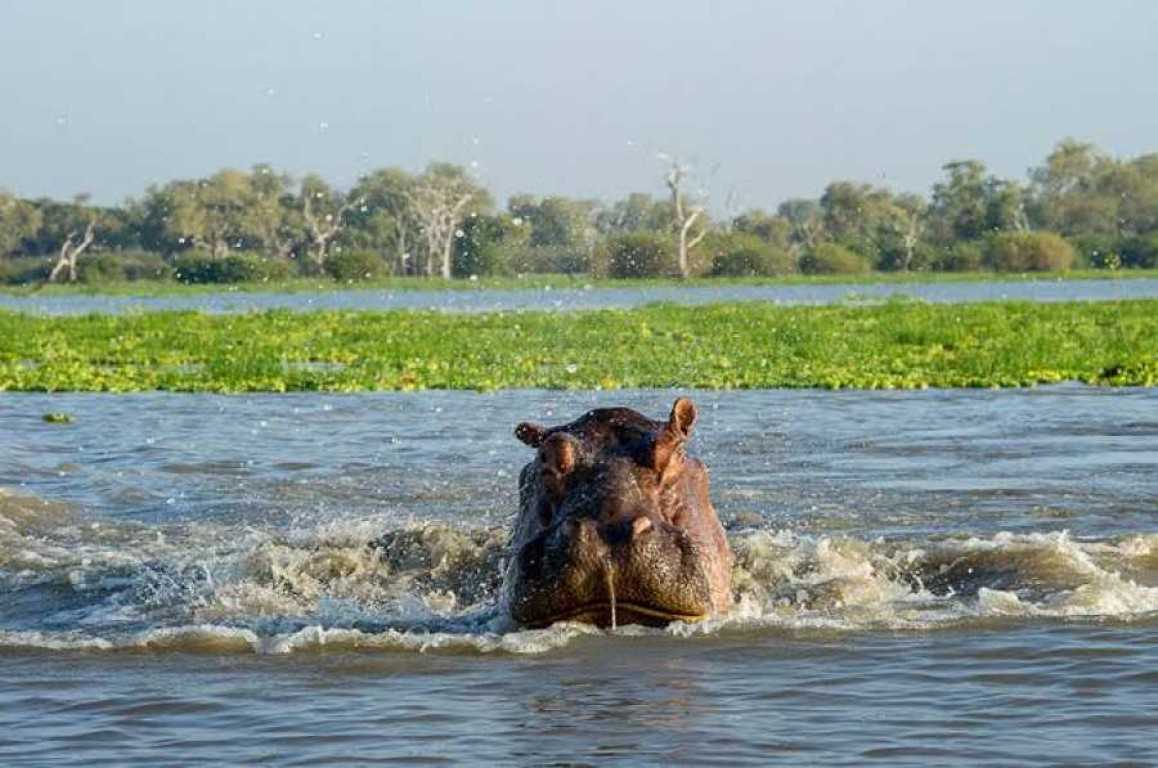
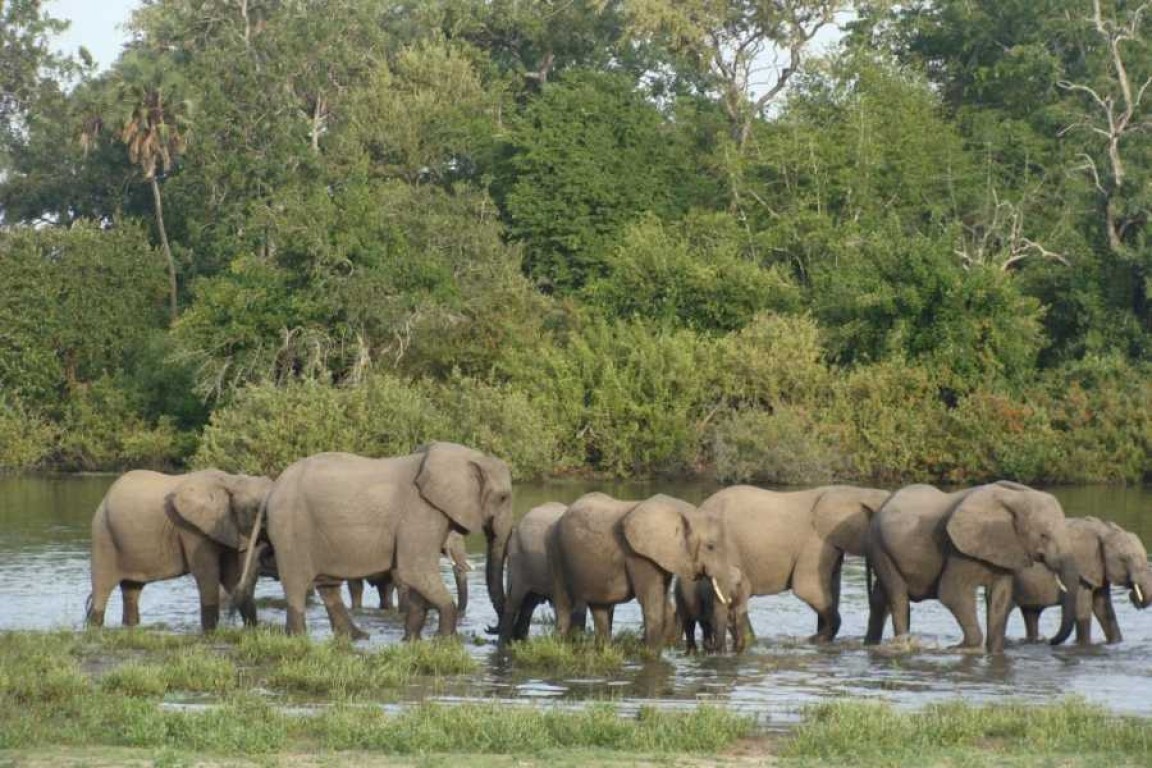
Lake Tanganyika holds over 250 species of cichlid fish, 98% found nowhere else on Earth, making it one of the world's premier freshwater snorkelling and diving destinations. The lake shore parks — Gombe and Mahale — protect Tanzania's only wild chimpanzee populations accessible to tourists. Hippo, crocodile and African fish eagle are present along the shore. The surrounding miombo woodland supports lion, elephant, leopard and a rich birdlife of over 400 species in the wider Kigoma region.
Top activities
Chimpanzee trekking at Gombe National Park (accessible by water taxi from Kigoma) and Mahale Mountains National Park (fly-in). Snorkelling and diving among endemic cichlids at Kigoma and Mahale beaches. Lake ferry travel on the historic MV Liemba between Tanzanian, Burundian and Zambian shore ports. Visit to Ujiji village — where Henry Morton Stanley found David Livingstone in 1871. Kayaking in sheltered bays near Kigoma. Sunset dhow trips on the lake.
About Lake Tanganyika
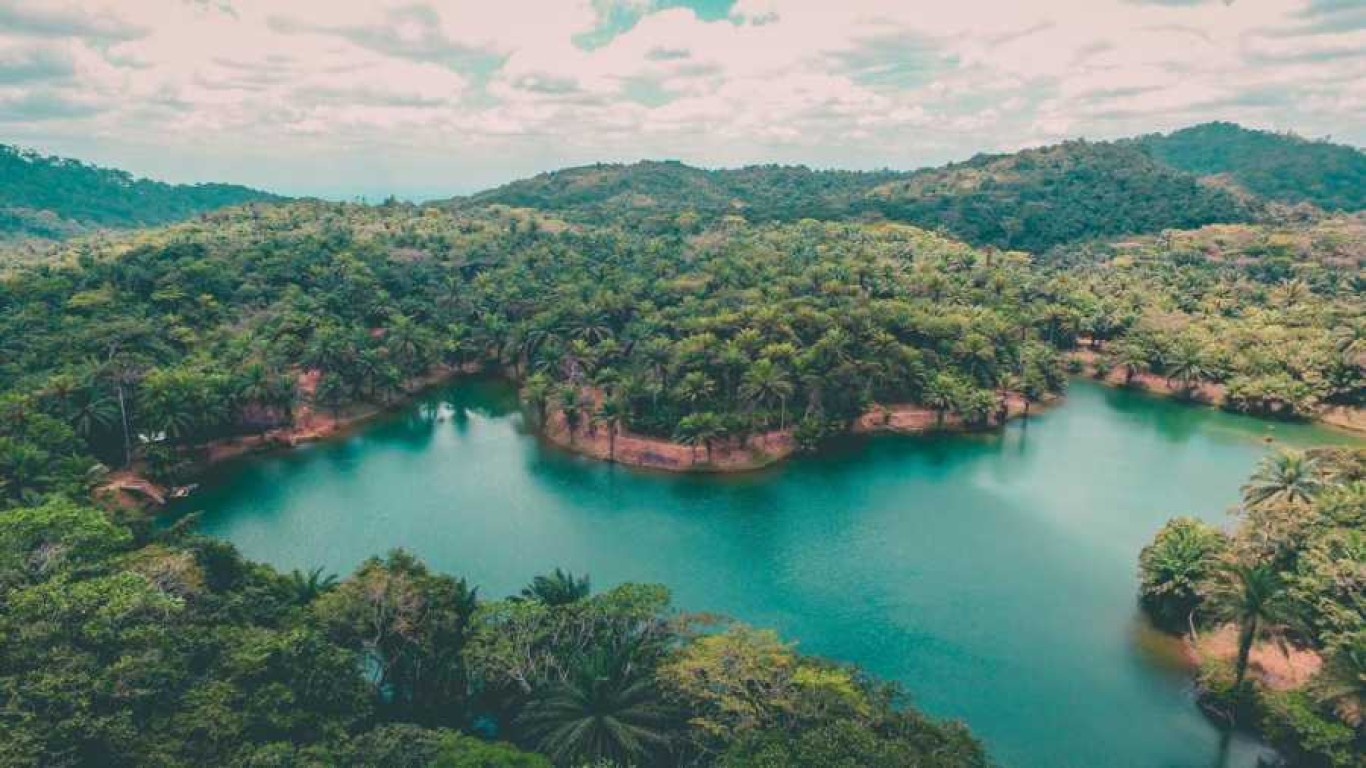
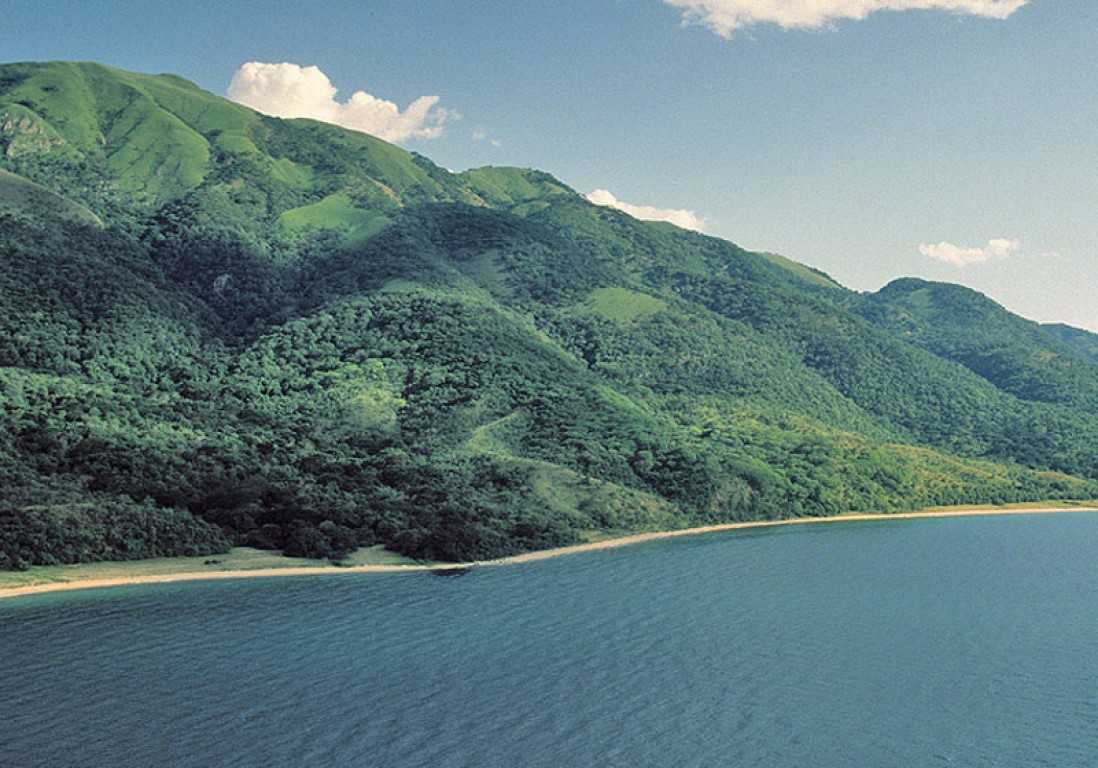
Lake Tanganyika holds superlatives that take a moment to absorb: the world’s longest freshwater lake (660 km from north to south), Africa’s deepest (1,470 m), the second-deepest on the planet after Lake Baikal, and the second-largest by volume. It is so long that it spans four countries — Tanzania, DRC, Burundi and Zambia — and so deep that its lower layers are permanently anoxic, isolated from the surface world for hundreds of thousands of years. In that isolated upper layer, evolution has produced a biological masterpiece: 250+ species of cichlid fish found nowhere else on Earth.
For travellers, Tanganyika is the anchor of western Tanzania’s most rewarding and least-visited safari circuit. The lake’s two shore parks — Gombe National Park to the north and Mahale Mountains National Park to the south — together protect Tanzania’s only accessible wild chimpanzee populations. The lake between them is an adventure in itself.
Where is Lake Tanganyika?
Tanzania’s share of the lake runs along its entire eastern shore, from Burundi in the north to Zambia in the south. The main Tanzanian access town is Kigoma, a port city in the Kigoma Region served by daily flights from Dar es Salaam and by the Central Line railway. Kigoma is the gateway to both Gombe (16 km north by water taxi) and Mahale (120 km south by charter boat or light aircraft).
The cichlid fish: a snorkeller’s reef
Lake Tanganyika’s cichlid diversity is a consequence of its extraordinary age (estimated at 9–12 million years) and isolation. The lake has never fully dried out or connected to other water systems in the geological record, giving its cichlid populations millions of years to diverge. Over 250 species have been described — from the enormous emperor cichlid (Boulengerochromis microlepis, reaching 80 cm) to tiny shell-dwelling species barely larger than a thumbnail.
The clear, warm water of the northern shore near Kigoma and the beaches at Mahale offers accessible snorkelling in 1–5 metres of water, with dozens of cichlid species visible simultaneously. No specialist equipment is needed — a mask and snorkel reveal an inland reef experience that rivals tropical marine snorkelling in colour diversity.
Ujiji: where Stanley found Livingstone
On the lake shore 8 km south of Kigoma, the village of Ujiji is the site of one of history’s most famous encounters. In November 1871, American journalist Henry Morton Stanley arrived at Ujiji and found the Scottish explorer David Livingstone — who had been out of contact with the outside world for six years — and reportedly greeted him with the understated: “Dr Livingstone, I presume?” A monument and small museum at the site mark the occasion. It is a 30-minute visit with outsized historical resonance.
The MV Liemba lake ferry
One of East Africa’s most romantic travel experiences is the MV Liemba — a lake ferry that has been travelling the Tanzanian shore of Tanganyika since 1927, originally built for the German navy. The Liemba connects Kigoma with shore villages and Zambian ports on a multi-day schedule, stopping at Gombe, Mahale and dozens of fishing communities. Travellers with time can book a cabin and travel the length of Tanzania’s lake shore — an extraordinary journey that few do but everyone who has describes as unforgettable.
Combine Lake Tanganyika with…
- Gombe National Park — Jane Goodall’s research site, 16 km from Kigoma.
- Mahale Mountains — the luxury chimp experience, 120 km south.
- Katavi National Park — the western Tanzania big-game complement.
Frequently asked questions about Lake Tanganyika
Is Lake Tanganyika safe to swim in?
Generally yes in the clear, wave-washed northern shore areas near Kigoma and the Mahale/Gombe beaches. Bilharzia risk is low in deep, clear water. Crocodile and hippo are present in river mouths and papyrus beds — always check local conditions before swimming.
How deep is Lake Tanganyika?
Maximum depth of 1,470 metres, making it Africa’s deepest lake and the second-deepest in the world after Russia’s Lake Baikal.
How many countries border Lake Tanganyika?
Four: Tanzania (east), Democratic Republic of Congo (west), Burundi (north) and Zambia (south).
Can you dive in Lake Tanganyika?
Yes — several dive operators based in Kigoma offer guided dives. The visibility and fish diversity are exceptional. The diving equivalent of a tropical coral reef, with entirely freshwater species.
Want to visit Lake Tanganyika?
Get a free custom safari plan within 24 hours.
Lake Tanganyika safari tours
No fixed packages listed yet — we'll build a custom safari around Lake Tanganyika for you.
Browse All ToursWant to visit Lake Tanganyika?
Get a free custom safari plan within 24 hours.
Best time to visit Lake Tanganyika
June to October — Dry season (best for chimpanzee trekking and snorkelling)
The dry season combines peak conditions for both the lake’s two main attractions. Chimpanzee trekking at both Gombe and Mahale is most productive — dry forest trails, chimps at lower elevations, and longer daily observation opportunities. Snorkelling visibility in the lake is at its annual peak as rainfall runoff is minimal. The lake surface is generally calm, making boat transfers comfortable. This is the recommended window for first-time visitors.
January to March — Short dry window (warm, productive)
A secondary dry period with warm temperatures and reasonable snorkelling conditions. Chimpanzee sightings remain good. A quieter time with lower camp rates at Mahale; most Gombe accommodation is available without advance booking.
November to December — Short rains transition
Brief rains begin in November. The forest is lush, bird diversity peaks, and the lake remains navigable. Chimp tracking is slightly more challenging as animals move to higher elevations. A good-value window with fewer visitors.
April to May — Long rains (difficult access, some camps close)
Heavy rains make lake crossing rough and forest trails hazardous. Mahale closes completely; Gombe remains technically open but is not recommended. Avoid for a dedicated Lake Tanganyika trip.
Bottom line: June to October without question. Book Mahale 12 months ahead for August and September.
Where to stay in Lake Tanganyika
We'll recommend accommodation across all budget levels based on your dates and preferences.
Browse All LodgesWant to visit Lake Tanganyika?
Get a free custom safari plan within 24 hours.
Nearby destinations
 Tanzania
 Tanzania
 Tanzania
 Tanzania