Quick facts
Wildlife
The Mailisita forest on the lower Kilimanjaro slopes supports colobus and blue monkey in the canopy. Blue-headed agama lizard is common on the warm rocks near the waterfall pool. Sunbirds, weavers, turacos and various forest-edge birds are active around the falls. The wider Hai District farmland and forest patch supports bushbuck, dik-dik and a range of butterflies particularly active in the wet months. The waterfall itself feeds a small stream used by local wildlife as a permanent water source.
Top activities
Waterfall hike from the Hai District trailhead — 45–90 minute walk through banana and coffee farms and forest patches to the waterfall and natural pool. Swimming in the rock pool beneath the falls — the pool is sheltered and clear. Picnic in the shaded forest clearing around the pool. Photography of the falls, the forest and the distant Kilimanjaro peak visible on clear mornings. Combination with a coffee farm tour on the Kilimanjaro lower slopes (Mailisita area is coffee-growing country). Bird watching on the forest trail for sunbird and turaco species.
About Mailisita Paradise waterfall
Northern Tanzania’s most visited corridor — the road between Arusha and Moshi — is dominated by safari departures and Kilimanjaro climbing operations. Just a short drive off that corridor, on the green lower slopes of the mountain in Hai District, Mailisita Paradise Waterfall offers something the safari circuit rarely provides: complete quiet.
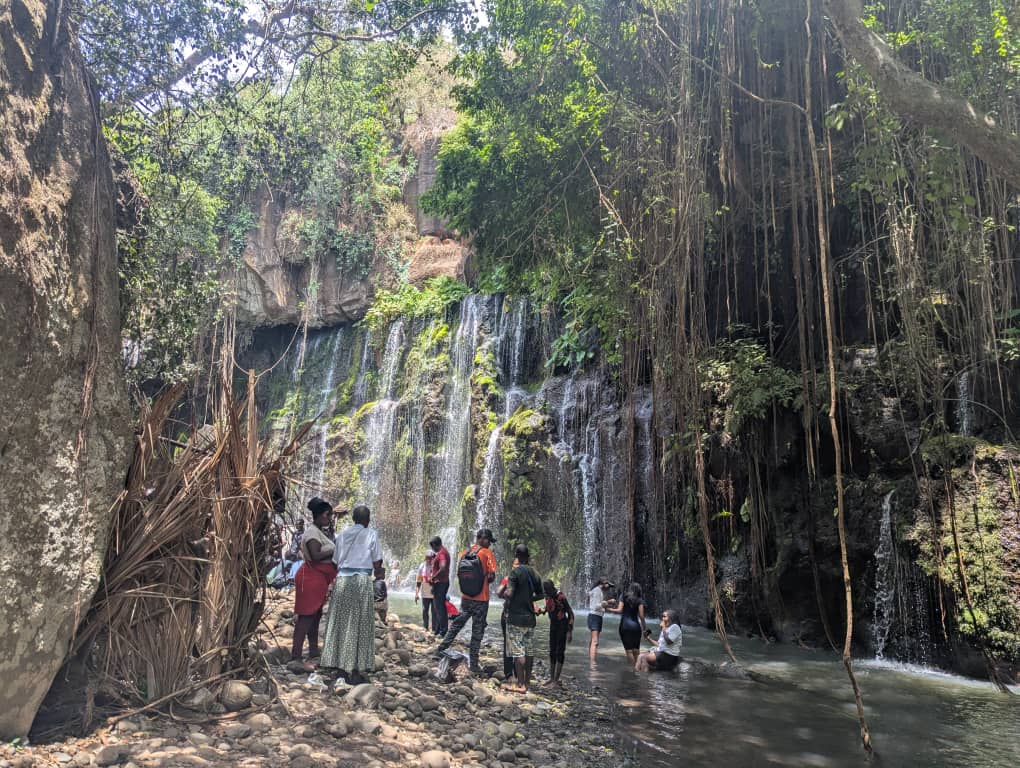
A cascade falling into a shaded natural pool, surrounded by montane forest and banana groves, Mailisita is a half-day escape that locals know and most visitors miss entirely. For anyone spending a day in Moshi before or after a Kilimanjaro climb, it is the single most pleasant way to spend that time.
Where is Mailisita?
The waterfall is in Hai District, Kilimanjaro Region, on the southwestern slopes of Kilimanjaro approximately 30–40 km from Moshi town (45–60 minutes by car depending on the route). The trailhead is accessible by private vehicle or with a local guide; the final section of road requires a 4WD or high-clearance vehicle in the wet season.
The walk
The trail from the trailhead descends through banana and coffee farms — passing the kind of Chagga smallholder agriculture that has covered these slopes for centuries — and into the forest fringe above the waterfall. The walk takes 45–90 minutes depending on pace and how much time you spend observing the farm and forest transition. A local guide hired in the nearby village adds cultural context and bird identification.
The waterfall itself drops into a clear rocky pool — sheltered, shaded and deep enough to swim in. The surrounding forest canopy provides cover even on hot days. Bring a picnic; this is a place to spend 2–3 hours rather than arriving and immediately turning back.
Combine Mailisita with…
- Moshi — the natural base, 45 minutes away. Combine with a coffee farm tour the same day.
- Kilimanjaro climb — an ideal pre-climb acclimatisation activity or post-climb recovery day.
- Arusha National Park — combine with a morning canoe safari and afternoon waterfall visit.
Frequently asked questions about Mailisita
Do you need a guide for Mailisita Waterfall?
A local guide is strongly recommended — the trail passes through private farmland and the approach roads are unsigned. Guides are available through Moshi-based operators or directly from villages near the trailhead.
Is it safe to swim in the natural pool?
Yes — the pool is fed by mountain water and is clear in the dry season. Avoid swimming immediately after heavy rain when the water may be fast-moving and murky.
How does Mailisita compare to Materuni Waterfall near Moshi?
Materuni is more accessible and better known, typically combined with a coffee farm tour. Mailisita is quieter, less visited and has a better swimming pool. Both are excellent; Materuni is more infrastructure-supported.
Want to visit Mailisita Paradise waterfall?
Get a free custom safari plan within 24 hours.
Mailisita Paradise waterfall safari tours
No fixed packages listed yet — we'll build a custom safari around Mailisita Paradise waterfall for you.
Browse All ToursWant to visit Mailisita Paradise waterfall?
Get a free custom safari plan within 24 hours.
Best time to visit Mailisita Paradise Waterfall
June to October — Dry season (safest for the trail, best pool conditions)
The dry season gives the safest trail conditions and the clearest pool water. The waterfall runs at a moderate, photogenic volume — neither the trickle of drought nor the brown torrent of heavy rain. The trail through the banana farms is dry and easy. Kilimanjaro is most frequently visible above the forest on clear mornings.
November to March — After rains (waterfall at full volume, trail muddier)
The waterfall runs at its most dramatic volume during and after the rains. The natural pool may be fuller and slightly murkier. The trail can be slippery on the steeper sections. A rewarding window for photographers who want the full waterfall experience rather than the calm dry-season flow.
Bottom line: June to October for the easiest trail and clearest pool. November to March for the most dramatic waterfall volume.
Where to stay in Mailisita Paradise waterfall
We'll recommend accommodation across all budget levels based on your dates and preferences.
Browse All LodgesWant to visit Mailisita Paradise waterfall?
Get a free custom safari plan within 24 hours.
Nearby destinations
 Tanzania
 Tanzania
 Tanzania
 Tanzania