Quick facts
Wildlife
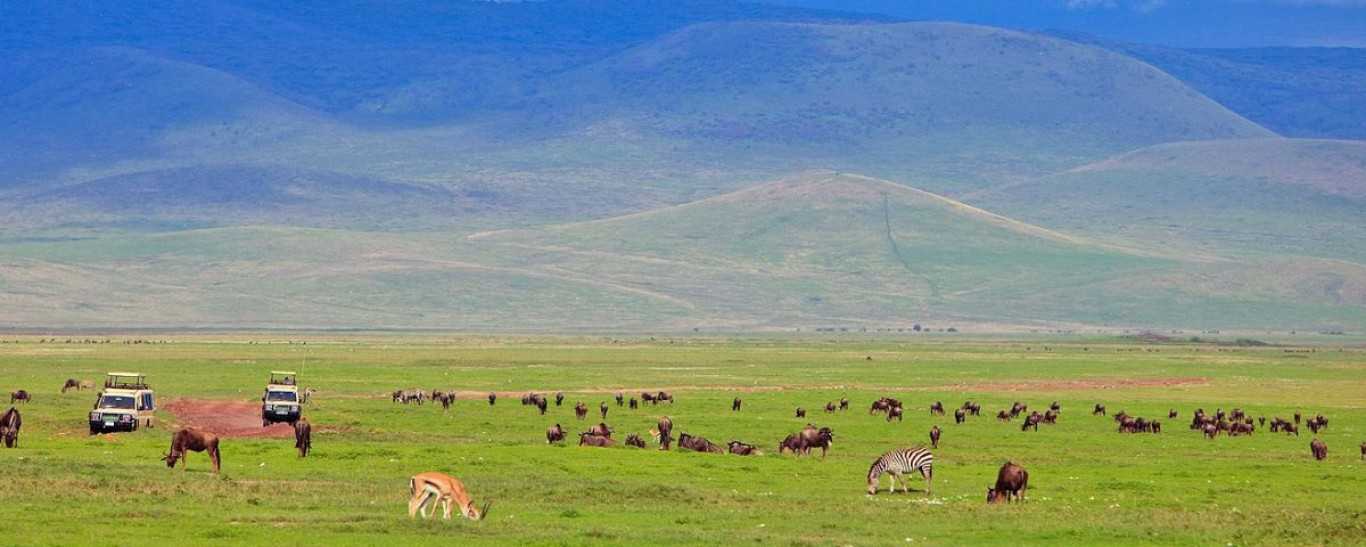
Olduvai Gorge sits inside the Ngorongoro Conservation Area and the adjacent Serengeti ecosystem. En route from the Ngorongoro rim, visitors commonly see wildebeest, zebra, gazelle, ostrich and Maasai livestock on the open plains. The gorge itself is a dry ravine; wildlife sightings here are incidental rather than the focus. The primary draw is geological and palaeontological.
Top activities
Guided museum and site tour at the Olduvai Gorge Museum — typically 60–90 minutes. Fossil trail walk along the gorge floor with a museum guide. Viewing of replica skulls and original excavation tools from the Leakey digs. Combined Olduvai and Laetoli day trip from the Ngorongoro rim. Maasai cultural visits available from the museum area. En-route stop on the Ngorongoro–Serengeti road, making it a natural inclusion on any Northern Circuit itinerary.
About Olduvai Gorge & Laetoli
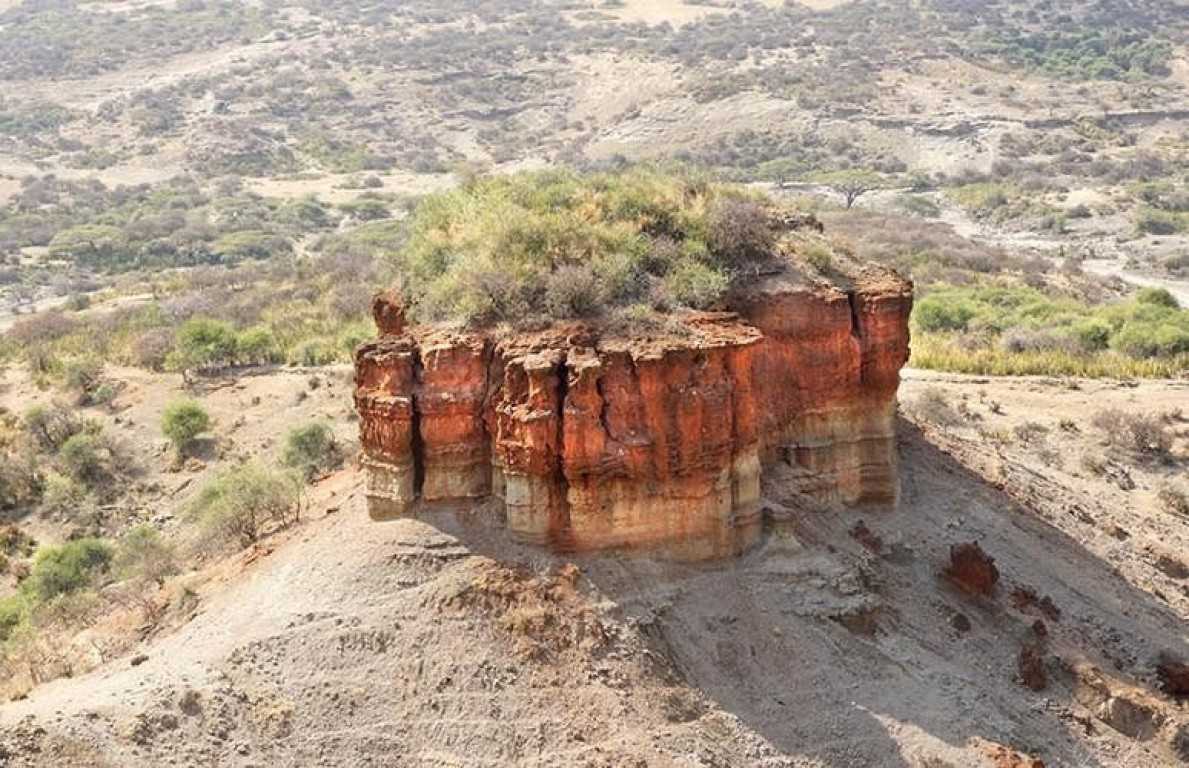
Standing at the edge of the Olduvai Gorge and looking down into the layered rock strata, you are reading a 2-million-year archive of human evolution. The pale sedimentary layers visible in the steep ravine walls each represent a different geological epoch — and from them, Louis and Mary Leakey and their successors extracted some of the most consequential discoveries in the history of science: skulls, tools, bones and footprints that rewrote our understanding of where, how and when modern humans came to be.
Located in northern Tanzania on the road between the Ngorongoro Conservation Area and the Serengeti, Olduvai Gorge is a mandatory stop on any Northern Circuit itinerary that takes its cultural and scientific context seriously.
Where is Olduvai Gorge?
The gorge sits in the western arm of the Ngorongoro Conservation Area, approximately 45 km from the Ngorongoro Crater rim and 50 km from the Naabi Hill gate of the Serengeti. It is a natural transit stop on the standard Ngorongoro–Serengeti road and requires no detour from the main Northern Circuit route.
What is Olduvai Gorge?
Olduvai (more correctly spelled Oldupai — a Maasai word for the wild sisal plant that grows here) is a 48-km long ravine in the Great Rift Valley, 90 metres deep in places. It was formed around 30,000 years ago through geological uplift and river erosion, cutting through layers of sediment that had been accumulating for nearly 2 million years. Those sediment layers trapped an extraordinary record: animal bones, volcanic ash (useful for radiometric dating) and, most importantly, the remains and tools of our hominin ancestors.
Key discoveries at Olduvai
Zinjanthropus (Paranthropus boisei) — 1959
Mary Leakea's most famous find: a 1.75-million-year-old skull she nicknamed "Nutcracker Man" for its enormous molars and robust jaw. The official specimen designation is Paranthropus boisei — a side branch of the human family tree, not a direct ancestor, but the discovery that put Olduvai on the scientific map and secured funding for further excavations.
Homo habilis — 1960
A year after Zinjanthropus, Louis Leakea's team found fossils of a more gracile hominin alongside the oldest stone tools yet discovered. They named it Homo habilis ("handy man") — the earliest member of the genus Homo, living approximately 2 million years ago. The find established Olduvai as one of the most significant palaeontological sites on Earth.
Acheulean hand axes and stone tools
The oldest Oldowan tools found at Olduvai are approximately 1.8 million years old — carefully struck flakes and choppers that are the earliest evidence of deliberate human technology. The later Acheulean tradition, represented by beautifully formed hand axes, documents technological progression over hundreds of thousands of years.
Laetoli: the footprints
Forty-five kilometres south of Olduvai, Laetoli is the site of the most extraordinary palaeontological discovery of the 20th century: a 27-metre trackway of hominin footprints preserved in volcanic ash, dated to 3.6 million years ago. Three individuals — almost certainly Australopithecus afarensis, the same species as the famous "Lucy" skeleton found in Ethiopia — walked across freshly deposited volcanic ash. The ash set like concrete, preserving their bipedal stride in perfect detail.
The Laetoli footprints prove that our ancestors were walking upright on two legs 3.6 million years ago — long before the brain had enlarged significantly. The site itself is not open to visitors (the original prints are buried under protective sand to preserve them) but a cast is displayed at the Olduvai Museum.
The Olduvai Gorge Museum
The on-site museum is small but punches well above its weight. Exhibits include replica skulls of the key Olduvai hominins arranged to show evolutionary progression, original and replica stone tools, geological cross-sections of the gorge strata, and a detailed explanation of the excavation history. A knowledgeable guide from the museum staff leads all visits — the 60–90 minute tour is far more informative than self-guided reading of the panels.
After the museum, the gorge trail descends to the excavation sites and the dry riverbed where many of the finds were made. Standing at the exact spot where the Nutcracker Man skull was found in 1959 is a genuinely moving experience.
Combine Olduvai with…
- Ngorongoro Crater — one full day in the crater, overnight on the rim, Olduvai the following morning en route to the Serengeti.
- Serengeti National Park — the natural continuation after the gorge visit.
- Lake Natron and Ol Doinyo Lengai — a northern extension for adventurous travellers.
Frequently asked questions about Olduvai Gorge
How long does the Olduvai Gorge visit take?
Allow 90 minutes minimum for the museum and gorge trail combined. Two to three hours is more comfortable and allows time to absorb the context properly.
Is Olduvai Gorge inside the Ngorongoro Conservation Area?
Yes — it is administered by the Ngorongoro Conservation Area Authority (NCAA) and standard NCA entry fees apply.
Can you see the original Laetoli footprints?
No — the original trackway is buried under protective sand. High-quality casts are displayed at the Olduvai Museum and at the National Museum of Tanzania in Dar es Salaam.
Who discovered the Laetoli footprints?
Mary Leakey, along with her team, in 1976 — seventeen years after the Zinjanthropus skull discovery at Olduvai.
Is Olduvai Gorge suitable for children?
Yes — the story of human origins is one that captures childrea's imagination well, and the museum guides are skilled at pitching the narrative to different ages. The gorge walk is flat and easy.
Want to visit Olduvai Gorge & Laetoli?
Get a free custom safari plan within 24 hours.
Olduvai Gorge & Laetoli safari tours
No fixed packages listed yet — we'll build a custom safari around Olduvai Gorge & Laetoli for you.
Browse All ToursWant to visit Olduvai Gorge & Laetoli?
Get a free custom safari plan within 24 hours.
Best time to visit Olduvai Gorge
Olduvai Gorge is visited as part of a Northern Circuit itinerary — usually on the road between the Ngorongoro rim and the Serengeti — and is accessible year-round. The site itself is not weather-dependent in the way that game drives are.
June to October — Dry season (best road conditions)
The road between Ngorongoro and the Serengeti via Olduvai is at its most reliable in the dry season. The gorge itself is dry and dusty — atmospheric rather than green — and the museum visit is comfortable in the cooler temperatures. The surrounding short-grass plains are at their most open, and the drive between Olduvai and the Serengeti gate often produces excellent wildlife sightings.
December to March — Green season (lush, often combines with calving)
The surrounding Serengeti-Ngorongoro plains are vivid green and the wildebeest calving season (January–March) is underway nearby. The museum visit is the same year-round. Some sections of the dirt road approaching from the Ngorongoro side can be slippery after heavy rain.
Bottom line: Visit Olduvai on any Northern Circuit itinerary. It requires 90 minutes minimum; allow 2–3 hours for the gorge trail and museum together.
Where to stay in Olduvai Gorge & Laetoli
We'll recommend accommodation across all budget levels based on your dates and preferences.
Browse All LodgesWant to visit Olduvai Gorge & Laetoli?
Get a free custom safari plan within 24 hours.
Nearby destinations
 Tanzania
 Tanzania
 Tanzania
 Tanzania