Quick facts
Wildlife
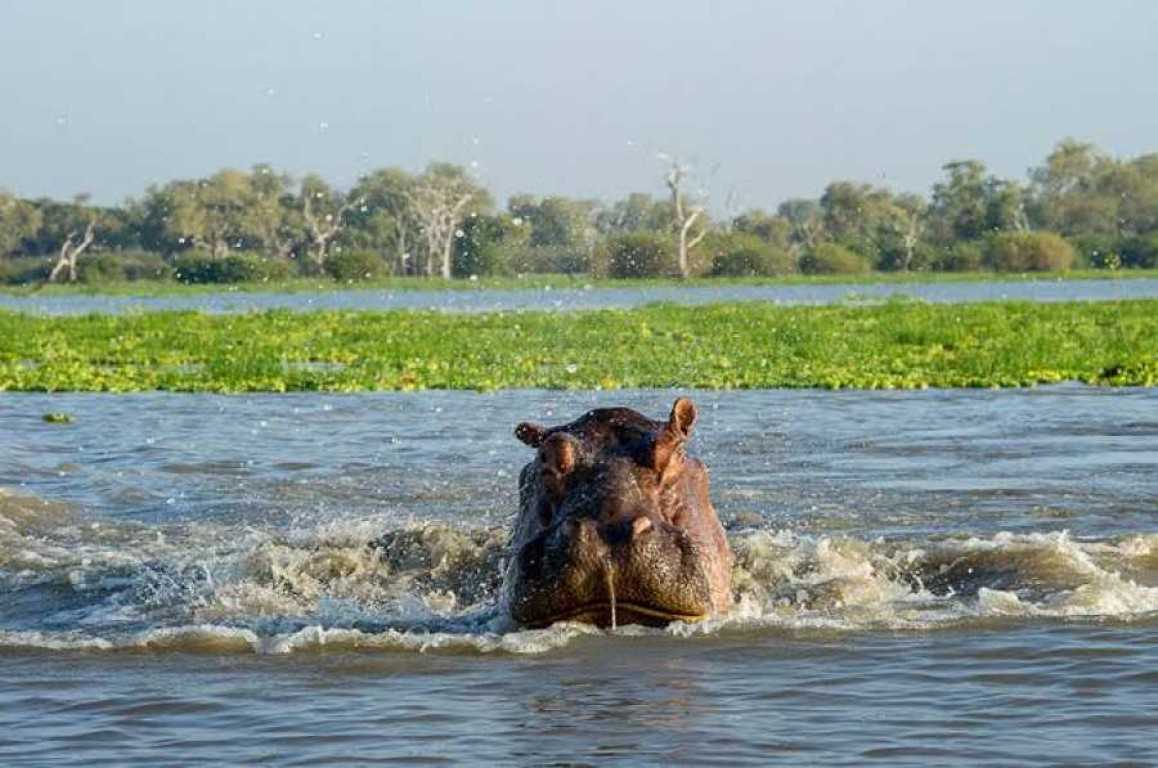
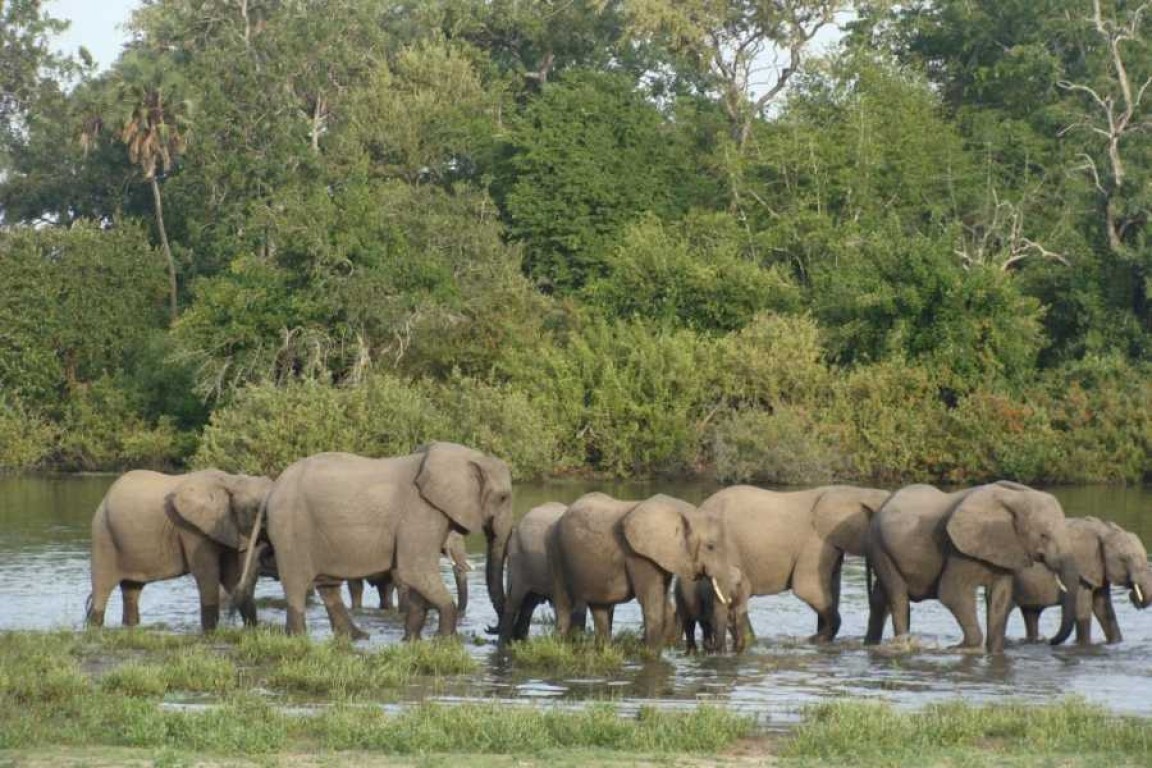
Rumanyika-Karagwe National Park holds elephant, hippo, Nile crocodile, buffalo, topi, Uganda kob, reedbuck, sitatunga in swamp habitats, oribi, warthog, olive baboon and a range of forest species. Chimpanzee are present in the equatorial forest patches. The park's range of habitats — grassland, equatorial forest, marsh, swamp and open water — produces high bird diversity, estimated at over 350 species including the shoebill stork in the wetland margins. The park shares wildlife with Uganda's Queen Elizabeth National Park across the border.
Top activities
Game drives through the grassland and forest mosaic for elephant, topi, Uganda kob and reedbuck. Boat safari on the lakes and river systems for hippo, crocodile and waterbirds. Chimpanzee tracking in the equatorial forest patches. Birdwatching with specialist guides for shoebill stork and forest endemics. Cultural visits to the Karagwe historic sites — the Karagwe Kingdom was one of the great interlacustrine kingdoms of the Great Lakes region, contemporaneous with Rwanda's Mwami dynasty. Bunyonyi crater lake overlook (near the Uganda border). Walking safaris in designated areas.
About Rumanyika -Karagwe National Park
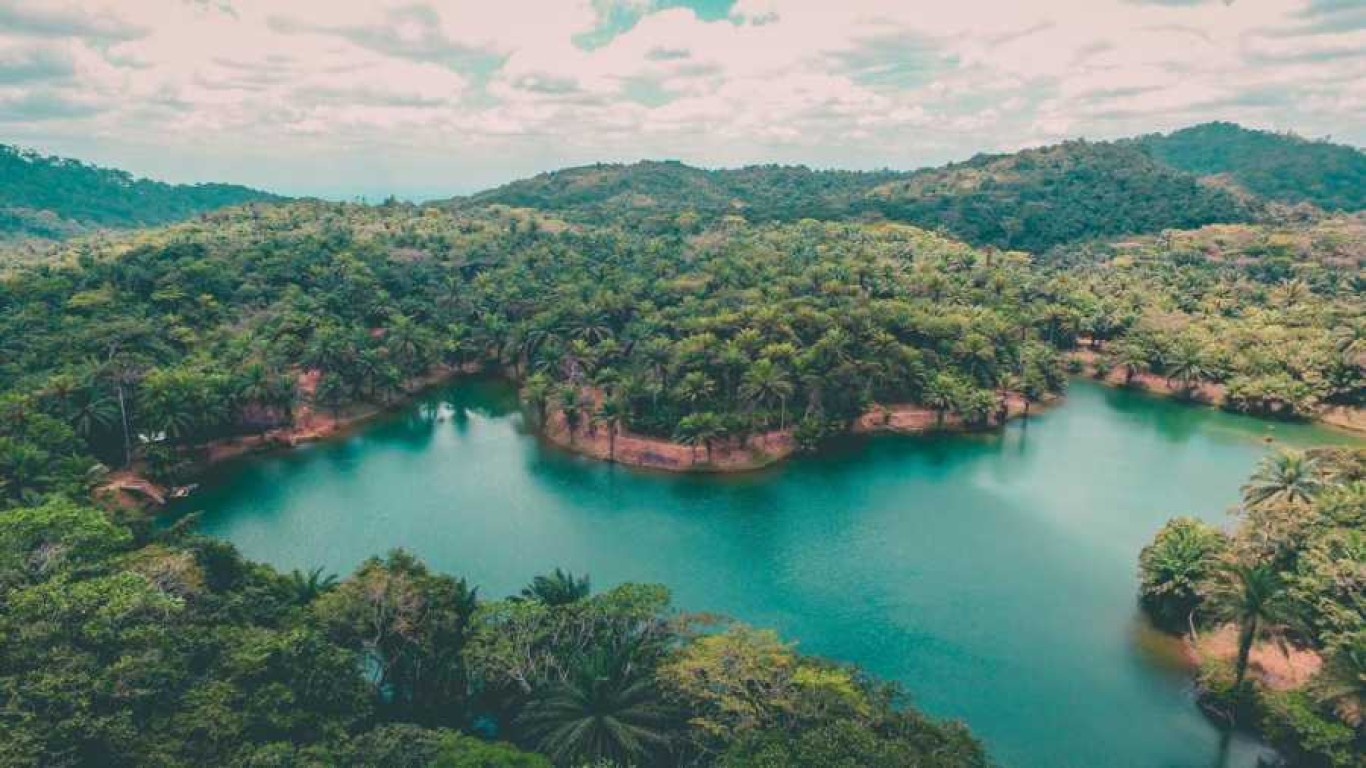
Rumanyika-Karagwe National Park is Tanzania’s newest national park — gazetted in 2019 from the former Rumanyika Orugundu Game Reserve in the country’s northwestern Kagera Region. The park sits on Tanzania’s border with Uganda, in the ancient landscape of the Karagwe Kingdom — one of the great interlacustrine kingdoms of the Great Lakes region, which dominated the area from the 15th to the 19th century before the colonial reorganisation of boundaries.
The park name honours two legacies: the Rumanyika game reserve tradition and the Karagwe chiefdom whose territory it protects. The park’s landscape — a mosaic of equatorial forest, grassland, marshland and open water bodies — straddles the ecological transition between Tanzania’s drier interior and the permanently watered Great Lakes ecosystem of Uganda and Rwanda.
Where is Rumanyika-Karagwe?
The park is in Tanzania’s Kagera Region, northwestern Tanzania, bordering Uganda to the north and Rwanda to the west. The nearest substantial town is Kyaka; the regional hub is Bukoba, on Lake Victoria’s western shore. Bukoba is served by daily flights from Dar es Salaam and Mwanza. The park is approximately 60 km from Bukoba on a gravel road.
Wildlife
The park’s range of habitats supports a diverse mammal community spanning both savanna and forest species:
- Elephant — resident herds that move across the Ugandan border with Queen Elizabeth National Park.
- Hippopotamus — abundant in the park’s lakes and river channels.
- Topi and Uganda kob — savanna antelopes more commonly associated with Uganda and western Kenya, present at the grassland-forest transition.
- Sitatunga — the semi-aquatic swamp antelope, present in the papyrus and reed habitats.
- Chimpanzee — present in the equatorial forest patches; not yet fully habituated but tracking sessions are available through the park authority.
The Karagwe Kingdom heritage
The Karagwe was one of the most powerful of the pre-colonial Great Lakes kingdoms, reaching its height under King Rumanyika Orugundu in the mid-19th century — the ruler after whom the former game reserve was named. The explorers Speke and Grant visited Karagwe in 1861 on their Nile source expedition and described it as the most prosperous and well-ordered kingdom they had encountered in Africa. The park encompasses former royal grazing lands and sacred sites associated with the Hinda royal clan.
As a new park
Rumanyika-Karagwe is still developing its visitor infrastructure — accommodation options are limited (basic bandas and camping) and the road network inside the park is in development. This makes it a destination for adventurous travellers comfortable with basic conditions who want to experience a genuinely undiscovered park before the tourist infrastructure arrives. TANAPA is actively developing the park; the situation will improve in the coming years.
Combine Rumanyika-Karagwe with…
- Bukoba town on Lake Victoria — the regional hub with decent accommodation.
- BurigiChato National Park — the neighbouring northern Tanzania park for shoebill stork and elephant.
- Rwanda’s Akagera National Park (across the border) — for Big Five in a complementary landscape.
- Uganda’s Queen Elizabeth National Park (shared wildlife corridor) — across the northern border.
Frequently asked questions about Rumanyika-Karagwe
Is Rumanyika-Karagwe suitable for standard safari visitors?
Currently best suited to adventurous travellers comfortable with basic facilities and pioneering conditions. As a new park, infrastructure is limited but improving. By late 2026–2027, more established visitor options should be available.
How does the park compare to Etosha or the Serengeti?
It doesn’t — they are at completely different stages of tourism development. Rumanyika-Karagwe is a frontier experience; Etosha and Serengeti are mature safari destinations. The right comparison is to parks like BurigiChato or the early days of Nyerere (Selous) — high potential, pioneering conditions.
What is the name Orugundu?
Orugundu is the name of the Karagwe ruling dynasty (the Hinda clan) — incorporated into the original game reserve name to honour the chiefdom’s legacy. The park name Rumanyika refers specifically to King Rumanyika Orugundu, the most celebrated 19th-century Karagwe ruler.
Want to visit Rumanyika -Karagwe National Park?
Get a free custom safari plan within 24 hours.
Rumanyika -Karagwe National Park safari tours
No fixed packages listed yet — we'll build a custom safari around Rumanyika -Karagwe National Park for you.
Browse All ToursWant to visit Rumanyika -Karagwe National Park?
Get a free custom safari plan within 24 hours.
Best time to visit Rumanyika-Karagwe National Park
January to February and June to August — Dry windows (best game viewing)
The park receives rainfall year-round due to its equatorial position, but the two drier windows — January to February and June to August — offer the most reliable conditions for game drives and the most comfortable walking safaris. Wildlife concentrates around permanent water sources during these drier periods.
March to May and September to November — Wetter periods (birding, lush landscape)
The wetter periods bring lush vegetation and high bird diversity, particularly in the forest and wetland habitats. Chimpanzee tracking may be more challenging in heavy rain. Some tracks can become muddy; a 4WD is essential year-round.
Bottom line: January to February and June to August for the clearest game viewing. Year-round for birding, with peak diversity in the wetter months.
Where to stay in Rumanyika -Karagwe National Park
We'll recommend accommodation across all budget levels based on your dates and preferences.
Browse All LodgesWant to visit Rumanyika -Karagwe National Park?
Get a free custom safari plan within 24 hours.
Nearby destinations
 Tanzania
 Tanzania
 Tanzania
 Tanzania