
Quick facts
Wildlife
Jambiani's long reef lagoon has extensive seagrass beds that support feeding green sea turtle, which are regularly sighted grazing in the shallow water. The outer reef beyond the lagoon has good snorkelling with parrotfish, surgeonfish, butterflyfish and reef shark. The beach and lagoon are used by local fishermen whose dhows and nets are part of the daily landscape. Kizimkazi, 30 minutes south, offers the best dolphin snorkelling in Zanzibar with resident spinner dolphin populations. Kuza Cave, adjacent to the beach, has a freshwater pool and resident bats in the cave ceiling.
Top activities
Lagoon walk at low tide — the Jambiani reef flat extends far at low tide, exposing starfish, sea cucumber, octopus and reef fish visible in pools. Seaweed farm visit with a local Jambiani woman farmer — one of the most genuine community encounters available at any Zanzibar beach. Kuza Cave — a short walk from the beach to a cave with a freshwater swimming pool formed in limestone. Kuumbi Cave rock art — an archaeologically important cave 2 km south with ancient human habitation evidence. Bicycle hire and cycling along the coastal track south toward Kizimkazi. Kizimkazi dolphin tour day trip (30 minutes south).
About Jambian Beach
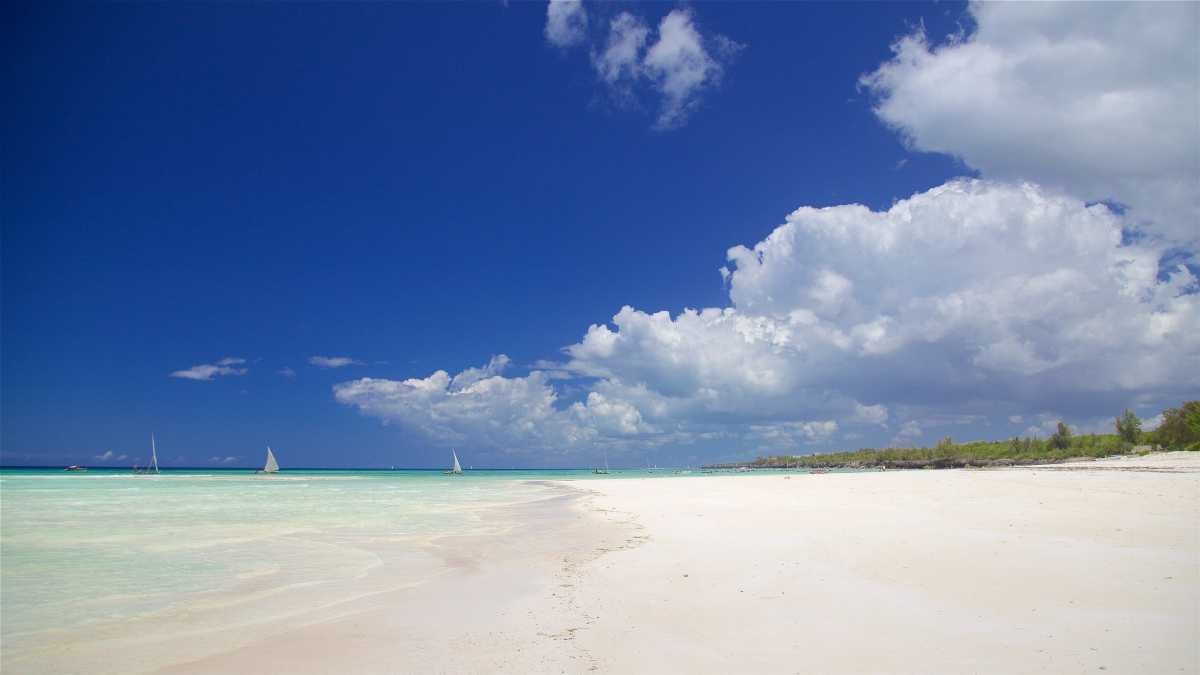
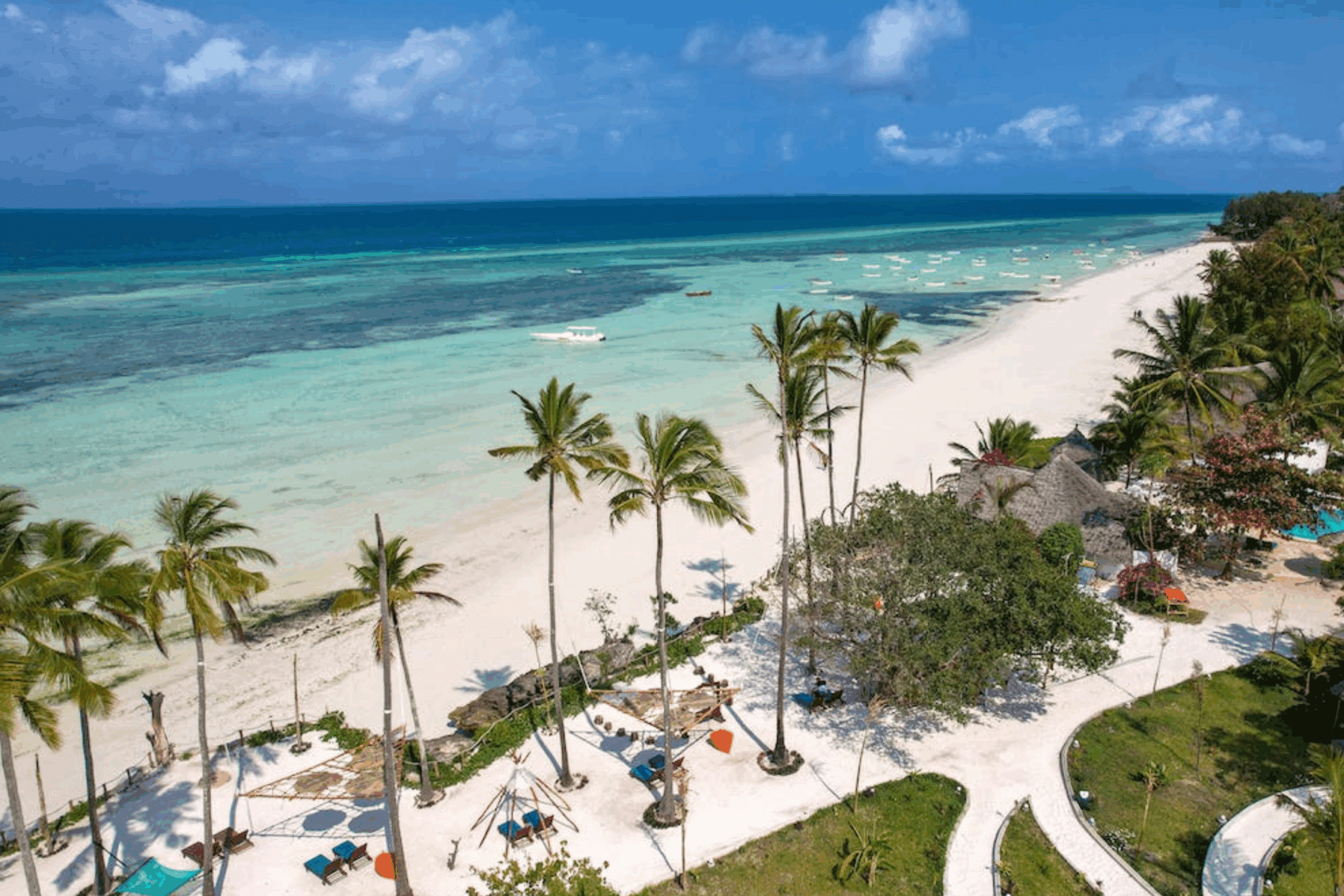
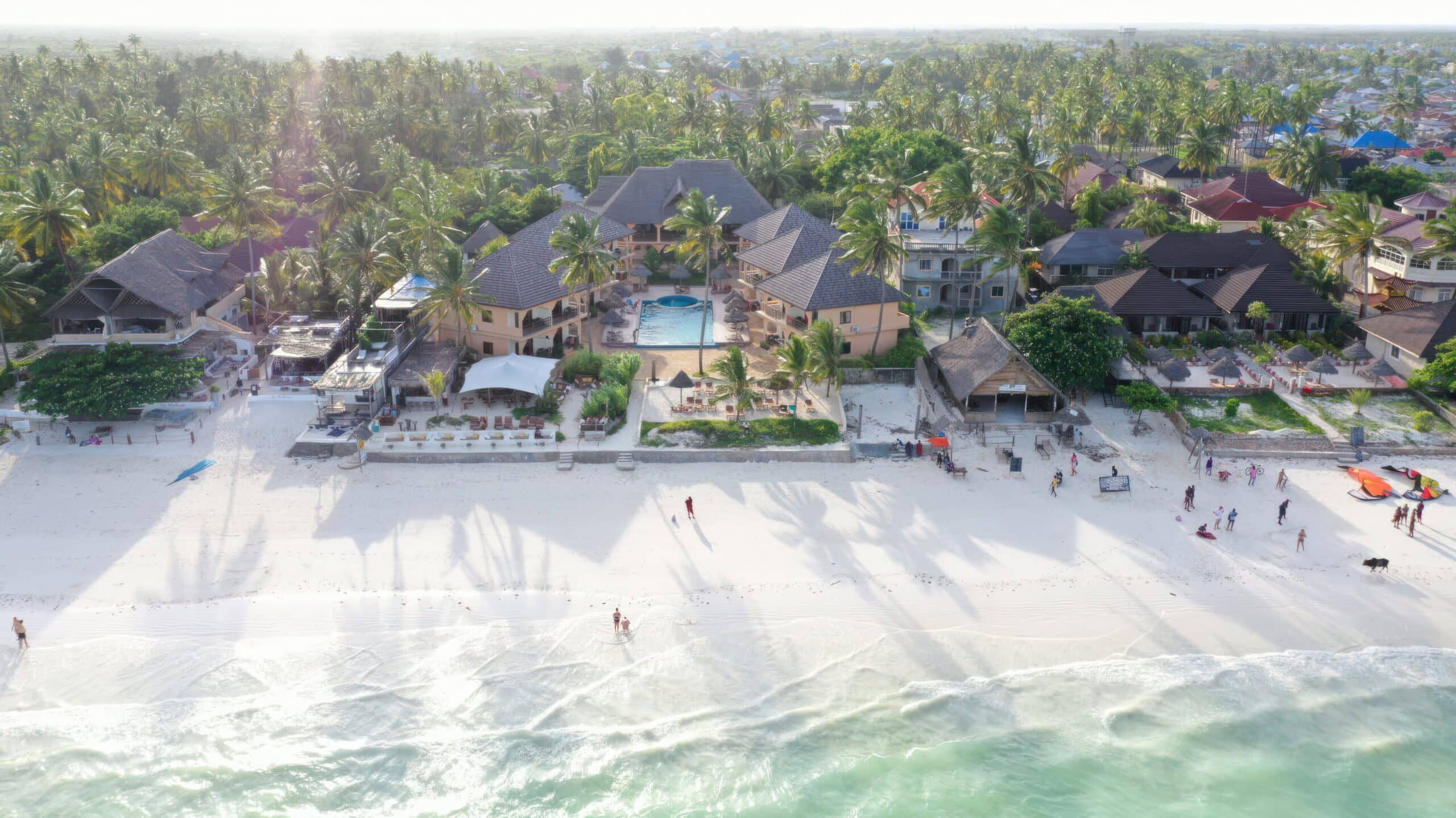
South of Paje along Zanzibar’s southeastern coast, the reef lagoon continues in a long, uninterrupted sweep of turquoise water bordered by coconut palms and fishing village. Jambiani Beach is the most quintessentially “Zanzibar village” of the east coast beaches: relatively small tourist infrastructure, a working fishing community whose dhows come and go on the tide, and a pace of life that the tourism industry has adjusted around rather than replaced.
It is Zanzibar’s best beach for travellers who want simplicity. The guesthouses are modest by the island’s luxury standards and the budget end is genuinely good value. The lagoon low-tide walk, the seaweed farming community and the nearby caves make it far more interesting than a generic beach stop.
Where is Jambiani?
On Zanzibar’s southeastern coast, 8 km south of Paje and 65 km from Stone Town (approximately 1.5 hours by car). The coastal road from Paje to Jambiani is a pleasant drive through coconut groves and fishing villages.
The lagoon and the tide
Like all east-coast Zanzibar beaches, Jambiani has a significant tidal range — at low tide the lagoon can stretch 300–400 metres across exposed reef flat. This is best understood as an opportunity rather than a nuisance: the exposed reef flat is full of life. Local guides lead low-tide lagoon walks across the flat, identifying octopus (sometimes caught for the evening’s dinner), starfish, sea urchins, reef fish trapped in pools and green sea turtle grazing on seagrass patches.
Kuza Cave
A 15-minute walk from the beach, Kuza Cave is a limestone cave containing a crystal-clear freshwater swimming pool — the water filtered through the rock and cool even in summer. A small population of bats roosts in the cave ceiling. Entry is through a local community management programme; the fee supports the village. The cave pool is a popular afternoon retreat from beach heat.
Kuumbi Cave rock art
Two kilometres south of Jambiani, Kuumbi Cave is archaeologically significant — excavations have revealed evidence of human habitation dating back approximately 20,000 years, including stone tools and charred bone fragments. The site also has early rock paintings. It is one of the earliest documented sites of human presence on Zanzibar Island.
Cycling the coast
Bicycles are available for hire in Jambiani, and the coastal track south toward Kizimkazi (30 km) passes through fishing villages, coconut groves and the occasional rocky headland with sea views. A combination of cycling to Kizimkazi for the dolphin tour, then cycling back for sunset, makes one of Zanzibar’s best active days.
Combine Jambiani with…
- Paje Beach — 8 km north; the kitesurfing and slightly more animated neighbour.
- Kizimkazi — 30 km south for spinner dolphin encounters.
- Stone Town — day trip west for the UNESCO heritage town.
Frequently asked questions about Jambiani
Is Jambiani safe for swimming?
Yes at high tide in the lagoon. The reef flat is safe to walk at low tide with shoes. The outer reef requires a boat to reach and is safe for confident swimmers and snorkellers.
How does Jambiani compare to Paje?
Paje is more developed with more guesthouses and kite schools; Jambiani is smaller, quieter and more village-like. Both share the same reef lagoon. Jambiani suits budget travellers who want authenticity; Paje suits kite surfers and those wanting more social activity.
Want to visit Jambian Beach?
Get a free custom safari plan within 24 hours.
Jambian Beach safari tours
No fixed packages listed yet — we'll build a custom safari around Jambian Beach for you.
Browse All ToursWant to visit Jambian Beach?
Get a free custom safari plan within 24 hours.
Best time to visit Jambiani Beach
June to October — Kusi season (kitesurfing wind, cooler)
The Kusi wind that makes nearby Paje a kitesurfing hotspot also provides pleasant beach conditions at Jambiani. Temperatures are cool (24–27°C), the lagoon is productive for wildlife walking at low tide and the beach is at its quietest.
December to February — Kaskazi season (warmest, best swimming)
Warm (28–30°C), calm and clear. The outer reef snorkelling is at its best visibility. High tide brings the water to the beach for swimming; Kuza Cave is pleasant in warm conditions.
April to May — Long rains (quietest, some closures)
The least recommended period for beach activities. Jambiani is small enough that some guesthouses close entirely. The village community life continues, but the beach experience is limited.
Bottom line: June to October and December to February are both rewarding. Jambiani is a year-round destination with the right expectations around tidal swimming.
Where to stay in Jambian Beach
We'll recommend accommodation across all budget levels based on your dates and preferences.
Browse All LodgesWant to visit Jambian Beach?
Get a free custom safari plan within 24 hours.
Nearby destinations
 Zanzibar
 Zanzibar
 Zanzibar
 Zanzibar
 Zanzibar
 Zanzibar