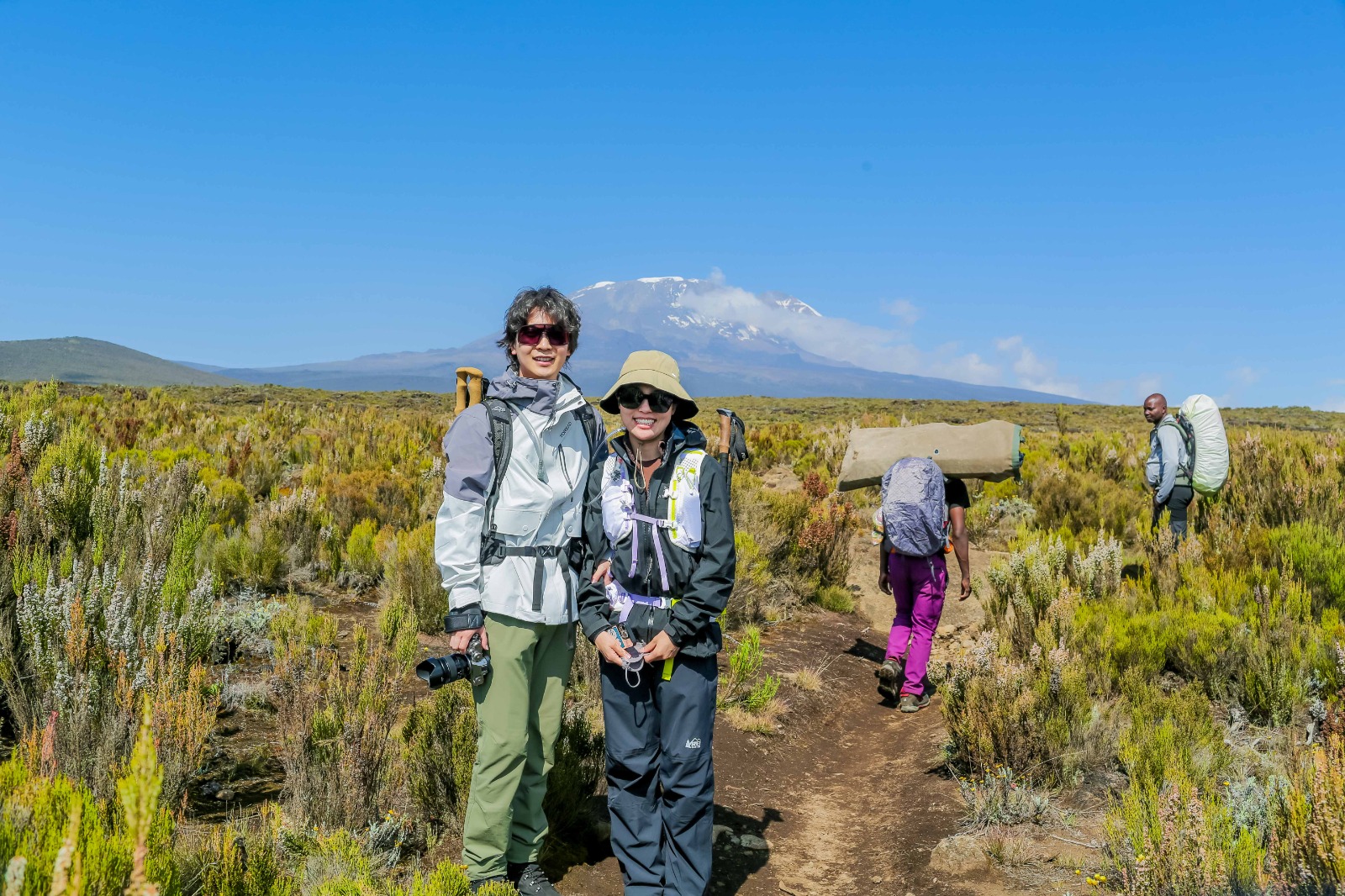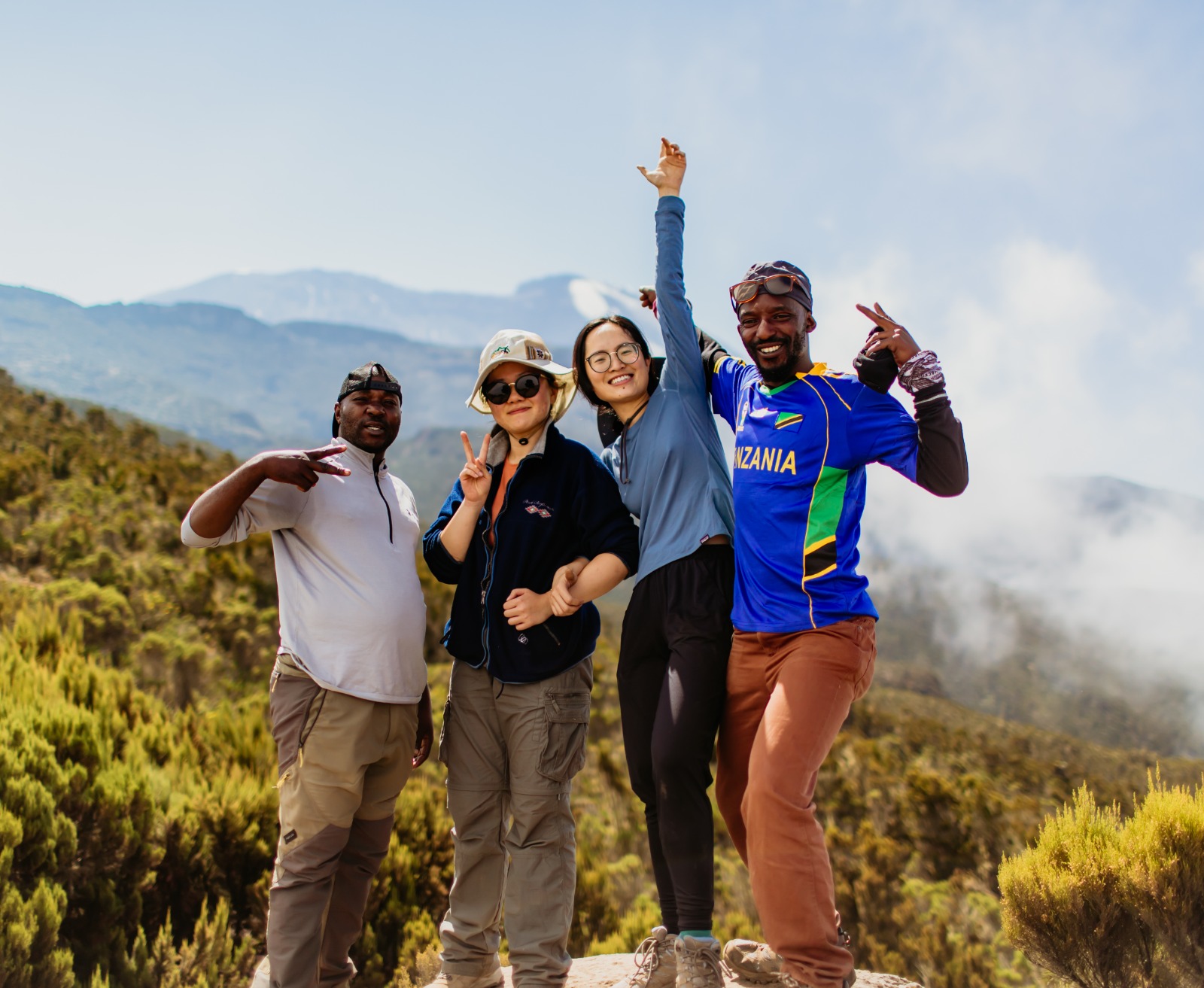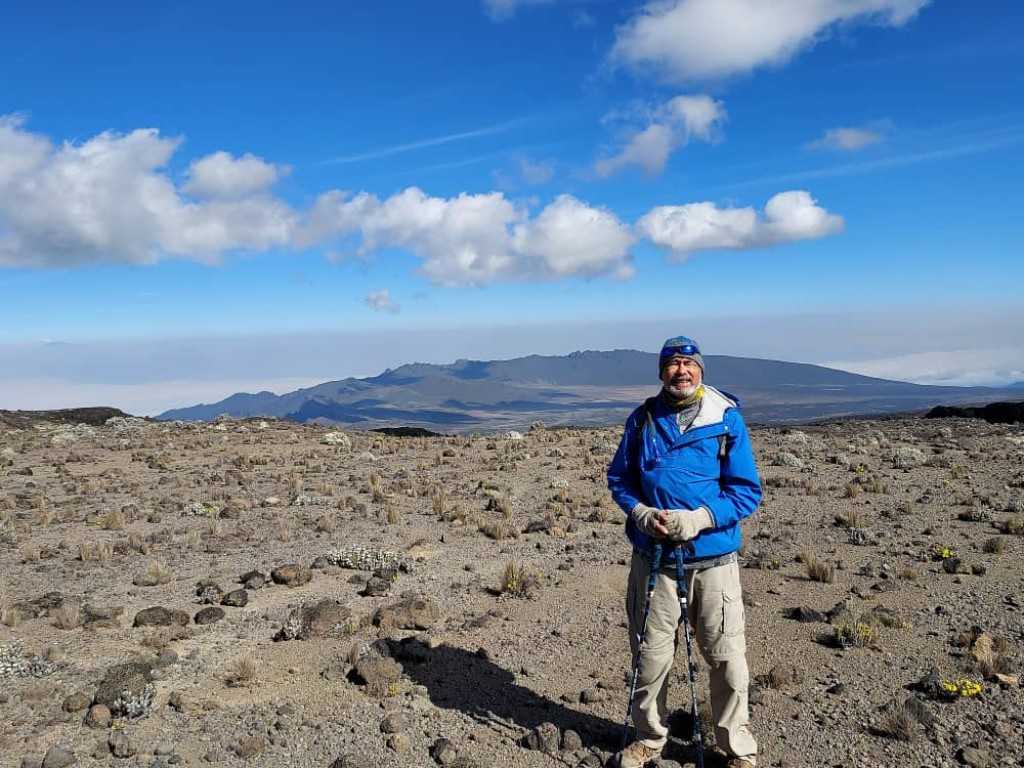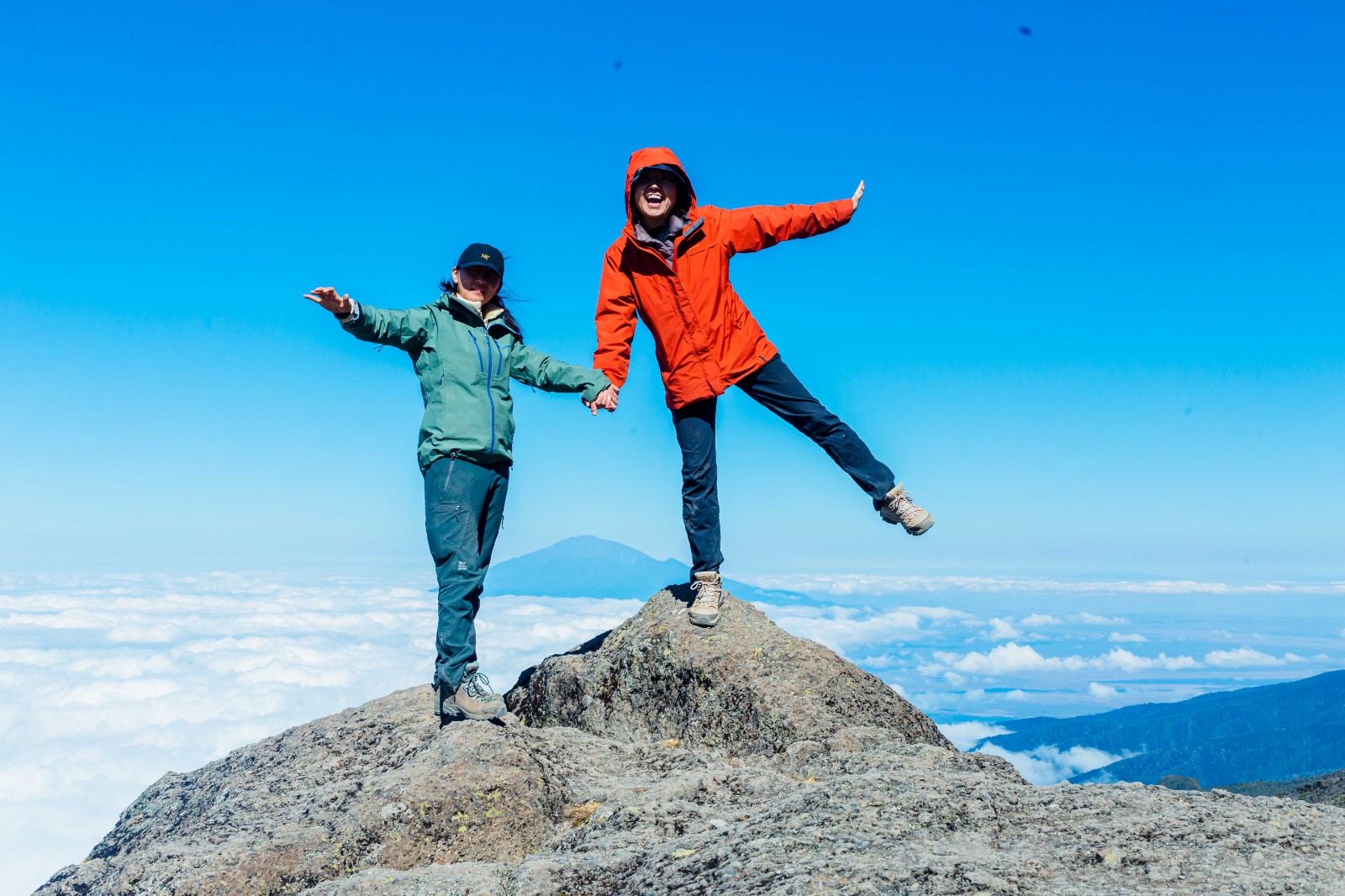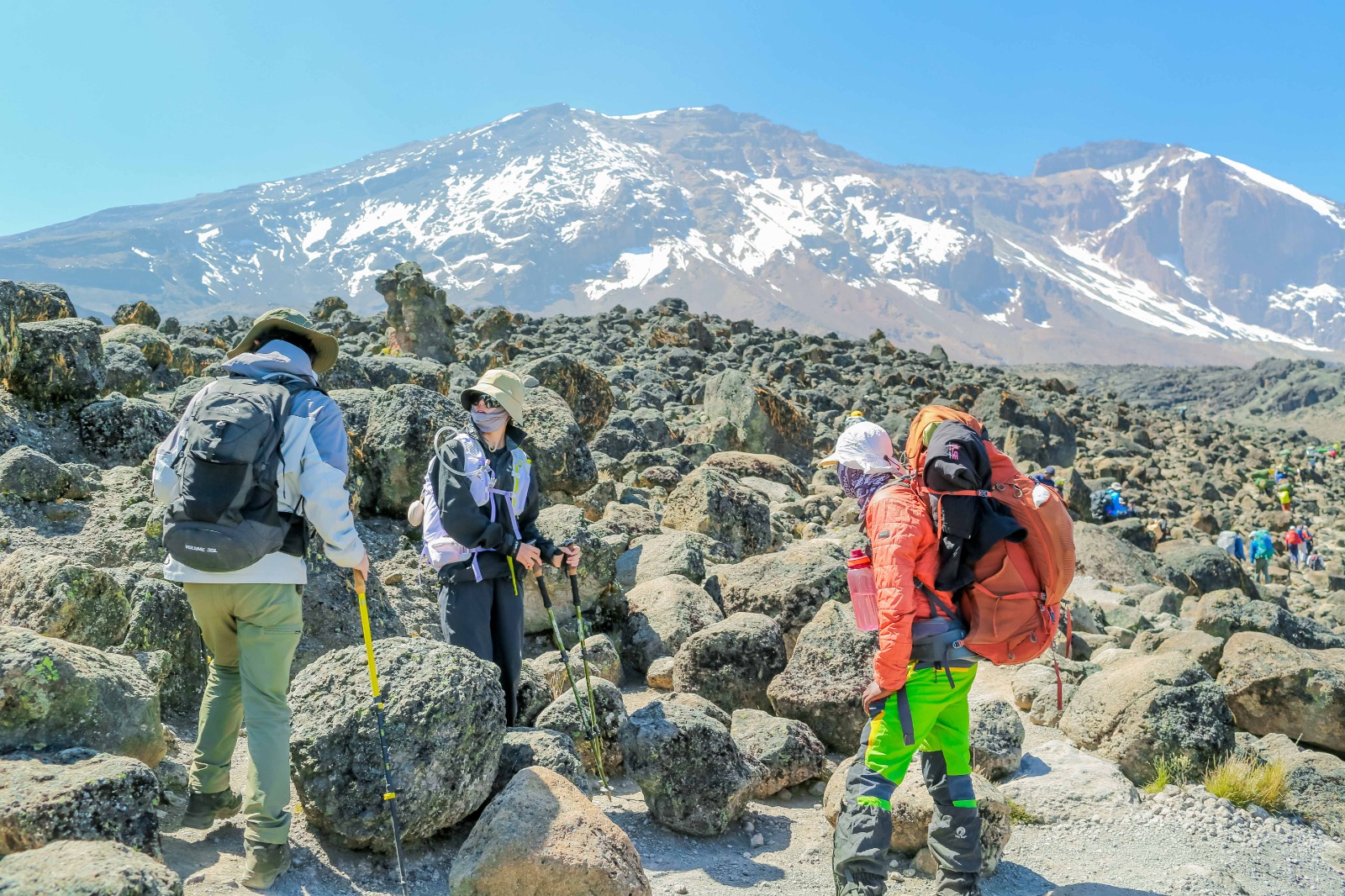
Mount Kilimanjaro is the tallest mountain in Africa, standing at 5,895 meters (19,341 feet) above sea level. Each year thousands of climbers travel to Tanzania to attempt reaching Uhuru Peak, the summit of Kilimanjaro.
One of the most important decisions when planning your climb is choosing the right route. Each Kilimanjaro route approaches the mountain from a different side and offers unique scenery, acclimatization profiles, and difficulty levels.
If you are new to the mountain, begin with the full Kilimanjaro Climbing Guide.
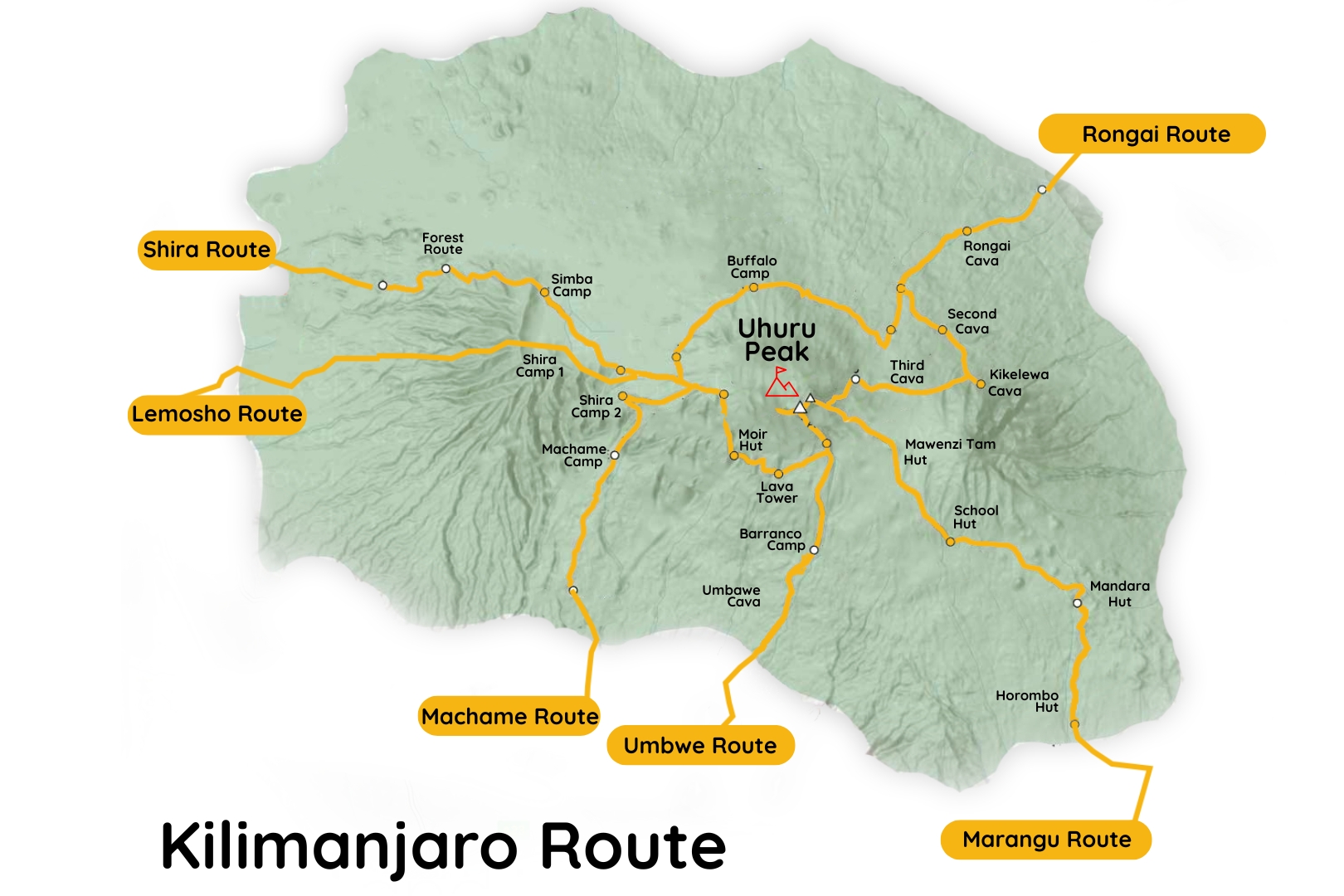
Understanding the Kilimanjaro Map
Mount Kilimanjaro is a massive volcanic mountain made up of three cones:
-
Kibo (5,895 m) – the highest peak and location of Uhuru Peak
-
Mawenzi (5,149 m) – a rugged volcanic cone east of Kibo
-
Shira (4,005 m) – the oldest cone forming a plateau on the western side
Most climbing routes circle around Kibo before making the final ascent to Uhuru Peak.
The mountain has several official routes that approach the summit from different directions.
Main Kilimanjaro Climbing Routes
The most popular Kilimanjaro routes include:
-
Lemosho Route
-
Machame Route
-
Marangu Route
-
Rongai Route
-
Umbwe Route
Each route offers a different experience depending on scenery, difficulty, and length.
For a detailed route comparison, see Machame vs Lemosho vs Marangu Route.
Lemosho Route
The Lemosho Route begins on the western side of Mount Kilimanjaro and is considered one of the best routes for acclimatization and scenery.
The route crosses the beautiful Shira Plateau before joining the Machame route near Lava Tower.
Key features of Lemosho:
-
Excellent acclimatization profile
-
Diverse landscapes
-
High summit success rate
-
Usually 7–8 days
Popular itineraries include the 7 Day Lemosho Route Kilimanjaro Climb and the 8 Day Lemosho Route Kilimanjaro Climb.
Machame Route
The Machame Route is the most popular Kilimanjaro climbing route and is known for its spectacular scenery.
It approaches the mountain from the southern side and follows the “climb high, sleep low” principle, which helps with altitude acclimatization.
Key features of Machame:
-
Stunning landscapes
-
Strong acclimatization profile
-
Popular and well-established route
-
Usually 6–7 days
Climbing options include the 6 Day Machame Route Kilimanjaro Climb and the 7 Day Machame Route Kilimanjaro Climb.
Marangu Route
The Marangu Route is the oldest Kilimanjaro route and the only one that uses mountain huts instead of tents.
Because of this, it is sometimes called the “Coca-Cola Route.”
Key features of Marangu:
-
Hut accommodation
-
Direct ascent route
-
Usually 5–6 days
-
One of the most historic routes
Climbers can choose itineraries such as the 5 Day Marangu Route Kilimanjaro Climb and the 6 Day Marangu Route Kilimanjaro Climb.
Rongai Route
The Rongai Route approaches Kilimanjaro from the northern side near the Kenyan border.
This route is quieter than the others and receives less rainfall because it lies in the rain shadow of the mountain.
Key features of Rongai:
-
Less crowded route
-
Drier climate
-
Gradual ascent profile
-
Usually 6–7 days
Example itineraries include the 6 Day Rongai Route Kilimanjaro Climb and the 7 Day Rongai Route Kilimanjaro Climb.
Umbwe Route
The Umbwe Route is the steepest and most challenging route on Mount Kilimanjaro.
It is recommended for experienced climbers because the rapid altitude gain provides less time for acclimatization.
Key features of Umbwe:
-
Steep ascent
-
Short route
-
Lower summit success rate
-
Usually 6 days
Climbers interested in this route can explore the 6 Day Umbwe Route Kilimanjaro Climb.
Kilimanjaro Summit Routes
Regardless of the starting route, most climbers approach the summit from the southern circuit, which circles around Kibo.
The final summit routes include:
-
Barafu Camp to Stella Point to Uhuru Peak
-
Kibo Hut to Gilman’s Point to Uhuru Peak
Summit night usually begins around midnight, and climbers reach the summit around sunrise.
To understand the challenge of summit night, read How Difficult Is the Kilimanjaro Climb.
Which Kilimanjaro Route Is Best?
The best route depends on your priorities.
Lemosho Route – Best overall route with excellent acclimatization
Machame Route – Most scenic and popular route
Marangu Route – Best for hut accommodation
Rongai Route – Quietest route with drier climate
Umbwe Route – Most challenging route
You can also see statistics in Kilimanjaro Success Rate.
Best Time to Climb Kilimanjaro
Weather conditions affect the route experience significantly. The best months for climbing are typically:
-
January to February
-
June to October
To understand seasonal conditions, read Kilimanjaro Weather by Month.
Final Thoughts
Understanding the Kilimanjaro map and routes is essential when planning your climb. Each route offers a different perspective of the mountain, from lush rainforest to alpine desert and the icy summit.
Choosing the right route can improve your experience and increase your chances of reaching Uhuru Peak at 5,895 meters.
To start planning your adventure, explore the available itineraries in Kilimanjaro Trekking Tours.