
All Tanzania Camping Safaris





What Is a Tanzania Camping Safari?
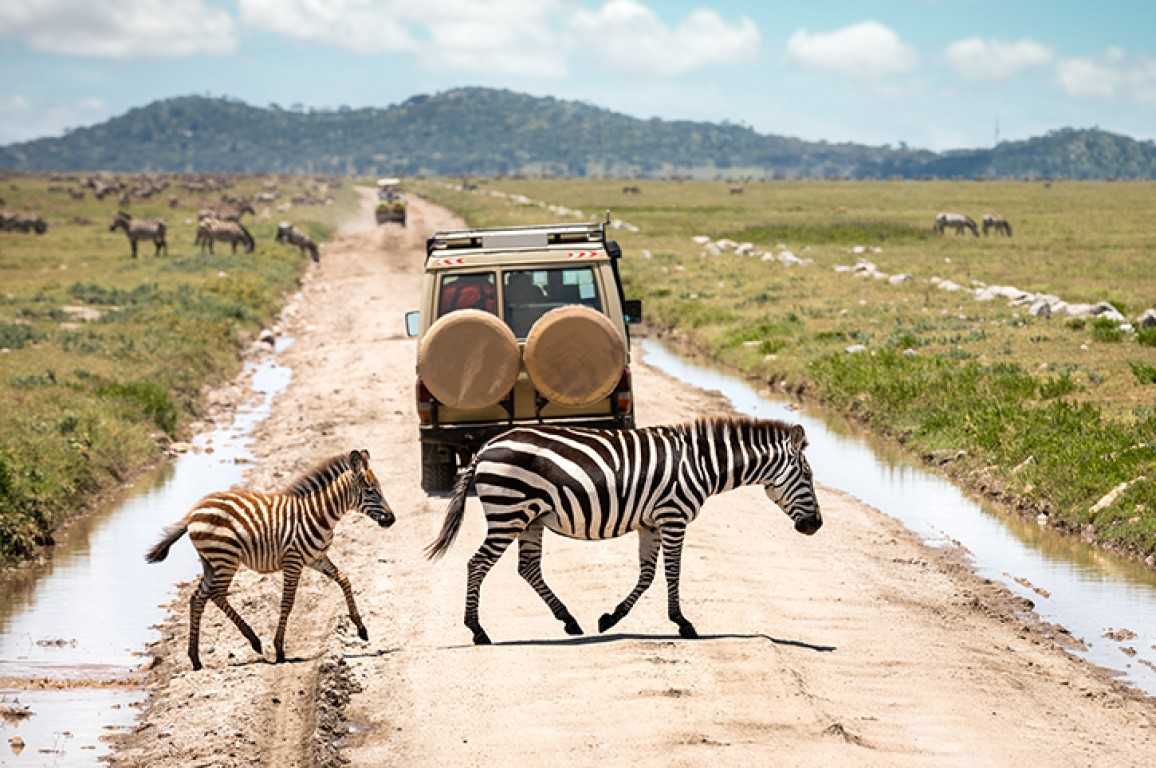
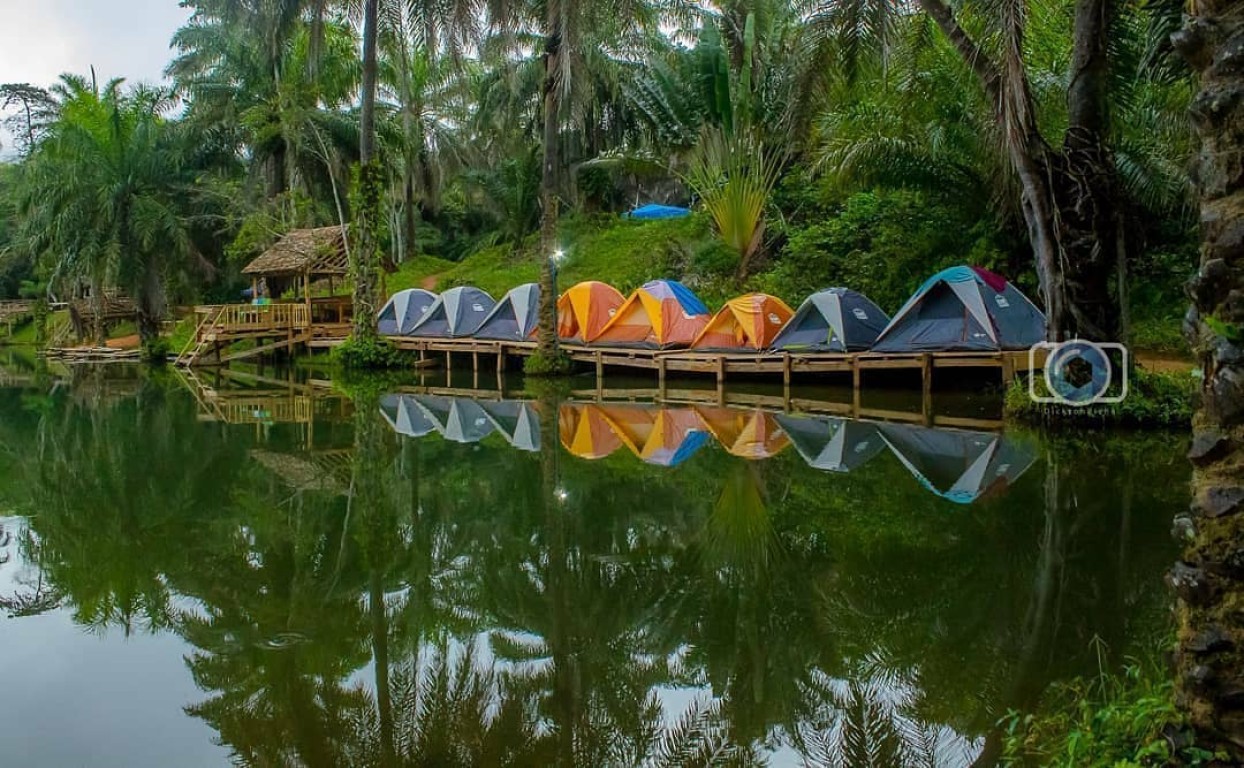
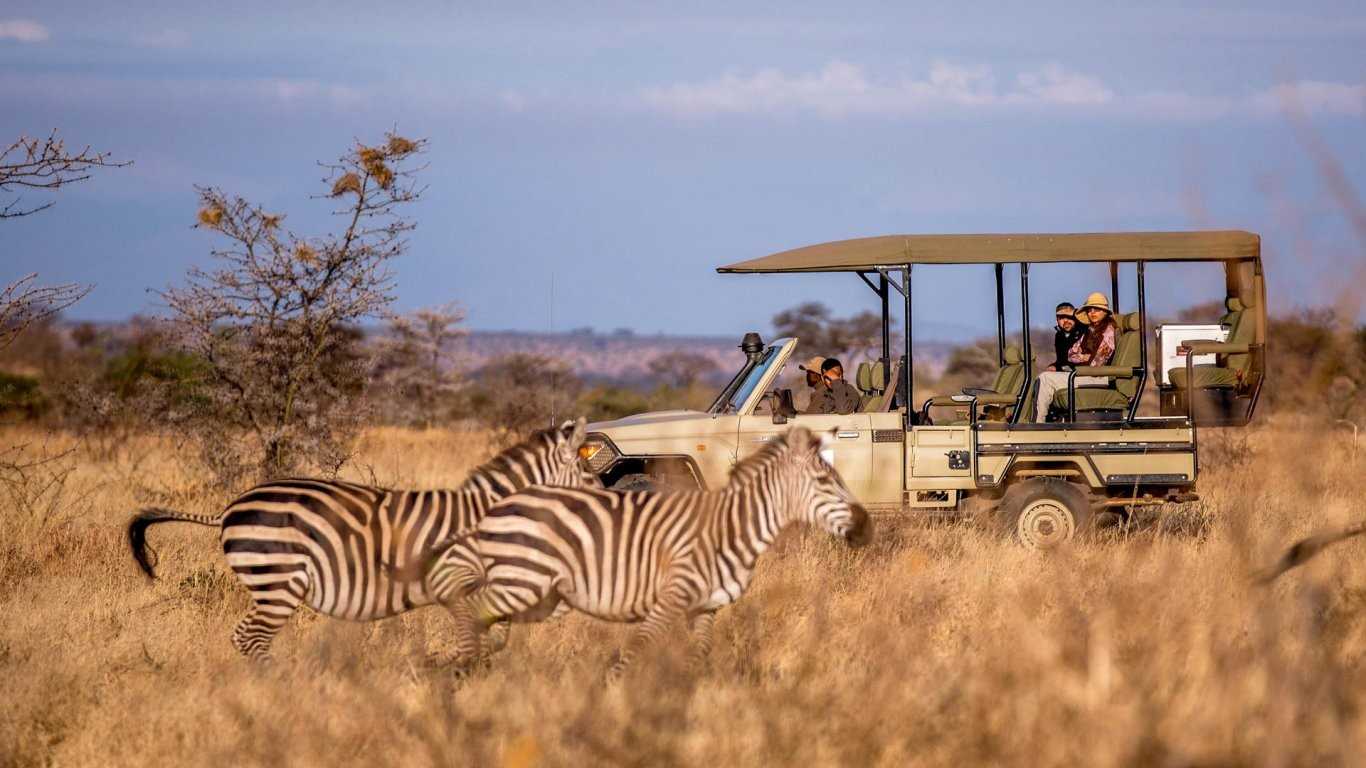
A Tanzania camping safari uses public or private campsites inside or on the borders of the national parks rather than lodges. You sleep in a standing tent with a camp bed and bedding, eat meals cooked by a dedicated camp cook over gas burners, and use shared or portable toilet and shower facilities depending on the campsite. The game drives are identical to a lodge safari — the same private 4x4, the same guide, the same access to the parks and the same wildlife.
The difference is price and proximity. Camping safari costs run 30 to 50% lower than equivalent lodge safaris because accommodation costs are eliminated. And sleeping inside the parks — hearing hyena at 2am, waking to elephant footprints near the camp perimeter — is an experience no lodge can replicate regardless of its price tag.
Types of Tanzania Camping Safari
Public campsites — the most affordable option
Tanzania National Parks Authority (TANAPA) operates public campsites inside most major parks. These are cleared, flat camping areas with basic pit toilets and sometimes a water point. All other equipment — tents, bedding, cooking kit, food — is provided by the safari operator. Public campsites are the lowest-cost accommodation option in the parks and are used on budget camping safaris.
Special campsites — exclusive, remote, more comfortable
Special campsites are private, exclusive sites inside the park boundaries — bookable by one group at a time, often in locations specifically chosen for wildlife proximity or landscape. They typically have better facilities than public campsites and are positioned away from other tourism traffic. Mid-range camping safaris use special campsites.
Mobile tented camps — the most comfortable camping option
A mobile tented camp uses standing canvas tents with proper camp beds, linen, a dining tent and a separate kitchen tent. Some operations add a bush shower (a canvas bag filled with solar-heated water) and a portable flush toilet. This is the most comfortable camping safari style and bridges the gap between budget camping and lodge accommodation.
Parks on the Tanzania Camping Safari Circuit
Serengeti National Park
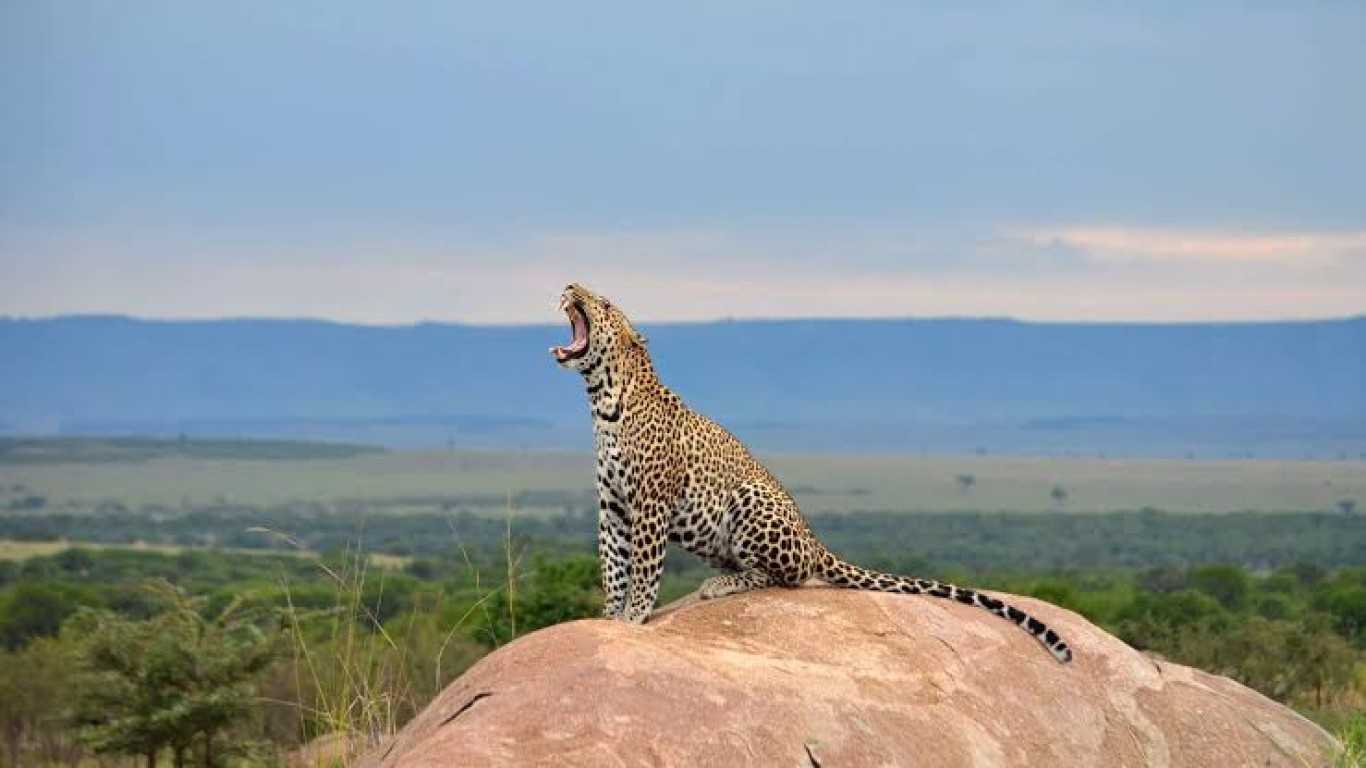
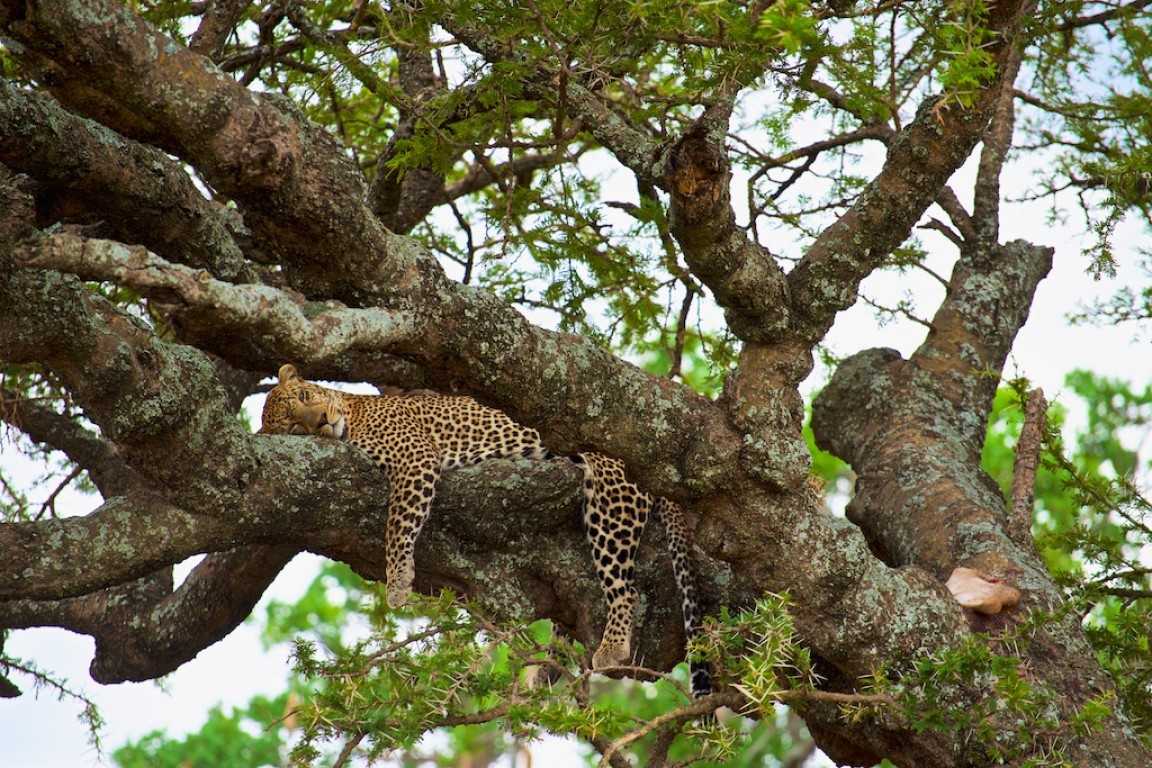
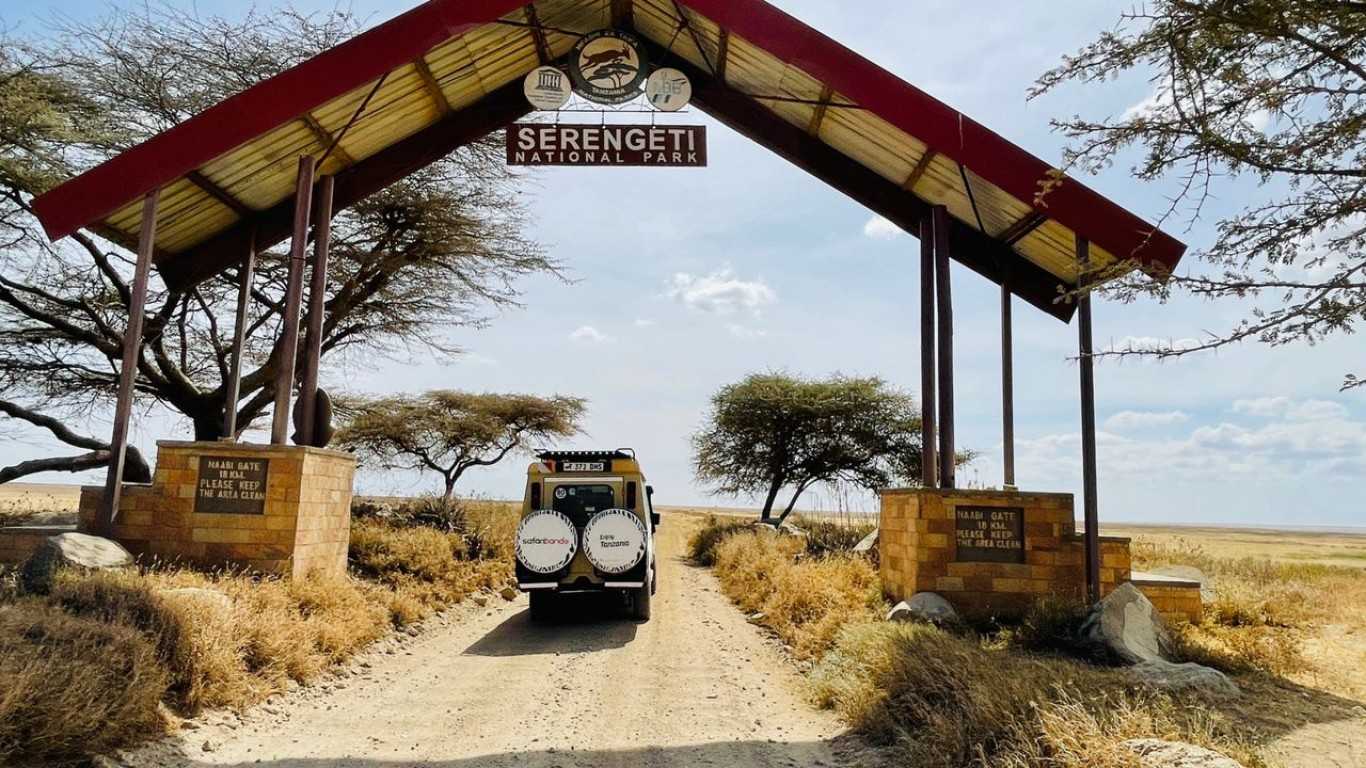
The Serengeti has multiple public and special campsites positioned across the park — the Seronera area in the centre, the Lobo area in the north (closest to the Mara River) and the Ndutu area in the south for calving season. Camping inside the Serengeti means sleeping where lion prides range at night and waking to the same landscape before it fills with other vehicles at dawn.
Ngorongoro Conservation Area
The Ngorongoro Crater rim has several public campsites with extraordinary views across the 260 sq km caldera below. Simba campsite on the rim is one of the most dramatically positioned campsites in Africa — waking at dawn with the entire crater visible before the descent. The rim is also the location of the Olduvai Gorge turnoff, making a crater rim camp the natural base for a combined Olduvai Gorge visit.
Tarangire National Park
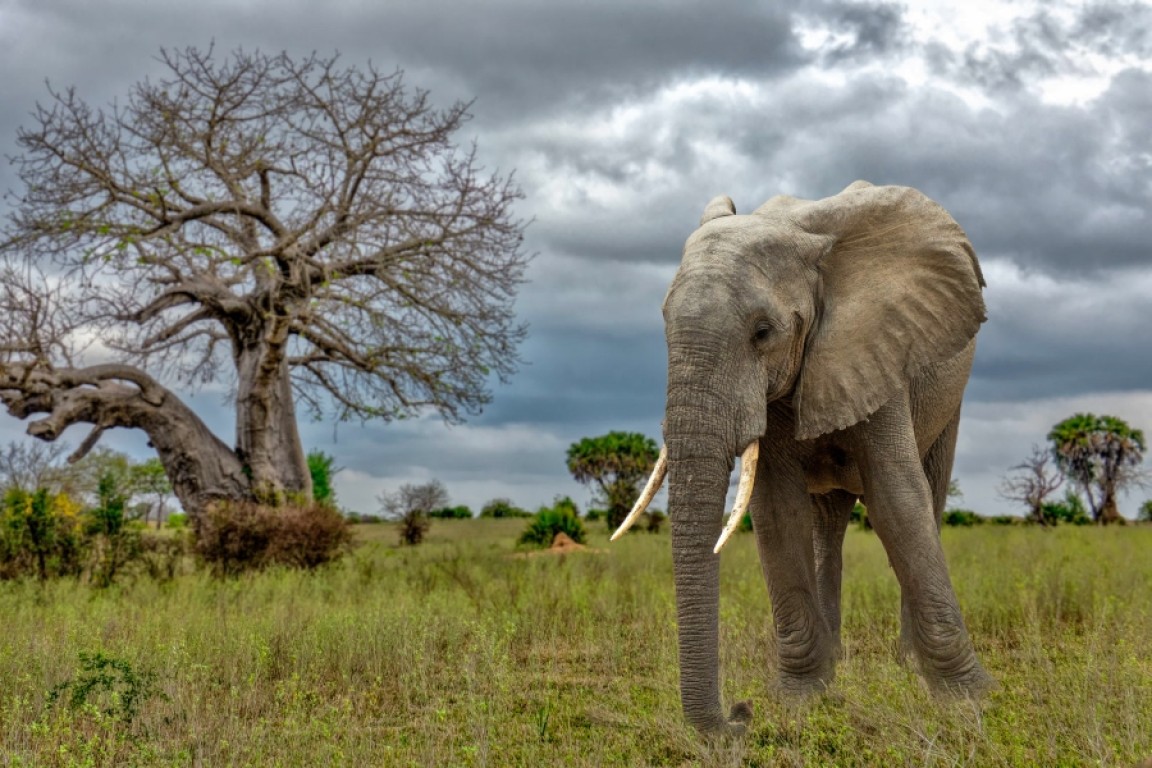
The Tarangire campsites are positioned in the park interior with views of the Tarangire River and the ancient baobab woodland. Elephant are regular visitors to the Tarangire campsites at night — waking to find fresh elephant footprints around the tents is a standard Tarangire camping experience, not a rare one. A natural opener or closer to any camping safari circuit.
Lake Manyara National Park
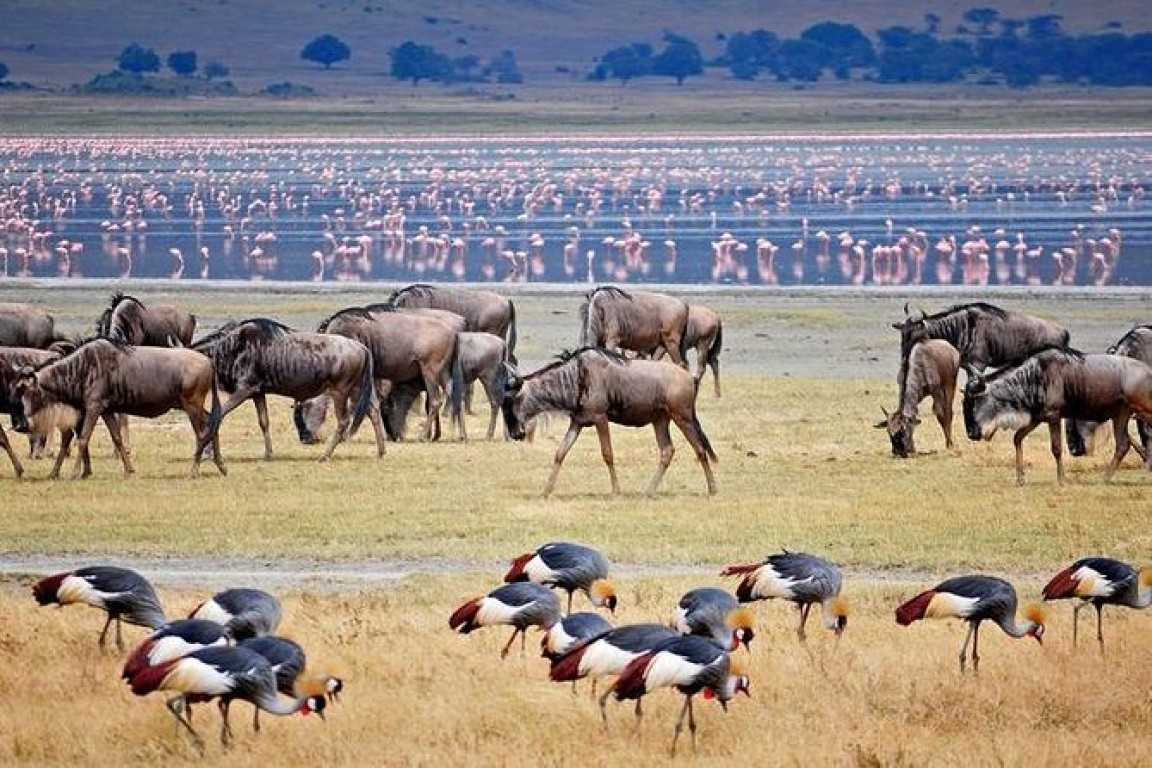
The Lake Manyara area has campsites just outside the park boundary. A half-day game drive in Manyara is typically combined with a Tarangire or Ngorongoro night rather than forming a standalone camp night, but it adds tree-climbing lion sightings, flamingo and groundwater forest wildlife to any camping circuit.
Best Time for a Tanzania Camping Safari
Camping safaris are rewarding year-round but have specific seasonal considerations that differ slightly from lodge safaris.
June to October (dry season) is the most popular window: clear nights, cool temperatures for sleeping, short grass for game viewing and the Mara River crossings in the northern Serengeti from July onwards. The dry season nights in Ngorongoro can be cold (4 to 8°C on the rim) — bring a quality sleeping bag.
January to March (calving season) is the finest window for the southern Serengeti and Ndutu. Warm nights, extraordinary predator activity and far fewer other campers. Night sounds in the southern Serengeti during calving season — the calls of hunting hyena and the alarm barks of wildebeest across the Ndutu plains — are unforgettable.
The long rains (April to May) make some campsites muddy and difficult. November is manageable. Rain gear and a good tent groundsheet matter more in shoulder season camping safaris.
What Is Included in a Camping Safari Package
Every Safaribando Tanzania camping safari includes: a TANAPA-certified, English-speaking guide and driver; a private 4x4 safari vehicle with pop-up roof; all national park fees and campsite fees; all camping equipment (tents, camp beds, bedding, dining tent, kitchen equipment); a dedicated camp cook with full board (three meals and snacks); drinking water throughout; and airport or hotel transfers in Arusha.
Not included: sleeping bag (we can advise on the right rating for the season), personal torch, international flights, travel insurance, visas, alcohol and tips for the guide and cook.
Camping Safari vs Lodge Safari — Which Is Right for You?
Choose a camping safari if: you want the most affordable route into the Serengeti and Ngorongoro; you want to sleep inside the parks; you value wilderness immersion over hotel-level comfort; or you have experience with outdoor travel and are comfortable with simple bush camp facilities.
Choose a lodge safari if: you want air conditioning, a restaurant, a proper shower and a bed with full hotel linen after a long game drive; you are travelling with young children who need consistent comfort; or comfort is as important as wildlife proximity.
The wildlife viewing is identical on both styles — the same guide, the same vehicle, the same parks, the same game drives. The camping safari simply removes the lodge from the equation.
Frequently Asked Questions
Is a Tanzania camping safari safe?
Yes. National park campsites are managed by TANAPA and the park rangers who patrol them. Wildlife does move through campsites at night — this is normal and part of the experience — and the camps are set up by experienced guides who know how to position tents safely relative to wildlife movement patterns. You stay inside your tent at night; your guide handles any wildlife interactions.
How cold does it get camping in Tanzania?
It depends on elevation and season. The Serengeti plains and Tarangire are warm year-round (15 to 25°C at night). The Ngorongoro Crater rim is significantly colder — 4 to 10°C on clear dry-season nights. We advise on the correct sleeping bag rating based on your specific itinerary and travel dates.
What are the toilet and shower facilities like?
Public campsites have basic pit toilets and sometimes cold-water taps. Special campsites and mobile camp setups include portable flush toilets and bush showers — a canvas bag of solar or fire-heated water that gives a genuine warm shower in the bush. The experience is not a hotel bathroom but it is significantly better than most people expect.
Can I combine a camping safari with a lodge stay?
Yes — combination itineraries are common. A typical format is camping in the Serengeti (to maximise time inside the park at lowest cost) with a lodge night at Ngorongoro (where the crater rim lodges have exceptional views that add real value). We design these combinations regularly.
Not sure which Tanzania Camping Safaris is right for you?
Our team designs custom itineraries — no fee, no obligation.Explore Other Safari Types

Kilimanjaro Trekking Tours
View Tours Tanzania Lodge Safaris
View Tours Tanzania Honeymoon Safaris
View Tours
Serengeti Migration Safaris
View Tours Tanzania Luxury Safaris
View Tours