Quick facts
Wildlife
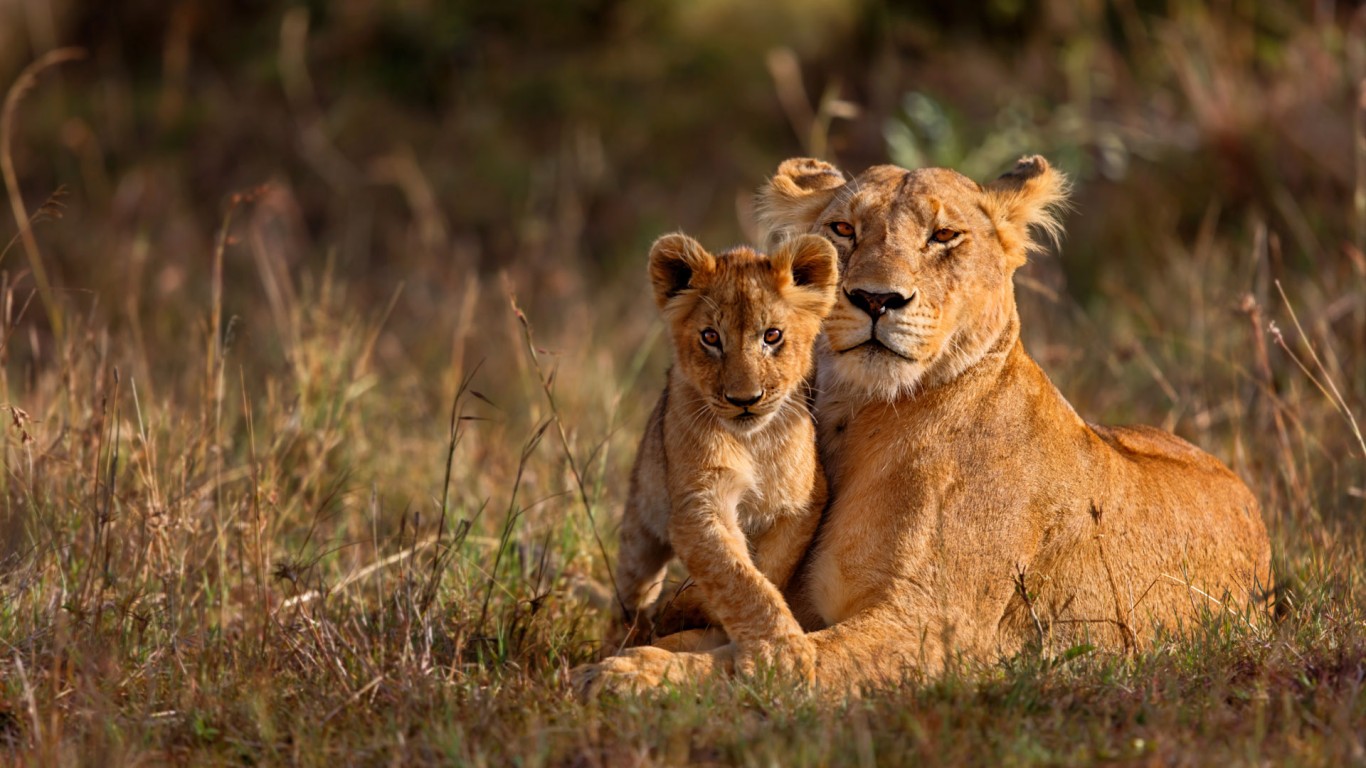
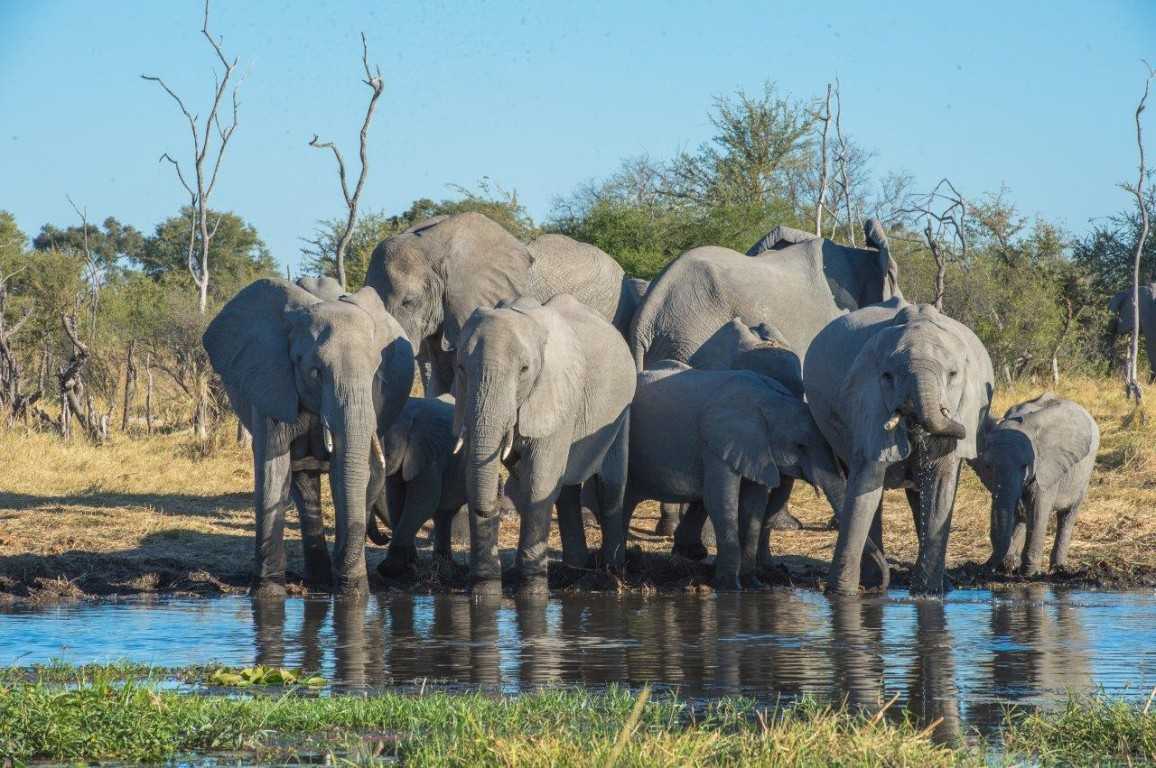
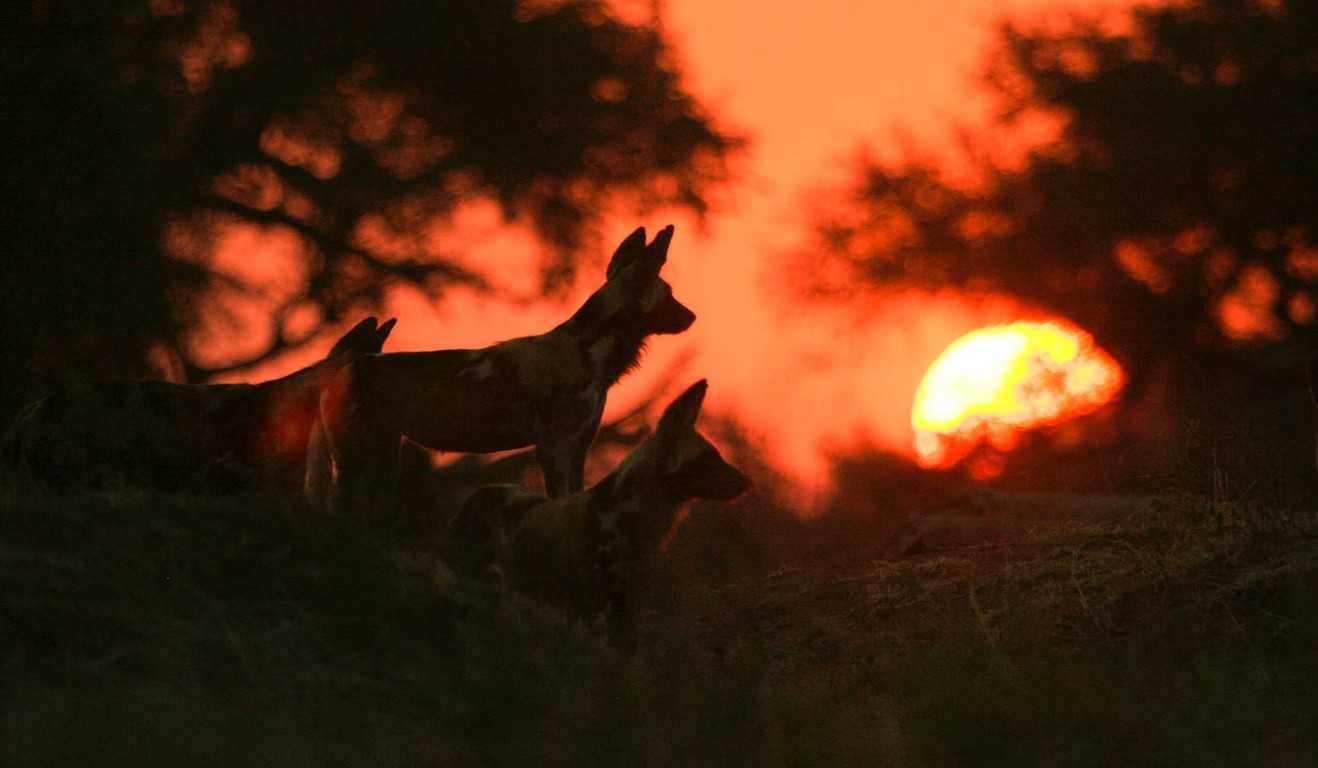
Hwange holds Zimbabwe's largest wildlife populations across 14,651 sq km. The elephant herd of approximately 50,000 individuals is one of Africa's greatest concentrations. African wild dog is reliably seen — Hwange has one of the continent's highest wild dog densities. Lion, leopard, cheetah, black and white rhino (reintroduced), giraffe, zebra, wildebeest, sable, roan, eland, buffalo, hippo and Nile crocodile are all present. Brown hyena (a rarity in most parks) is resident. Over 430 bird species recorded, with raptors and arid woodland species outstanding.
Top activities
Game drives to the network of borehole-fed waterholes — the Hwange equivalent of Etosha's waterhole strategy. Wild dog tracking from specialist camps in the northern zones. Guided walking safaris through mopane and teak woodland — some of Zimbabwe's finest. Night drives revealing leopard, hyena, honey badger and nocturnal specials. Elephant waterhole stakeouts during the dry season at Main Camp's visible boreholes. Hide-based game viewing at Nyamandhlovu Pan and Masuma Dam. Horseback safaris in the Hwange area.
About Hwange National Park
Zimbabwe has not always had the safari industry its wildlife deserves. For much of the 2000s and 2010s, Hwange’s extraordinary ecosystem — the largest national park in Zimbabwe at 14,651 square kilometres, with one of Africa’s most significant wild dog populations and an elephant concentration that rivals anywhere on the continent — was undervisited and under-resourced. That is now changing rapidly. A new generation of exceptional safari camps, increasing political stability and growing international recognition have returned Hwange to the conversation about Africa’s finest destinations.
The park sits on the Kalahari sand system of western Zimbabwe, bordering Botswana to the south and accessible from Victoria Falls (2 hours north) or from Bulawayo (3 hours southeast). Its landscape is mopane and teak woodland interspersed with open vleis (grassland depressions) and the borehole-fed waterholes that are the key to the Hwange game-viewing strategy.
The elephants
Hwange’s elephant population — estimated at 50,000 individuals — is genuinely staggering. The Kalahari system produces insufficient natural water for the vast number of animals, and for decades Zimbabwe National Parks has pumped borehole water into artificial pans throughout the park. In the dry season (July–October), this concentrated water source draws herds of hundreds of elephants to specific pans on a predictable daily rotation. Sitting at Nyamandhlovu Pan, Masuma Dam or Ngweshla Picnic Site and watching 200-elephant herds arrive at the water is one of the great wildlife spectacles in Africa.
African wild dog
Hwange holds one of Africa’s healthiest wild dog populations, and the park’s vast, undivided woodland provides the unbroken range these highly mobile predators require. Specialist camps in the northern sections — particularly around Kennedy vlei and the Ngamo area — have resident research teams that track known packs. During denning season (June–August), packs are tied to a specific den site for 6–10 weeks, making sightings highly reliable with the right guide.
Walking safaris
Zimbabwe has a long and proud tradition of walking safaris — the profession of the professional hunter evolved into the walking safari guide in the early 20th century, and Hwange produced many of Zimbabwe’s most celebrated walking safari guides. The mopane and teak woodland, with its tracking-friendly soil and diverse game, remains one of Africa’s finest environments for walking. Several camps — particularly in the northern concession areas — offer multi-day wilderness walking trails sleeping under fly-camps.
Rhino in Hwange
Both black and white rhino have been reintroduced to Hwange’s protected areas — white rhino to the Main Camp area and black rhino to selected private concessions. Sightings are not guaranteed (the park is vast and rhino are shy) but the population is growing. The Wilderness Safaris concession in the north has the most reliable rhino programme.
Combine Hwange with…
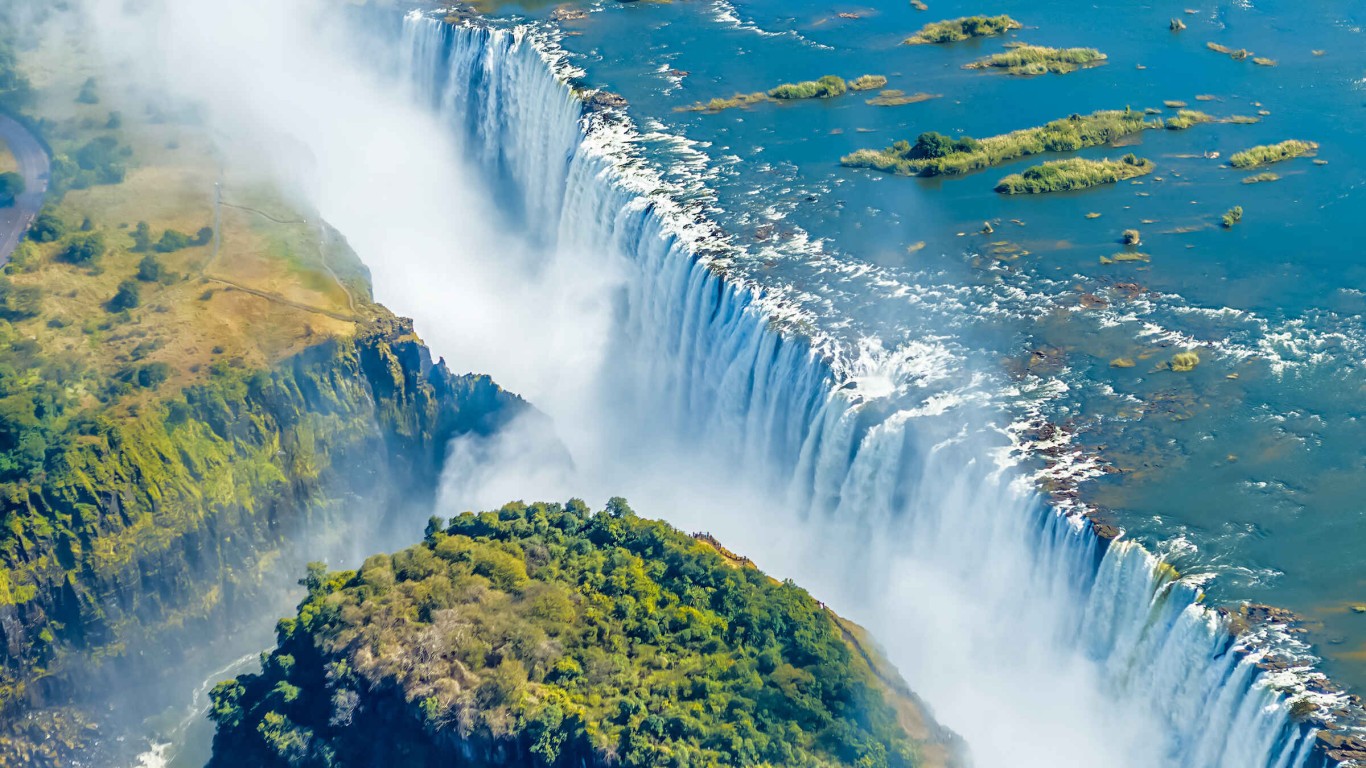
- Victoria Falls — 2 hours north; the classic Zimbabwe combination.
- Mana Pools — fly east for walking and canoeing safaris on the Zambezi.
- Matobo Hills — 3 hours southeast for rhino on foot and rock art.
Frequently asked questions about Hwange
Is Hwange good for self-drive safari?
Yes — the Zimbabwe National Parks camps at Main Camp, Sinamatella and Robins Camp have public access roads. A 4WD is recommended for the sandy interior tracks. The waterhole hides at Main Camp are accessible without a guide.
How does Hwange compare to Kruger?
Hwange has more elephants, more wild dogs and less tourist pressure. Kruger has better infrastructure and a more diverse mammal list. Both are outstanding; Hwange rewards travellers who want a quieter, more exclusive experience.
Is Zimbabwe safe to visit?
Yes — the tourism areas (Victoria Falls, Hwange, Mana Pools, Bulawayo) are considered safe and visitor-friendly. Zimbabwe has been rebuilding its tourism industry and the camp staff and guiding quality is among the finest in Africa.
Want to visit Hwange National Park?
Get a free custom safari plan within 24 hours.
Hwange National Park safari tours


Want to visit Hwange National Park?
Get a free custom safari plan within 24 hours.
Best time to visit Hwange National Park
July to October — Dry season (best game viewing, elephant concentration)
The dry season is unambiguously the best time to visit Hwange. As waterholes outside the park dry up, the borehole-fed pans inside become the only water source for miles. Elephant herds of hundreds converge on these waterholes throughout the day. Wild dog denning (July–September) creates reliable pack sightings near denning sites. Lion and leopard are most frequently seen in the thinner dry vegetation. October is the hottest month (up to 40°C) but produces the most dramatic waterhole concentrations.
November to April — Green season (birding, calving, lush landscape)
The summer rains transform Hwange into a lush, green landscape. Buffalo herds and wildebeest drop calves; predator activity around the vulnerable young animals is intense. Migratory birds arrive from October through November. Wildlife disperses but the wild dog packs regroup and range widely. A beautiful period for birding and photography.
May to June — Early dry season (excellent, fewer visitors)
The transition into dry season is productive and quiet. Elephant herds are beginning to concentrate and prices are lower than the July–October peak.
Bottom line: July to October for the definitive Hwange experience. Wild dog dens June–August. Elephant waterholes September–October.
Where to stay in Hwange National Park
We'll recommend accommodation across all budget levels based on your dates and preferences.
Browse All LodgesWant to visit Hwange National Park?
Get a free custom safari plan within 24 hours.
Nearby destinations
Zimbabwe  Zimbabwe Zimbabwe