Quick facts
Wildlife
The nursery cares for elephant calves from across Kenya — orphaned by poaching, human-wildlife conflict, drought or natural causes. Ages typically range from a few weeks to around 3 years. The nursery holds between 20 and 40 calves at any given time. Baby warthog, buffalo and other orphaned animals occasionally join the nursery program. Calves graduate to reintegration facilities at Tsavo National Park (Voi and Ithumba Units) where they are slowly reintroduced to wild herds over several years.
Top activities
Daily public visit (11:00–12:00) watching the baby elephants feeding, playing in the mud bath and interacting with keepers — the core experience. Elephant adoption programme — adopt a named calf and receive updates on their progress; the trust's main funding model. Behind-the-scenes foster parent experience (by advance arrangement for adopters). Keeper talks explaining rehabilitation protocols, the calves' histories and the reintegration process. Photography with the calves during the mud bath. Combination with a morning Nairobi National Park game drive immediately before the 11am nursery visit.
About David Sheldrick Wildlife Trust Elephant Nursery
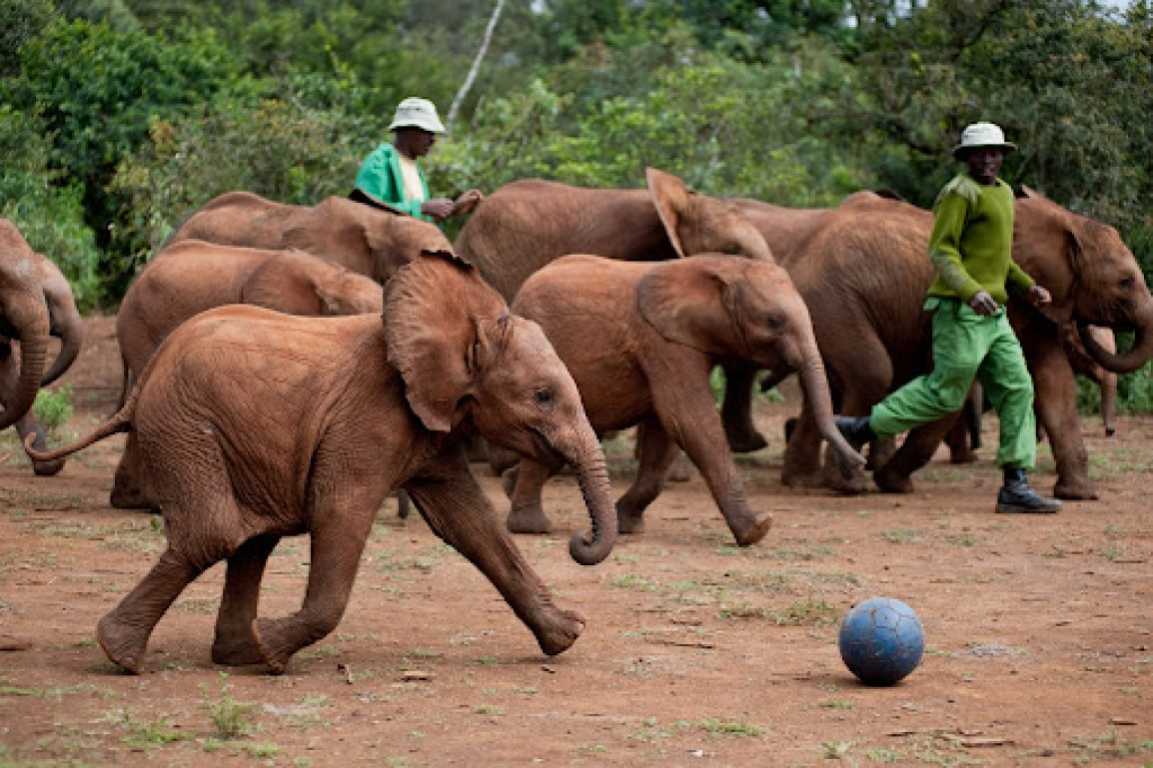
There is a moment during the public visit to the David Sheldrick Wildlife Trust Elephant Nursery that catches almost everyone off guard. A baby elephant — maybe eight months old, maybe 40 kg — charges toward the mud bath, stumbles, rolls, rights itself and charges again. Its keeper follows a step behind, still attached by the kind of constant attention that you would give to a toddler. And you realise that this is exactly what it is: a toddler, orphaned, confused, and being raised by humans with extraordinary dedication and patience.
The Sheldrick Wildlife Trust was founded by Dame Daphne Sheldrick following the death of her husband David Sheldrick, the founding warden of Tsavo East National Park. What began in the 1970s as a personal effort to care for orphaned elephants has become the world’s most successful elephant orphan rescue and rehabilitation programme, having raised over 260 elephants to successful reintegration into wild herds.
Where is the nursery?
The nursery is located at the main gates of Nairobi National Park on Magadi Road, 7 km from Nairobi city centre. It is easily combined with a morning game drive in the park — enter the park at 06:00, drive for 3 hours, exit and walk 5 minutes to the nursery for the 11:00 visiting hour. The Giraffe Centre in Karen and the Karen Blixen Museum are 20 minutes further, making a full Nairobi wildlife day very achievable.
The visiting experience
The public visiting hour runs from 11:00 to 12:00 every day of the year. During this hour the orphan calves are brought to the mud bath area for feeding and play. Keepers explain each calf’s history — how they were found, where they came from, and what their prognosis is. The calves interact freely with the crowd (and occasionally with each other in disputes over milk) while the keepers manage the flow.
The experience is genuinely moving. Each calf has a name, a known history and a keeper who has been assigned to it specifically — the keeper sleeps with the calf, feeds it every 3 hours through the night, and is with it during every waking moment. This level of dedication is what makes the Sheldrick model work: elephants form attachment bonds like humans do, and without constant companionship from a trusted keeper, orphaned calves simply fail to thrive.
The adoption programme
The nursery is funded primarily through its elephant adoption programme. For a fixed annual donation, adopters receive a detailed profile of their chosen calf, monthly keeper field reports, a soft toy replica and updates as the elephant progresses through the nursery and eventual reintegration programme at Tsavo. Over 200,000 people have adopted Sheldrick elephants globally.
Adopters can arrange a dedicated foster parent visit outside public visiting hours — a smaller group, quieter setting and more direct keeper interaction. Contact the trust directly well in advance to arrange.
The reintegration process
Calves remain at the Nairobi nursery until they are 2–3 years old and strong enough for the next stage. They are then transferred to reintegration units at Tsavo (Voi and Ithumba) and eventually to the wild elephant population in the greater Tsavo ecosystem. The process takes 8–10 years from rescue to full reintegration. Many ex-orphans have returned to the Ithumba unit with their own wild-born calves — the programme’s most profound measure of success.
Combine the nursery with…
- Nairobi National Park — the morning game drive immediately before the 11:00 nursery visit.
- Nairobi Giraffe Centre — 20 minutes further into Karen for the afternoon.
- Tsavo National Park — visit the reintegration units to see graduated ex-orphans in the wild.
Frequently asked questions about the Sheldrick Nursery
Do I need to book in advance?
Walk-in visitors are accepted, but during peak season (July–September) the viewing area can fill. For foster parent visits outside the public hour, advance booking through the trust is essential.
How much does entry cost?
Entry is by donation. The trust suggests USD 5–10 per person but contributions of any size are accepted. See sheldrickwildlifetrust.org for current details.
Can I touch the elephants?
Physical contact is not encouraged during the public visiting hour — for both visitor safety (baby elephants are strong and unpredictable) and to minimise human imprinting on animals that need to eventually live wild. Keeper interaction is handled by the assigned trust staff only.
Is the Sheldrick Trust the same as the Born Free Foundation?
No — they are separate organisations. Born Free focuses on keeping animals wild and opposes captivity. The Sheldrick Trust rescues and rehabilitates genuine orphans with the explicit goal of returning them to wild populations.
Want to visit David Sheldrick Wildlife Trust Elephant Nursery?
Get a free custom safari plan within 24 hours.
David Sheldrick Wildlife Trust Elephant Nursery safari tours
No fixed packages listed yet — we'll build a custom safari around David Sheldrick Wildlife Trust Elephant Nursery for you.
Browse All ToursWant to visit David Sheldrick Wildlife Trust Elephant Nursery?
Get a free custom safari plan within 24 hours.
Best time to visit the Sheldrick Nursery
The nursery has a single, fixed public visiting window: 11:00–12:00 daily, every day of the year. The best time to visit is therefore whenever your Nairobi itinerary allows — but there are practical considerations.
Arrive by 10:45
The nursery can accommodate a limited number of visitors at a time. Arriving early secures a position at the front of the mud bath area — where the calves play most actively — and gives the best photography position.
June to October — Busiest period (book the adoption programme ahead)
The peak Kenya safari season brings the highest visitor numbers to the nursery. The experience is no less special with more people, but the viewing area is more crowded. If you are an adopter, organise a foster-parent visit at a different time of day through the trust directly.
April to May — Quietest period (smallest crowds, calves just as active)
The long rains bring the fewest visitors. The mud bath is muddier and the calves often more enthusiastically filthy. A wonderful time to visit if you are in Nairobi during this period.
Bottom line: Visit whenever you are in Nairobi. Arrive at 10:45, watch the whole hour, and bring the money for an adoption.
Where to stay in David Sheldrick Wildlife Trust Elephant Nursery
We'll recommend accommodation across all budget levels based on your dates and preferences.
Browse All LodgesWant to visit David Sheldrick Wildlife Trust Elephant Nursery?
Get a free custom safari plan within 24 hours.