Quick facts
Wildlife
The Ngosi forest reserve surrounding the crater supports Angolan colobus, blue monkey, bushbuck and the Lanje francolin. The lake itself holds tilapia and several endemic invertebrate species unique to the crater water body. Birdwatching in the surrounding Uporoto montane forest is excellent — over 300 species recorded in the wider highlands, including the bar-tailed trogon, mountain greenbul, and several endemic sunbird species. Leopard sign is occasionally noted on the crater rim trail.
Top activities
Half-day or full-day crater rim hike from the Tukuyu base — a 2-3 hour trail through montane forest to the crater edge with views 200m down to the emerald lake surface. Birdwatching in the surrounding Uporoto Mountains forest reserve. Photography of the dramatic crater walls and misty lake reflections. Combination day trip with nearby Kaporogwe Falls (Tanzania's widest waterfall) and Daraja la Mungu (Bridge of God) natural rock arch. Cultural visits to Nyakyusa farming communities in the Tukuyu valley below.
About Lake Ngosi
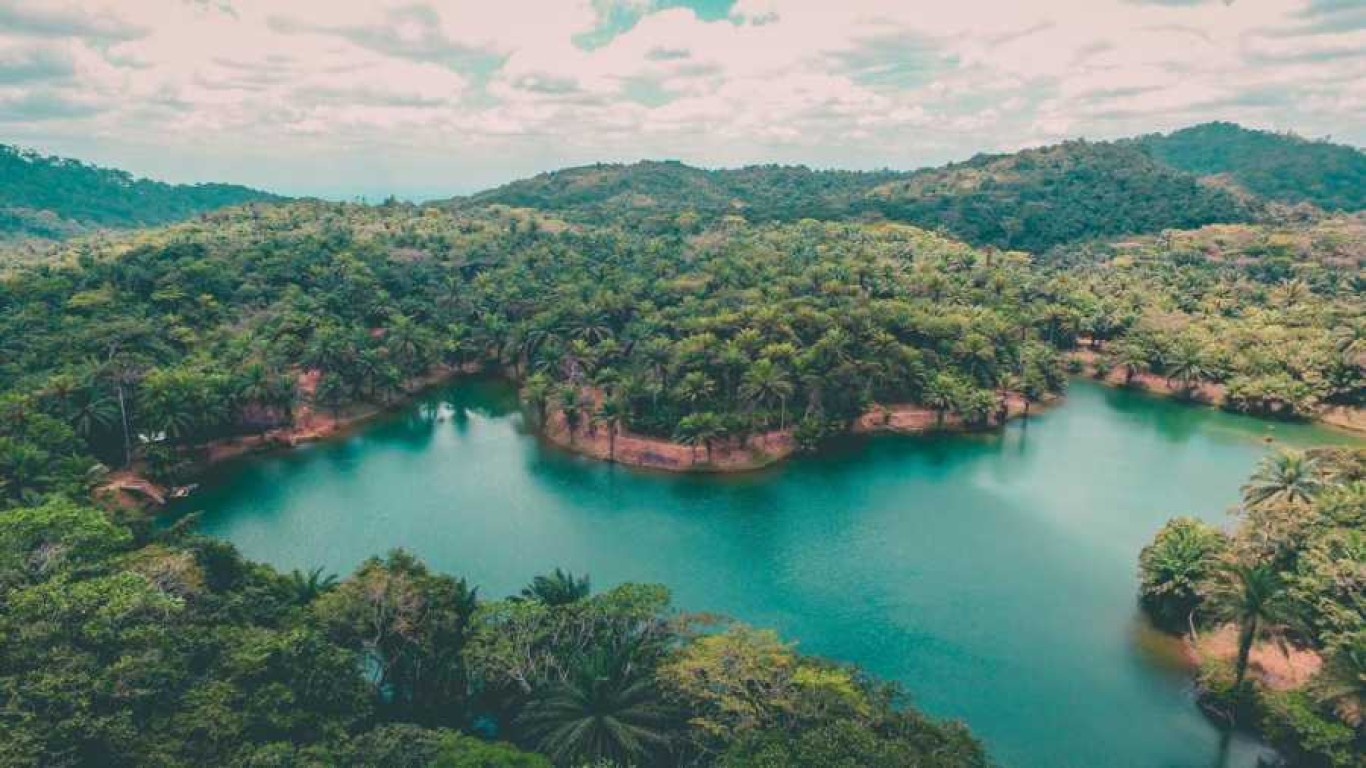
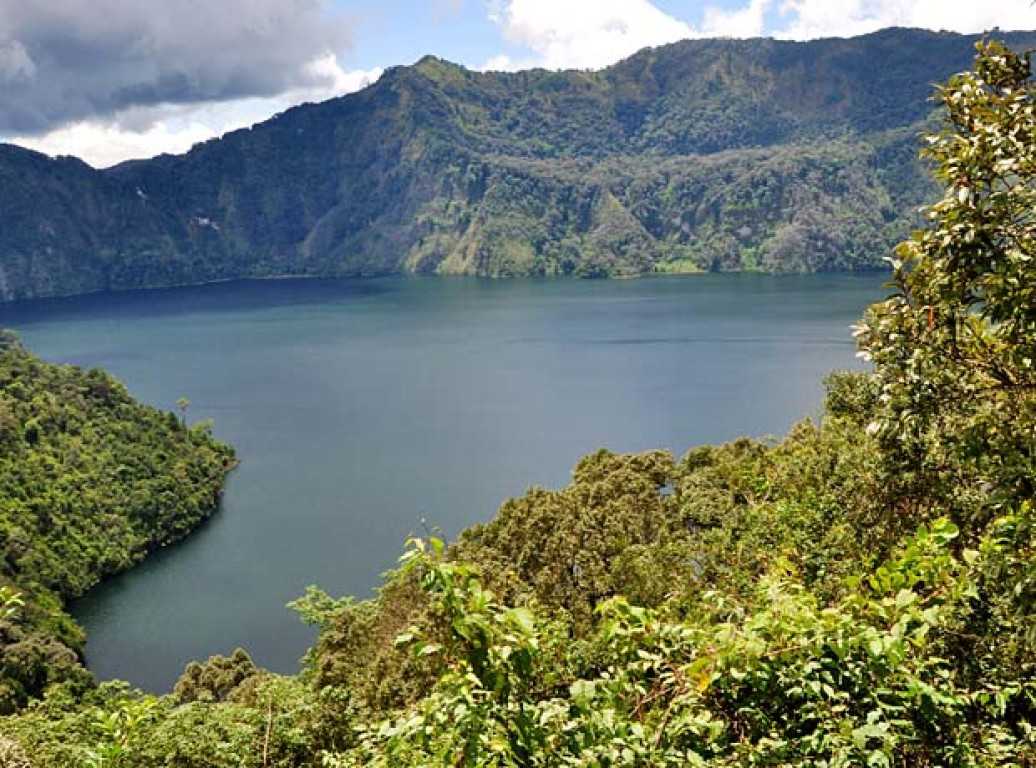
High on the Uporoto Mountains above Tanzania’s tea-growing southern highlands, a perfect volcanic crater holds a lake so green it looks painted. Lake Ngosi is Africa’s second-largest crater lake — 1.5 kilometres across, 200 metres below its rim, draped in montane forest and almost entirely unknown outside the region. Yet the hike to its rim is one of the most rewarding half-day walks in southern Tanzania, and the view down to the emerald water is genuinely extraordinary.
The lake sits inside the Ngosi Forest Reserve on the Uporoto ridge, part of the Eastern Arc Mountain chain and one of the most biodiverse landscapes in Africa. At 2,620 metres elevation, the forest here is ancient, dense and full of life — a very different Tanzania from the savanna of the Northern Circuit.
Where is Lake Ngosi?
The lake is 38 km south of Mbeya city, near the town of Tukuyu in the Rungwe District of southern Tanzania. The trailhead is accessible by road from Tukuyu in a 4WD vehicle, and the round-trip hike to the crater rim takes 2–3 hours. Lake Ngosi sits 30 km north of Kitulo National Park, making the two natural partners on a southern highlands loop.
The crater and the lake
Ngosi crater was formed by a volcanic collapse and is roughly circular, with steep forested walls dropping 200 metres to the lake surface. The water has a distinctive deep emerald colour, fed by rainwater and forest springs with minimal external drainage. The crater is large enough to generate its own micro-weather system — mist frequently fills the bowl in the early morning, burning off to reveal the lake around 09:00–10:00.
The lake has no surface outlet. Its water level fluctuates seasonally but the chemistry remains stable enough to support tilapia and a community of endemic invertebrates that have been evolving in isolation since the crater formed.
The hike
The trail climbs from the forest edge through dense montane vegetation to the crater rim — a moderate ascent of around 300 metres over 3–4 km. The path is well-defined but steep in sections and slippery after rain. Rubber-soled boots are essential; flip-flops are not appropriate. A local guide from Tukuyu is strongly recommended both for navigation and for identifying the forest birds and plants along the way.
The crater rim is narrow in places with a dramatic vertical drop on the inner face. Those with a fear of heights should walk with care at the edge viewpoints. The best views are from the south rim, where the full lake surface is visible below and the Uporoto ridge extends in both directions.
Combine Lake Ngosi with…
- Kitulo National Park — the orchid plateau 30 km south; a natural same-day or next-day addition.
- Mbeya — the nearest city with good accommodation.
- Lake Nyasa — extend southeast for the lake shore and ferry.
- Kaporogwe Falls — Tanzania’s widest waterfall, 15 km from Tukuyu, easily combined on the same day.
Frequently asked questions about Lake Ngosi
Is a guide required for Lake Ngosi?
Not legally mandatory, but strongly recommended — the trail is not signposted and local guides from Tukuyu provide both navigation and excellent botanical and birdwatching knowledge.
Can you swim in Lake Ngosi?
There is no safe descent to the lake surface — the inner crater walls are steep and unstable. The experience is a rim viewpoint visit rather than a lake swim.
How does Lake Ngosi compare to Lake Chala?
Lake Chala is smaller, accessible for kayaking and swimming, and has established camp infrastructure. Ngosi is larger, more remote and a wilder experience. Both are extraordinary crater lakes but they serve different traveller profiles.
Want to visit Lake Ngosi?
Get a free custom safari plan within 24 hours.
Lake Ngosi safari tours
No fixed packages listed yet — we'll build a custom safari around Lake Ngosi for you.
Plan My Trip Browse All ToursWant to visit Lake Ngosi?
Get a free custom safari plan within 24 hours.
Best time to visit Lake Ngosi
May to October — Dry season (best for hiking)
The dry months give the clearest lake views and the most reliable trail conditions. The Uporoto Mountains receive substantial rainfall, so even “dry season” can produce misty mornings — but afternoons are generally clear. June to August sees the crater most reliably mist-free by mid-morning. The forest birdlife is active and audible in the cool, clear air.
November to February — Short rains transition (lush but wet)
The forest is at its most dramatically lush, waterfalls are running at full volume nearby, and the lake surface reflects the green crater walls in extraordinary detail when the mist clears. Trails can be slippery on the crater descent. A rewarding window for photographers who don’t mind mud.
March to April — Long rains (difficult access)
The crater trail becomes genuinely slippery and the forest tracks to the trailhead can be impassable after heavy rain. Not recommended unless you have high-clearance 4WD and local knowledge of current conditions.
Bottom line: June to September for the most reliable hiking. Combine with Kitulo National Park nearby for a complete southern highlands itinerary.
Where to stay in Lake Ngosi
We'll recommend accommodation across all budget levels based on your dates and preferences.
Plan My Trip Browse All LodgesWant to visit Lake Ngosi?
Get a free custom safari plan within 24 hours.
Nearby destinations
 Tanzania
 Tanzania
 Tanzania
 Tanzania